Number Recognition Adding up to 50 Without Regrouping Worksheets for Ages 8-9
15 filtered results
-
From - To
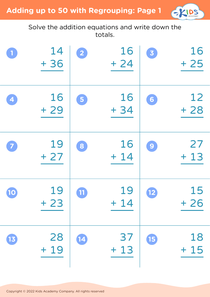
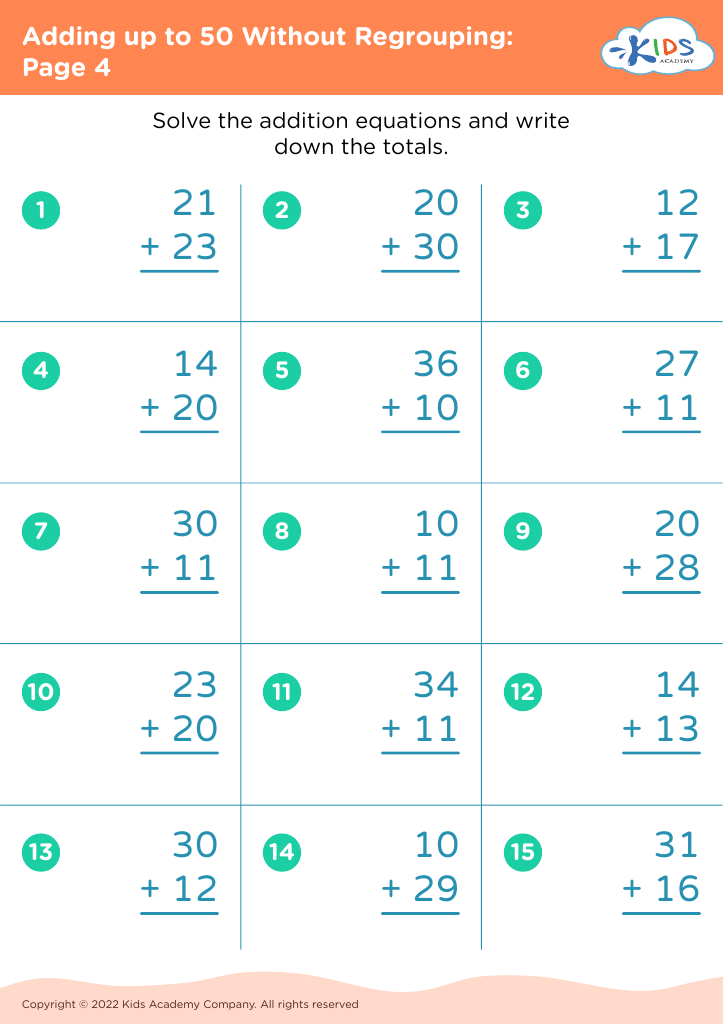
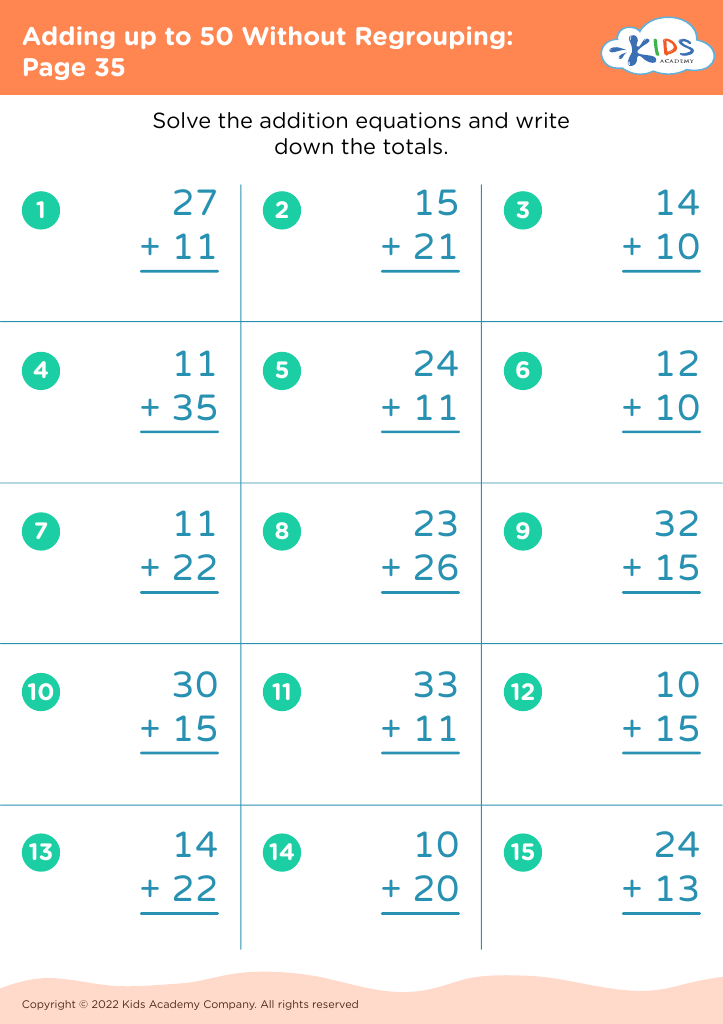
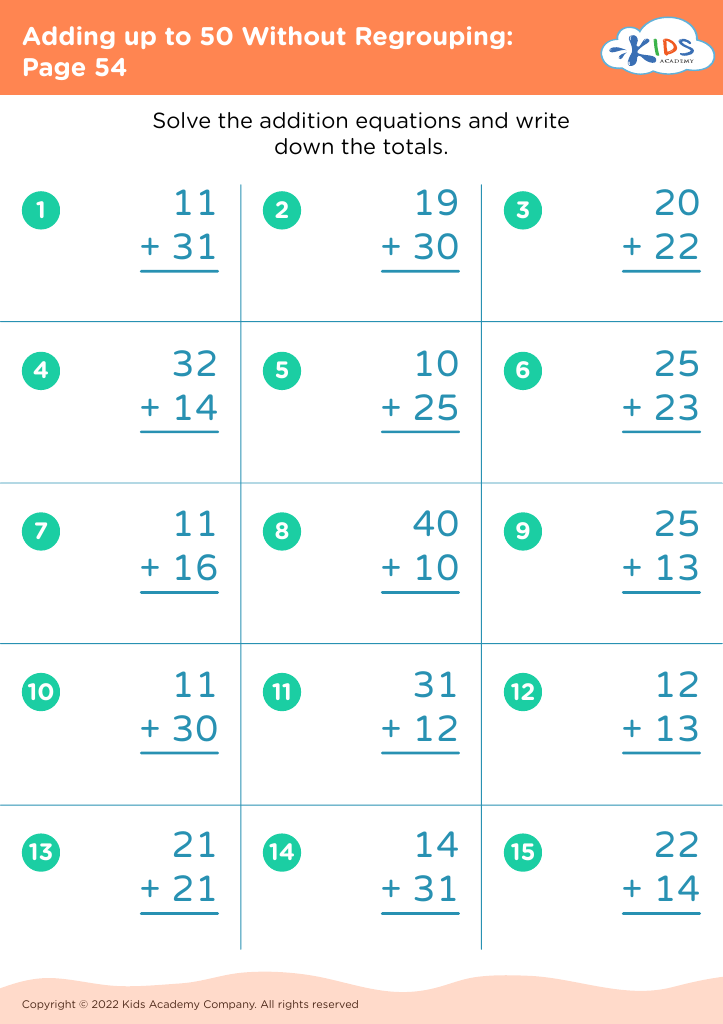
Enhance your child's math skills with our "Number Recognition Adding up to 50 Without Regrouping Worksheets" designed specifically for ages 8-9. These printable worksheets provide engaging exercises that focus on bolstering number recognition and addition skills without the complexity of regrouping. Each sheet is meticulously crafted to build confidence and accuracy in young learners by offering a variety of practice problems up to 50. Perfect for both classroom and home use, these resources ensure consistent, incremental learning to boost math proficiency. Help your child master essential math foundations with our fun and educational worksheets today!
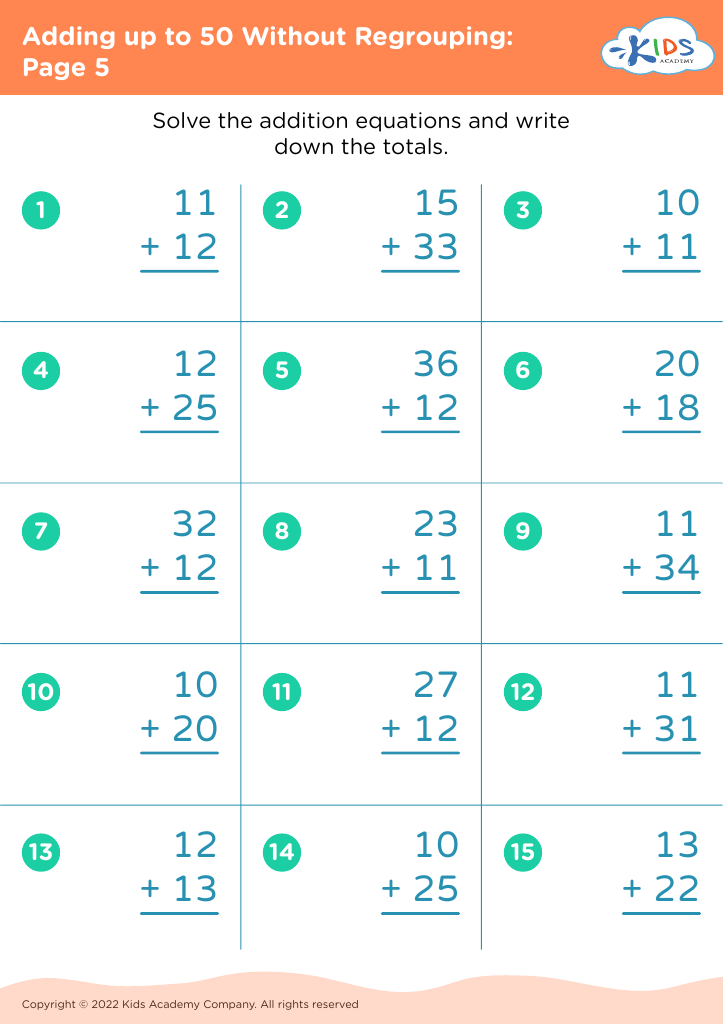
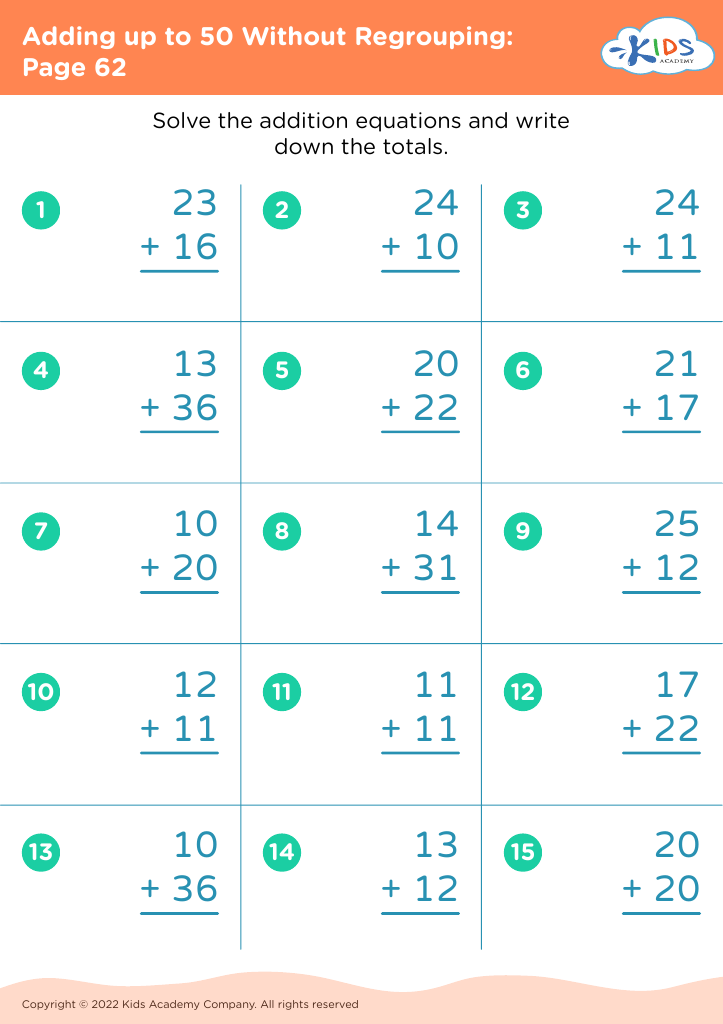
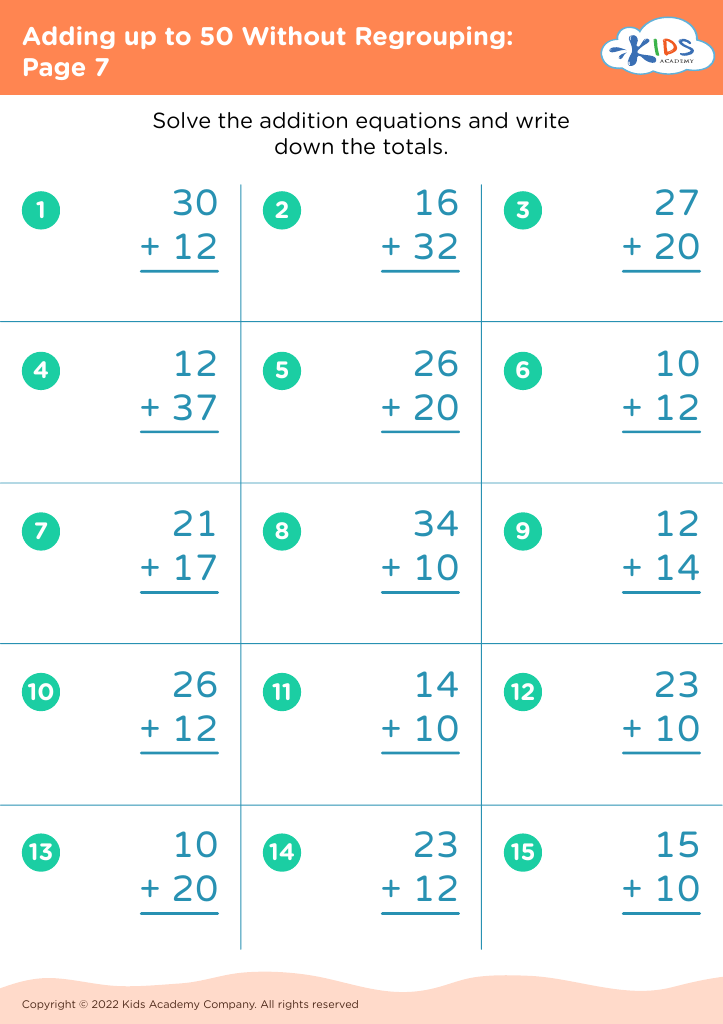
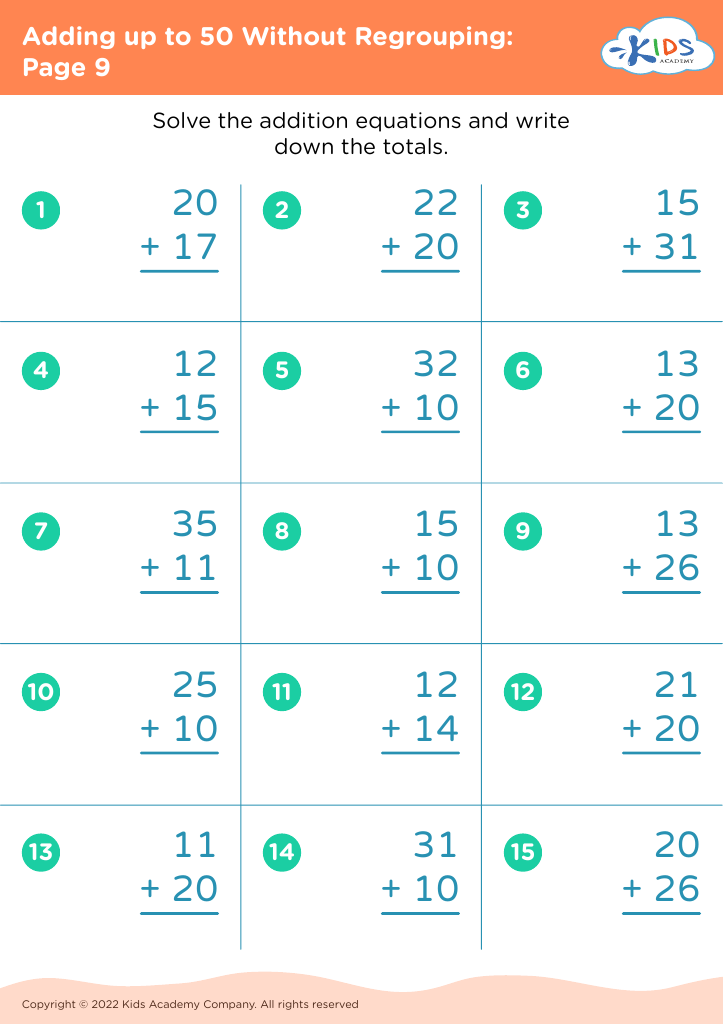
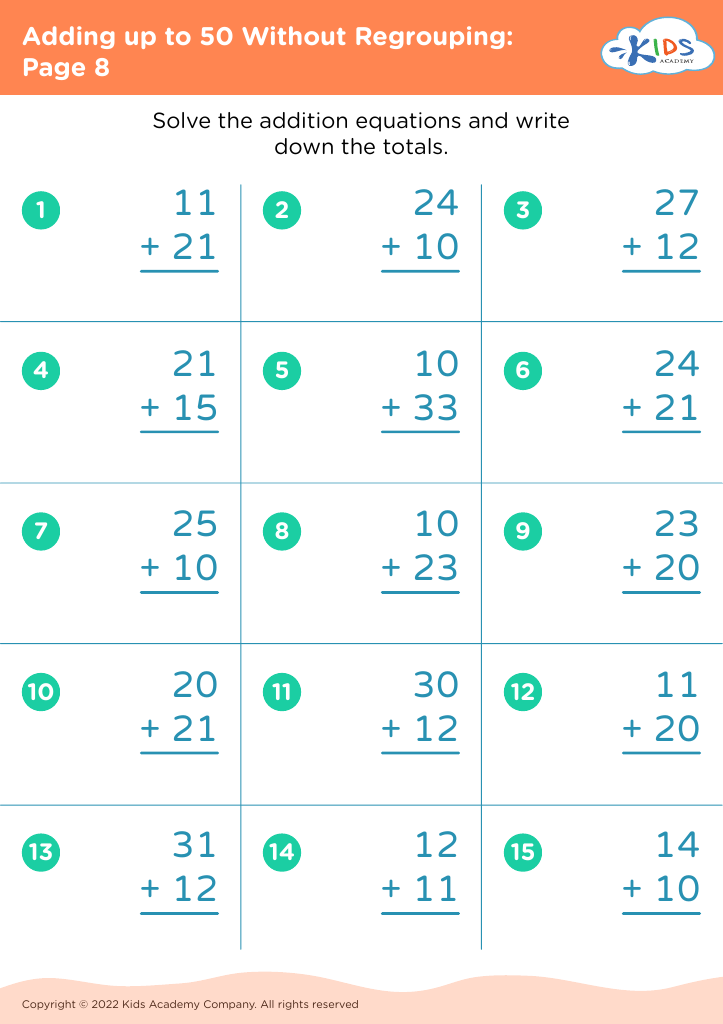
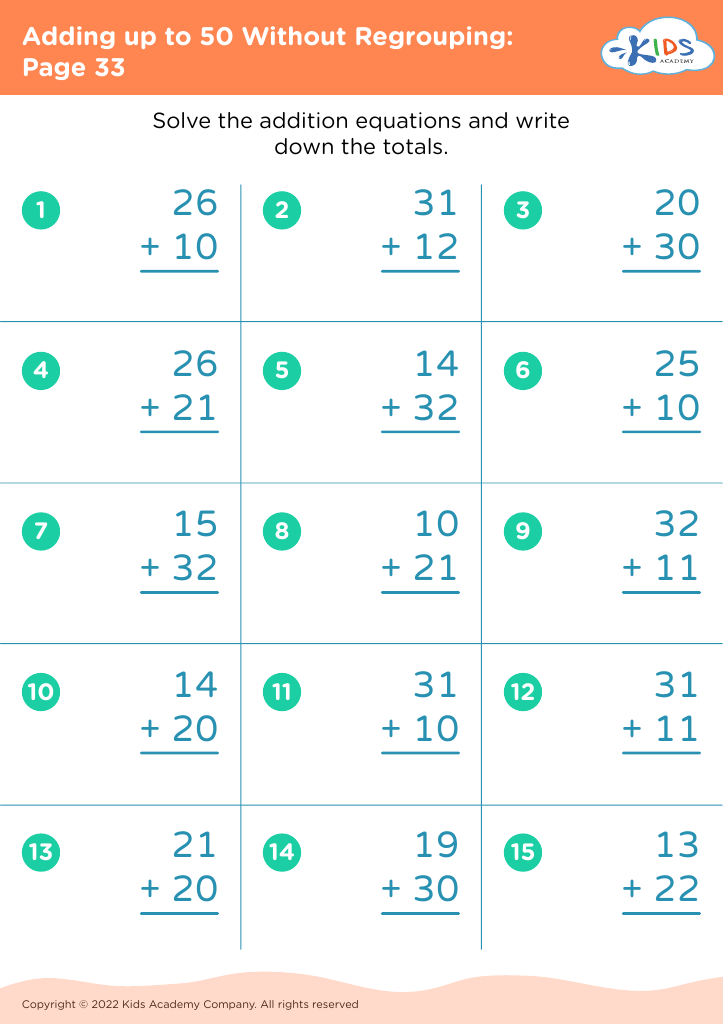
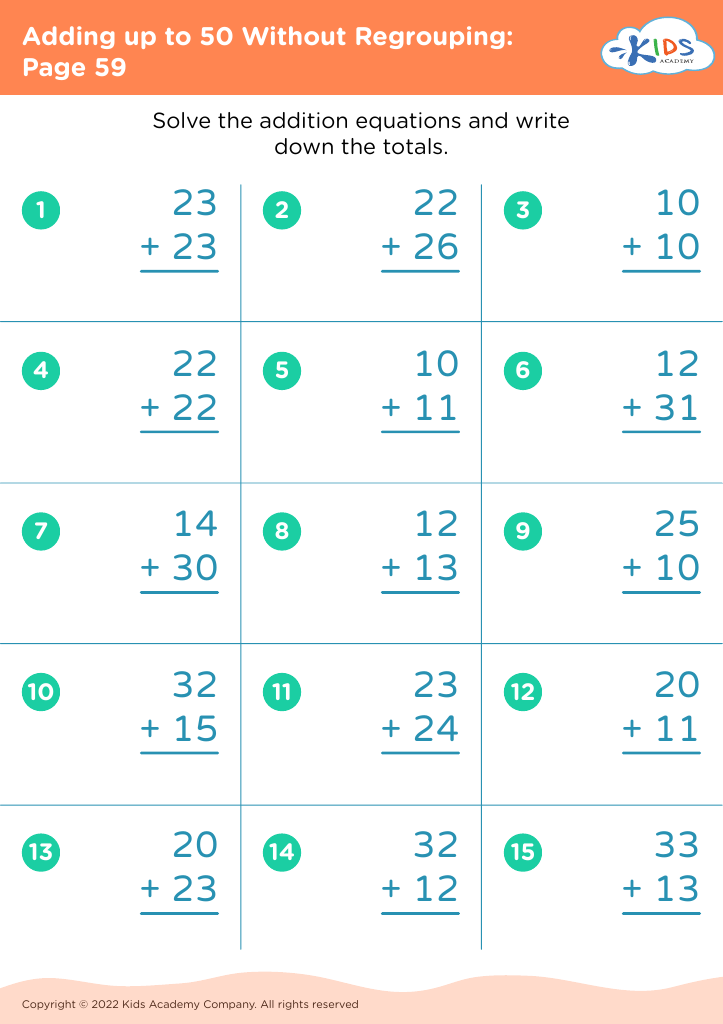
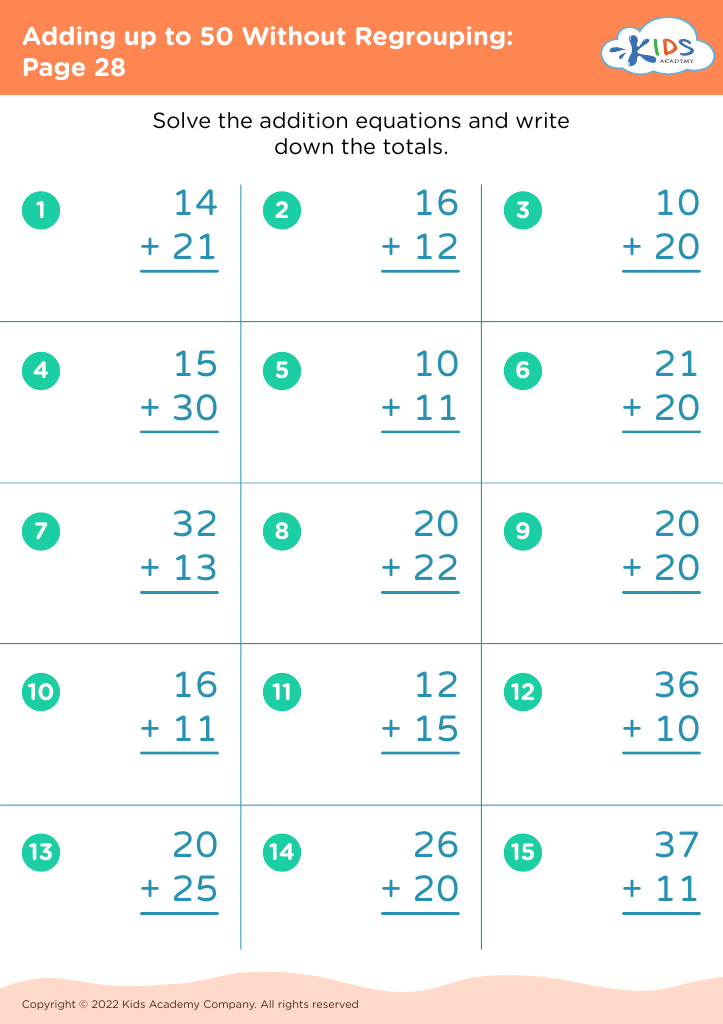
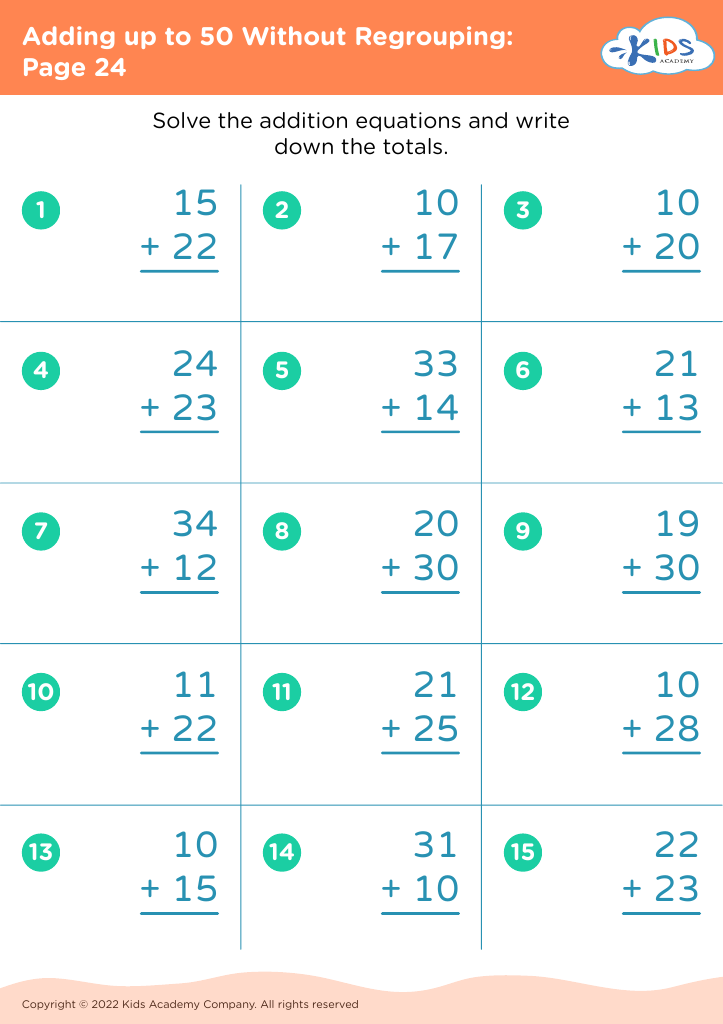
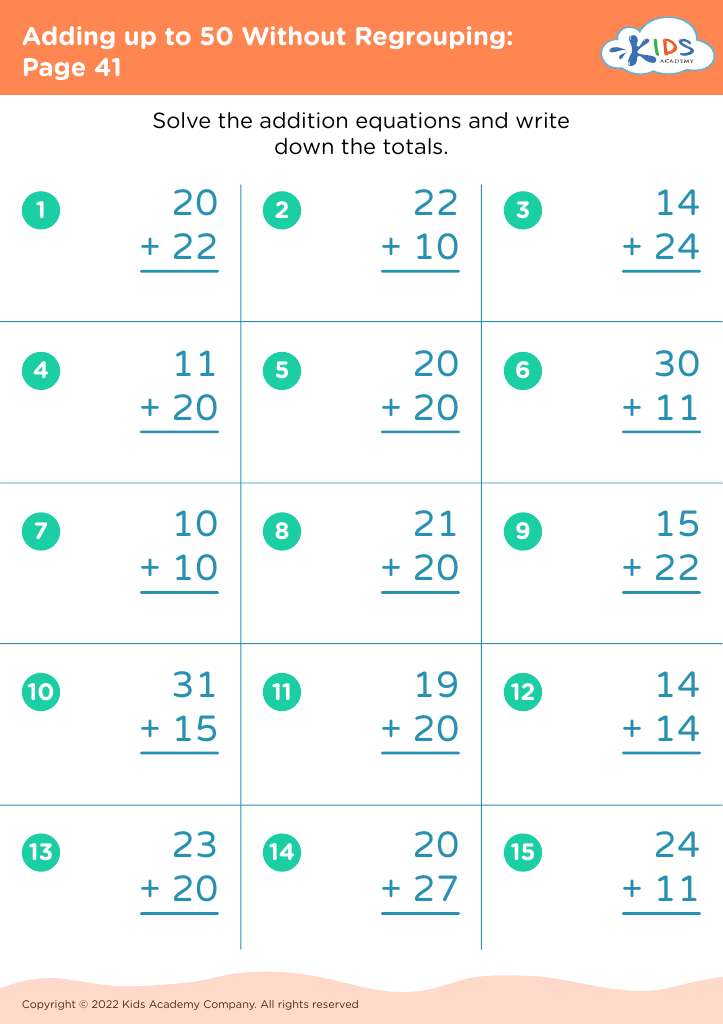
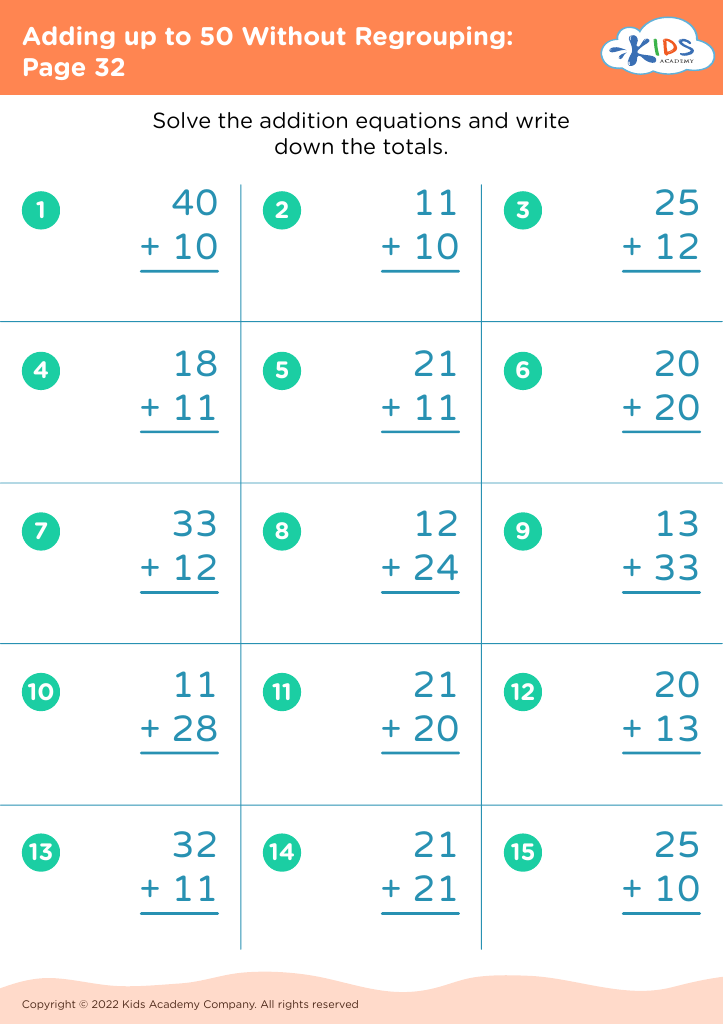
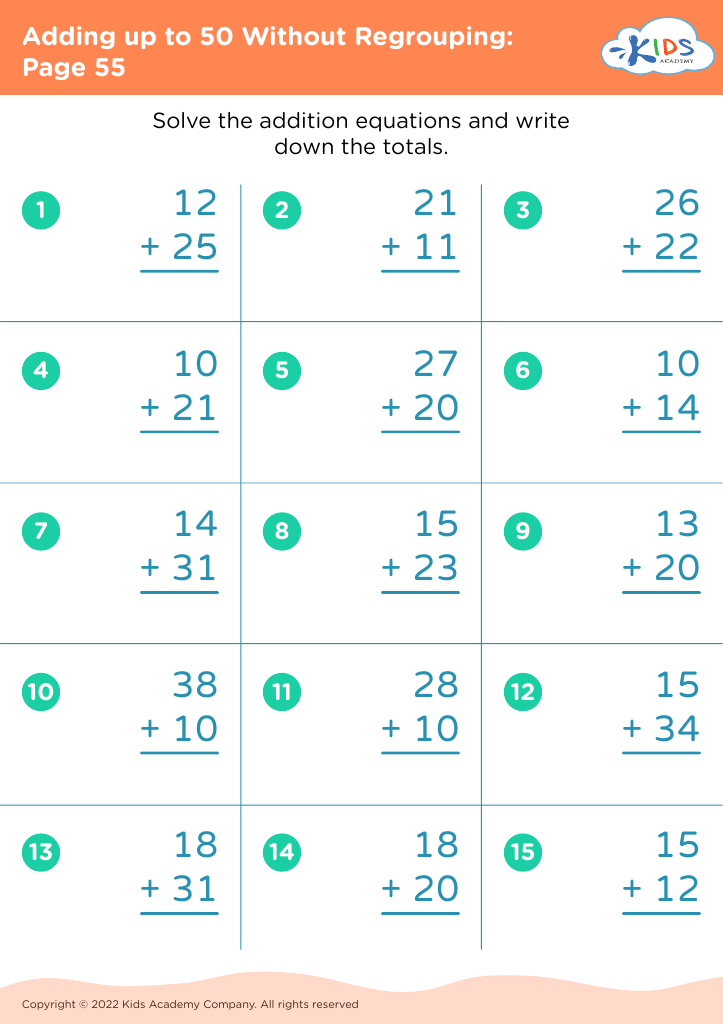


Number recognition and the ability to add numbers up to 50 without regrouping is an essential foundational math skill for children aged 8-9. This age is crucial for building mathematical confidence and understanding, and mastering these skills can significantly impact a child's future academic success. Number recognition supports cognitive development by allowing children to visualize and comprehend numerical values, which is critical for performing addition, an everyday life skill and foundational math concept.
Adding numbers without regrouping helps students understand basic arithmetic, enhances their computational fluency, and prepares them for more complex mathematical operations. When children achieve speed and accuracy in simple additions, they reduce cognitive load, freeing up mental resources to tackle advanced math problems later.
Furthermore, early achievement in these areas fosters a sense of accomplishment and confidence, positively affecting a child's attitude toward math. Understanding the basics like adding up to 50 prepares students to tackle higher-level math problems with ease. Hence, it equips them with essential problem-solving skills and logical reasoning abilities, essential components of overall academic achievement.
In essence, prioritizing number recognition and basic addition for children ages 8-9 lays a robust groundwork for their future mathematical learning, bolsters their confidence, and ensures long-term academic success.