Filters

30 filtered results

Clear all filters
Favorites
With answer key
Interactive

30 filtered results

Difficulty Level

Grade


Discover our engaging "Comparing Fractions Adding Up to 50" worksheets designed for children ages 8-9! These fun and interactive resources empower young learners to develop essential fraction comparison skills. Each worksheet presents unique problems that challenge students to identify and compare fractions that total 50, reinforcing their understanding of both fractions and addition. Perfect for use at home or in the classroom, our worksheets can help improve math fluency while making learning enjoyable. With vibrant illustrations and clear instructions, your child will confidently master comparing fractions in no time. Start your math journey with us today!
Check out this FREE Trial Lesson on Adding up to 50 for age 8-9!

Match Objects that Fit Together

Favorites
With answer key
Interactive
  • 8-9
  • Comparing Fractions
  • Adding up to 50
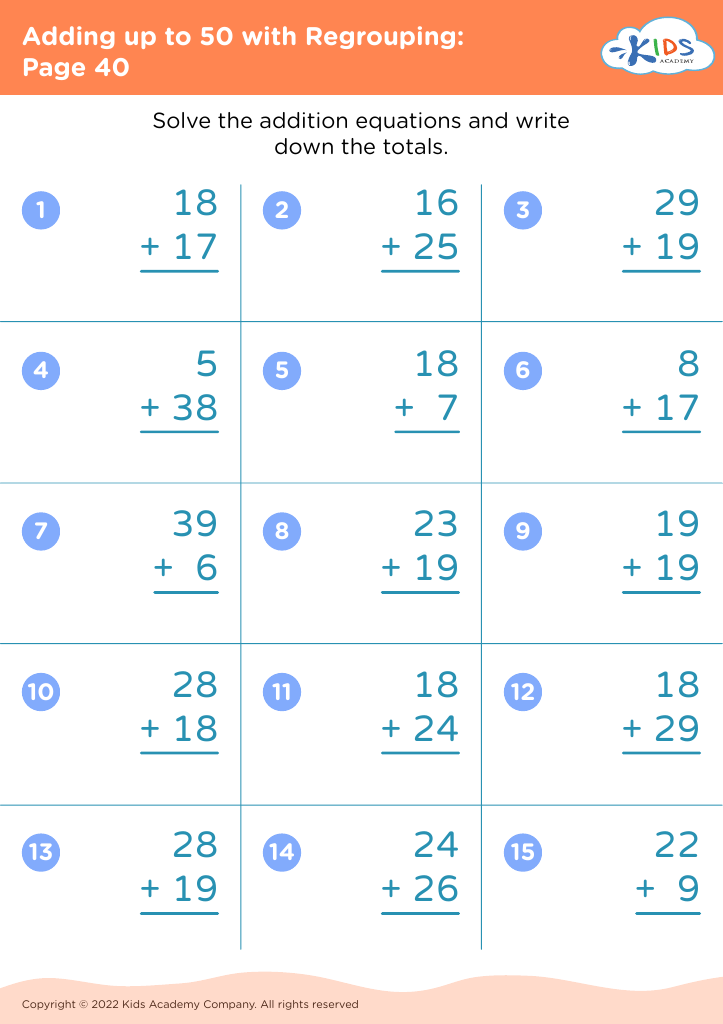
Adding up to 50 with Regrouping: Page 40
Worksheet
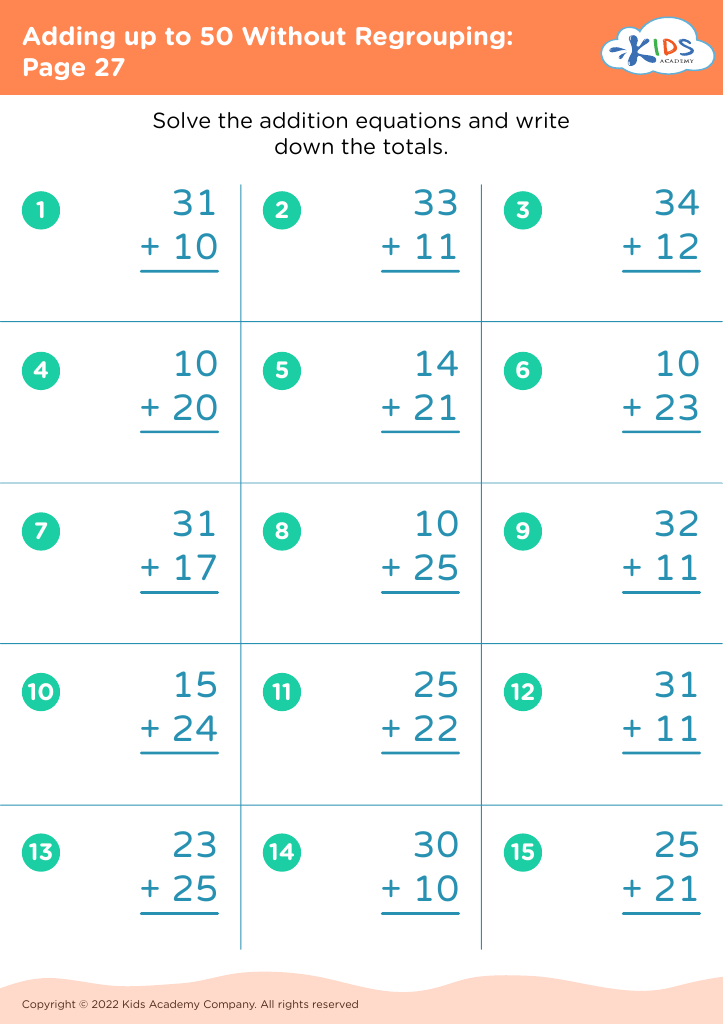
Adding up to 50 Without Regrouping: Page 27
Worksheet
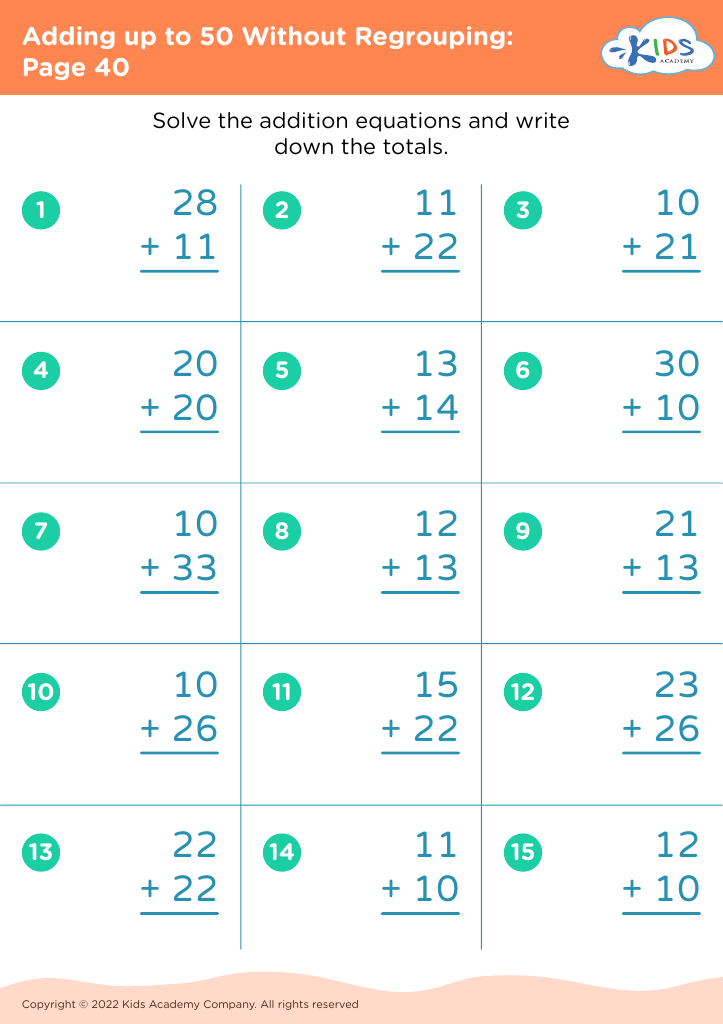
Adding up to 50 Without Regrouping: Page 40
Worksheet
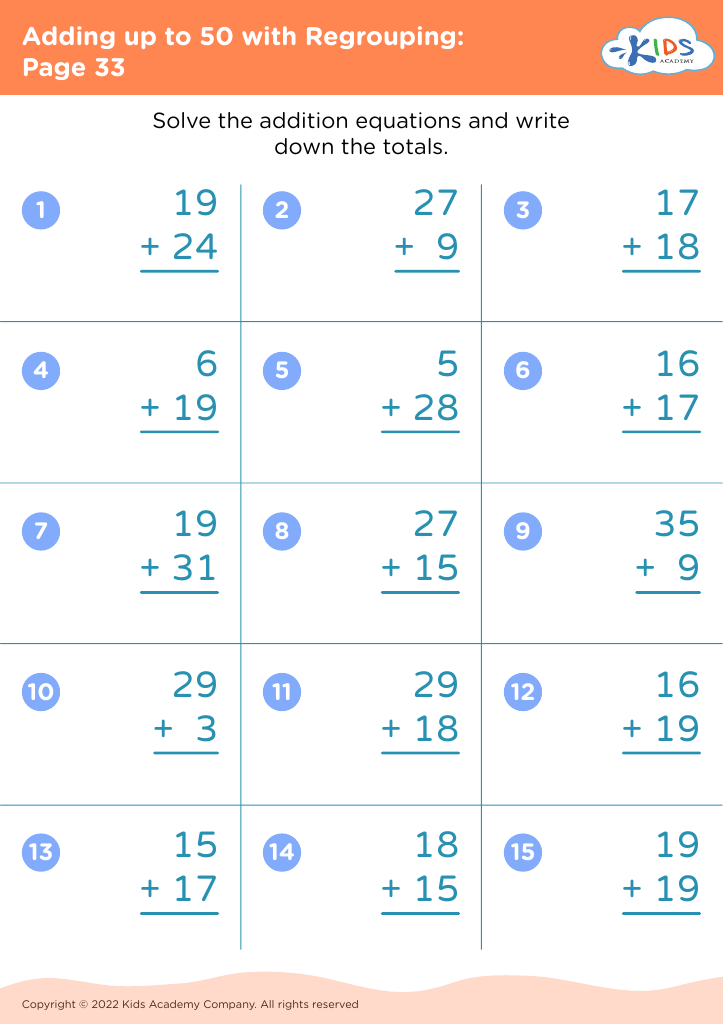
Adding up to 50 with Regrouping: Page 33
Worksheet
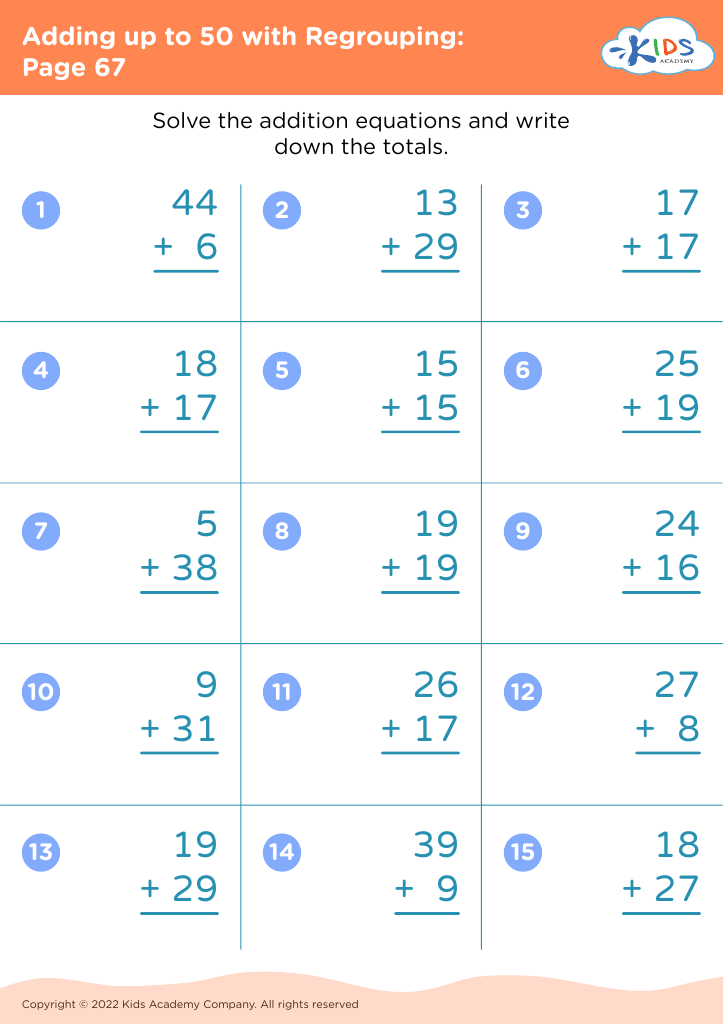
Adding up to 50 with Regrouping: Page 67
Worksheet
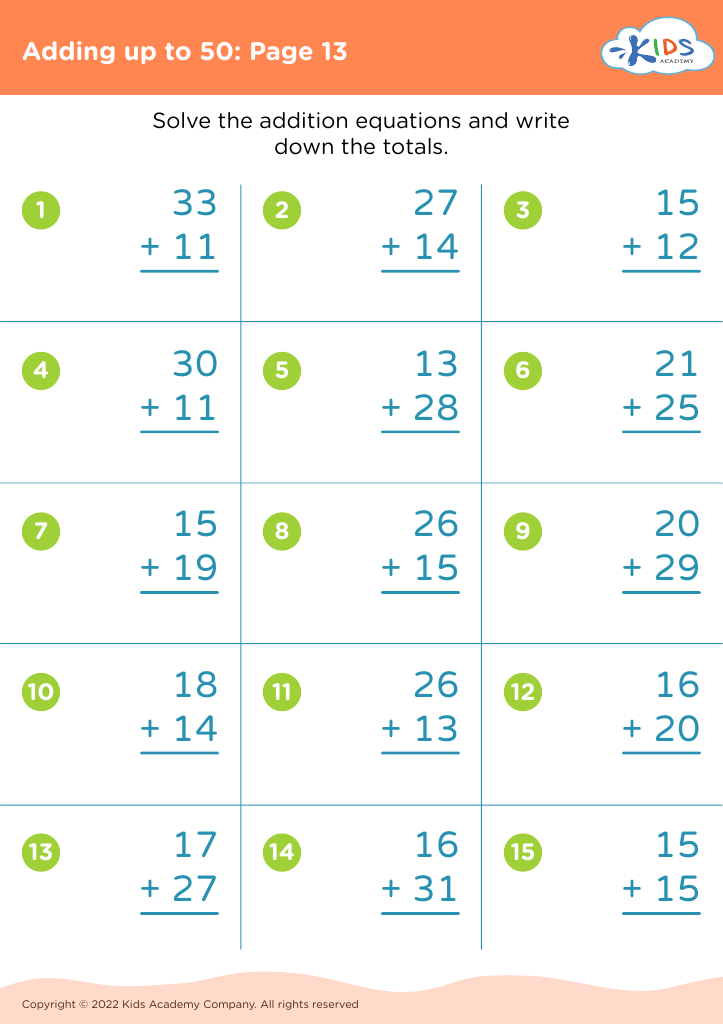
Adding up to 50: Page 13

Adding up to 50: Page 13

Adding up to 50: Page 13
Worksheet
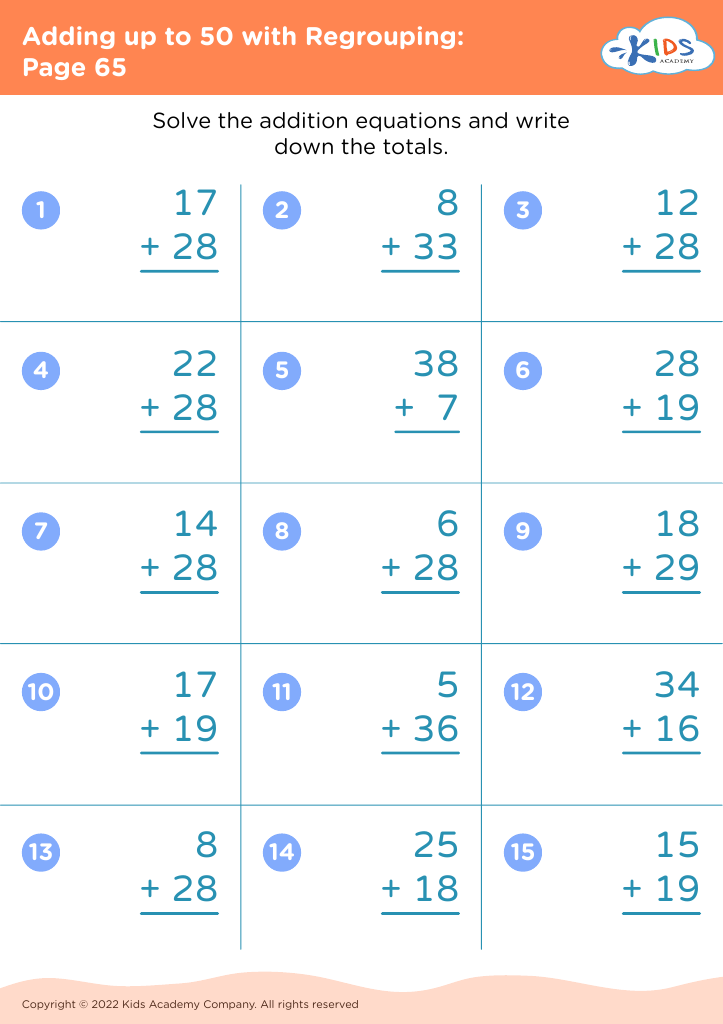
Adding up to 50 with Regrouping: Page 65
Worksheet
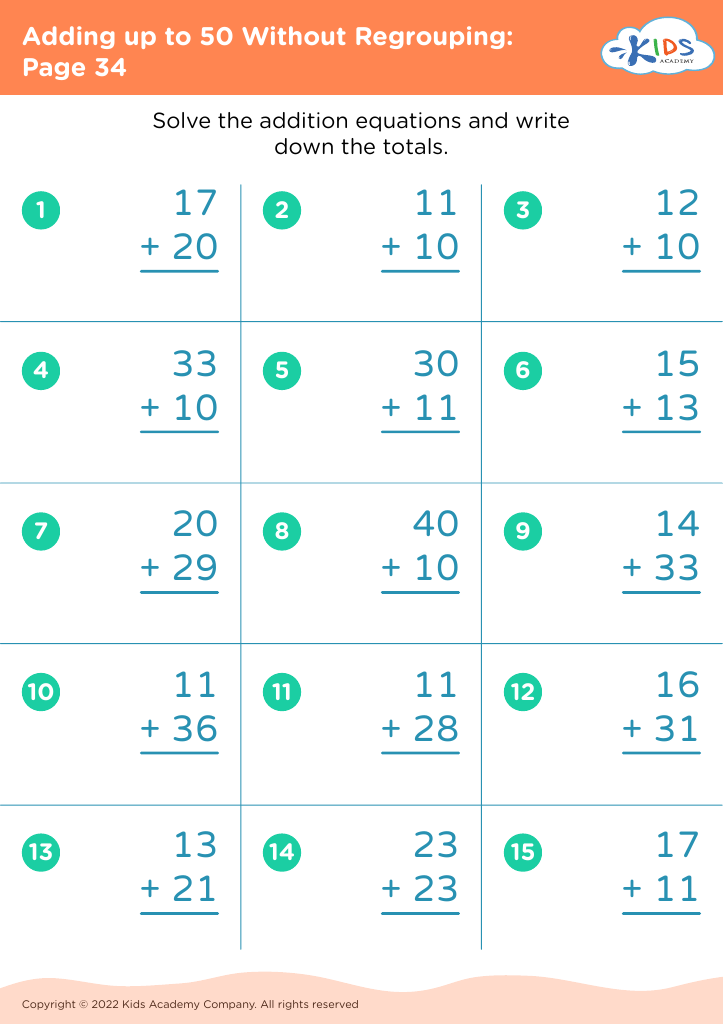
Adding up to 50 Without Regrouping: Page 34
Worksheet
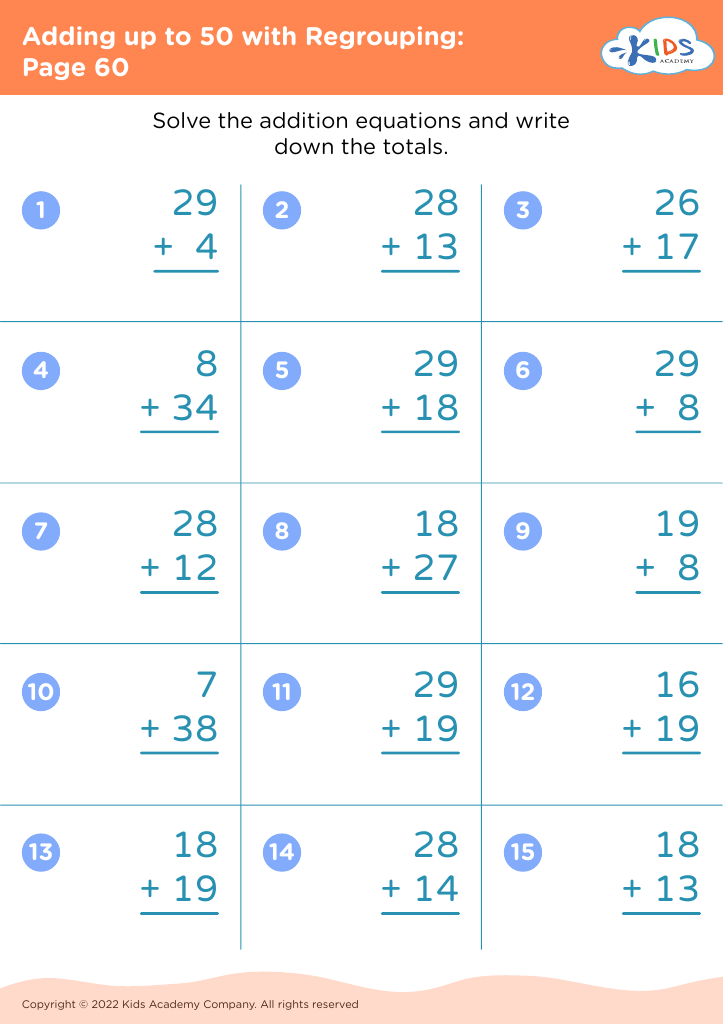
Adding up to 50 with Regrouping: Page 60
Worksheet
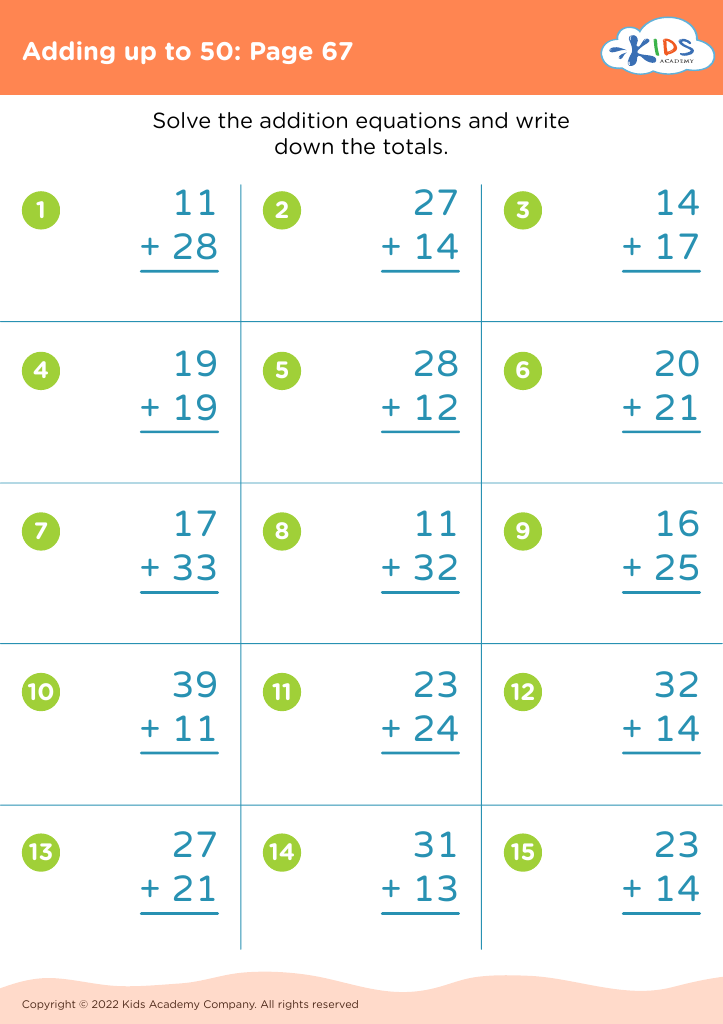
Adding up to 50: Page 67

Adding up to 50: Page 67

Adding up to 50: Page 67
Worksheet
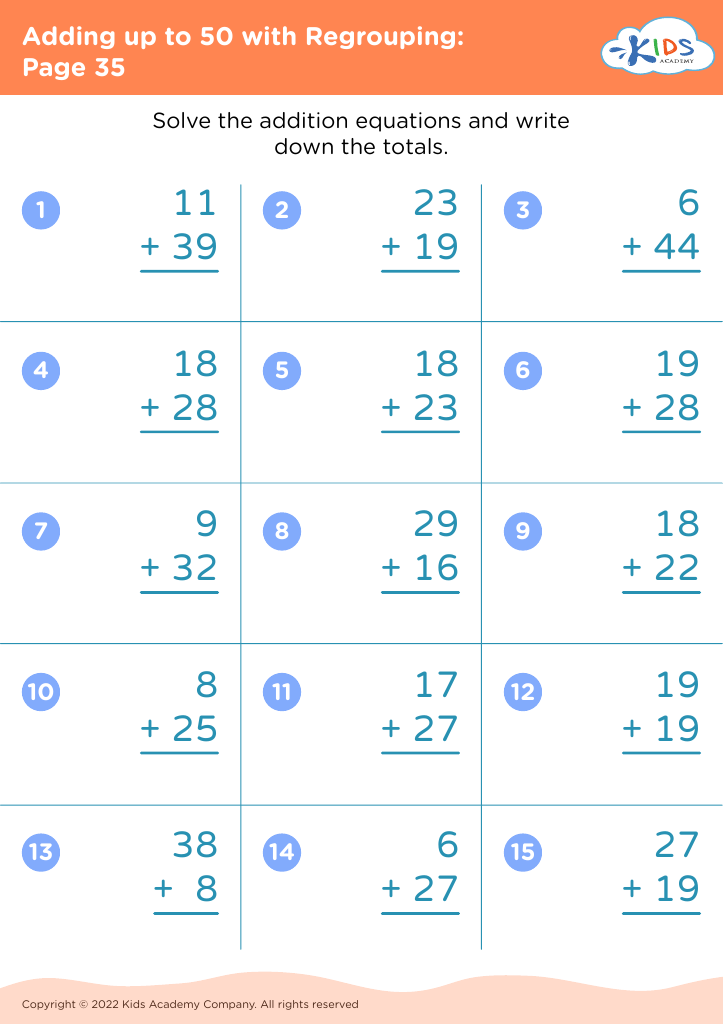
Adding up to 50 with Regrouping: Page 35
Worksheet
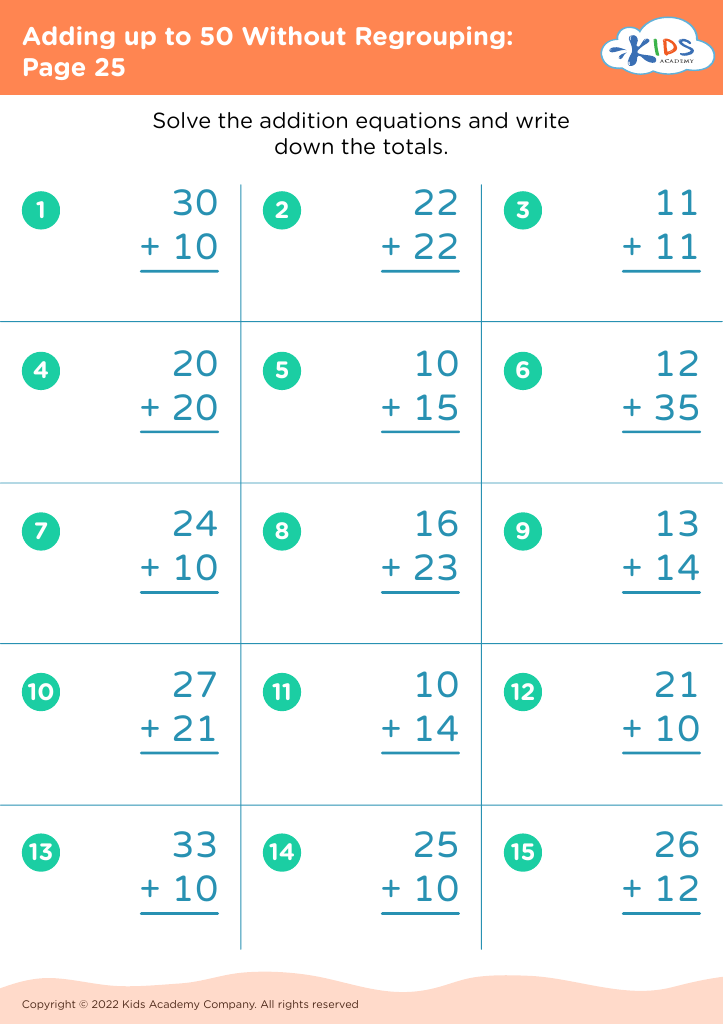
Adding up to 50 Without Regrouping: Page 25
Worksheet
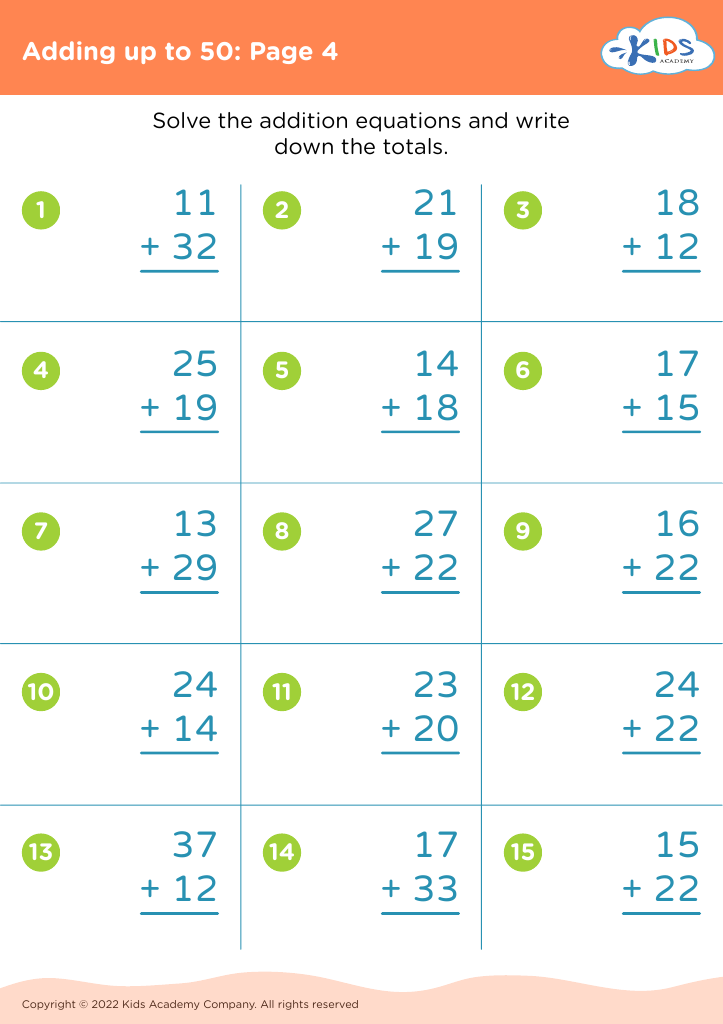
Adding up to 50: Page 4

Adding up to 50: Page 4

Adding up to 50: Page 4
Worksheet
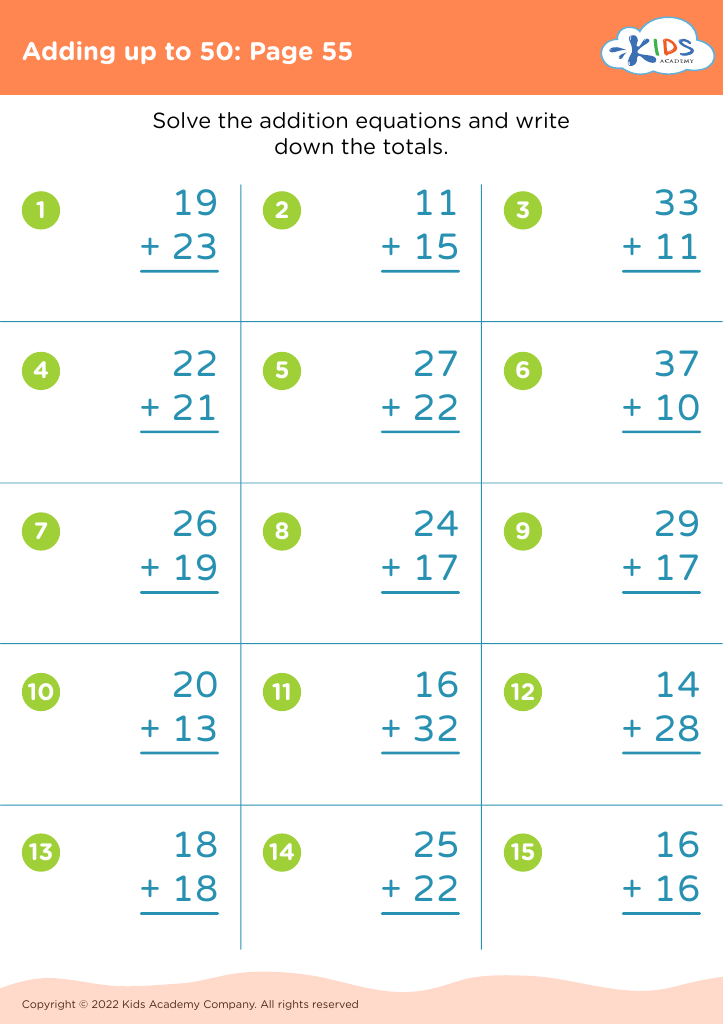
Adding up to 50: Page 55

Adding up to 50: Page 55

Adding up to 50: Page 55
Worksheet
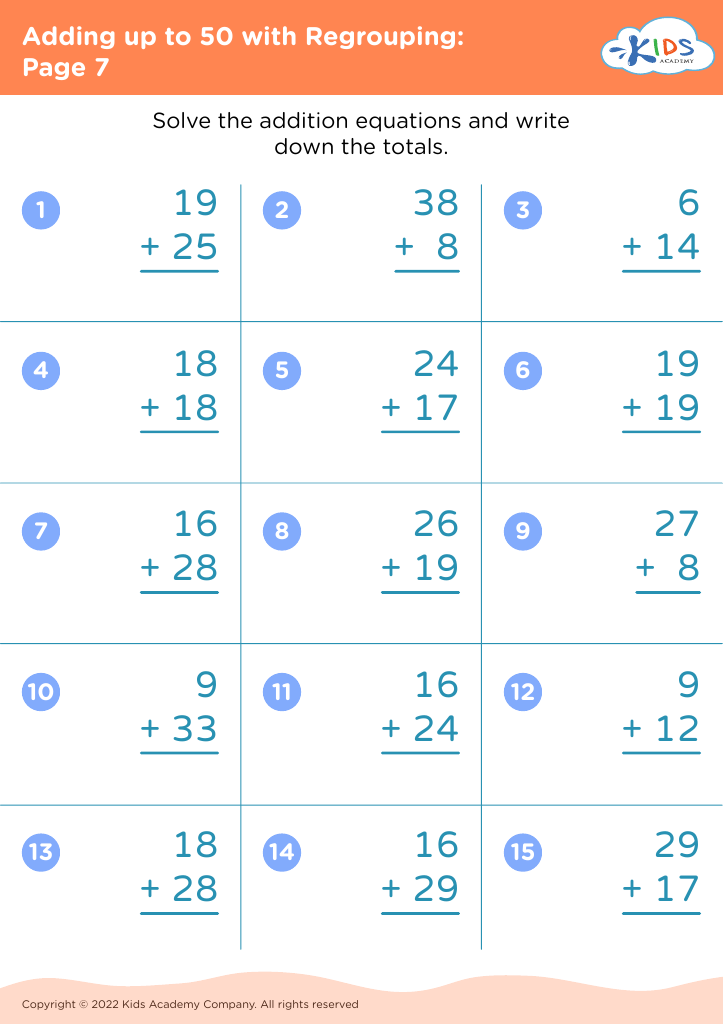
Adding up to 50 with Regrouping: Page 7
Worksheet
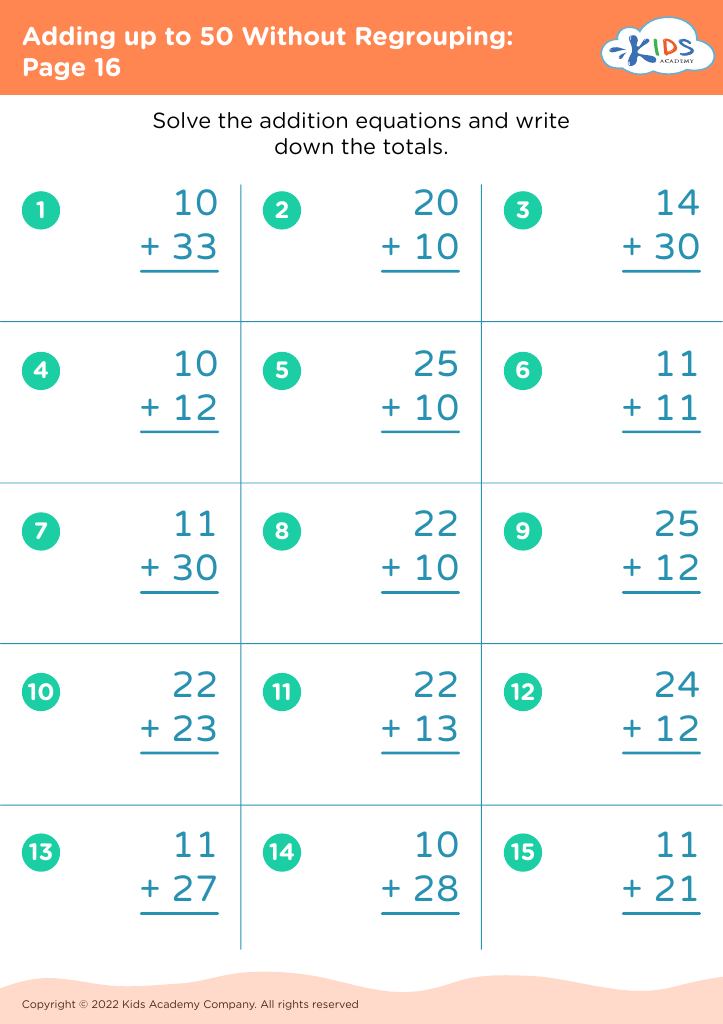
Adding up to 50 Without Regrouping: Page 16
Worksheet
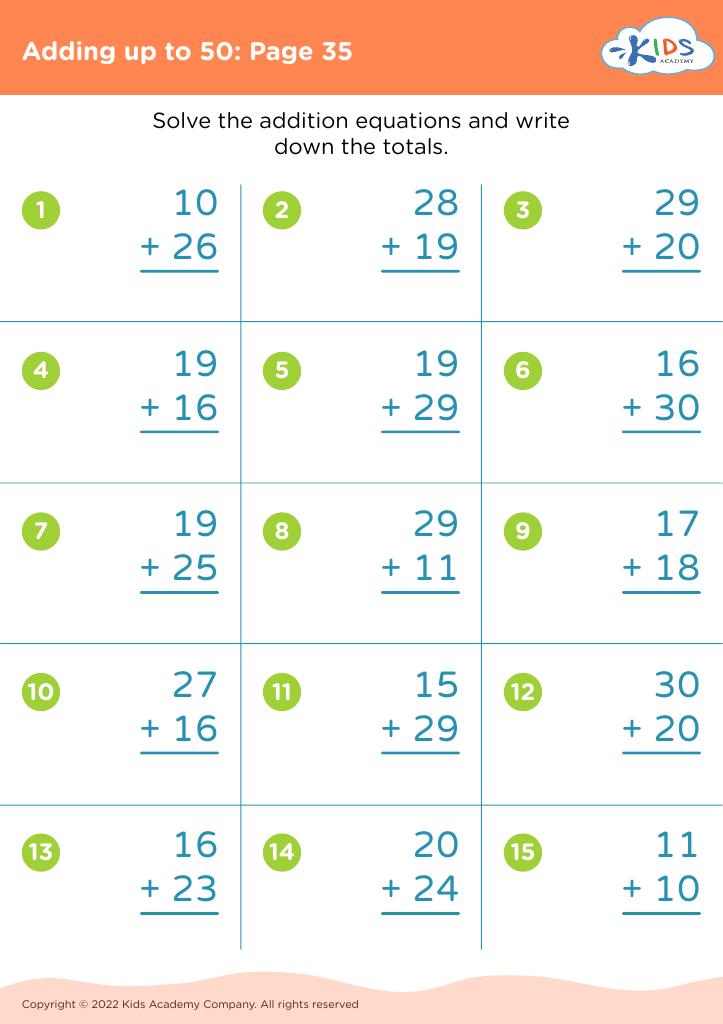
Adding up to 50: Page 35

Adding up to 50: Page 35

Adding up to 50: Page 35
Worksheet
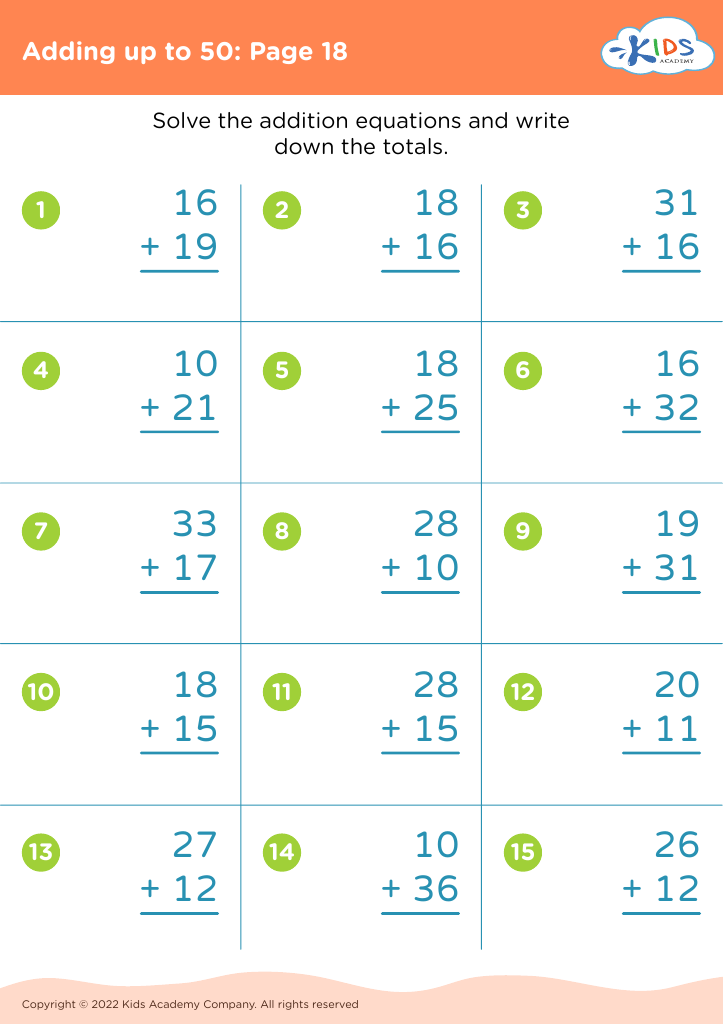
Adding up to 50: Page 18

Adding up to 50: Page 18

Adding up to 50: Page 18
Worksheet
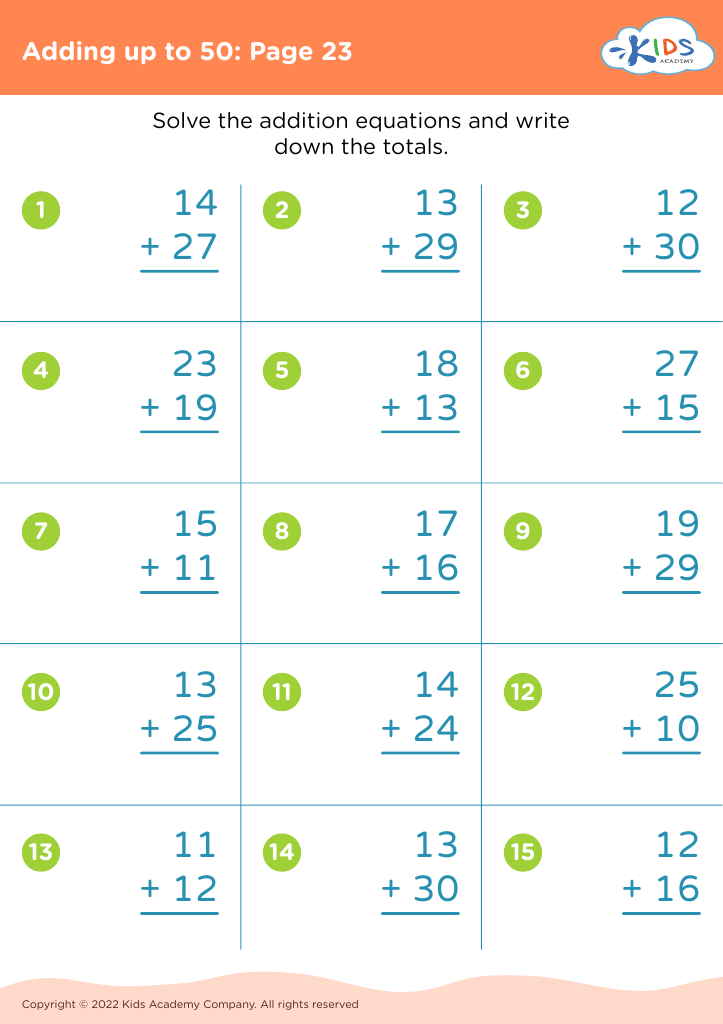
Adding up to 50: Page 23

Adding up to 50: Page 23

Adding up to 50: Page 23
Worksheet
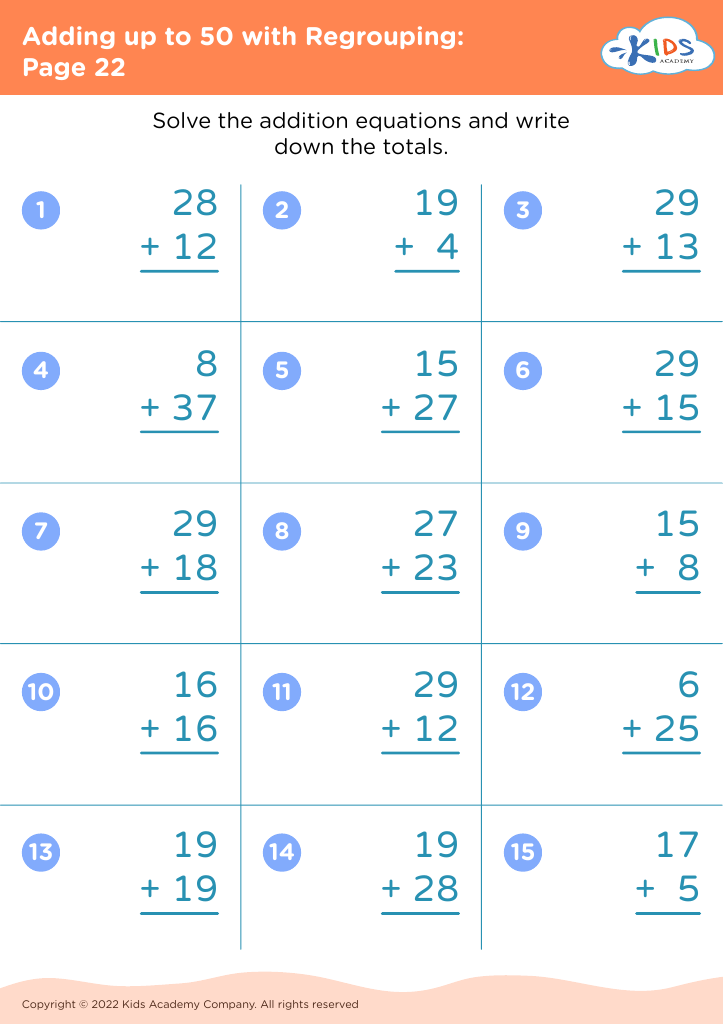
Adding up to 50 with Regrouping: Page 22
Worksheet
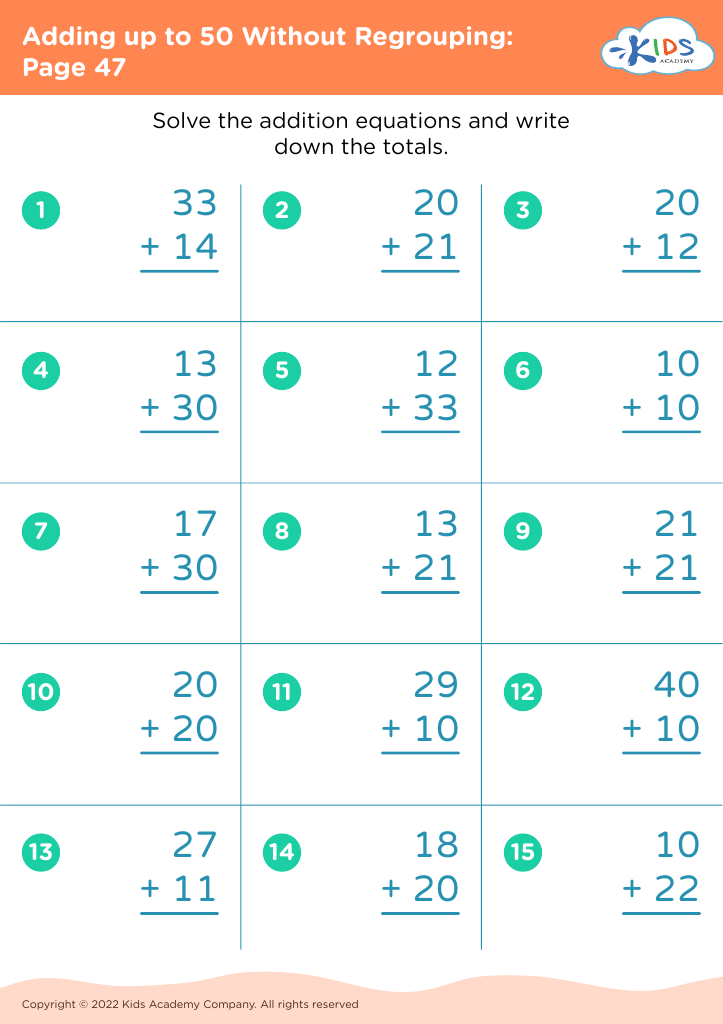
Adding up to 50 Without Regrouping: Page 47
Worksheet
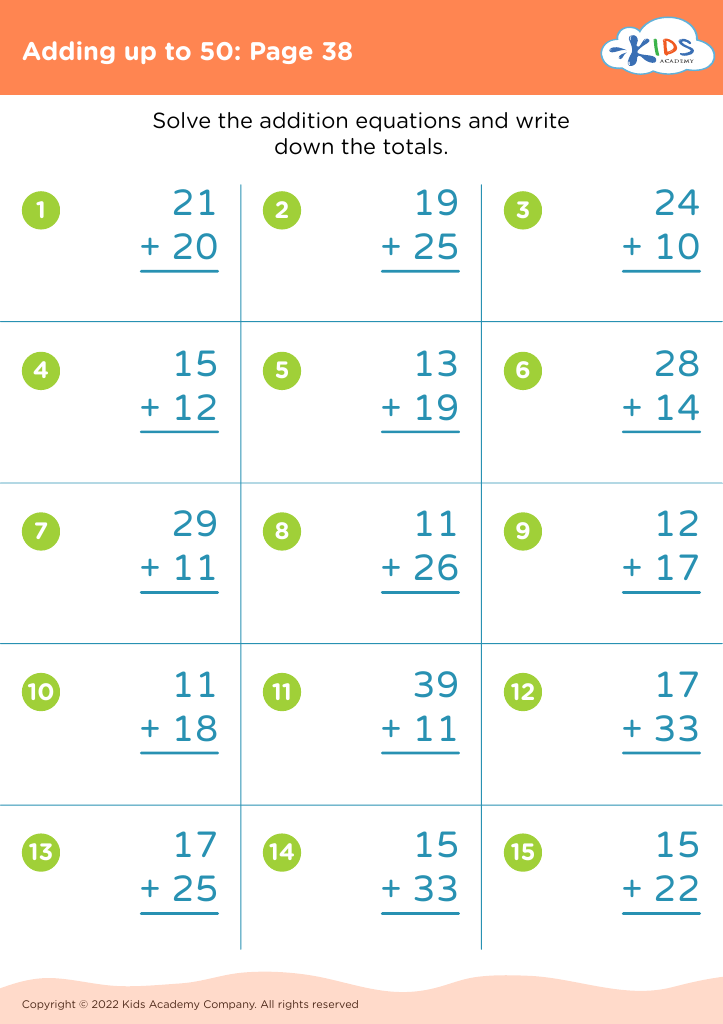
Adding up to 50: Page 38

Adding up to 50: Page 38

Adding up to 50: Page 38
Worksheet
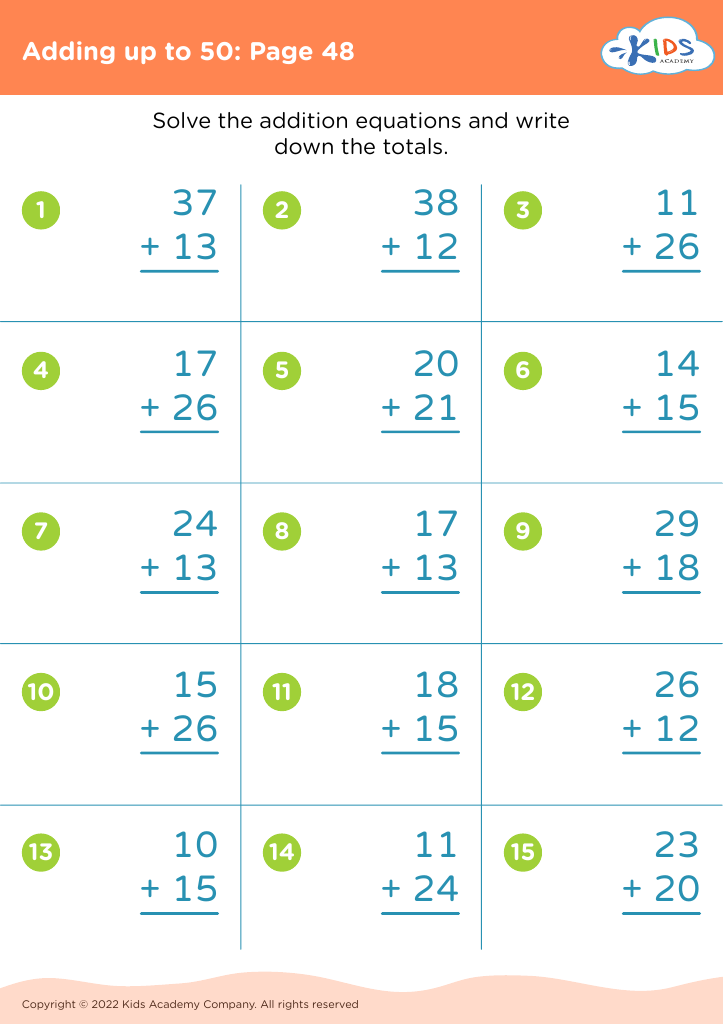
Adding up to 50: Page 48

Adding up to 50: Page 48

Adding up to 50: Page 48
Worksheet
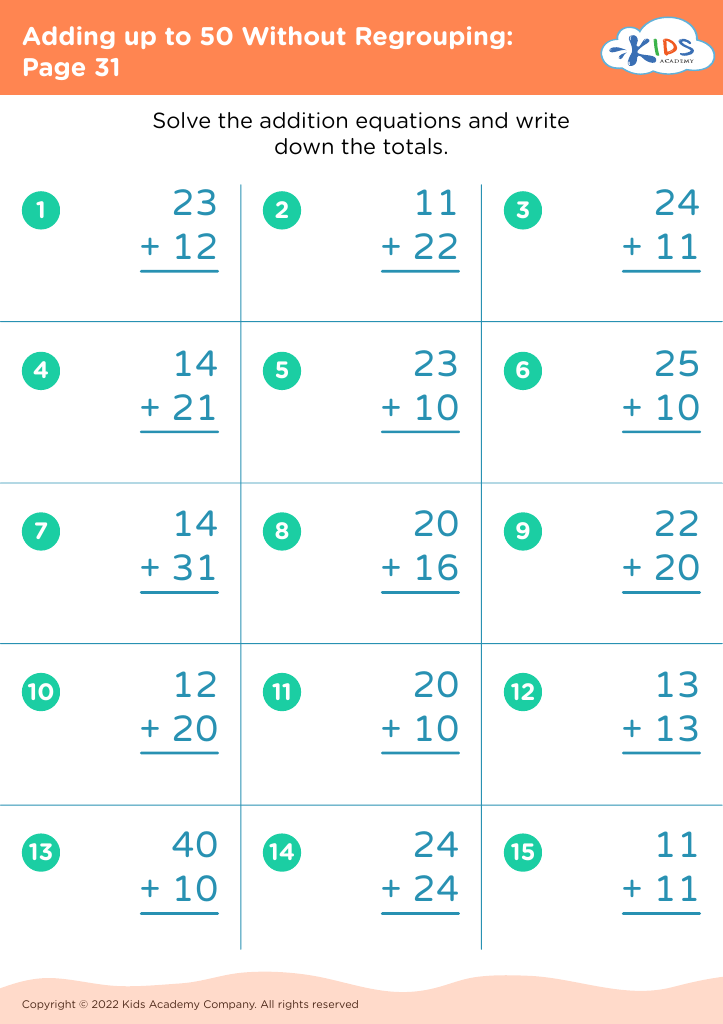
Adding up to 50 Without Regrouping: Page 31
Worksheet


Comparing fractions, particularly when the sum is 50, is crucial for 8-9-year-olds as it lays the foundation for strong mathematical understanding. At this stage, children are developing their ability to comprehend numerical relationships, which is an essential skill in problem-solving. Understanding how to compare fractions enhances their ability to make sense of concepts like 'greater than' or 'less than,' which are foundational for future mathematics, including algebra and data analysis.

For parents and teachers, facilitating the mastery of comparing fractions can also stir interest and engagement in mathematics. It encourages children to visualize fractions, assess values accurately, and develop strategies for establishing relationships between numbers. This skill not only builds confidence but also fosters critical thinking and decision-making skills.

Furthermore, real-world applications arise from this knowledge, such as cooking measurements or managing expenses, making fractions relatable and practical. Equals fractions maturity bolster their overall academic success and set the stage for higher-level math concepts in the later grades. Therefore, investing time in comparing fractions equips students with essential skills that transcend the classroom, ultimately shaping their overall cognitive development and future career possibilities.