Improve reading skills Adding up to 50 Worksheets for Ages 8-9
7 filtered results
-
From - To
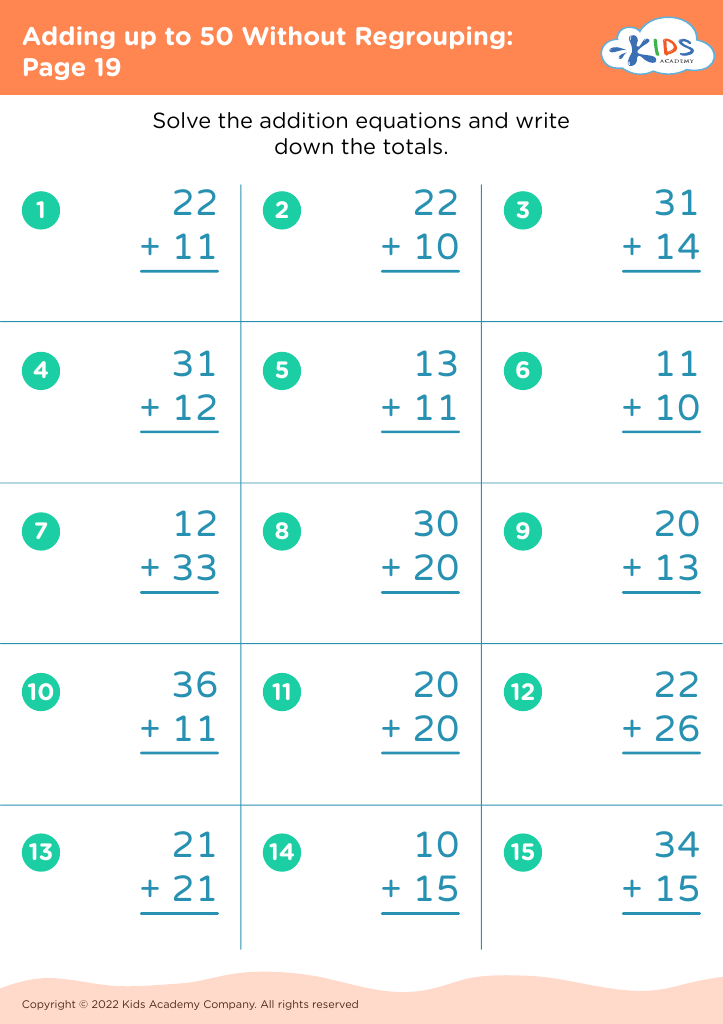
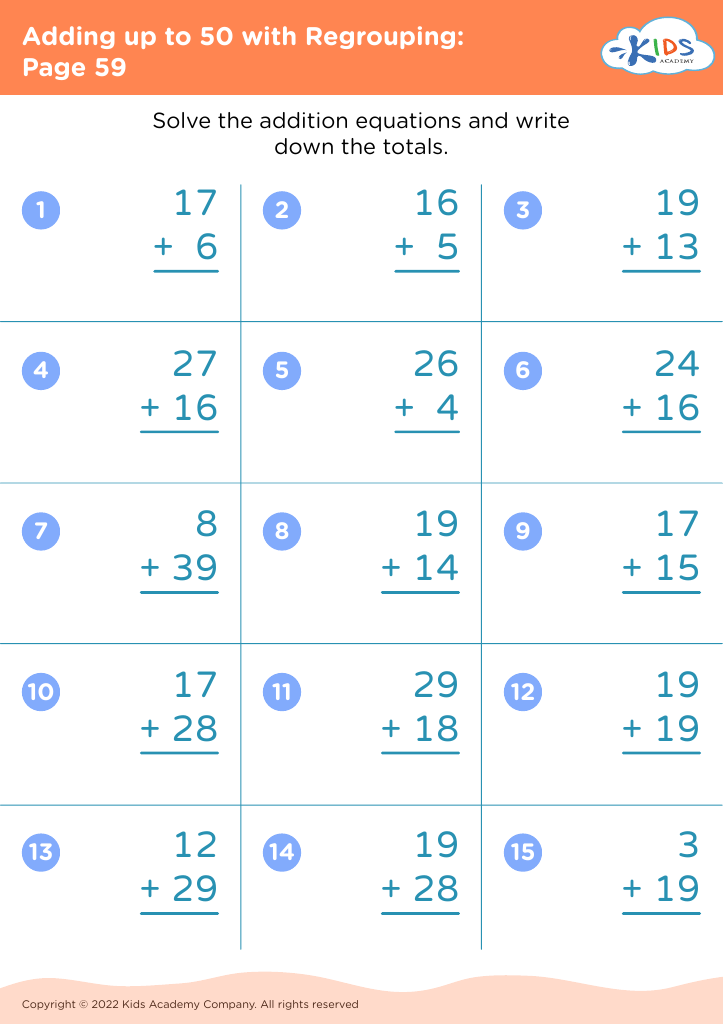
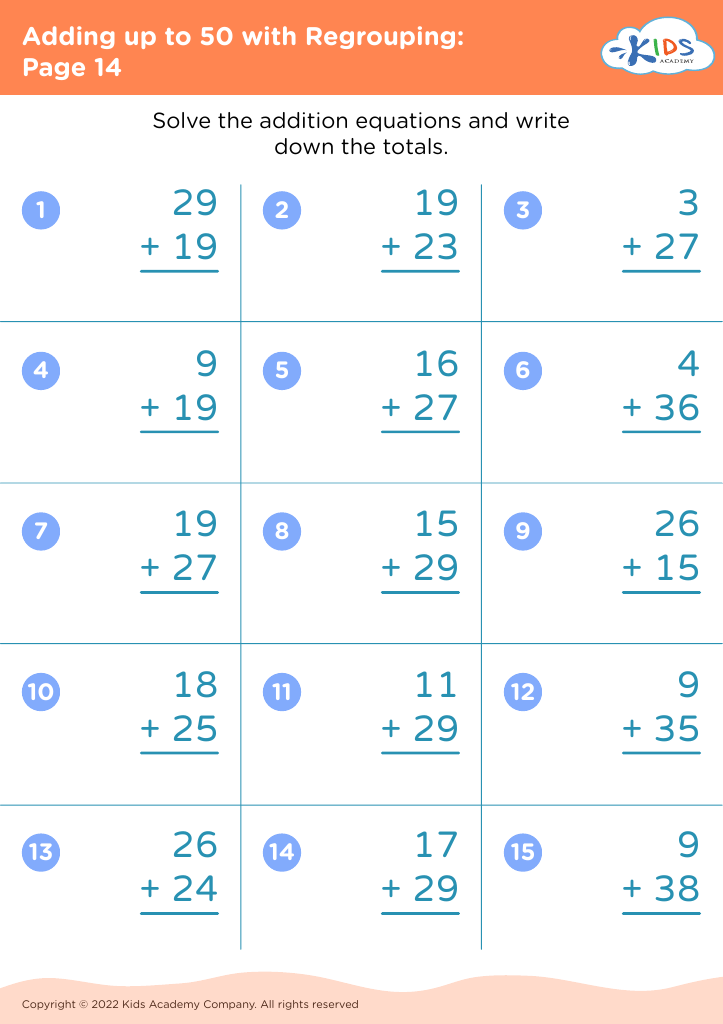
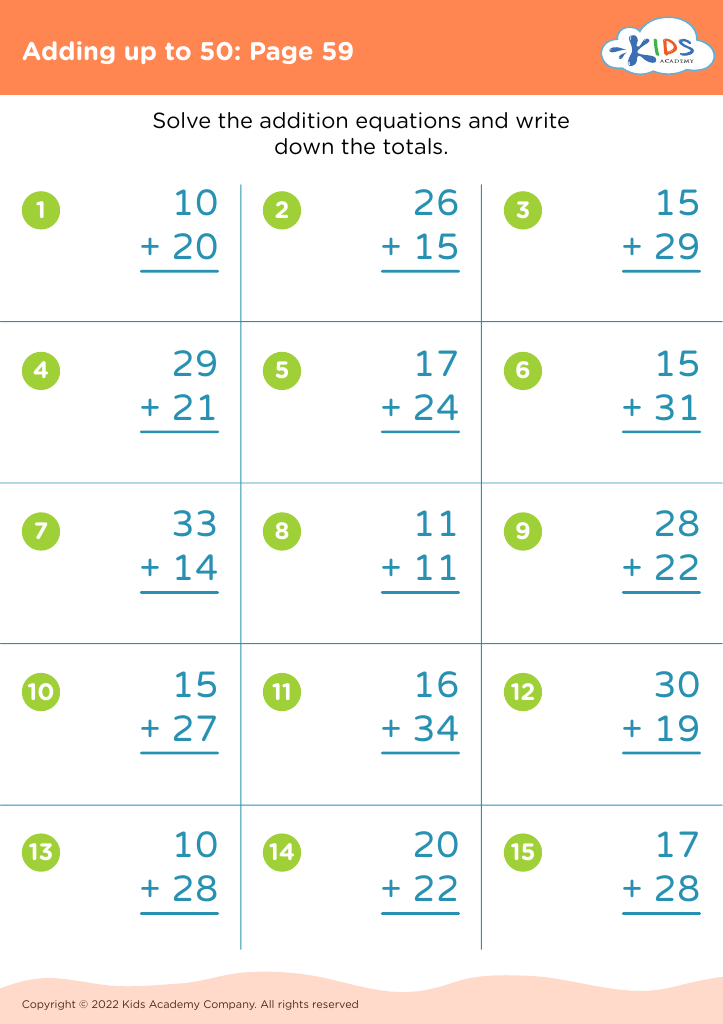
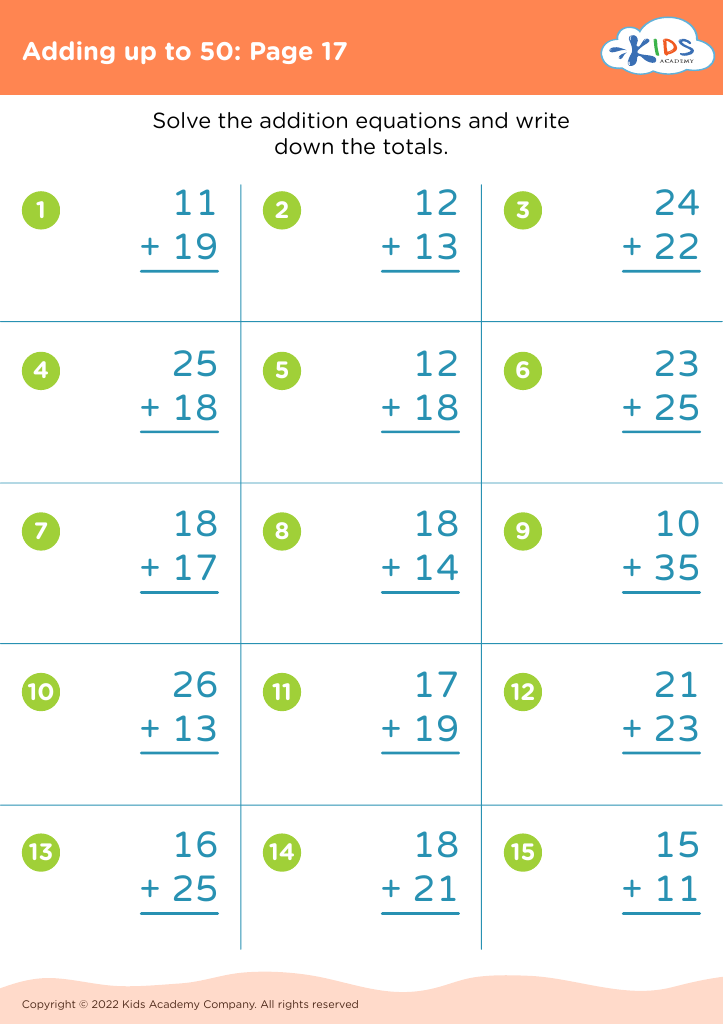
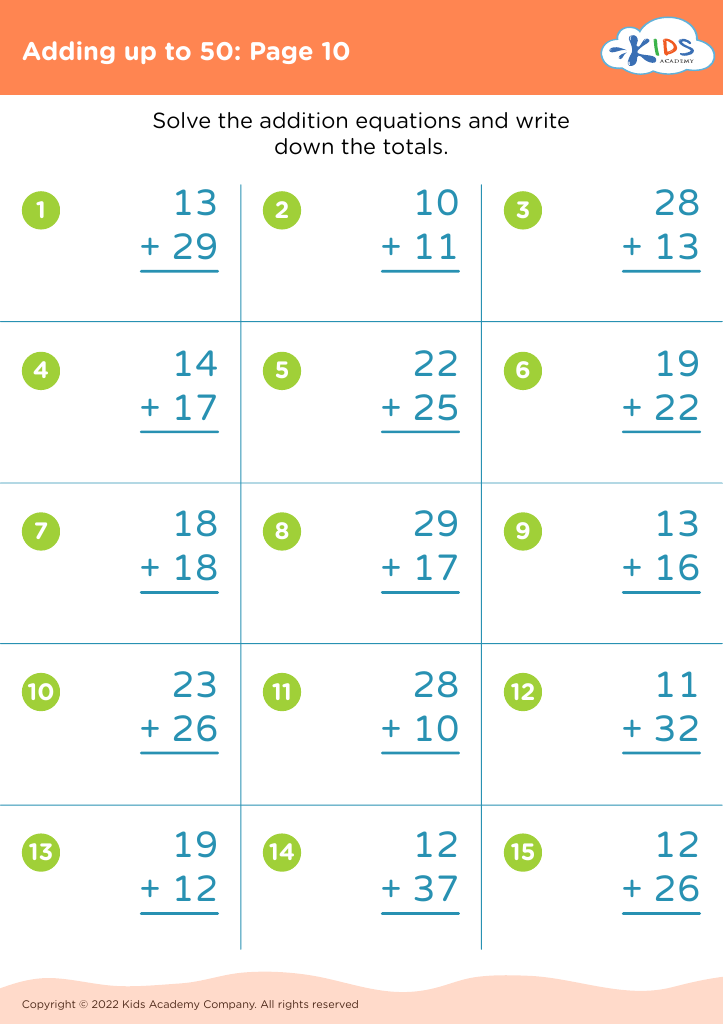
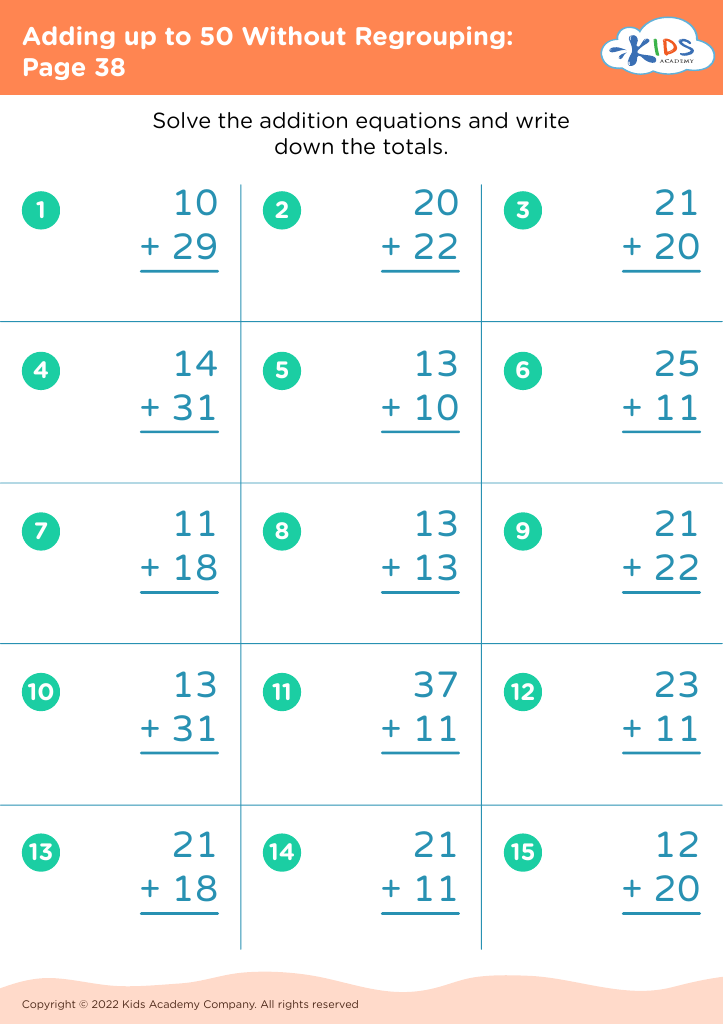
Welcome to our Improve Reading Skills resource for ages 8-9! Our collection features 50 engaging worksheets designed to enhance reading abilities while focusing on math concepts like adding up to 50. Each worksheet integrates fun and interactive activities that encourage critical thinking and comprehension. These resources are perfect for teachers and parents looking to support literacy development in conjunction with foundational math skills. Help your child become a confident reader and problem solver with our carefully crafted worksheets. Discover ways to make learning enjoyable and effective—dive into the world of reading in math today!




Parents and teachers should prioritize improving reading skills in children aged 8-9 for several reasons. At this critical stage in development, children transition from learning to read to reading to learn. Proficient reading skills are foundational for academic success; they enhance comprehension across subjects, fostering a love for learning and curiosity about the world. Children who read well tend to perform better in other areas, such as math and science, making it essential for holistic development.
Moreover, strong reading abilities boost self-esteem and confidence. Children who struggle with reading may experience frustration and a lack of motivation, potentially leading to disengagement from school. Conversely, those who excel in reading are more likely to participate actively in classroom discussions and activities.
Additionally, reading fosters essential cognitive skills, including critical thinking, imagination, and empathy. It opens the door to an array of literature, helping children understand diverse perspectives and cultures. Lastly, engaging in reading activities with parents or teachers strengthens relationships and creates shared experiences, further encouraging children’s enthusiasm for learning. In summary, prioritizing reading skills is vital for academic achievement, personal growth, and nurturing a lifelong love of learning.








