Recognizing Patterns Adding up to 50 Worksheets for Ages 8-9
7 filtered results
-
From - To
Boost your child's math skills with our "Recognizing Patterns Adding Up to 50 Worksheets" designed specifically for ages 8-9! These engaging worksheets help students identify and analyze numerical patterns while practicing their addition skills. Understanding patterns is crucial for developing number sense and problem-solving abilities. Our worksheets feature various exercises that challenge young learners to recognize sequences and relationships in numbers, fostering critical thinking in a fun and interactive way. Each worksheet is tailored to maintain interest and encourage independent learning, ensuring your child gains confidence as they master adding numbers up to 50. Perfect for classroom or home use!
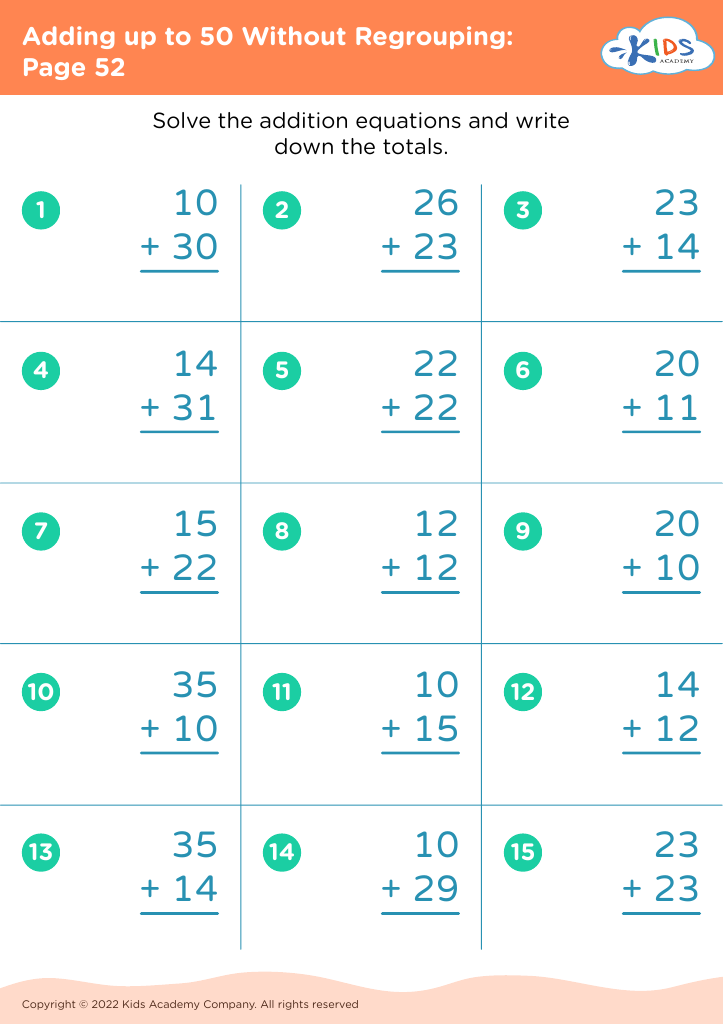
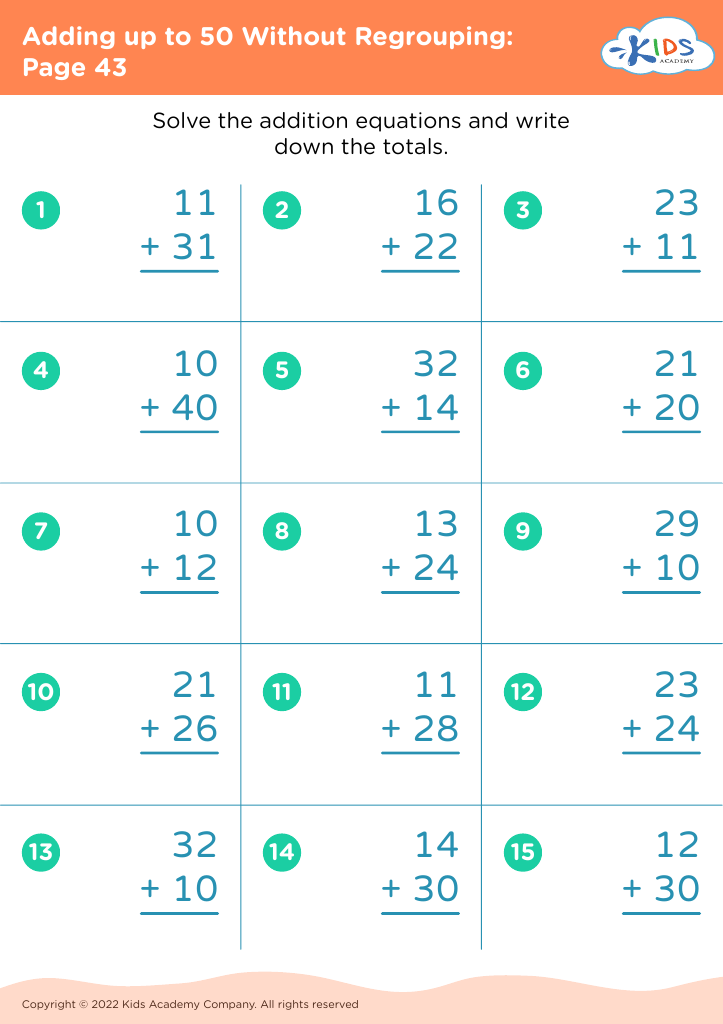
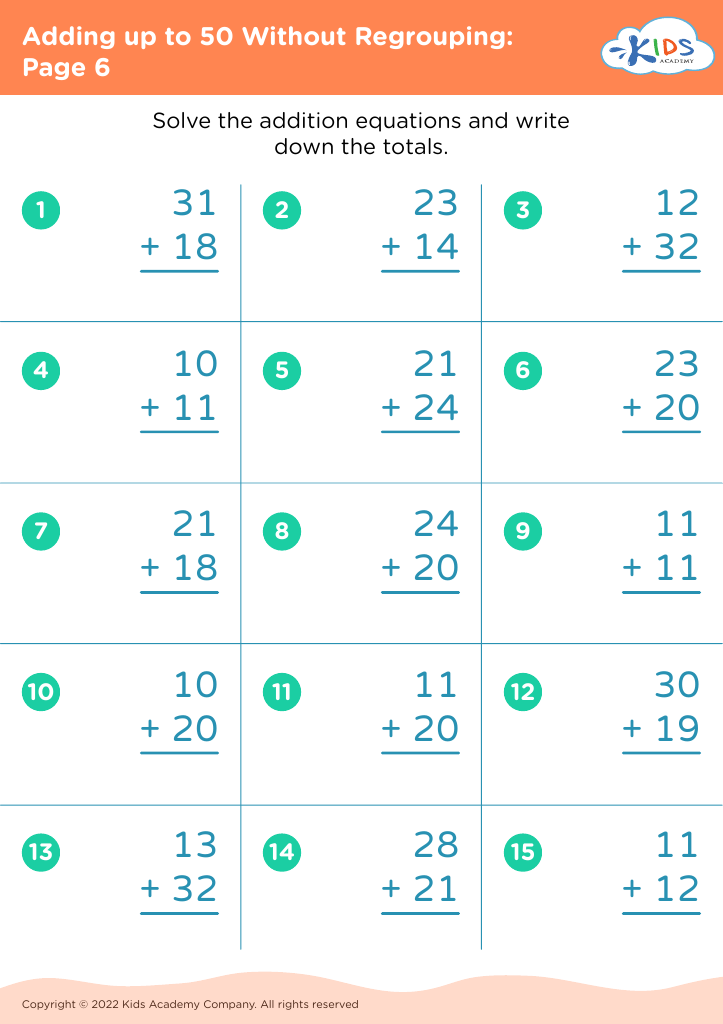
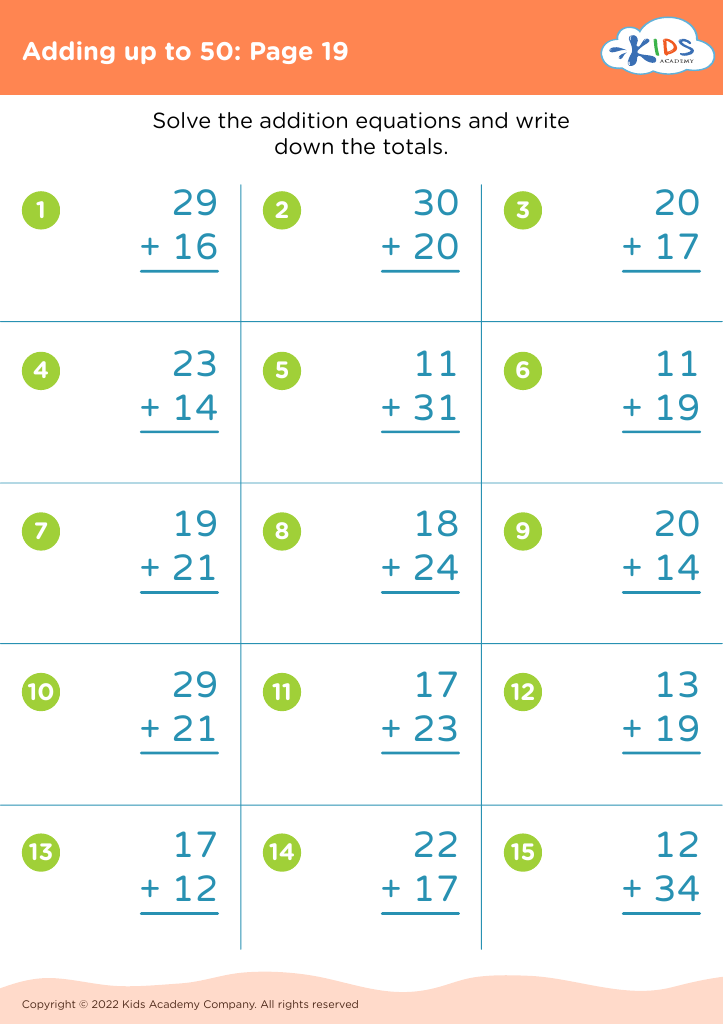
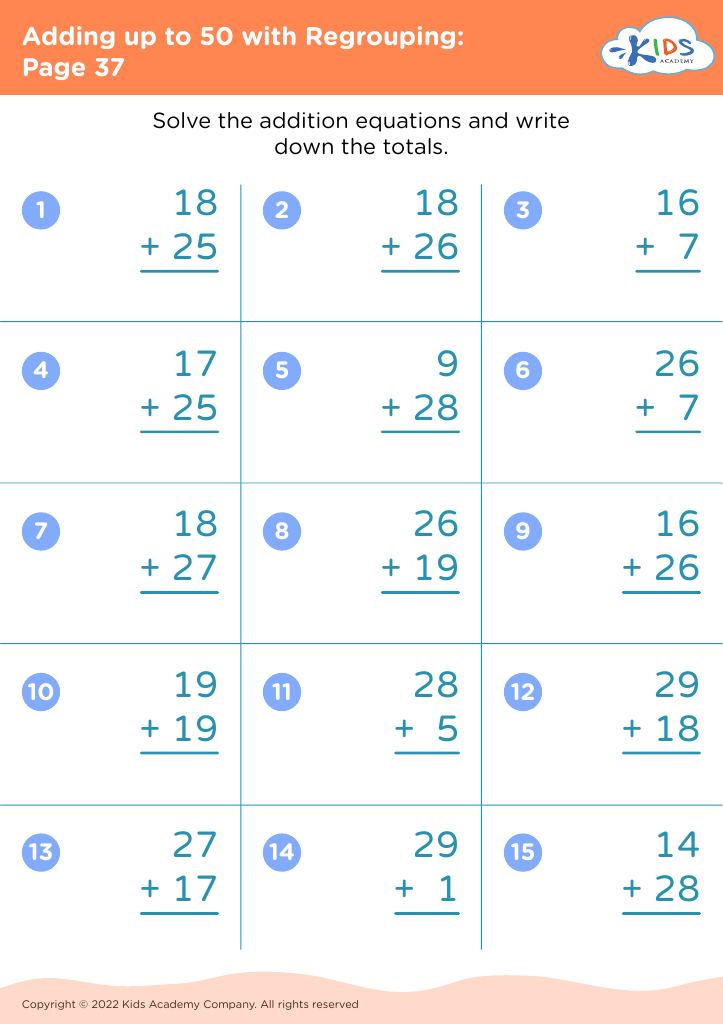
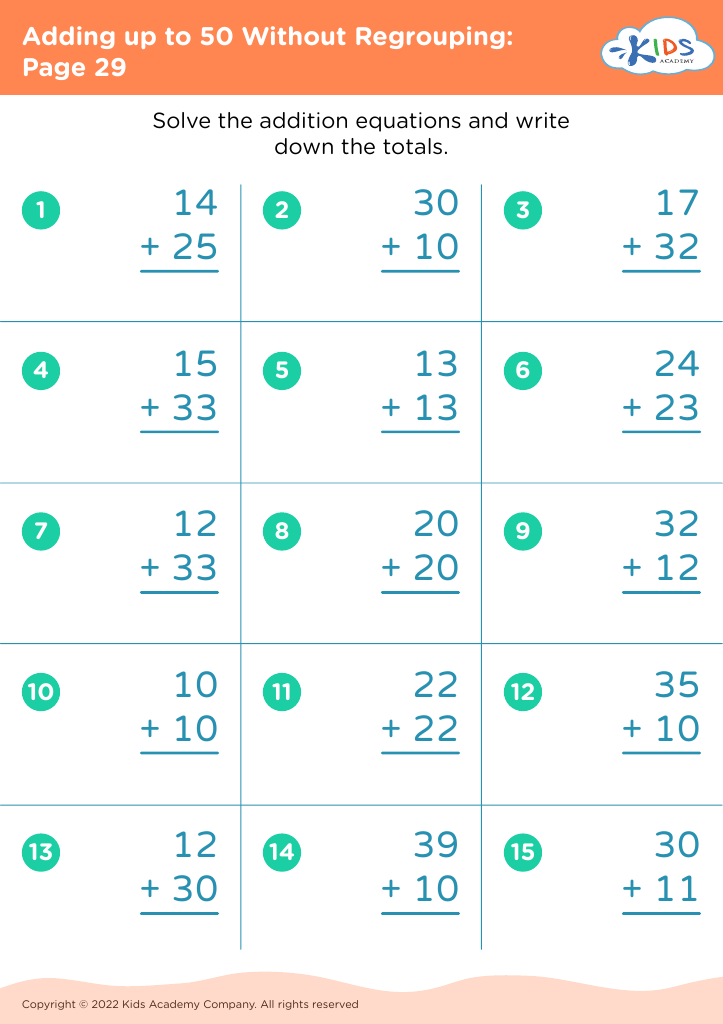
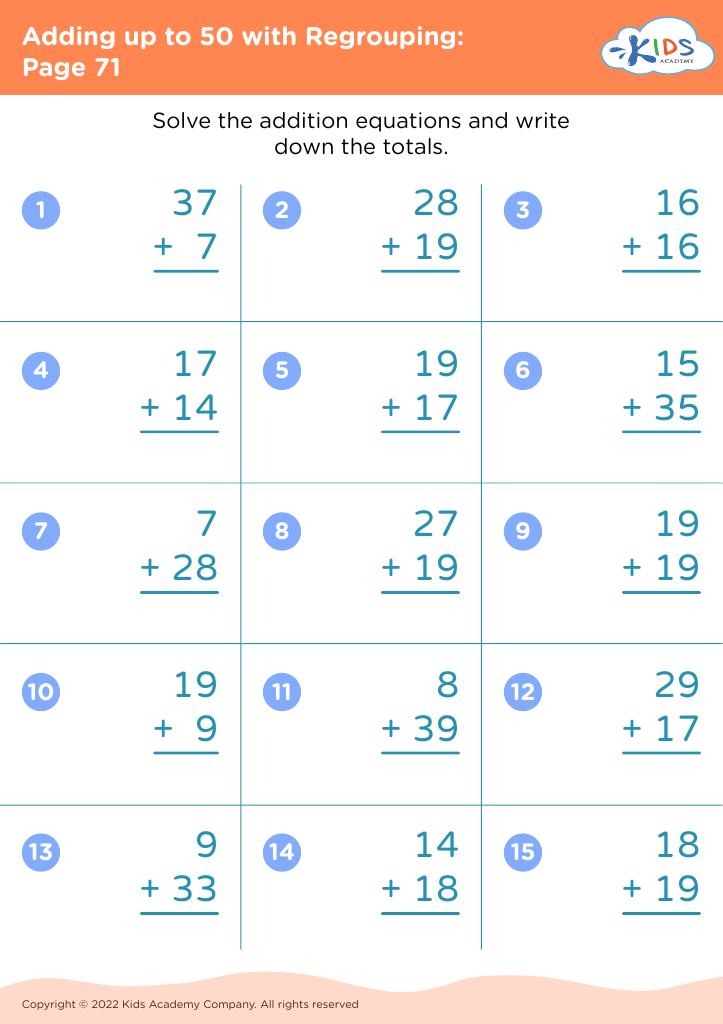




Recognizing patterns, especially when adding up to 50, is a crucial skill for children aged 8-9. This developmental stage often marks a significant leap in numerical understanding, and mastering patterns can enhance mathematical fluency and problem-solving abilities. When students learn to identify patterns in numbers, they can simplify complex problems, streamline calculations, and develop strategies for mental math.
Parents and teachers should care about this because pattern recognition lays the foundation for more advanced mathematical concepts such as multiplication, division, and fractions. Understanding how numbers relate to each other fosters critical thinking skills and promotes a deeper understanding of mathematics. It also supports students in identifying relationships among numbers, thereby boosting their confidence and reducing anxiety in math-related tasks.
Moreover, recognizing patterns can encourage a love for mathematics. When children see the "big picture" behind numbers, they may find math more interesting and engaging. This proficiency not only aids them in their immediate educational journey but also equips them with lifelong skills that extend beyond the classroom, enabling them to tackle real-world problems with confidence and creativity. Thus, cultivating this skill should be a priority for caregivers and educators alike.








