Recognizing shapes Adding up to 50 Worksheets for Ages 8-9
8 filtered results
-
From - To
Explore our "Recognizing Shapes Adding up to 50 Worksheets for Ages 8-9" designed to enhance both math and geometry skills. Perfect for young learners, these engaging worksheets help children recognize and compare various shapes while practicing addition problems up to 50. With vibrant illustrations and challenges tailored for ages 8-9, students will have fun while honing their math skills. Ideal for both classroom and home use, our resources offer a diverse array of activities that stimulate learning and development. Boost your child's confidence and proficiency in math with our expertly crafted, interactive worksheets available now on Kids Academy!
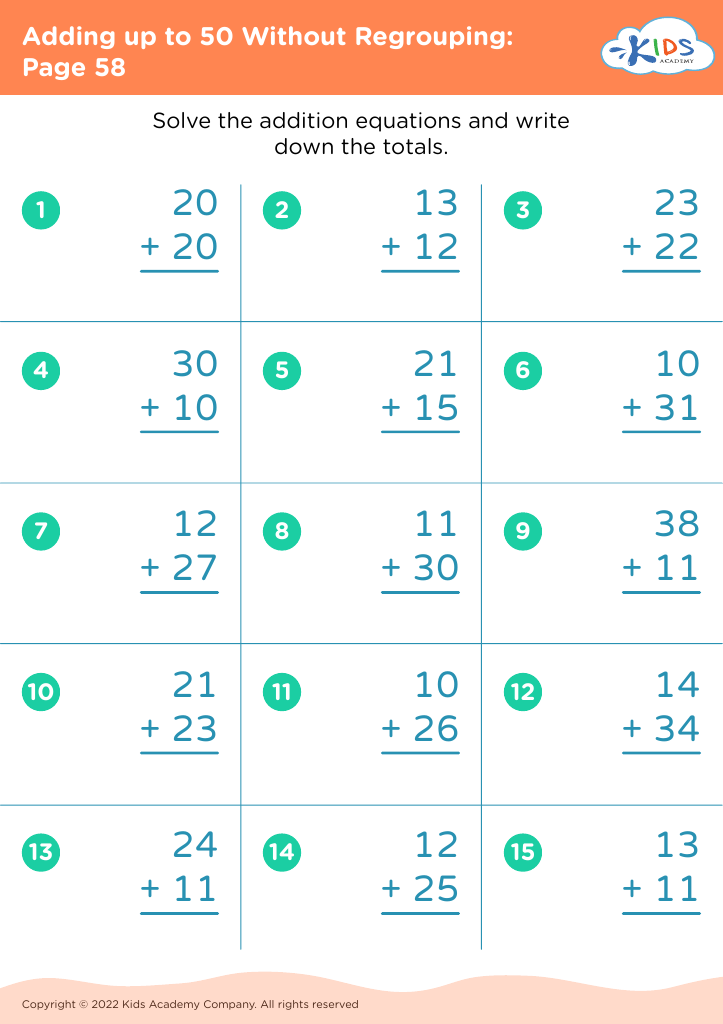
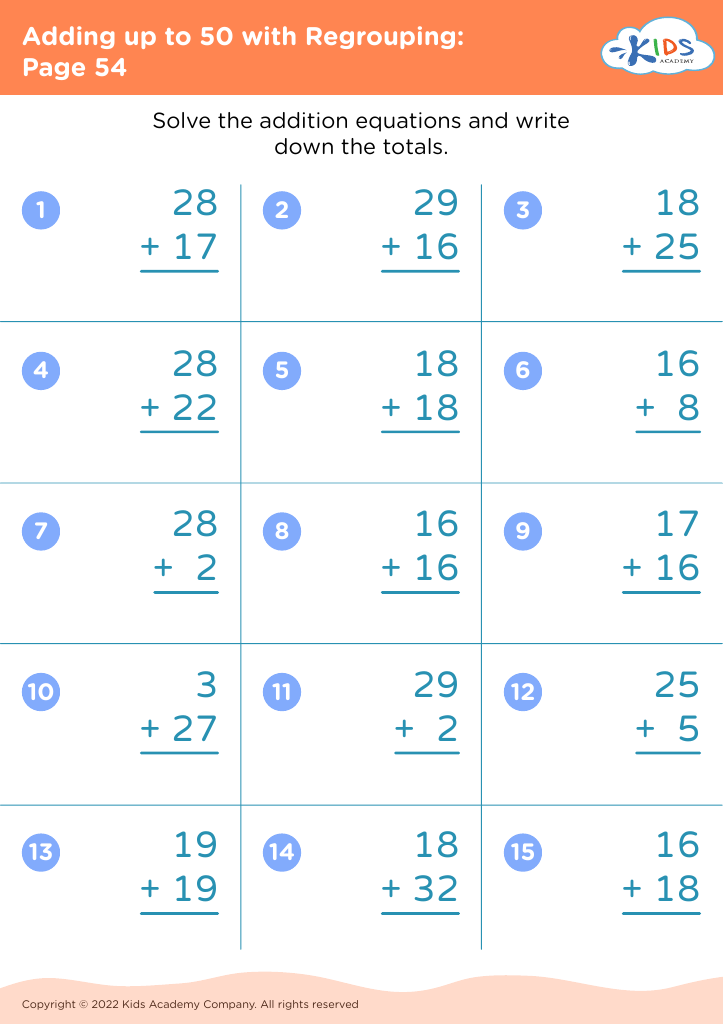
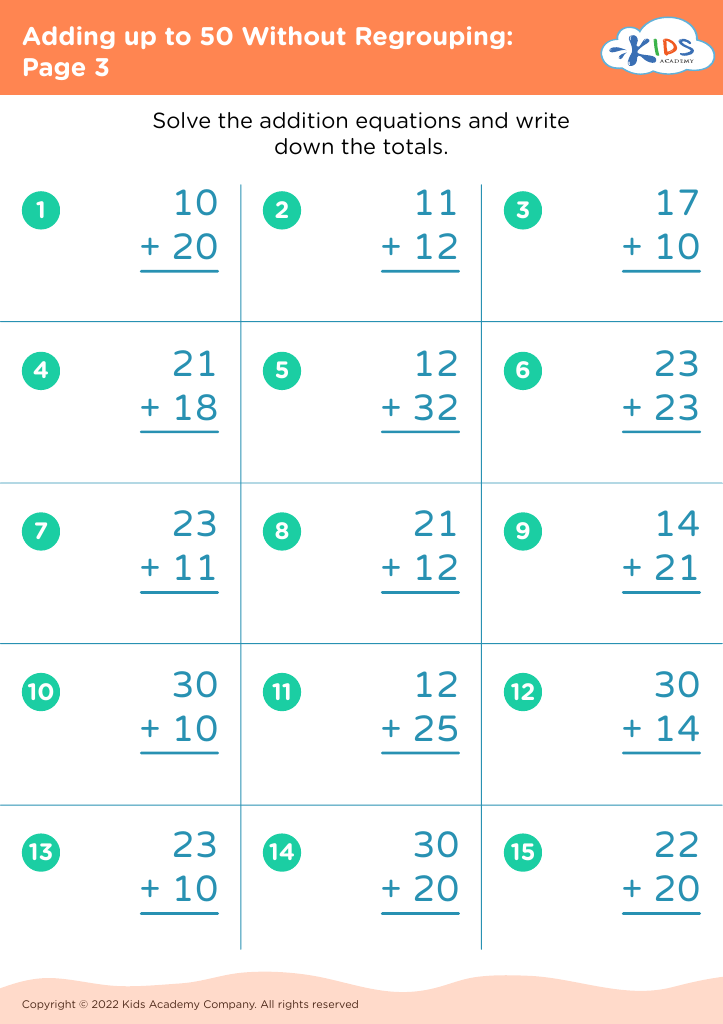
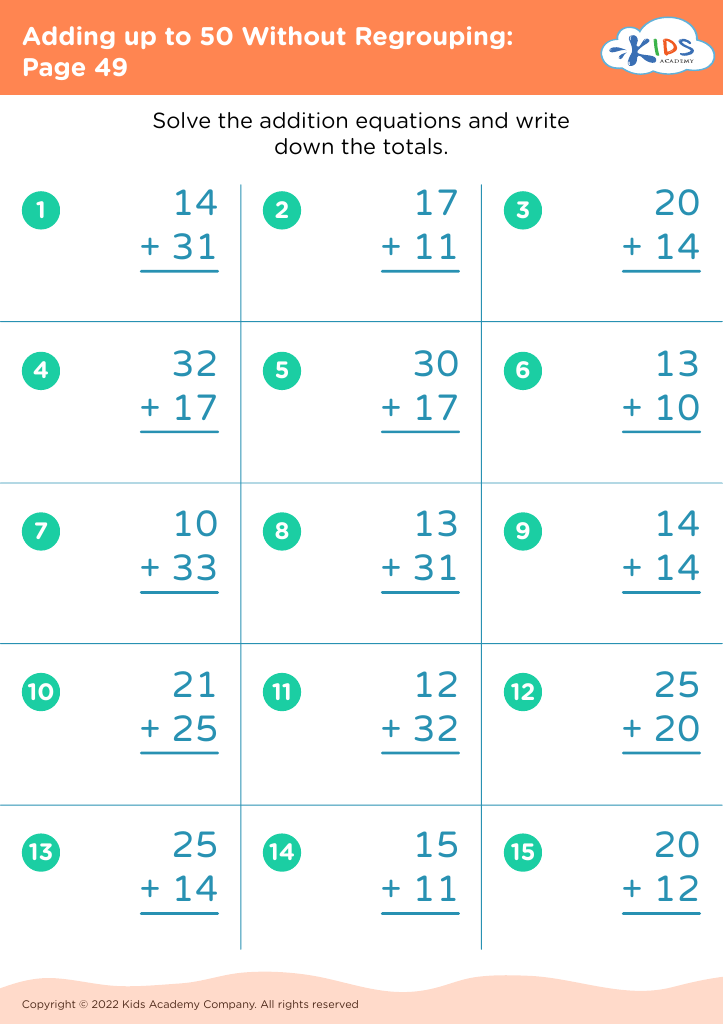
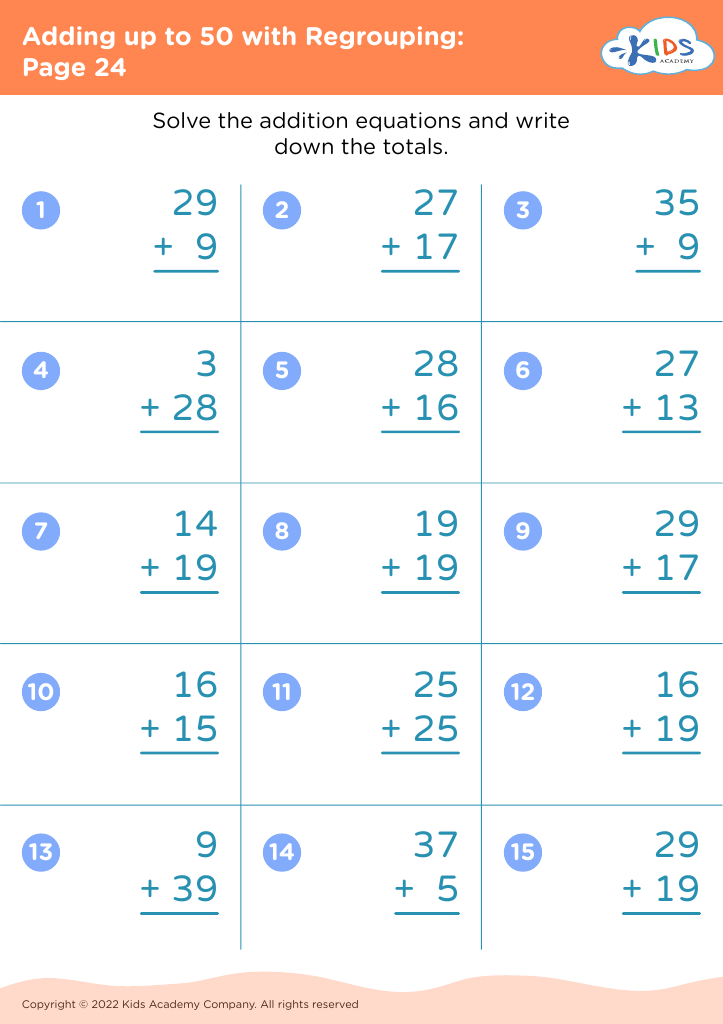
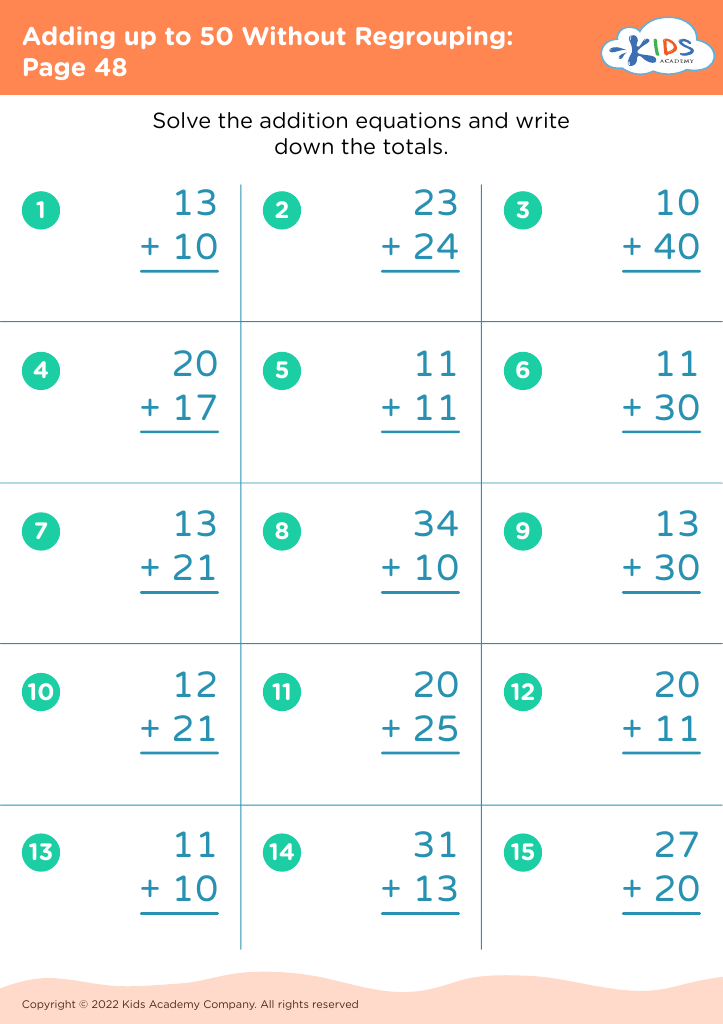
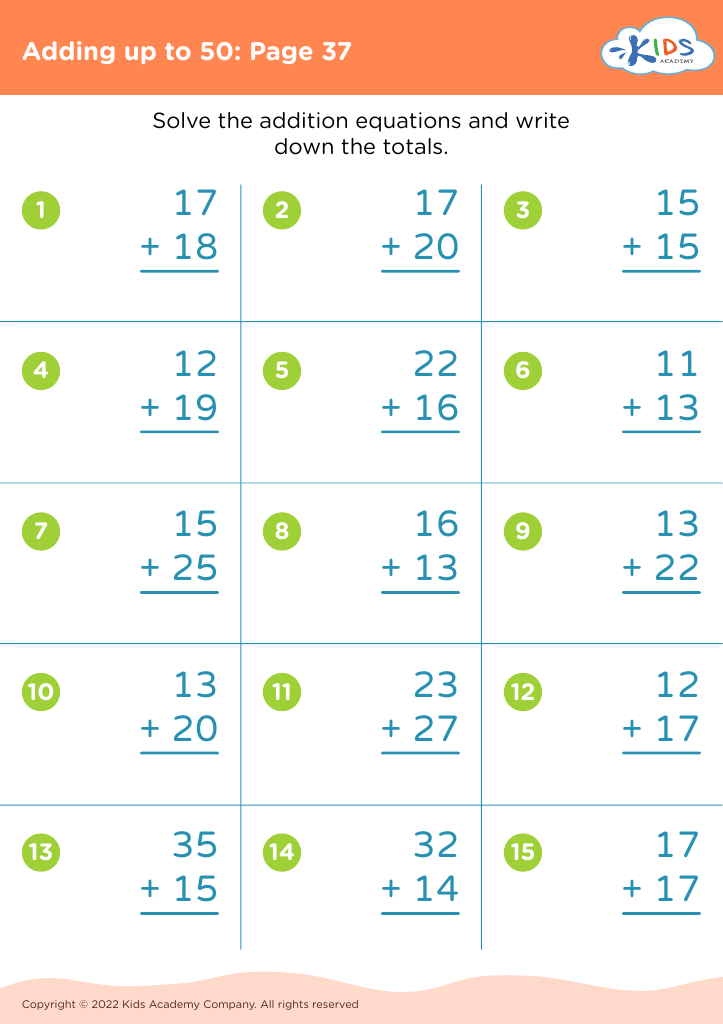
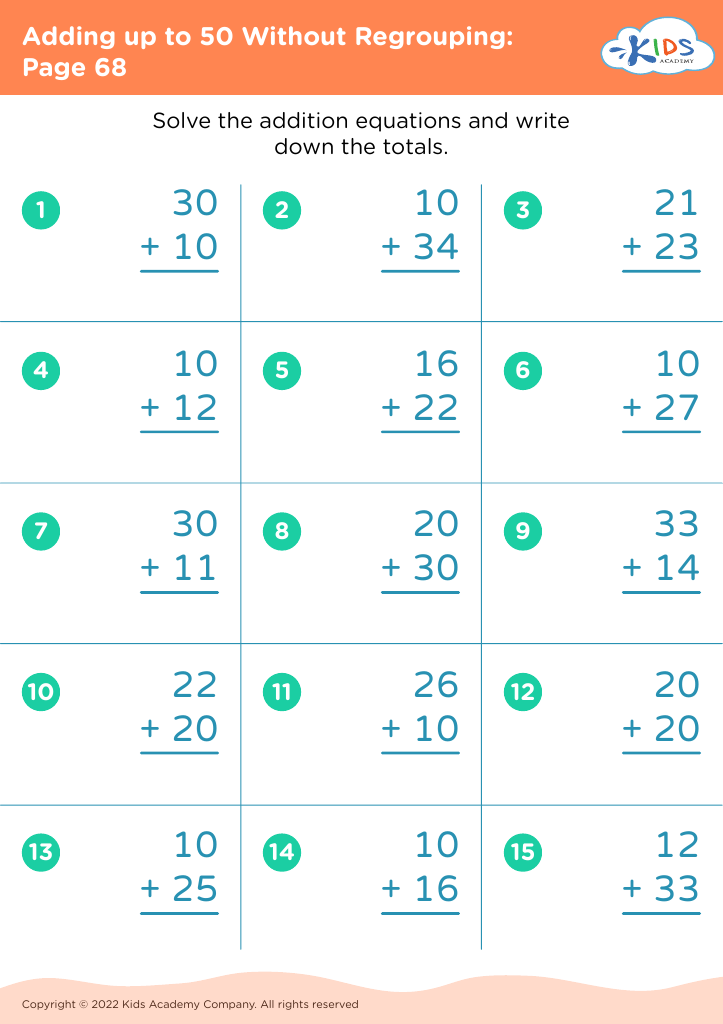




Recognizing shapes and adding numbers up to 50 are fundamental skills in early education that significantly impact future learning and cognitive development in children aged 8-9. Recognizing shapes, such as circles, triangles, and squares, enhances spatial awareness and visual perception, crucial for problem-solving and understanding more complex geometric concepts in later grades. Additionally, recognizing shapes fosters critical thinking and categorization skills, aiding in subjects such as science and reading.
Adding up to 50 is essential for developing a strong numerical foundation, promoting not just arithmetic skills but also logical reasoning and pattern recognition. Mastering this skill, children build confidence in handling everyday math problems, like measuring ingredients for a recipe or calculating change during shopping. This robust numerical fluency sets the stage for grasping more advanced mathematical concepts and operations taught in higher grades, including multiplication and division.
Both recognizing shapes and adding numbers up to 50 also contribute to enhancing a child's overall cognitive abilities, including memory, attention, and executive function. Therefore, parents and teachers should prioritize these skills to promote well-rounded intellectual growth and lay the groundwork for academic success and practical life skills, making learning engaging and accessible in these formative years.








