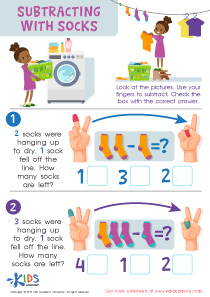
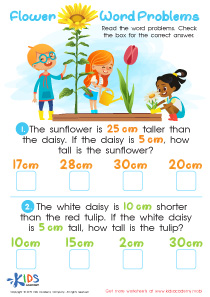
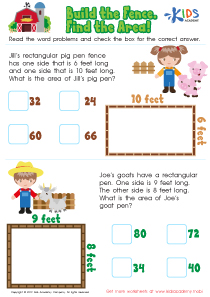
Problem-solving abilities Addition and Subtraction Word Problems Worksheets for Ages 8-9
4 filtered results
-
From - To
Enhance your child's problem-solving skills with our engaging Addition and Subtraction Word Problems Worksheets, tailored for ages 8-9. Designed to develop critical thinking and mathematical abilities, these worksheets feature real-life scenarios that challenge students to apply their knowledge creatively. Each problem encourages kids to decipher the information, formulate equations, and explore multiple strategies, building their confidence in mathematics. With varied difficulty levels and colorful illustrations, our worksheets make learning fun and accessible. Perfect for classroom use or at-home practice, these printable resources help young learners master essential skills needed for future academic success. Dive into the excitement of math problem solving today!
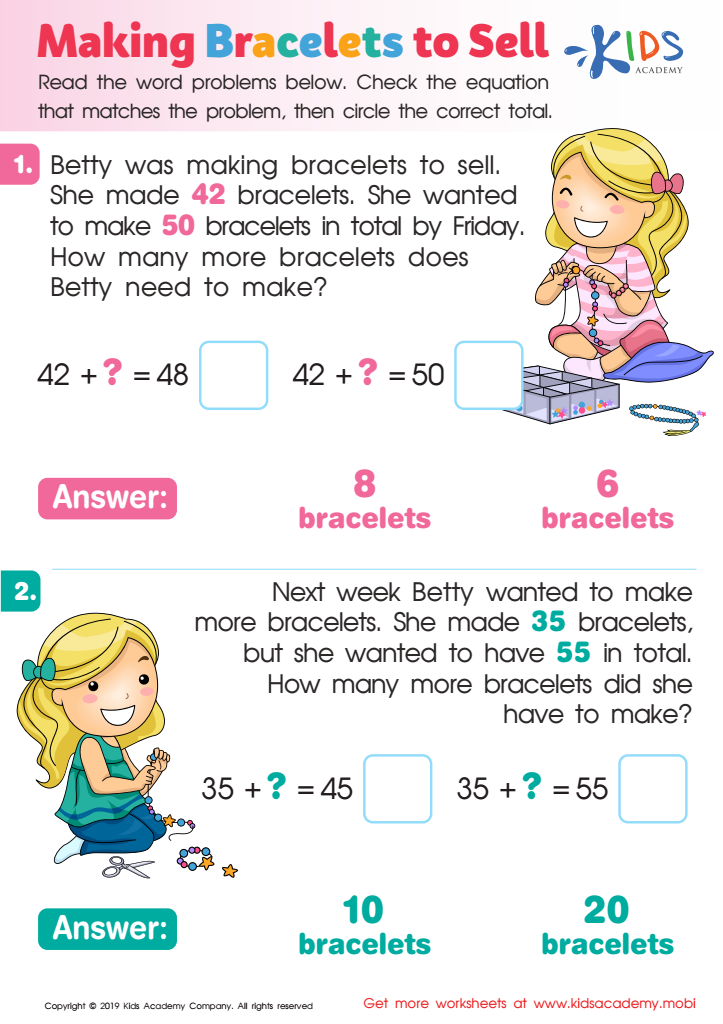
Making Bracelets to Sell Worksheet
 Assign to My Students
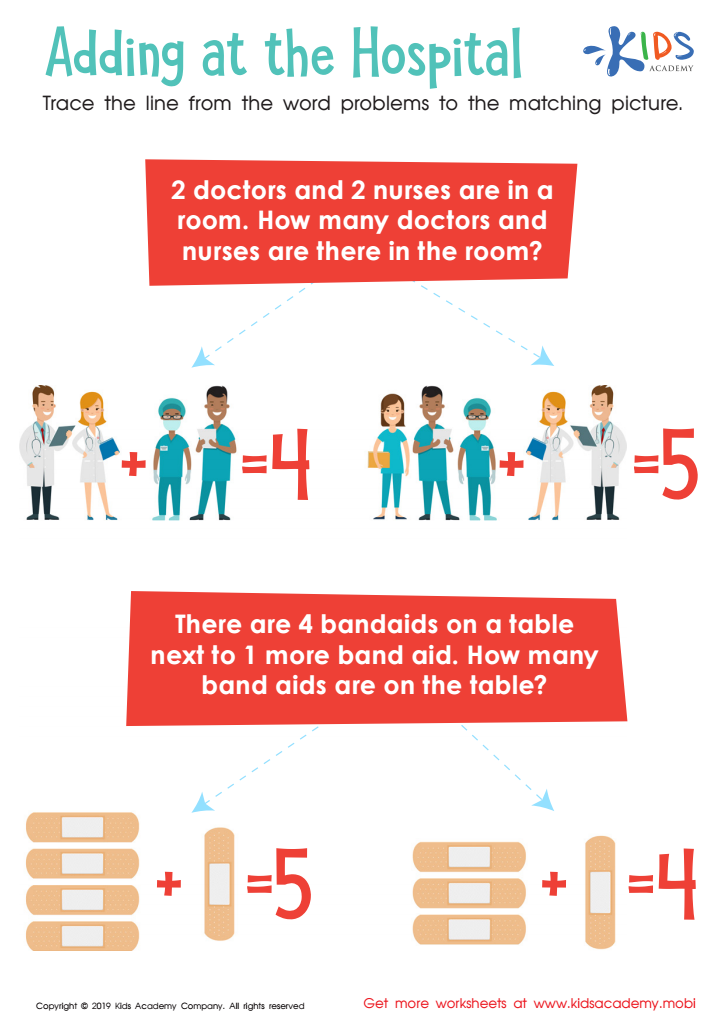
Adding at the Hospital Worksheet
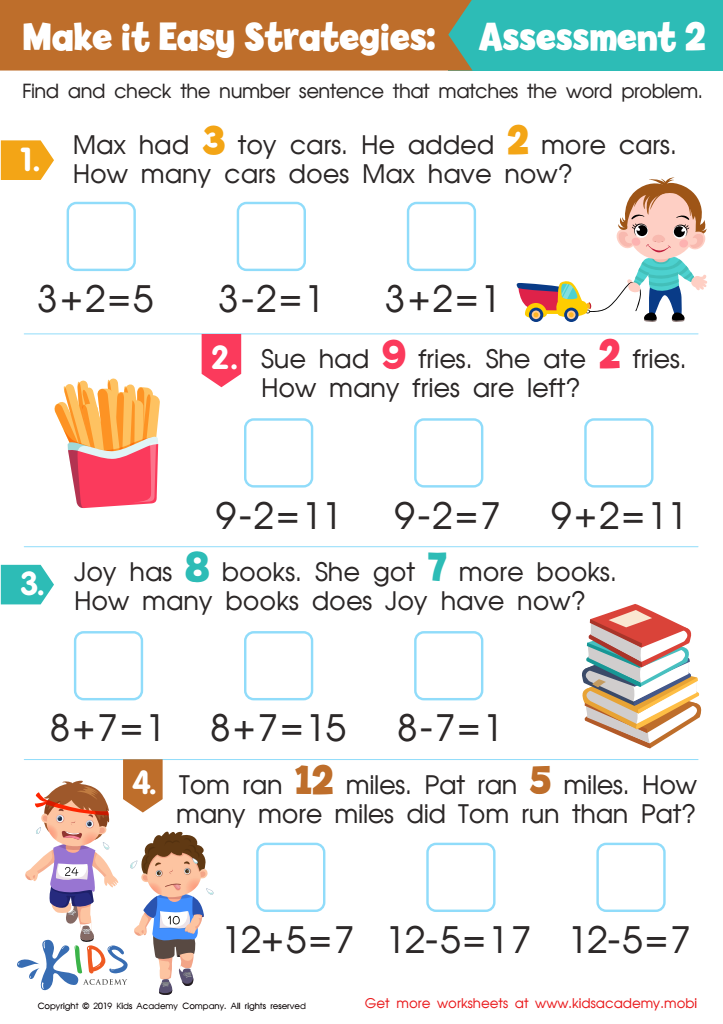
Make it Easy Strategies: Assessment 2 Worksheet
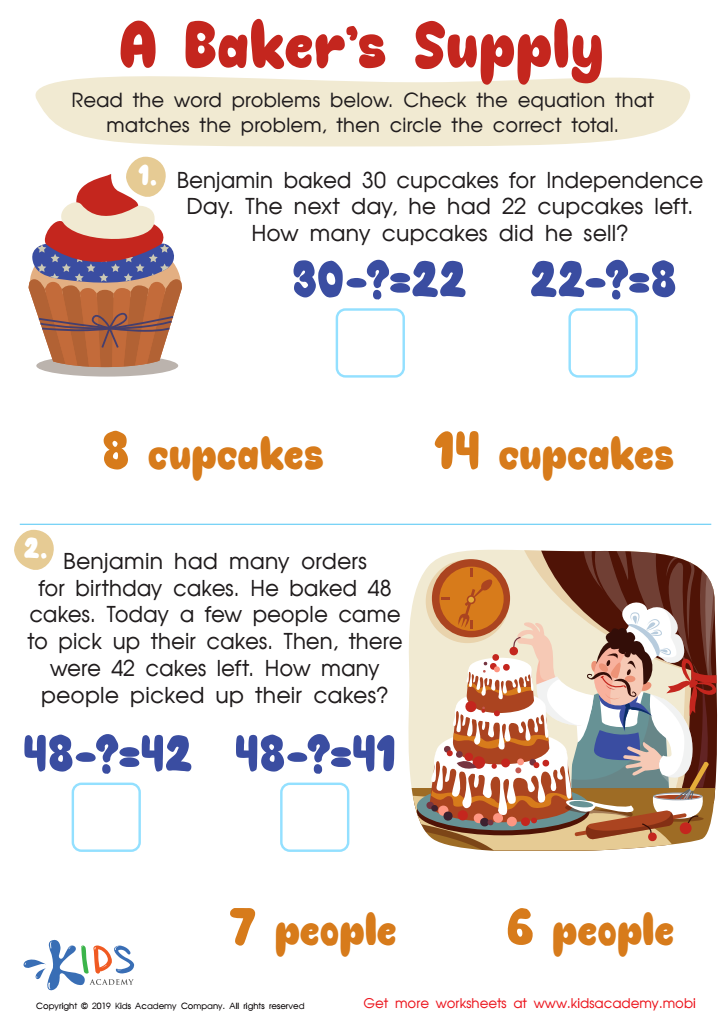
A Baker's Supply Worksheet








Problem-solving abilities in addition and subtraction word problems are vital for children aged 8-9, as they serve as foundational skills for mathematical understanding and real-life applications. At this age, children are transitioning from concrete operational thinking to more abstract reasoning, making it an ideal time to cultivate critical thinking.
Teaching these skills empowers students to process and interpret information, fostering independent learners who can approach challenges methodically. Word problems require children to not only perform calculations but also to comprehend the context, enabling them to analyze situations and devise solutions—skills they will utilize throughout their lives.
Moreover, mastery of these skills enhances confidence in mathematics, reducing math anxiety. When parents and teachers emphasize problem-solving, they nurture a growth mindset, encouraging children to view challenges as opportunities for learning. Collaboration between parents and teachers reinforces these concepts, showing children the importance of community in problem-solving.
Ultimately, focusing on addition and subtraction word problems adheres to standardized learning objectives while instilling life skills such as perseverance, analytical thinking, and effective communication. As they learn to express their reasoning and strategies, they become better prepared for more complex mathematical concepts and everyday decision-making.