Counting practice Addition & Subtraction Worksheets for Ages 8-9 - Page 3
55 filtered results
-
From - To
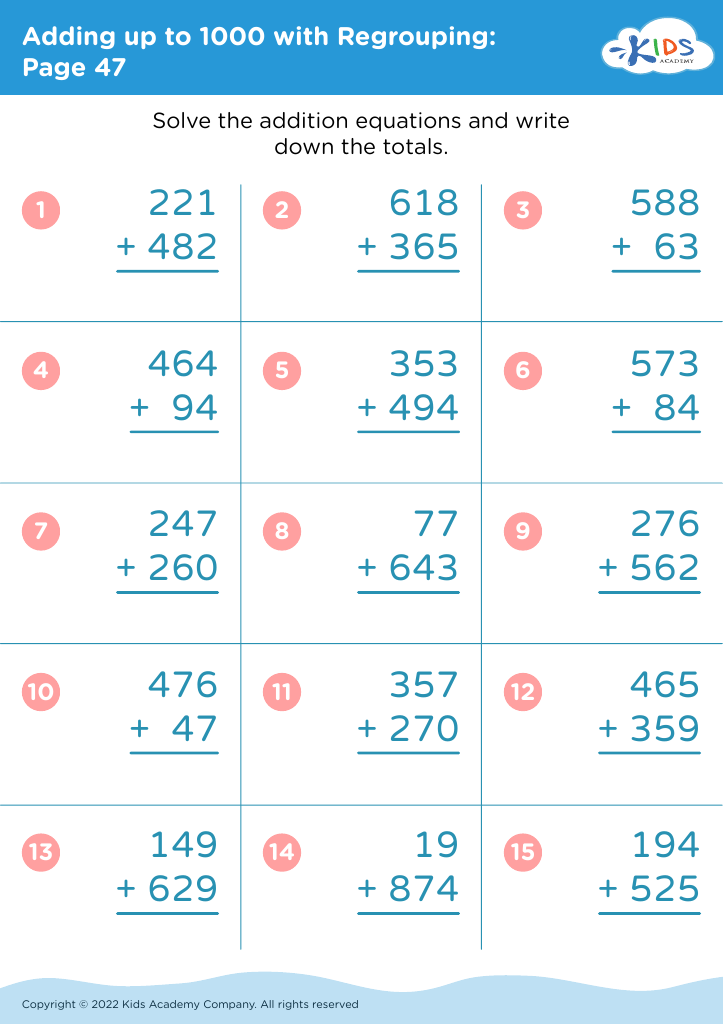
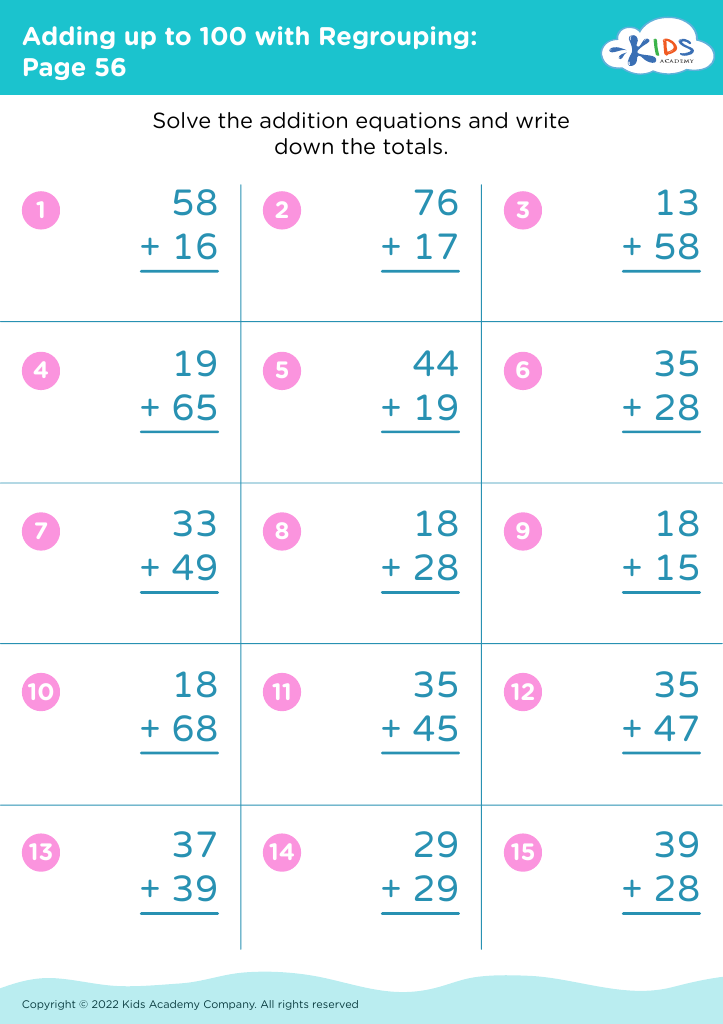
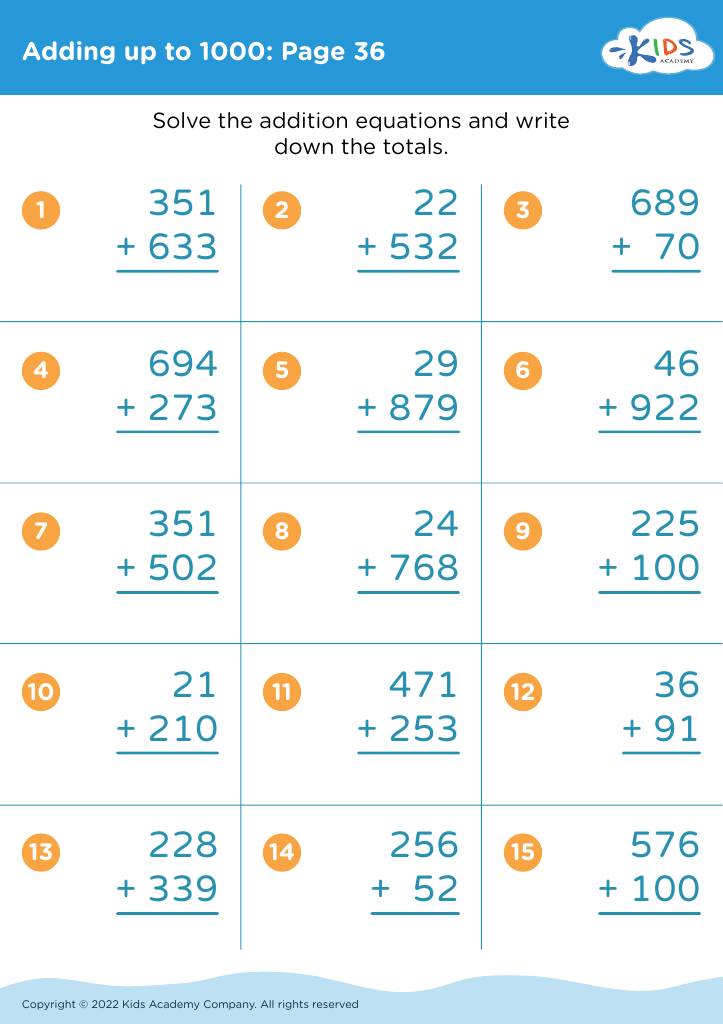
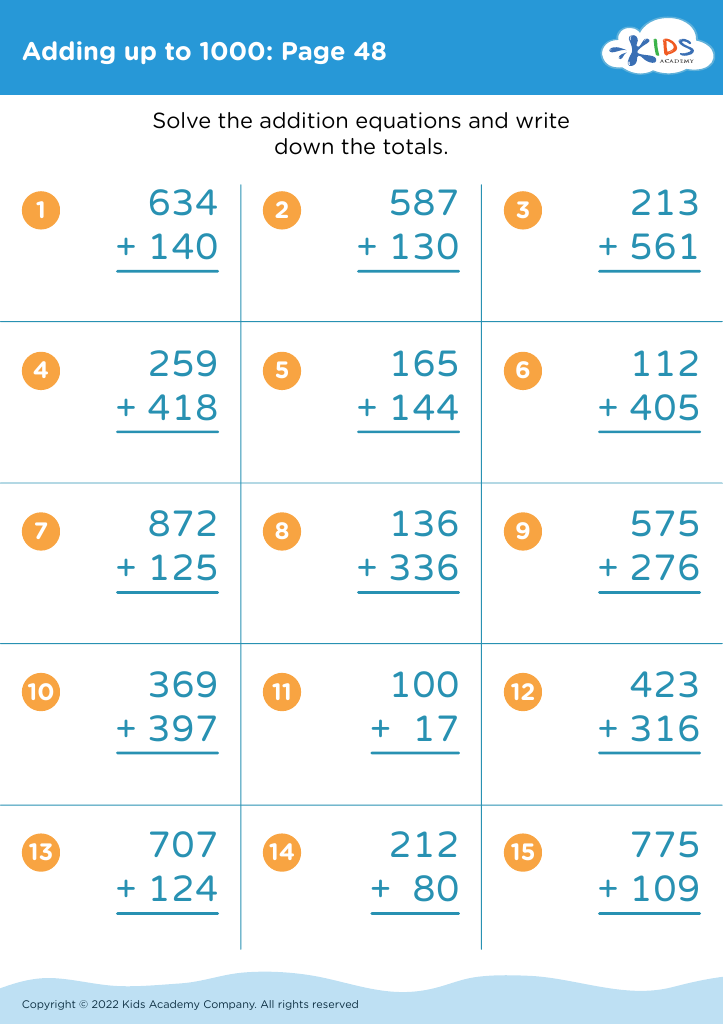
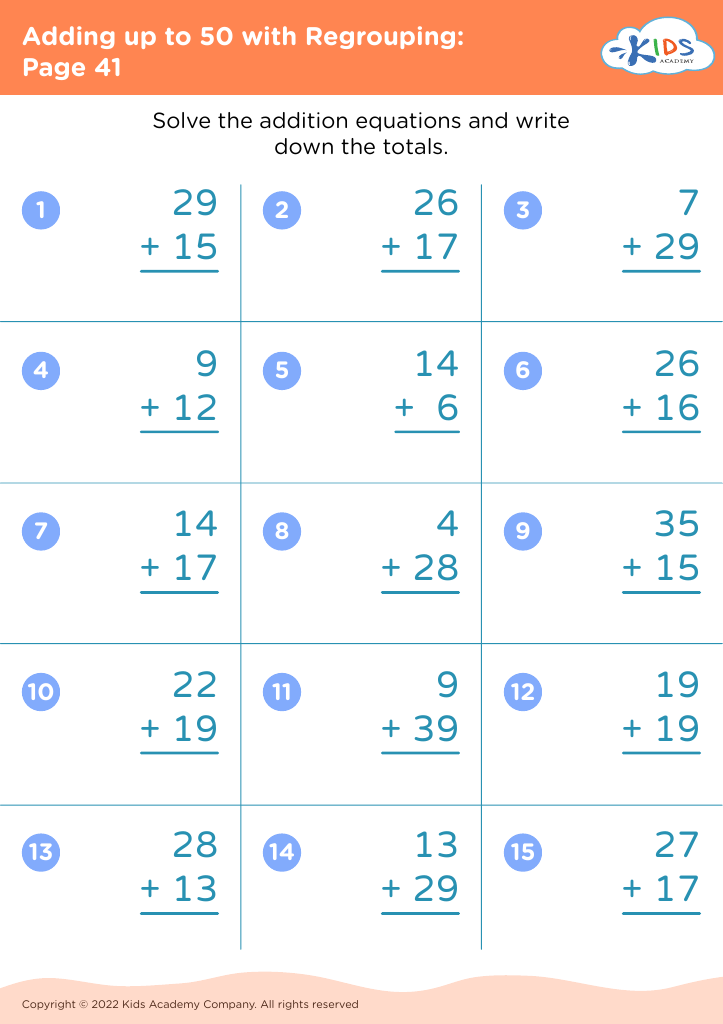
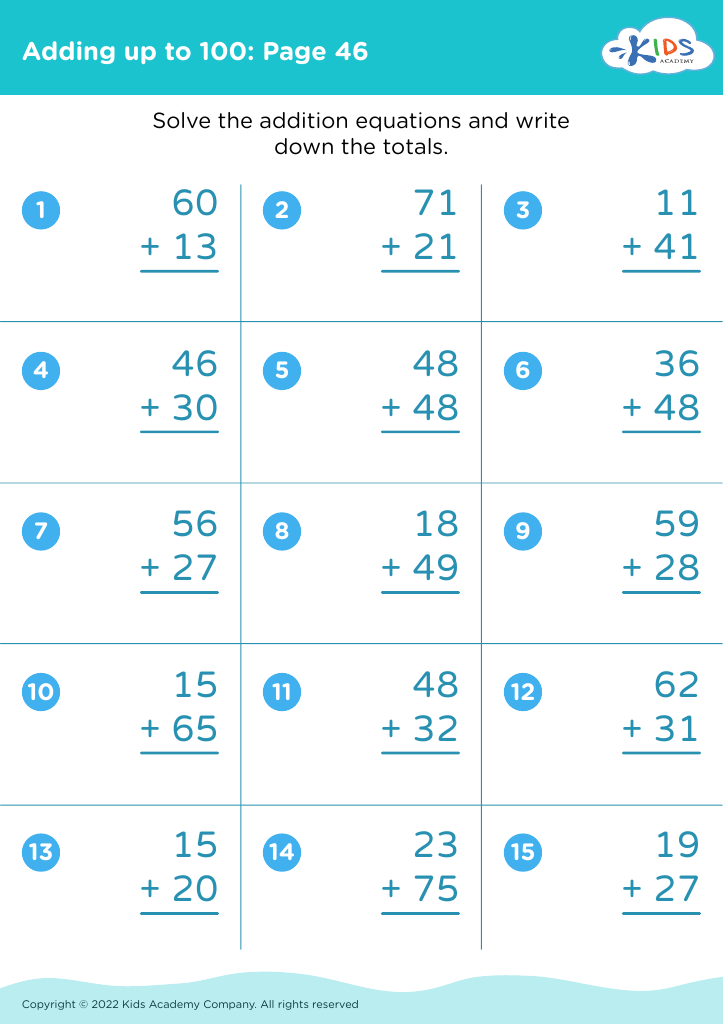
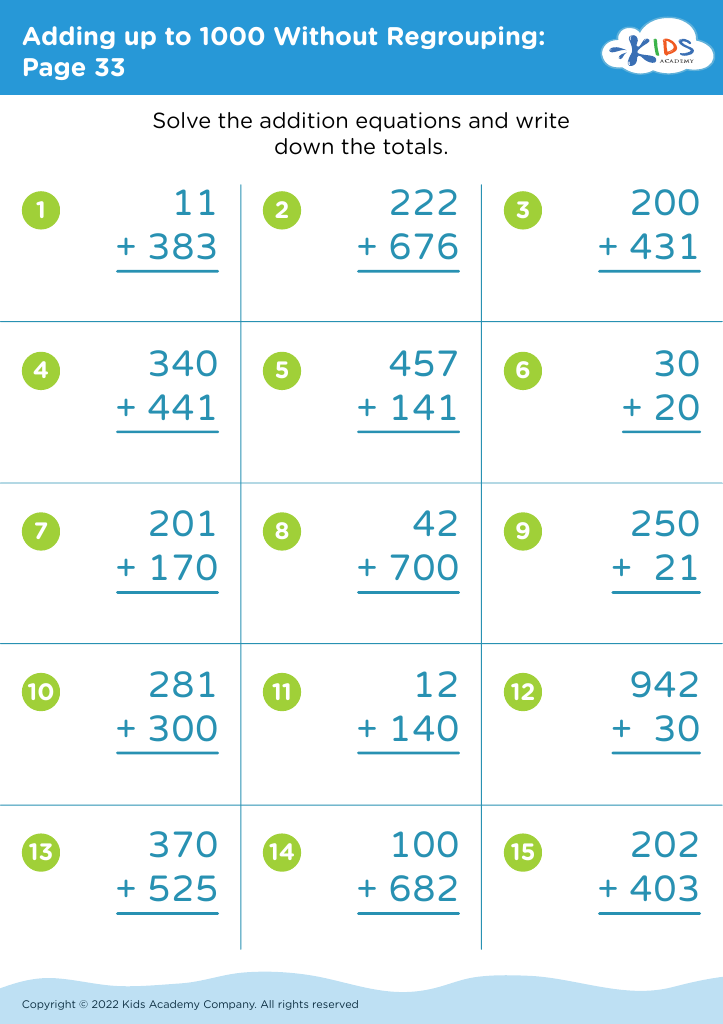








Counting practice in addition and subtraction is crucial for children aged 8-9 as it lays the groundwork for their mathematical skills and critical thinking. At this developmental stage, children transition from basic arithmetic to more complex problem-solving abilities. Mastery of counting and these basic operations enhances their numerical fluency, allowing them to tackle higher-level mathematics confidently in the future.
Furthermore, consistent practice with addition and subtraction reinforces cognitive skills, promotes logical reasoning, and enhances concentration. This age group also begins to grasp mathematical concepts like place value and mental math, which are essential for more advanced topics in later years. By engaging in regular practice, children develop a mathematical mindset and increase their confidence, making them more enthusiastic learners.
Additionally, proficient counting and arithmetic skills impact everyday life. Students who excel in math can more effectively manage tasks like budgeting, measuring, and estimating in real-world situations.
Parents and teachers should prioritize counting practice to ensure children are not only successful academically but also equipped with skills they will apply throughout their lives. Investing time in these foundational skills ultimately nurtures lifelong learners and adept problem solvers.








