
Drawing skills Addition & Subtraction Worksheets for Ages 8-9
6 filtered results
Difficulty Level
Grade
Age
-
From - To
Subject
Activity
Standards
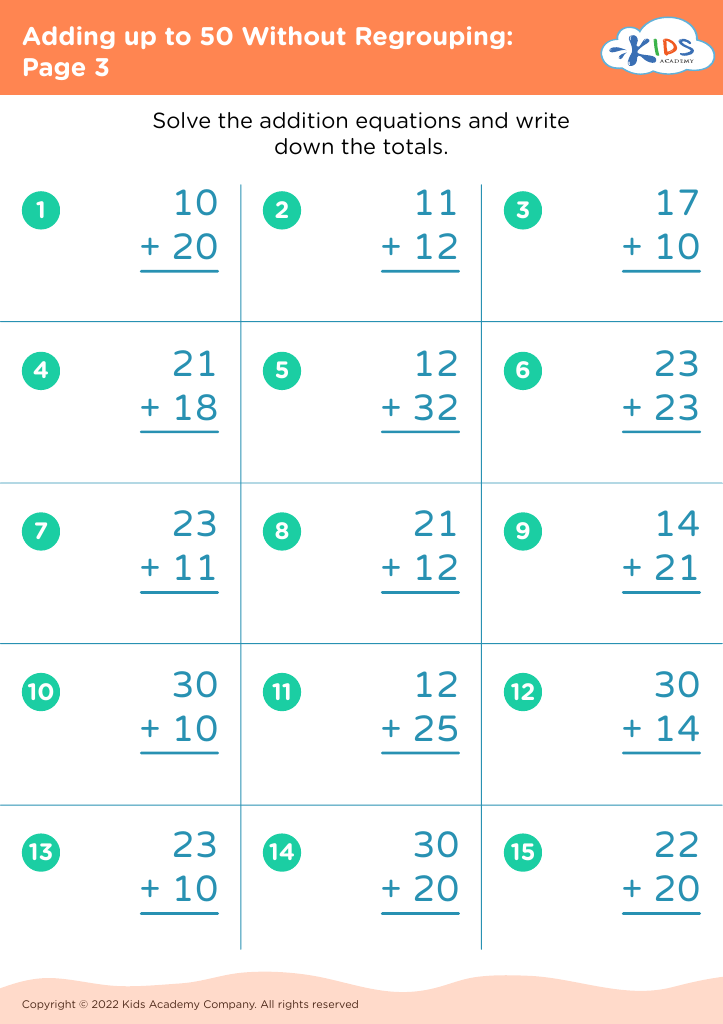
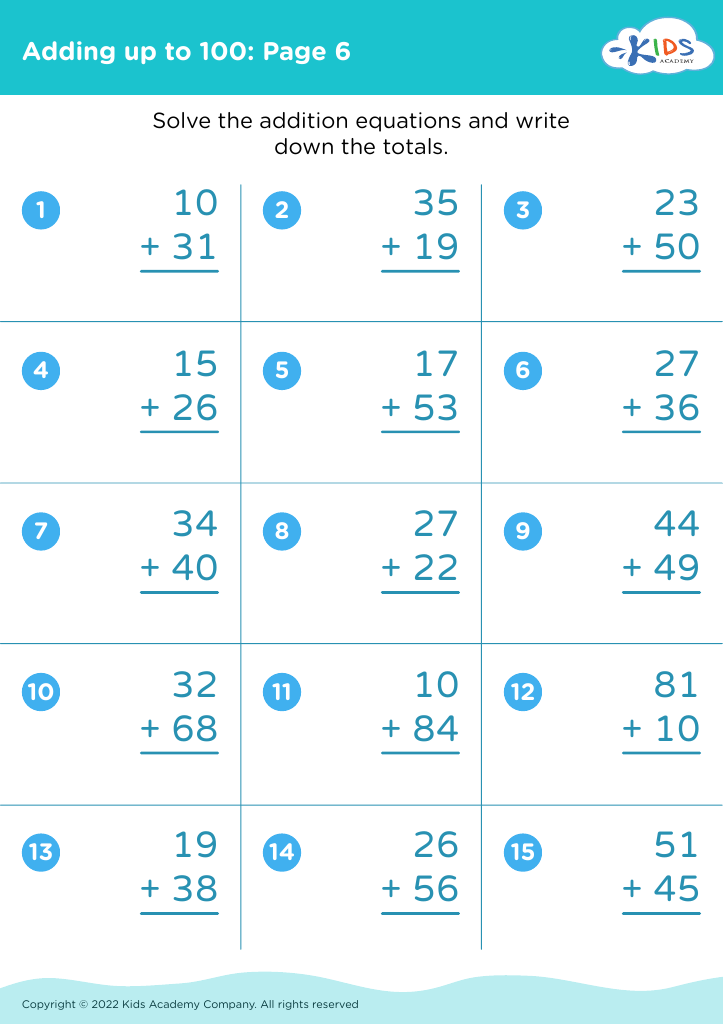
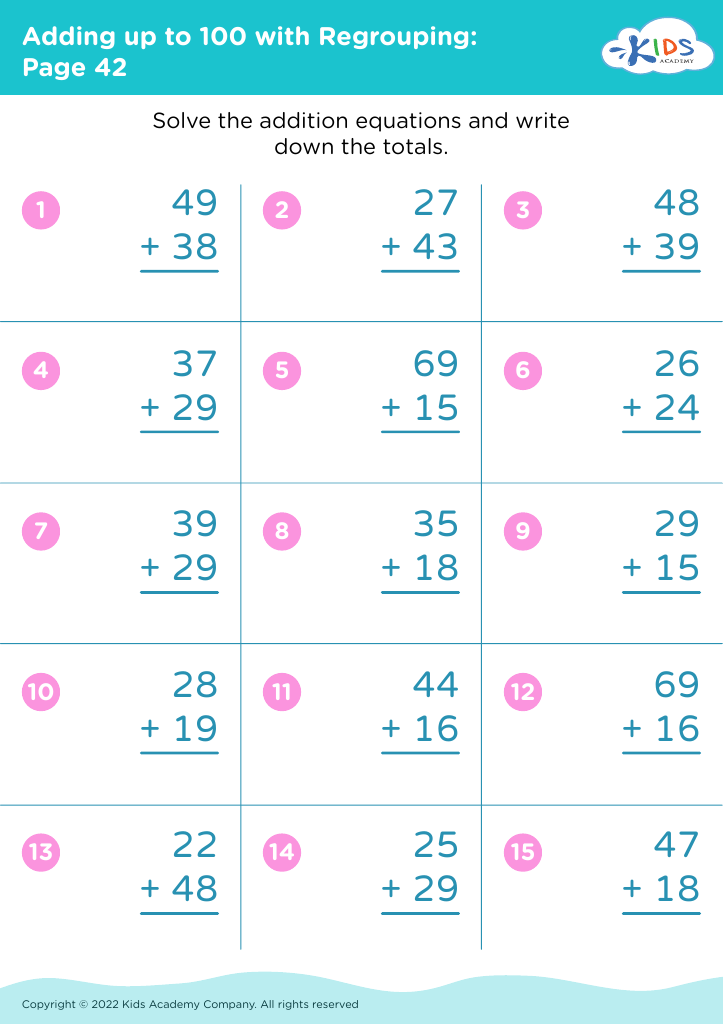
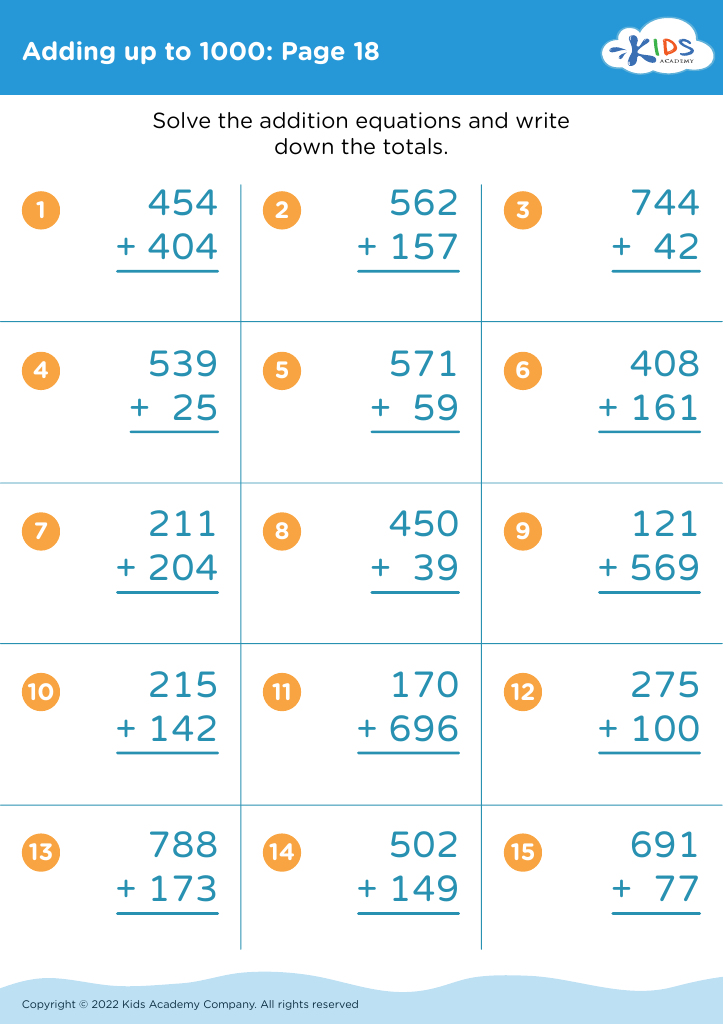
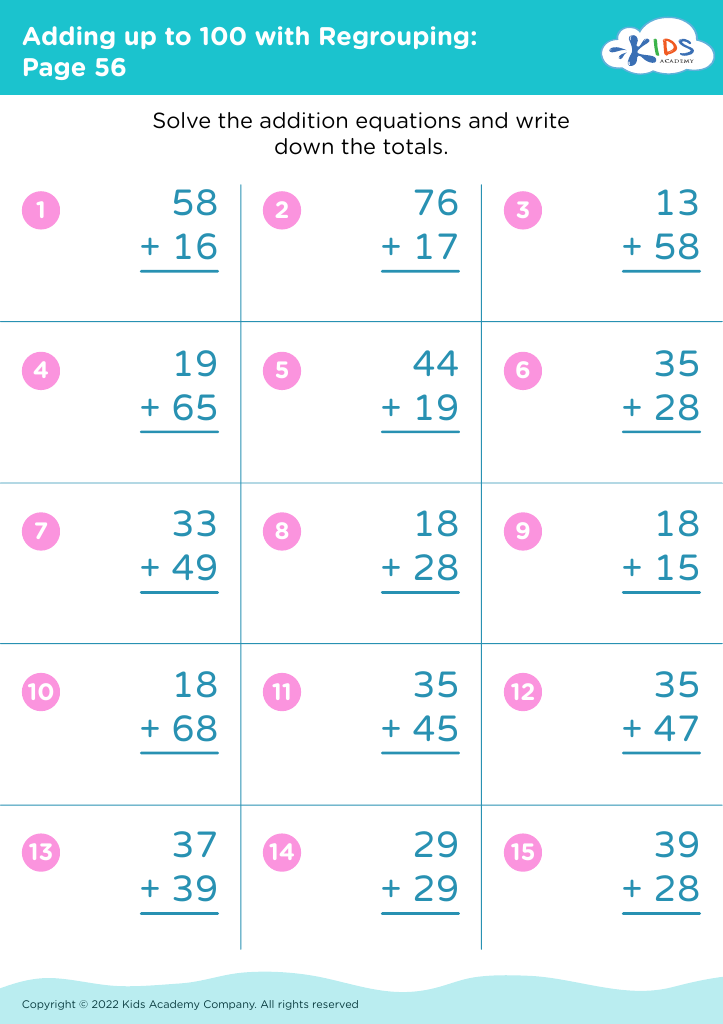
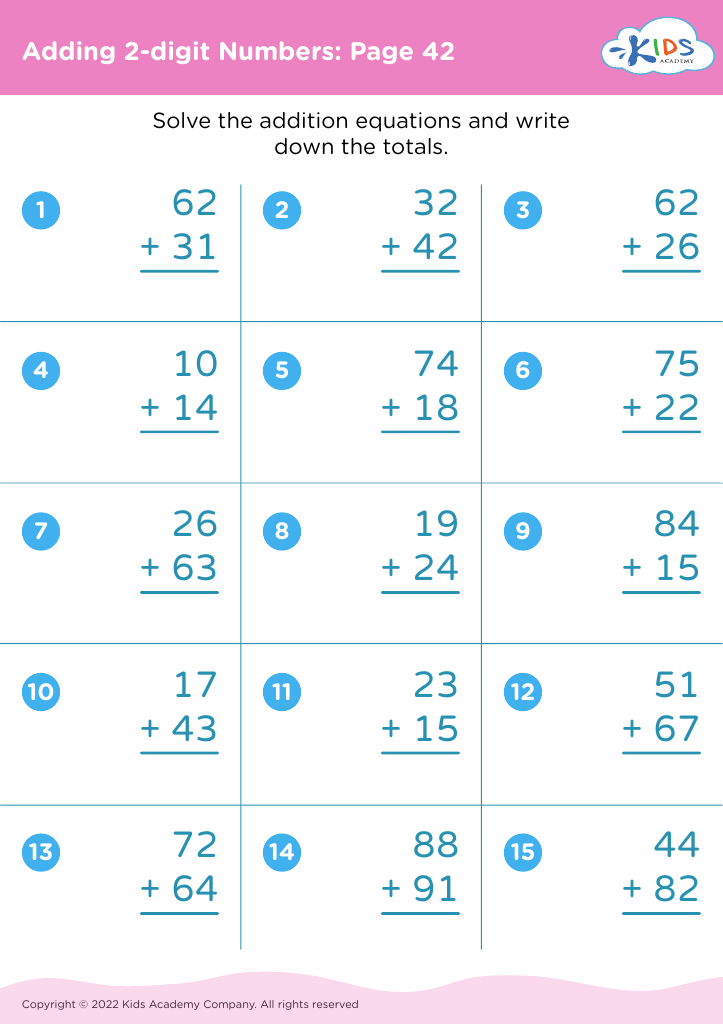
Enhance your child's math skills with our engaging Drawing Skills Addition & Subtraction Worksheets designed specifically for ages 8-9. These worksheets combine creativity and critical thinking, allowing children to visualize numbers and improve their understanding of basic math. Each worksheet encourages students to draw as they solve addition and subtraction problems, promoting retention and comprehension. Ideal for classroom activities or at-home practice, our worksheets foster a love for learning while developing essential skills. Easy to print and integrate into daily routines, these resources make math fun and interactive. Turn math practice into an artistic adventure today!
Favorites
With answer key
Interactive
Join Kids Academy for Free
Who is primarily going to use this learning content?








Parents and teachers should care about drawing skills in relation to addition and subtraction for children aged 8-9 because these skills contribute significantly to a child's overall development and understanding of mathematical concepts. Drawing is a powerful learning tool that enables children to visualize problems, which enhances comprehension and retention. When students illustrate mathematical problems, they engage both cognitive and creative parts of their brains, fostering a deeper grasp of numbers and relationships.
Moreover, integrating drawing with addition and subtraction encourages critical thinking and problem-solving. For instance, when children draw items to illustrate an equation, they learn to identify quantity, represent values, and explore different ways to reach a solution visually. This hands-on approach not only makes learning more interactive but also helps bridge the gap between abstract concepts and real-world applications.
By supporting children in developing drawing skills linked to mathematics, parents and teachers equip them with valuable tools for academic success and boost their confidence in their abilities. Additionally, these foundational skills can lead to improved performance in higher level math, as visualization techniques play a significant role in more complex mathematical problems encountered later on. Ultimately, nurturing these skills contributes to well-rounded intellectual growth and prepares students for future challenges.








