Fine motor skills (writing) Addition & Subtraction Worksheets for Ages 8-9
6 filtered results
-
From - To
Enhance your child's fine motor skills while mastering addition and subtraction with our engaging worksheets designed specifically for ages 8-9. These carefully crafted activities not only reinforce essential math concepts but also promote dexterity through writing practice. As children trace numbers and solve problems, they strengthen their hand-eye coordination and develop the control needed for proficient writing. Our user-friendly worksheets are an excellent resource for homeschooling or classroom settings, ensuring a well-rounded educational experience. With a blend of fun and learning, these addition and subtraction worksheets make math enjoyable and promote critical fine motor skills essential for overall academic success.
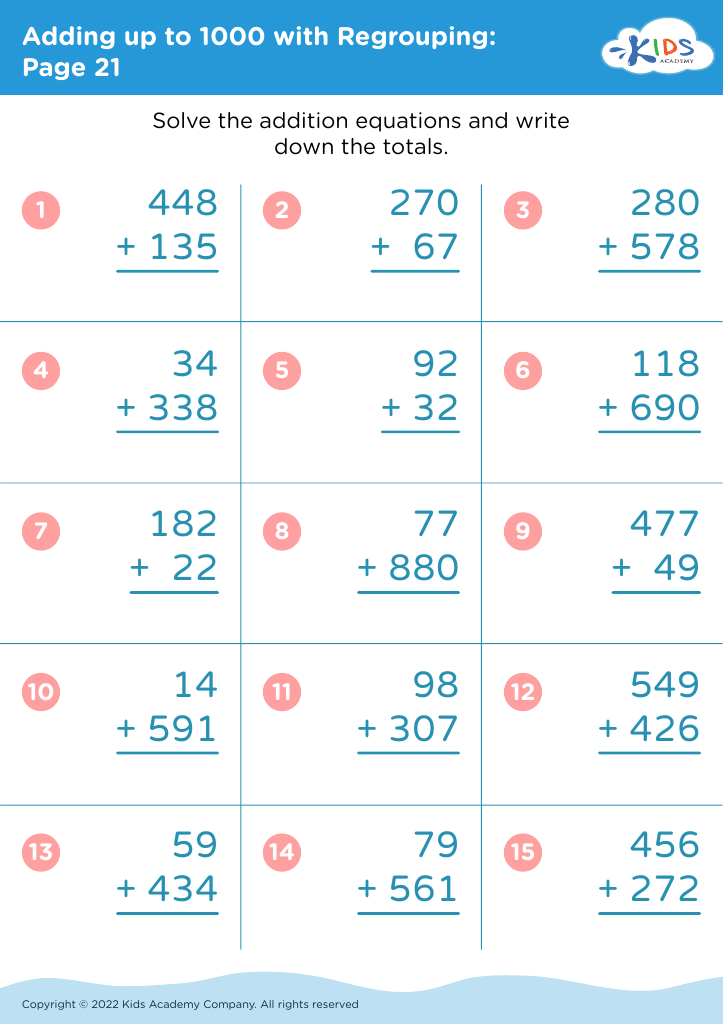
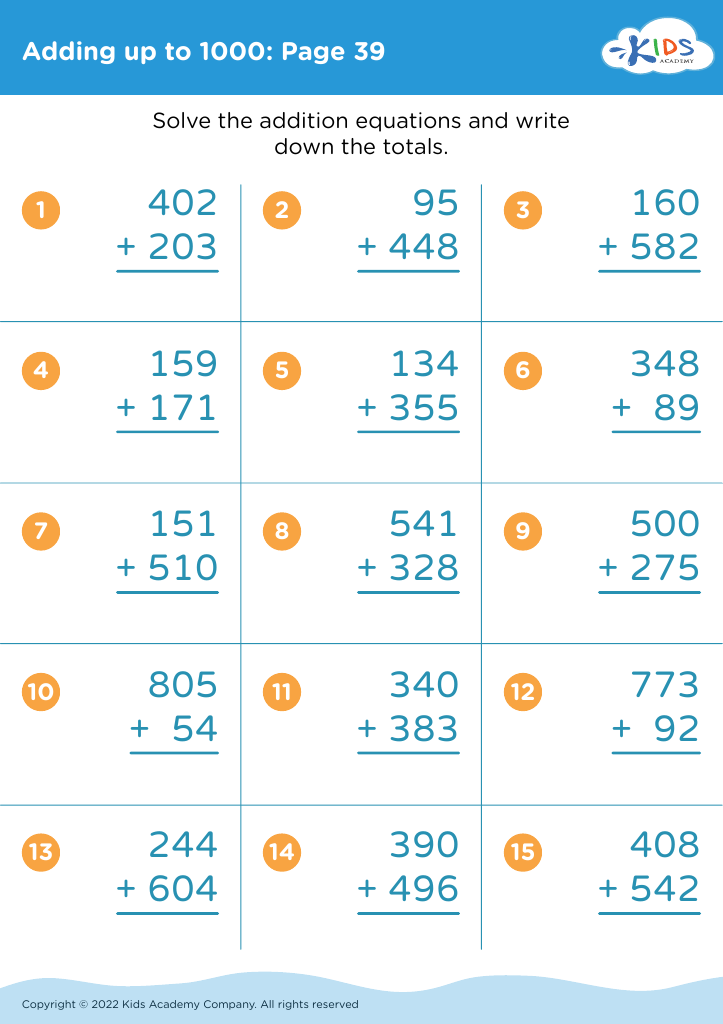
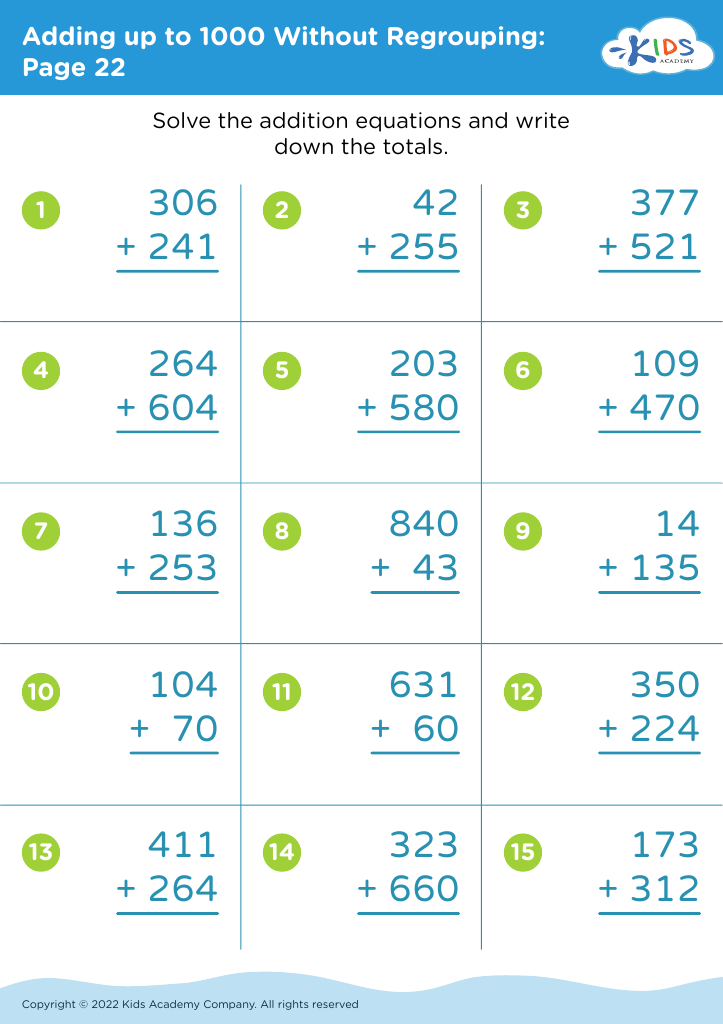
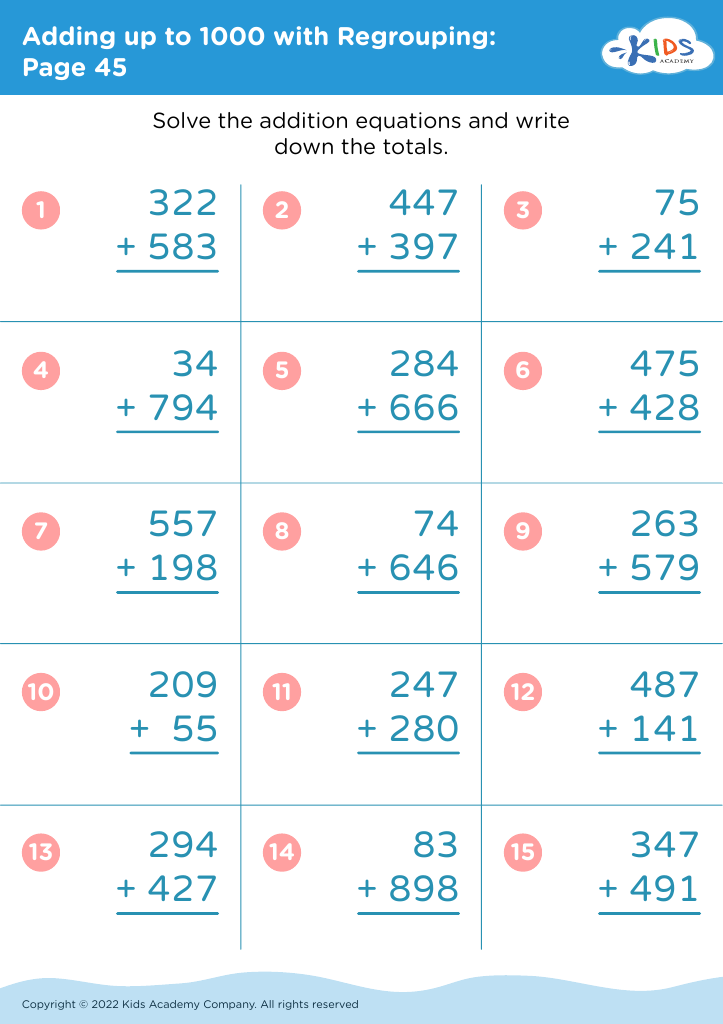
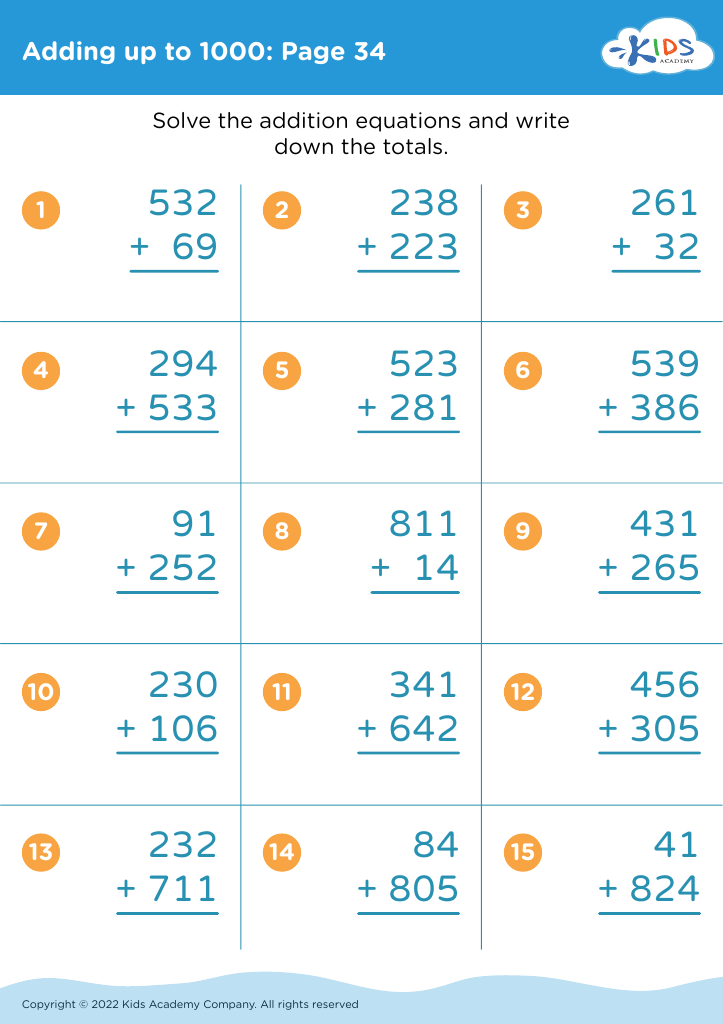
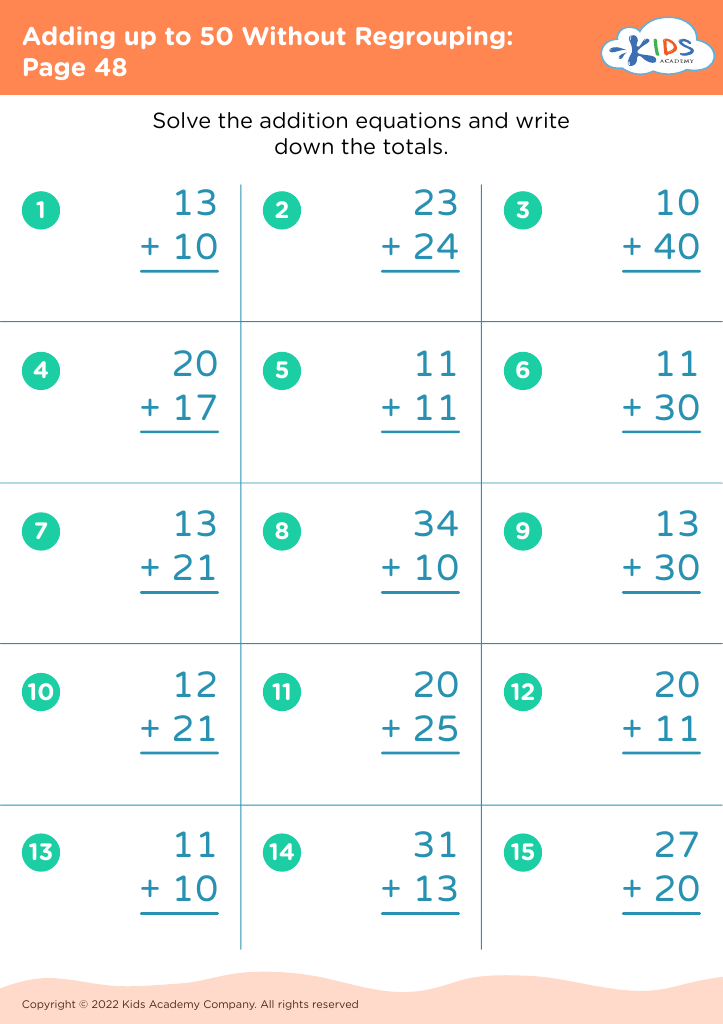








Fine motor skills are crucial for children ages 8-9, impacting their writing abilities and mathematical understanding, particularly in addition and subtraction. At this stage, children refine their hand-eye coordination and dexterity, which are essential for effective writing. Mastery of fine motor skills enables students to form letters neatly and maintain proper spacing, leading to improved legibility in their written work. This skillfulness also creates a sense of pride and boosts their confidence in expressing their thoughts on paper.
In addition, fine motor skills play a significant role in performing arithmetic tasks, such as addition and subtraction. As children manipulate numbers, they often use counters or draw representations, which requires a steady hand and precision. Developing these skills enhances their ability to visualize problems and strengthens their overall mathematical understanding.
Parents and teachers should prioritize honing fine motor skills to support children's academic success. Engaging in activities like crafts, puzzles, and writing exercises can provide fun and valuable practice. With strong fine motor skills, children become more independent learners, capable of tackling schoolwork efficiently and creatively, leading to a positive and fulfilling educational experience.








