
Improve counting Addition & Subtraction Worksheets for Ages 8-9
3 filtered results
Difficulty Level
Grade
Age
-
From - To
Subject
Activity
Standards
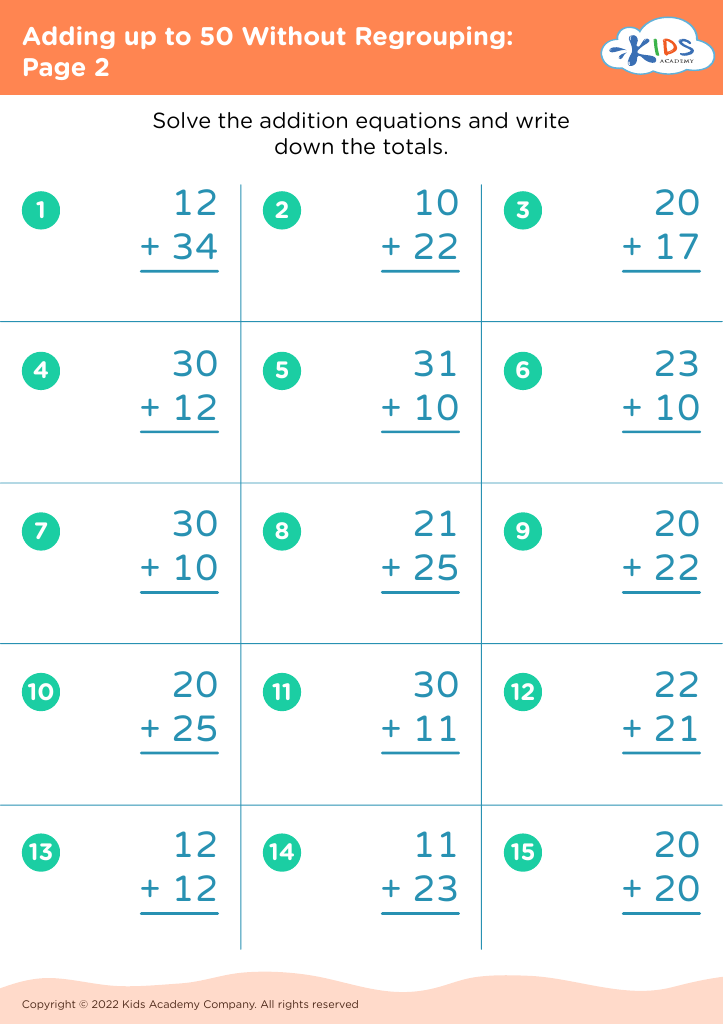
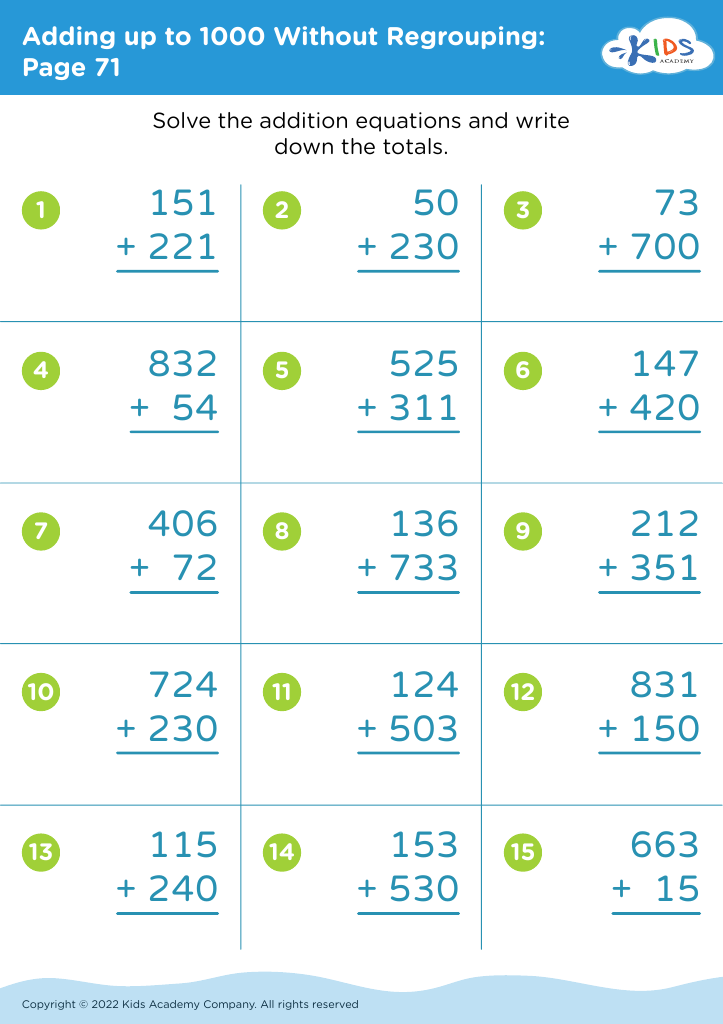
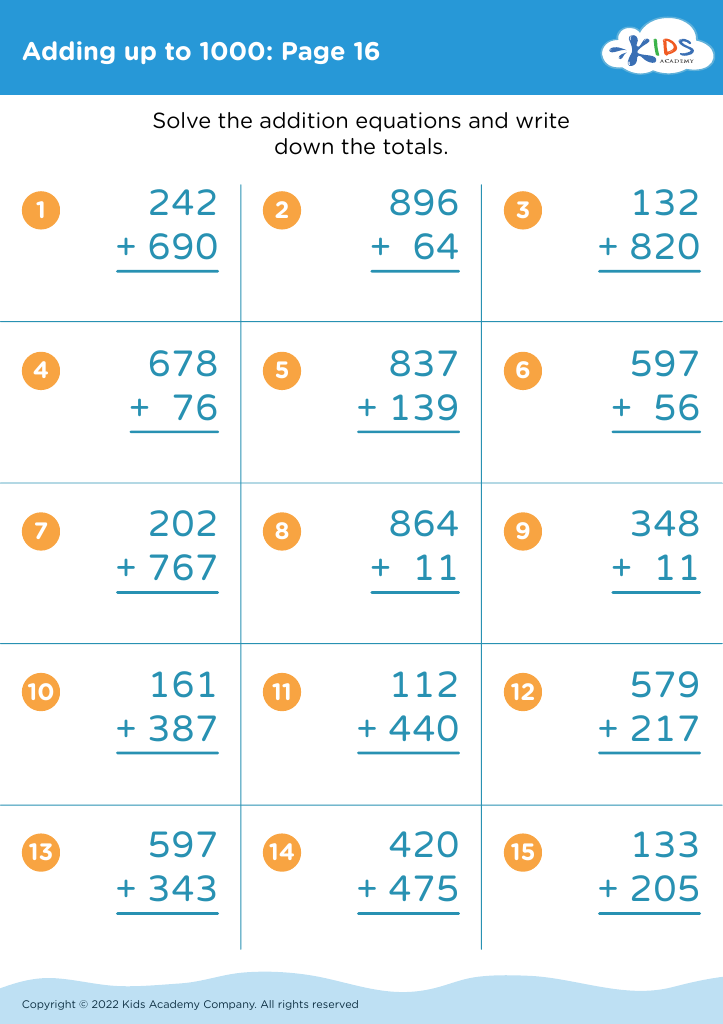
Boost your child's math skills with our "Improve Counting Addition & Subtraction Worksheets for Ages 8-9." Specifically designed to enhance counting and arithmetic proficiency, these engaging worksheets offer practice in adding and subtracting numbers within 100. Perfect for reinforcing classroom learning or enhancing homeschooling curricula, our carefully crafted exercises help children build strong foundational skills. Through a variety of problems that combine fun themes with educational content, kids can enjoy mastering essential math concepts. Empower your 8-9-year-old to confidently tackle counting, addition, and subtraction challenges with our expertly designed worksheets that make learning entertaining and effective.
Favorites
With answer key
Interactive
Join Kids Academy for Free
Who is primarily going to use this learning content?








Counting, addition, and subtraction are foundational math skills critical for the cognitive development of children aged 8-9. At this age, kids transition from simple counting to understanding more complex mathematical concepts. Strengthening these skills ensures they have a solid base for future learning in mathematics and other STEM subjects, enhancing academic confidence and performance.
Caring about improvement in these areas offers numerous benefits. Firstly, mastering addition and subtraction fosters problem-solving skills and logical thinking. These abilities extend beyond math classes, aiding in subjects like science, where measurement and data analysis are vital. Secondly, proficiency in basic math operations is essential for daily life activities, such as handling money, measuring ingredients in recipes, or planning time, thereby promoting practical life skills.
Moreover, engaging with math through fun and interactive methods can boost a child's enthusiasm for learning, reduce math anxiety, and cultivate a positive attitude toward school. Parents and teachers play crucial roles in this developmental phase by offering support, encouragement, and resources, such as educational games, hands-on activities, and relevant real-world examples.
Ultimately, by prioritizing these mathematical fundamentals, parents and teachers not only enable children to excel academically but also equip them with critical thinking and everyday skills pivotal for their future success.








