Improves counting skills Addition & Subtraction Worksheets for Ages 8-9
5 filtered results
-
From - To
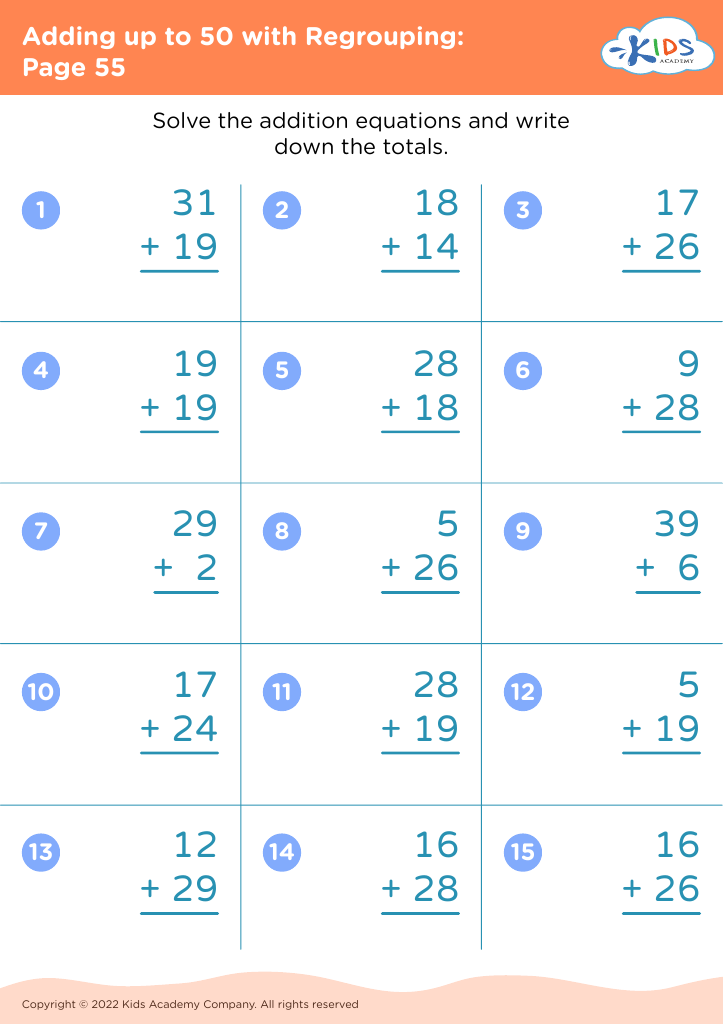
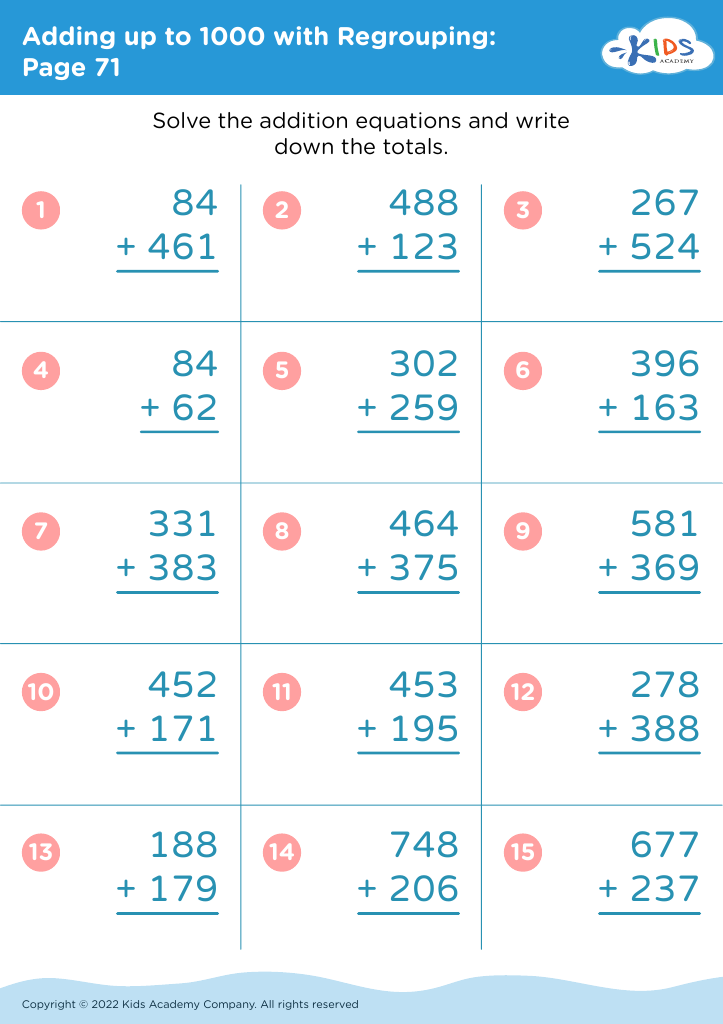
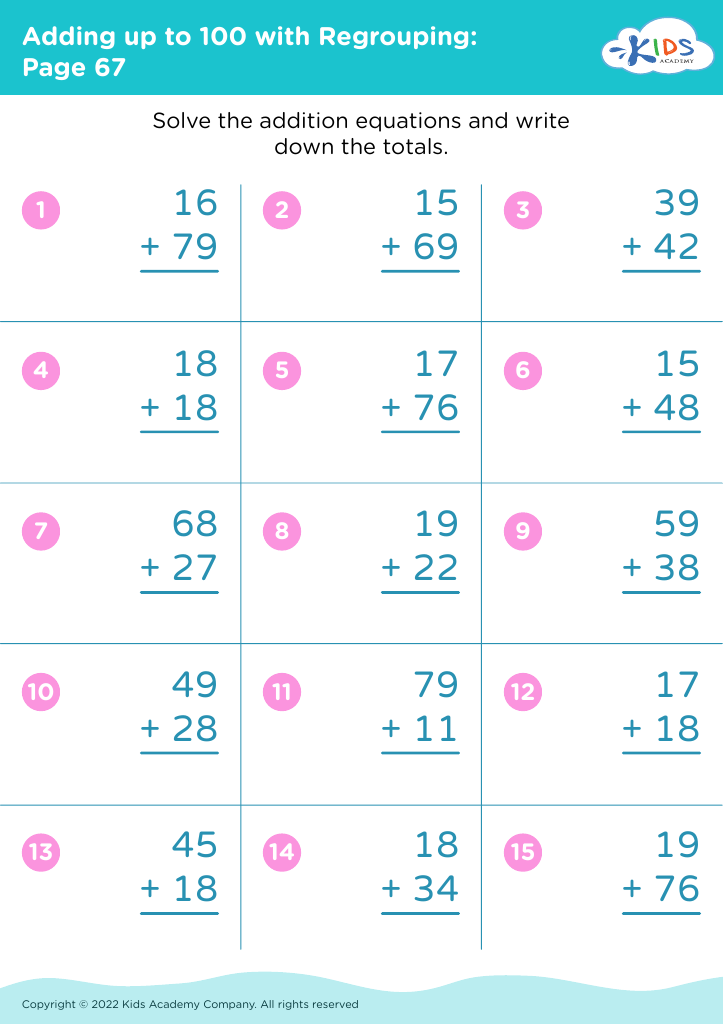
Boost your child's counting skills with our engaging addition and subtraction worksheets designed specifically for ages 8-9. These worksheets provide a fun and interactive way for children to practice and reinforce their math abilities. From simple exercises to more challenging problems, each printable activity helps consolidate counting, addition, and subtraction fundamentals. Perfect for at-home learning or classroom use, our resources encourage children to explore numbers with confidence. Foster a love for math while improving their counting skills and building a solid foundation for future mathematical concepts. Discover the joy of learning with our carefully crafted worksheets today!
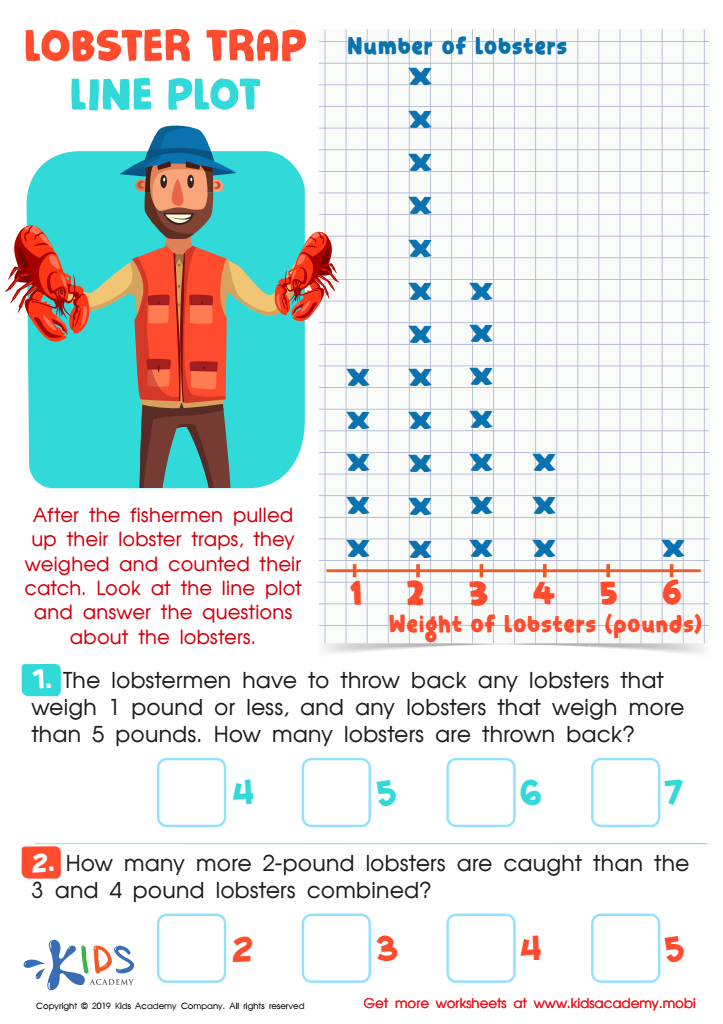
Lobster Trap Line Plot Worksheet
 Assign to My Students
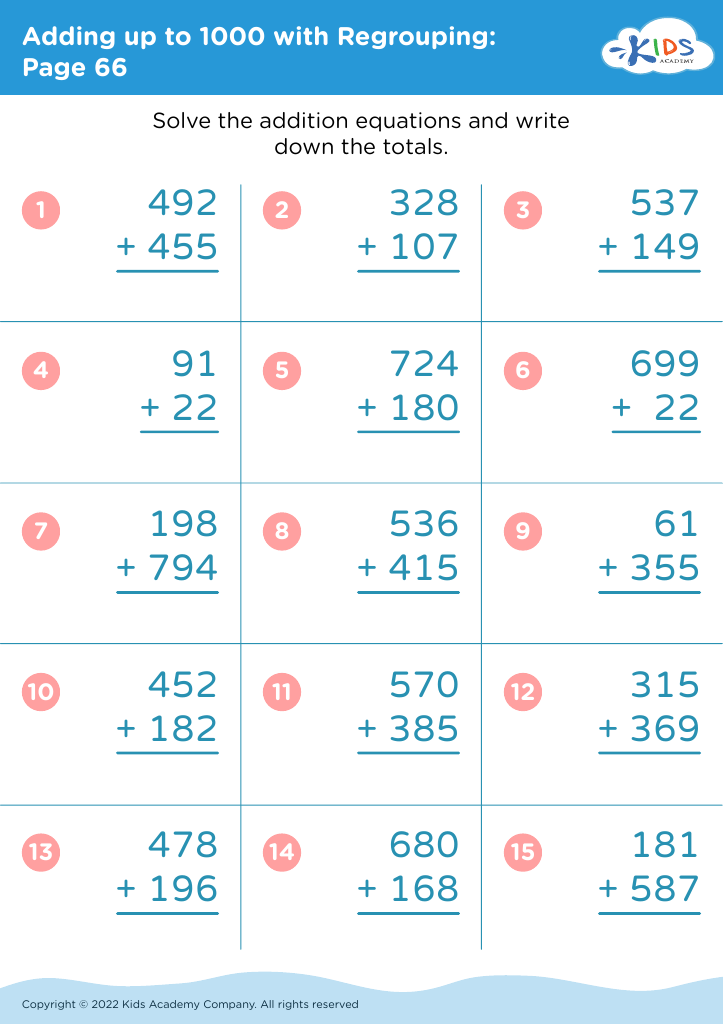








Parents and teachers should prioritize enhancing counting skills, as well as addition and subtraction, for children aged 8-9, because these foundational math abilities are crucial for academic success and everyday problem-solving. At this developmental stage, children are not just memorizing numbers; they are beginning to understand mathematical concepts and relationships. Improved counting skills help children recognize patterns and sequences, fostering their ability to perform more complex operations in the future.
Additionally, proficiency in addition and subtraction enables children to tackle real-world situations, like budgeting their allowance or calculating time. It builds their confidence and independence in managing everyday tasks. Moreover, strong math foundations support higher-order thinking skills, helping children develop critical and analytical thinking abilities essential for learning across all subjects.
Also, as standardized testing and curriculum expectations increase in complexity, enhancing these basic skills can significantly reduce anxiety and boost performance. By investing time in developing these capacities, parents and teachers are equipping children with tools they will rely on throughout their academic journey and in everyday life, thus laying the groundwork for future learning and success. As a result, fostering these skills is not just beneficial; it is essential for comprehensive educational development.








