Improving subtraction skills Addition & Subtraction Worksheets for Ages 8-9
3 filtered results
-
From - To
Enhance your child's subtraction skills with our expertly designed Addition & Subtraction Worksheets for ages 8-9. These engaging worksheets cater to young learners, focusing on improving subtraction techniques and building a strong mathematical foundation. Students will navigate through a variety of subtraction problems, gradually advancing in difficulty to boost their confidence and proficiency. Our interactive and visually appealing worksheets are crafted by experienced educators to ensure they meet the educational needs of children, helping them master subtraction while making learning fun and enjoyable. Unlock your child's potential with our comprehensive subtraction worksheets today!
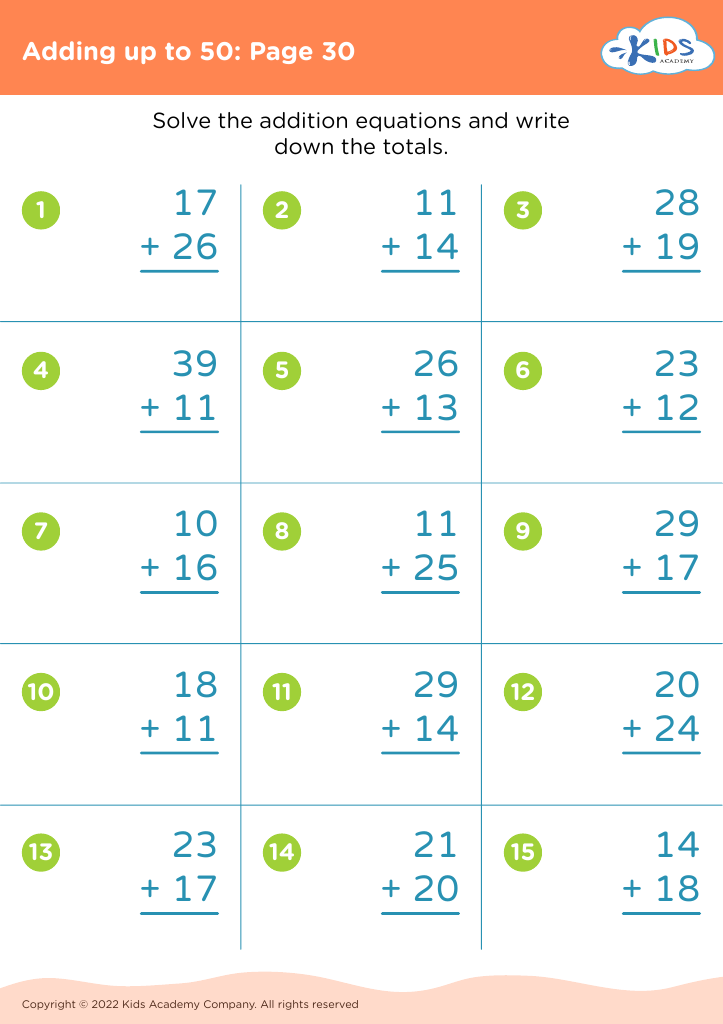
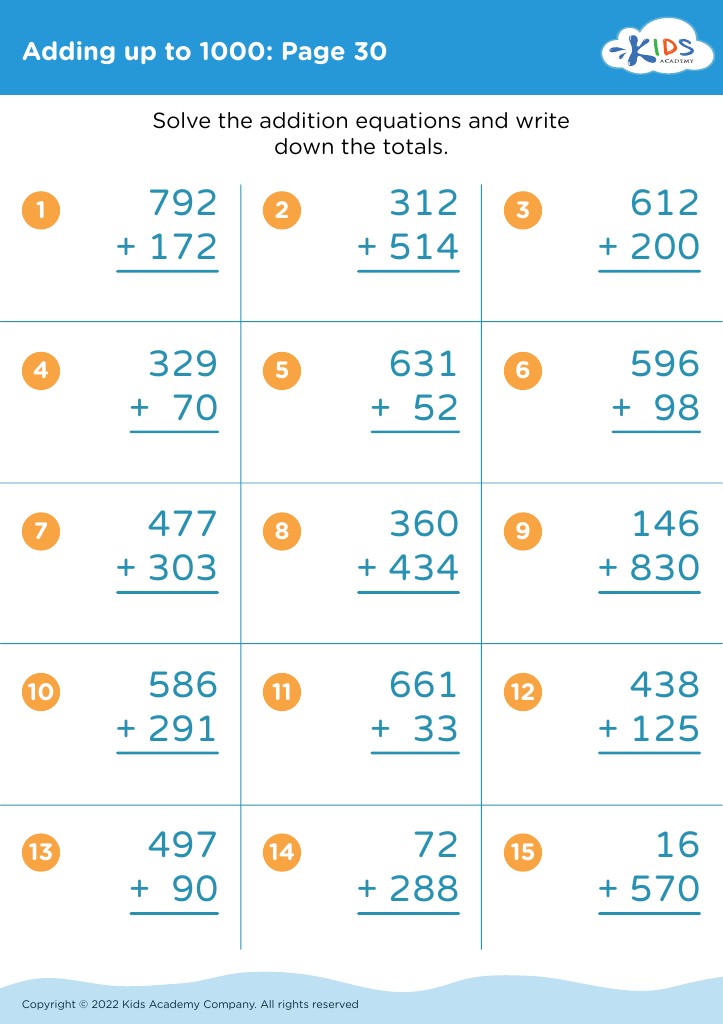
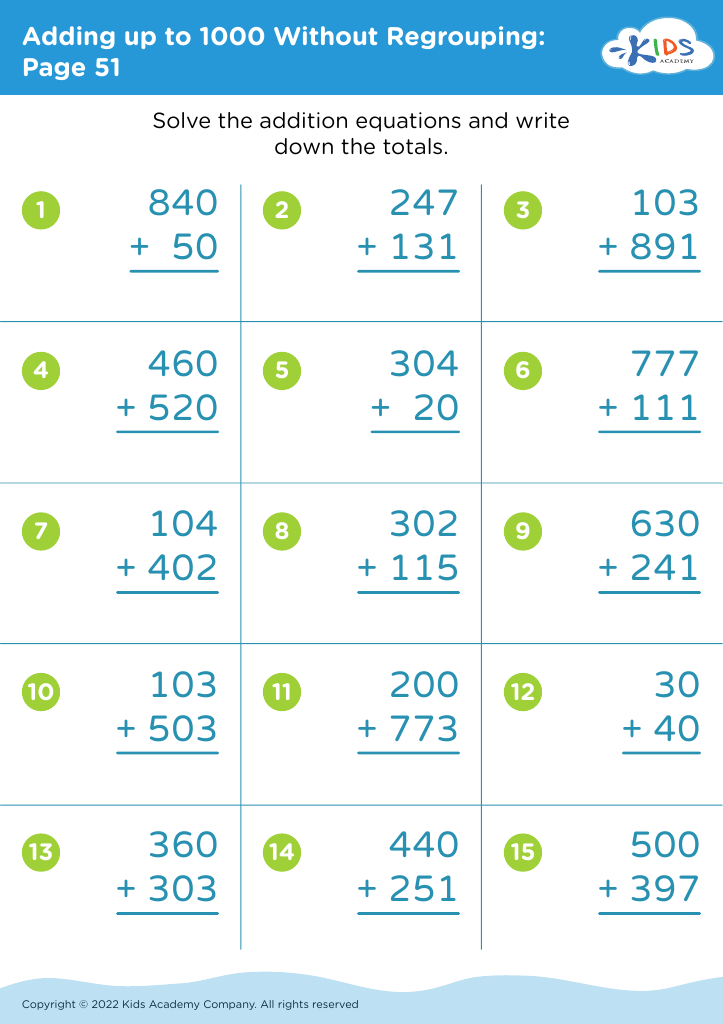








Improving subtraction skills, alongside addition, is crucial for children aged 8-9 because it lays the foundational groundwork for their future success in mathematics and everyday problem-solving. At this age, students are transitioning from basic arithmetic to more complex mathematical concepts. Mastery in subtraction, a key component of arithmetic, is essential for understanding related concepts such as borrowing techniques, number sense, and fact families.
By strengthening subtraction skills, students enhance their ability to perform multi-step problems and apply logical thinking. This boosts their confidence in tackling advanced math topics like multiplication, division, and fractions later on. Additionally, proficient subtraction skills aid in real-life applications, such as making change, budgeting, and measuring, which are necessary competencies in daily life.
Parents and teachers play a pivotal role in supporting this learning stage. Engaging children with hands-on activities, digital tools, and real-world examples can make the process enjoyable and relatable. Monitoring and encouraging consistent practice also help reinforce these essential skills. Ensuring that children develop solid subtraction and addition capabilities sets a positive trajectory for academic achievement, cultivating their analytical skills and empowering them with the confidence to approach subjects that require precision and critical thinking.








