Number comprehension Addition & Subtraction Worksheets for Ages 8-9
13 filtered results
-
From - To
Enhance your child's mathematical skills with our engaging Number Comprehension Addition & Subtraction Worksheets designed specifically for ages 8-9. These worksheets focus on improving number understanding through fun and interactive exercises. Kids will explore various number concepts, practice addition and subtraction, and develop critical thinking skills essential for mastering mathematics. Our printables feature colorful illustrations and diverse problems to keep young learners motivated. Ideal for classroom use or at-home practice, these worksheets will help children confidently tackle math problems while building a strong foundational understanding. Start boosting your child's number comprehension today and watch their math skills flourish!
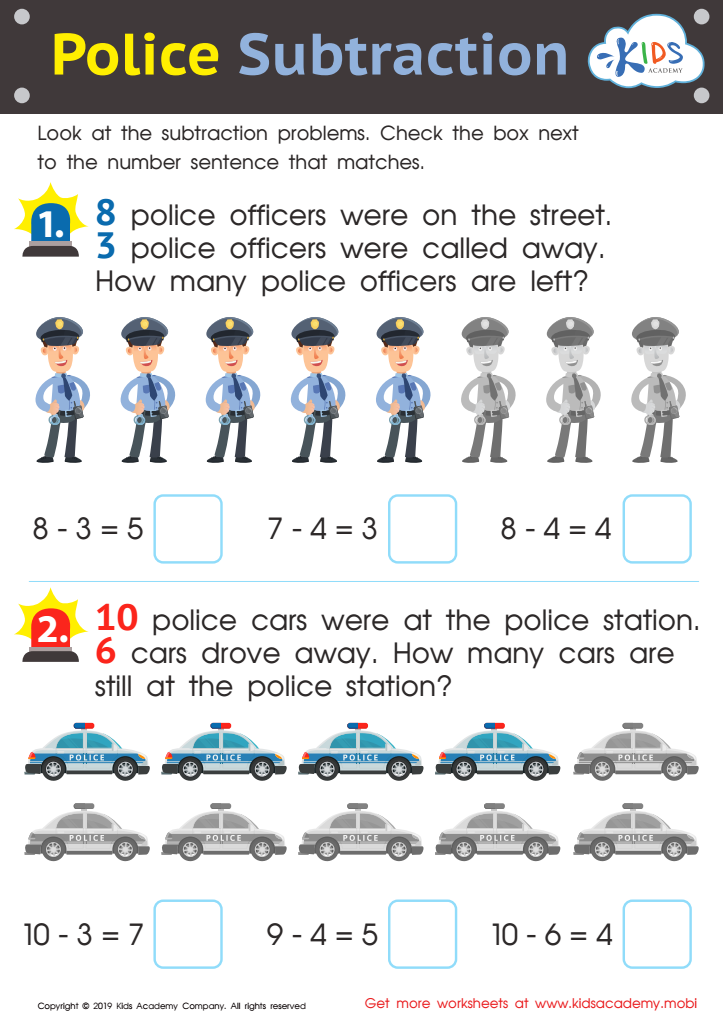
Police Subtraction Worksheet
 Assign to My Students
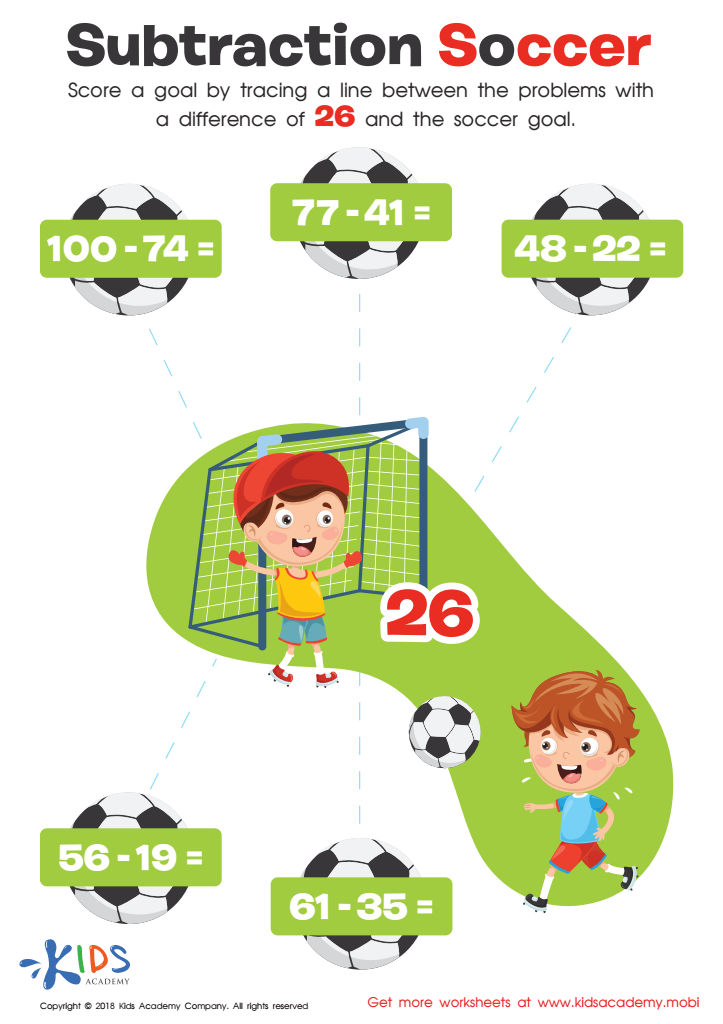
Subtraction Soccer Worksheet
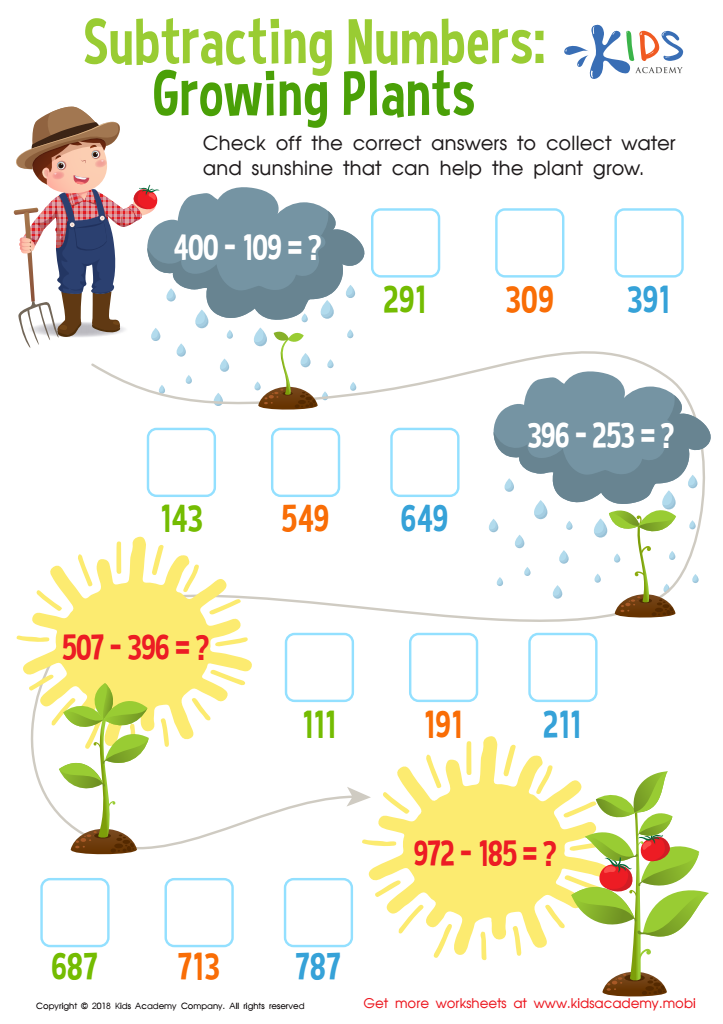
Subtracting Numbers: Growing Plants Worksheet
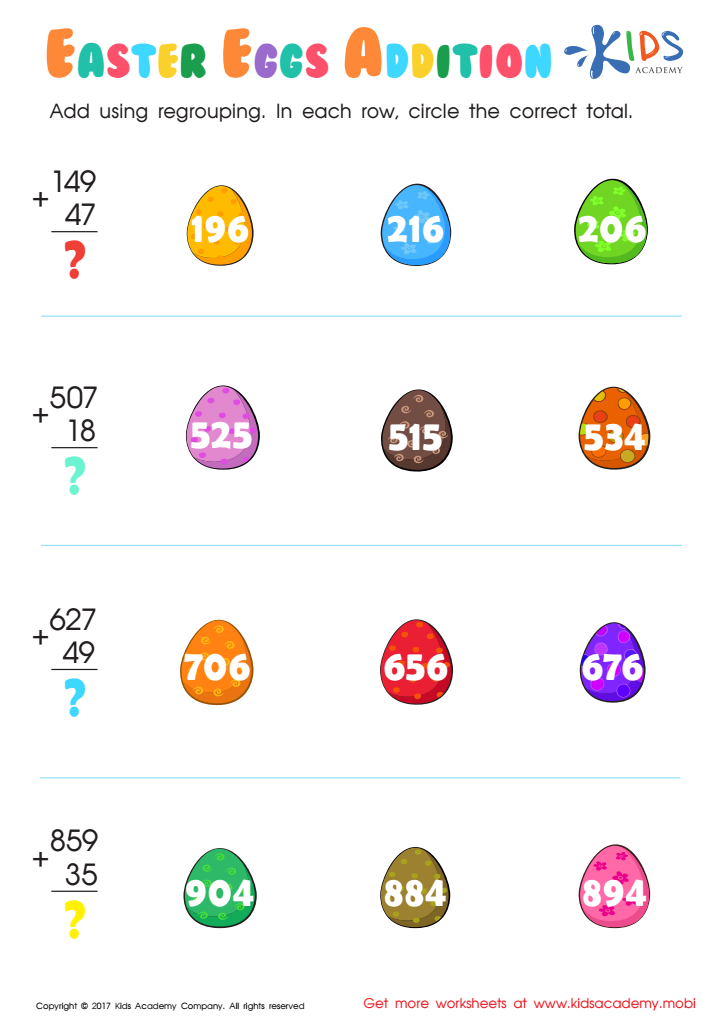
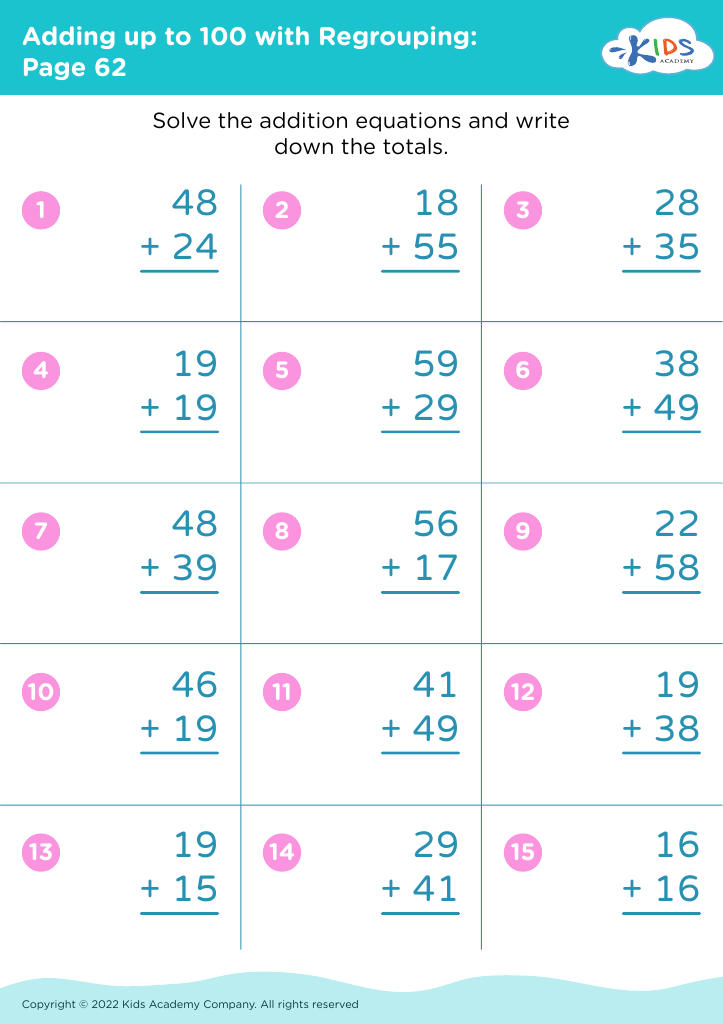
Addition with Regrouping Worksheet
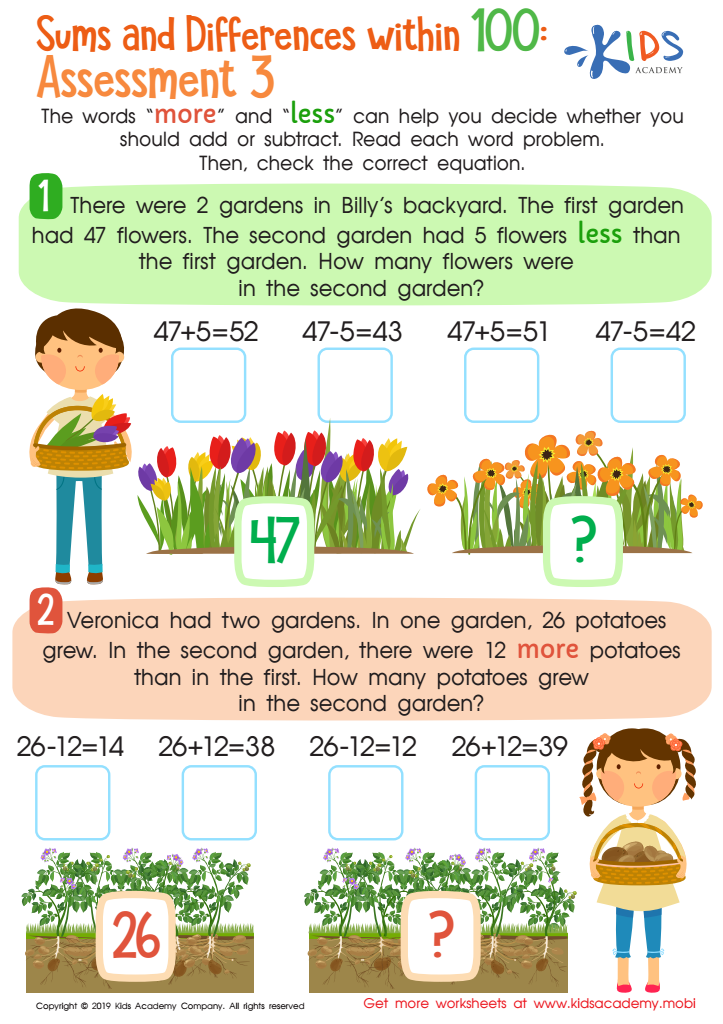
Sums and Differences Within 1 - Assessment 1 Worksheet
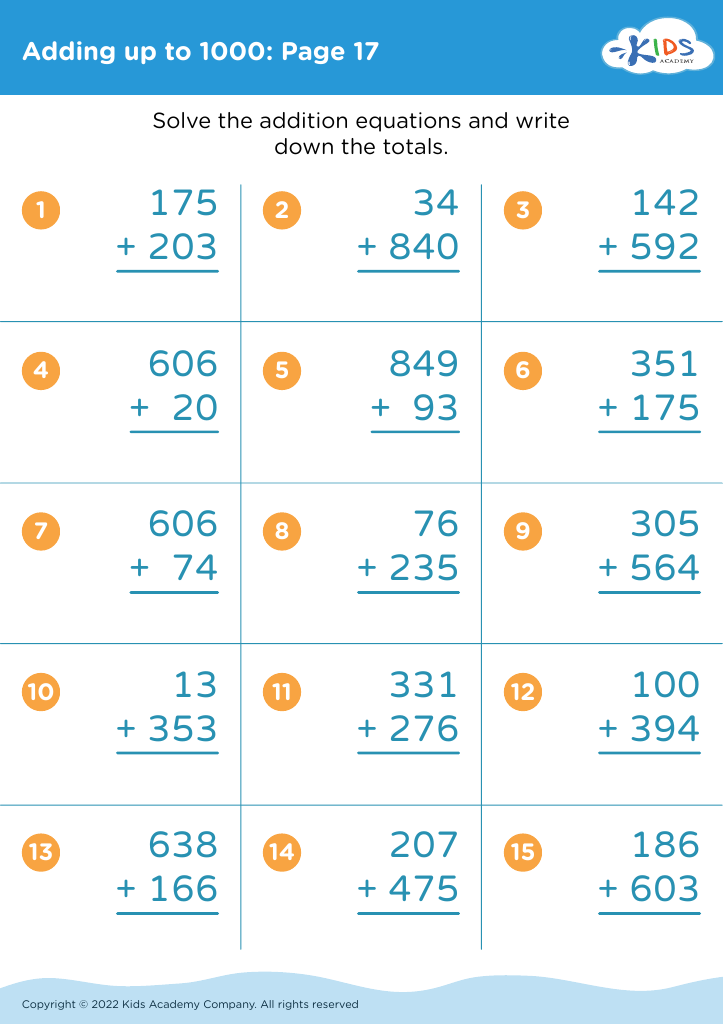
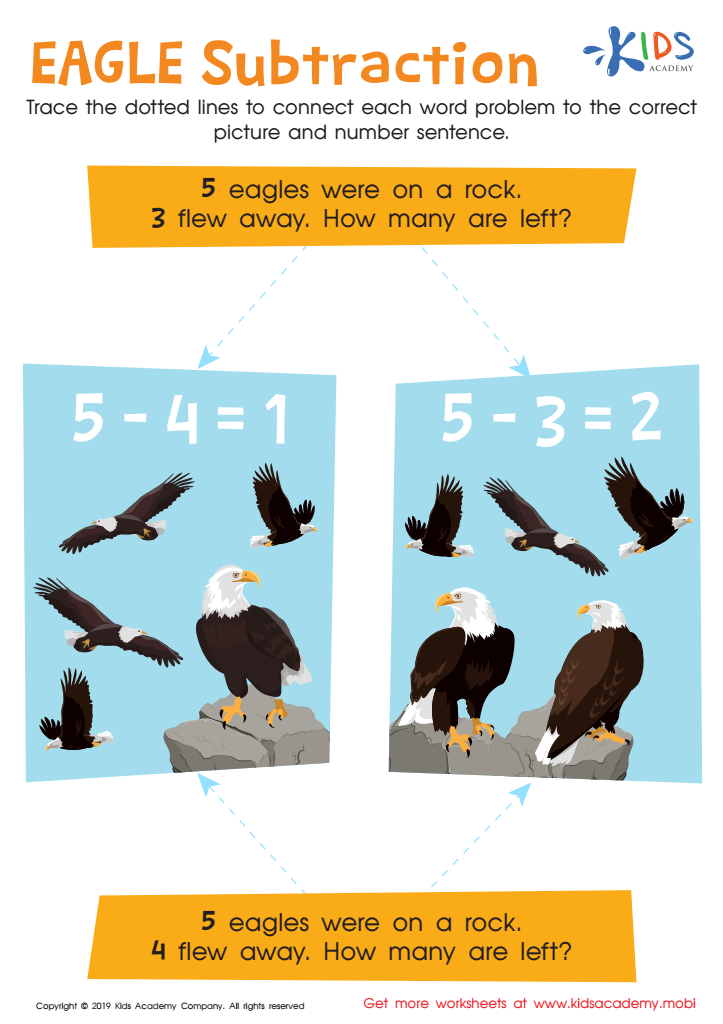
Eagle Subtraction Worksheet
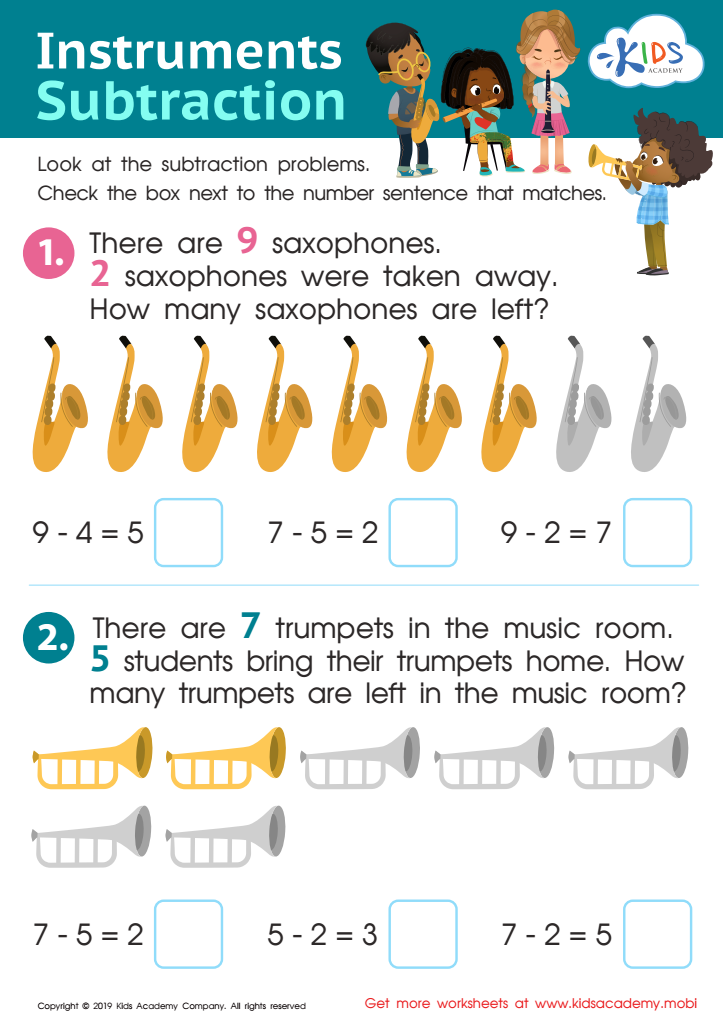
Instrument Subtraction Worksheet
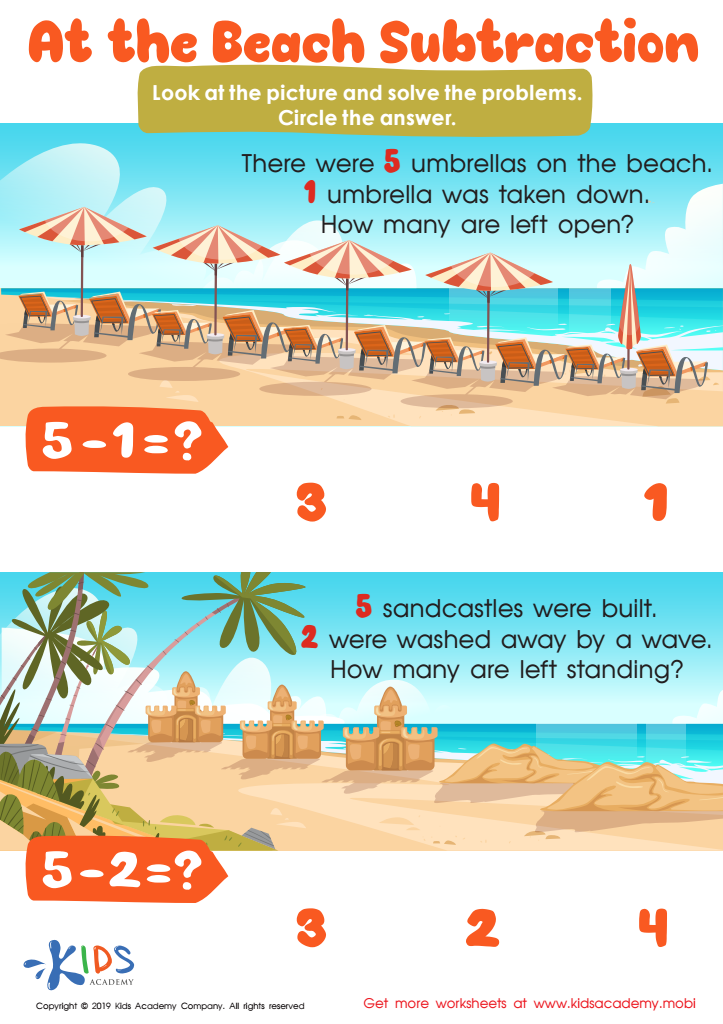
At the Beach Subtraction Worksheet
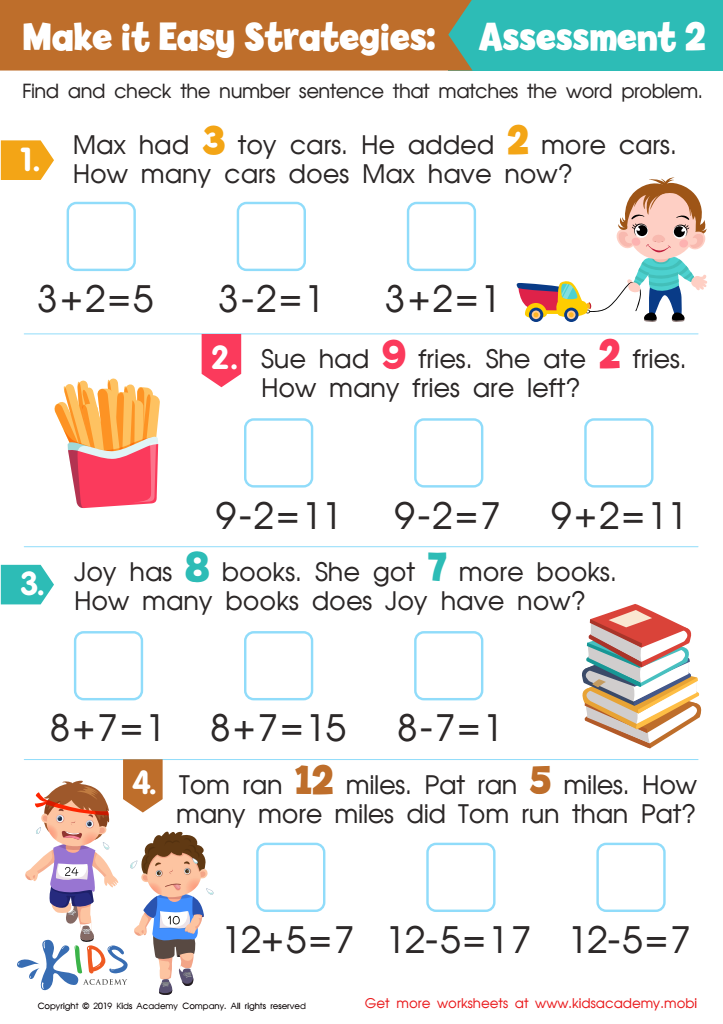
Make it Easy Strategies: Assessment 2 Worksheet
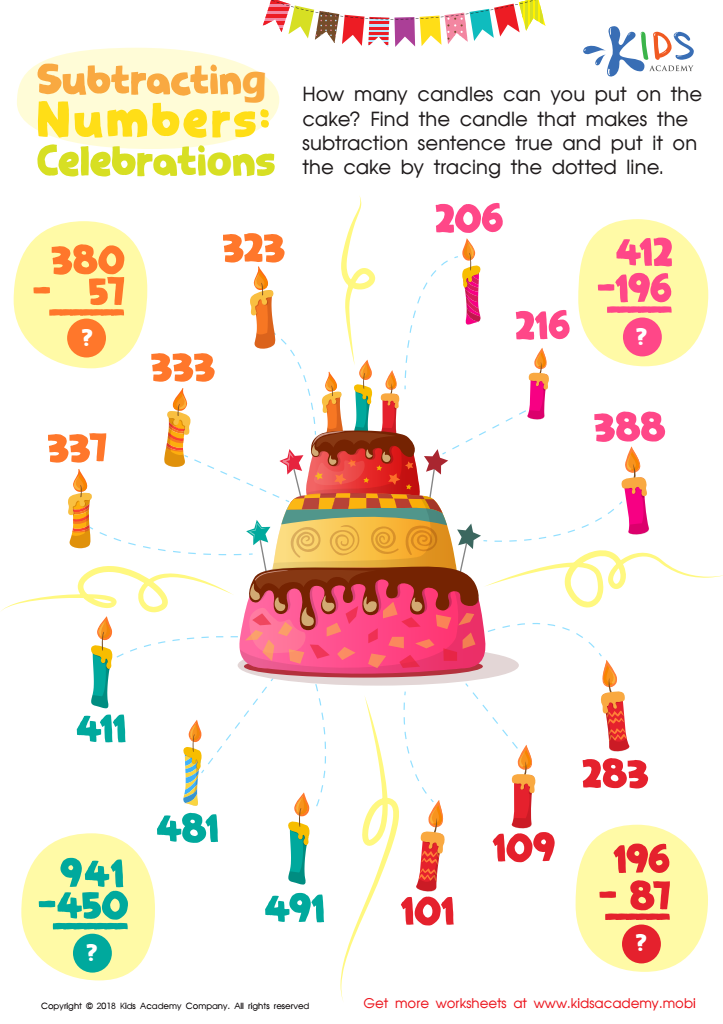
Subtracting Numbers: Celebrations Worksheet








Number comprehension in addition and subtraction is crucial for children aged 8-9 as it lays the foundation for future mathematical understanding and problem-solving skills. During this developmental stage, children begin to grasp more complex mathematical concepts, making it imperative for parents and teachers to support their learning in these areas. Proficient addition and subtraction skills enhance their ability to tackle not just math itself, but subjects that rely on numerical reasoning, like science and economics.
Developing a strong number sense promotes confidence and encourages a positive attitude towards math, reducing anxiety about the subject in future academic years. Mastery of foundational skills enables children to engage effectively with word problems, fostering critical thinking and analytical abilities as they learn to identify and represent real-world situations mathematically.
Furthermore, these skills foster independence in everyday tasks, such as budgeting allowance or measuring ingredients for cooking, reinforcing their practical importance. Investing time and resources in nurturing number comprehension helps children develop perseverance, the ability to think creatively, and resilience, qualities that benefit them beyond academic settings. Parents and teachers who prioritize these skills are playing a vital role in empowering children to become successful, numerically literate adults.








