Practice inference skills Addition & Subtraction Worksheets for Ages 8-9
3 filtered results
-
From - To
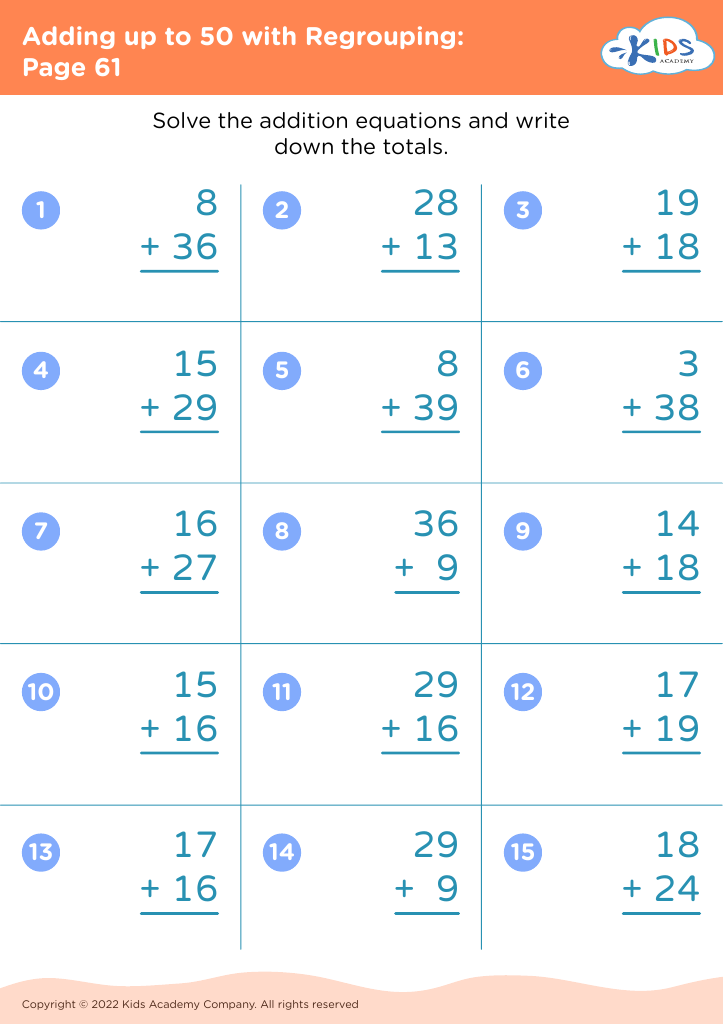
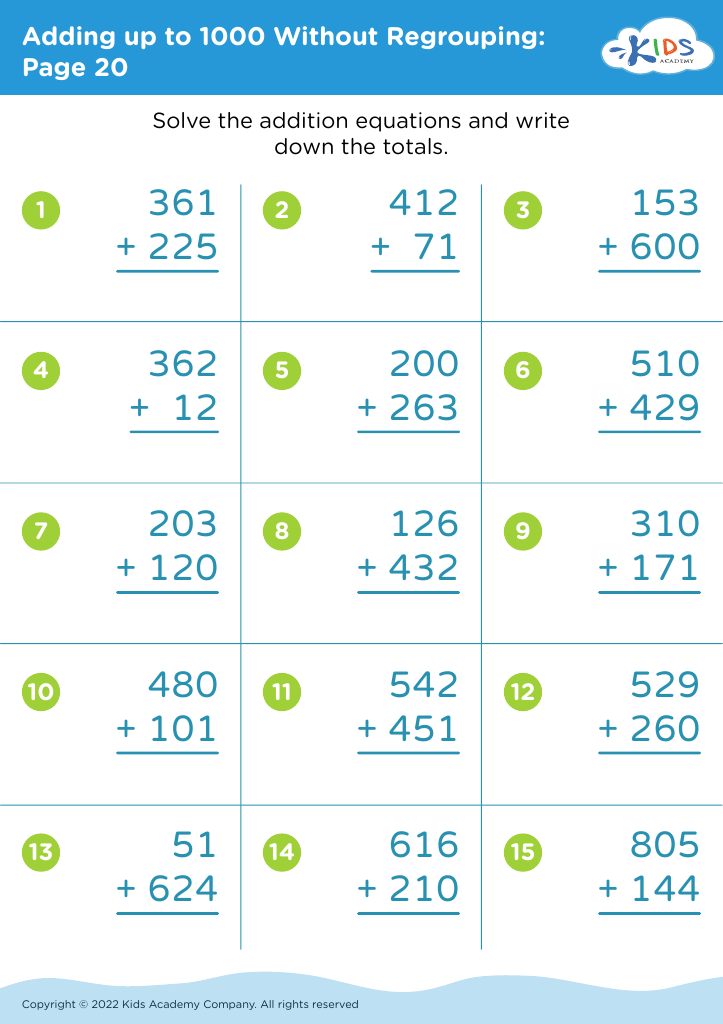
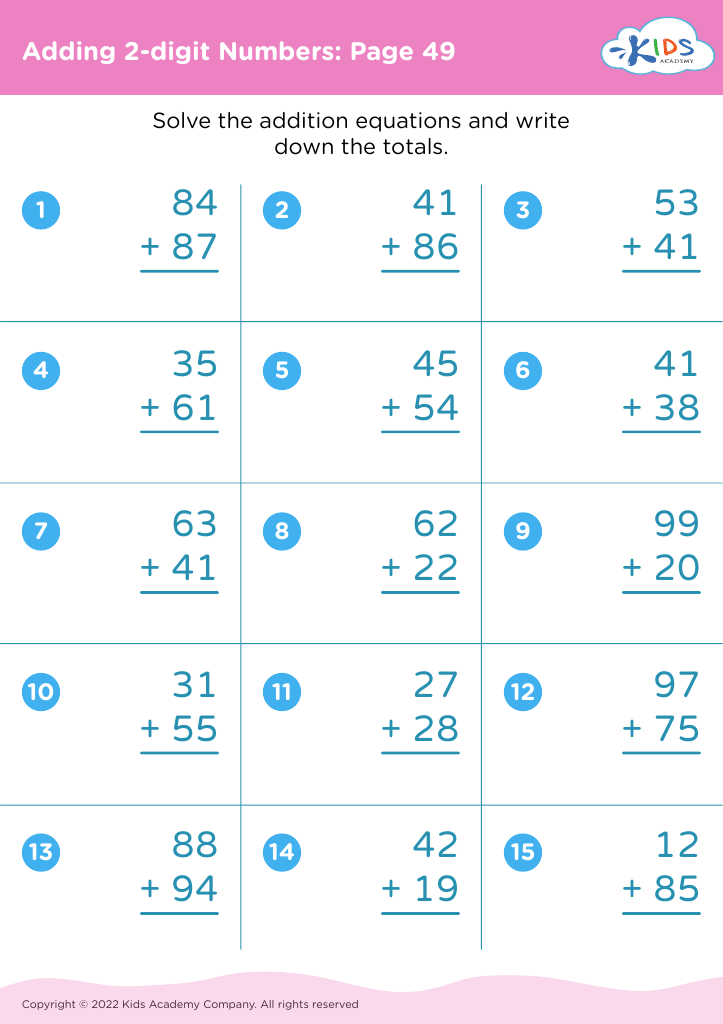
Enhance your child's math proficiency with our "Practice Inference Skills: Addition & Subtraction Worksheets" designed for ages 8-9. These engaging and educational resources help young learners develop critical thinking and problem-solving abilities through structured math problems. Perfectly tailored for 3rd graders, the worksheets integrate captivating exercises that focus on making logical inferences while practicing addition and subtraction. Foster confidence and academic growth with these expertly crafted worksheets that ensure a strong grasp of fundamental math concepts. Supplement your child's learning journey and watch them excel in both math and logical reasoning with our thoughtfully designed practice sheets.








Parents and teachers should prioritize developing inference skills in addition and subtraction for children aged 8-9 because these skills are foundational for future mathematical proficiency and overall cognitive development. Inference skills enable children to go beyond rote memorization of arithmetic facts, fostering deeper comprehension and problem-solving abilities. By practicing inference, children learn to recognize patterns, make educated guesses, and apply logical reasoning—skills that are crucial for tackling more advanced math topics such as multiplication, division, and algebra.
Moreover, honing addition and subtraction strategies strengthens a child's mental arithmetic capability, making daily tasks, like shopping or time management, more manageable. These skills encourage flexibility in thinking and help children approach problems from multiple angles, promoting a mindset geared towards exploration and discovery.
For teachers, integrating inference exercises into math lessons can create a more engaging and interactive learning experience. Active participation through challenge-based learning helps students stay motivated and builds their confidence. For parents, reinforcing these skills at home supports consistency in education, bridging the gap between classroom learning and real-life application.
Ultimately, focusing on inference building in addition and subtraction equips children with essential tools for academic success and practical life skills, laying a robust foundation for enduring educational journeys.








