Recognizing numbers Addition & Subtraction Worksheets for Ages 8-9
3 filtered results
-
From - To
Strengthen your child's arithmetic skills with our "Recognizing Numbers Addition & Subtraction Worksheets for Ages 8-9." These engaging and educational worksheets are expertly designed to help your child master number recognition, addition, and subtraction. Perfect for classroom or home practice, our worksheets provide a fun and interactive way for kids to boost their math confidence. Aligned with common core standards, the exercises combine colorful visuals with progressively challenging tasks, ensuring a well-rounded approach to learning. Download today and watch your child’s math abilities flourish with each completed worksheet!
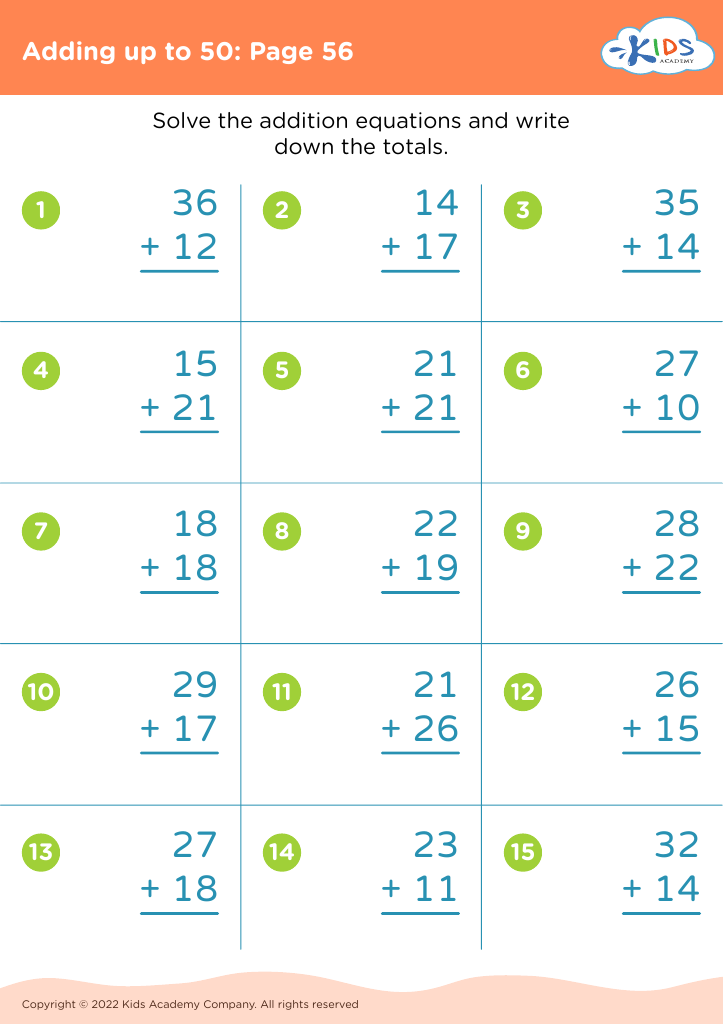
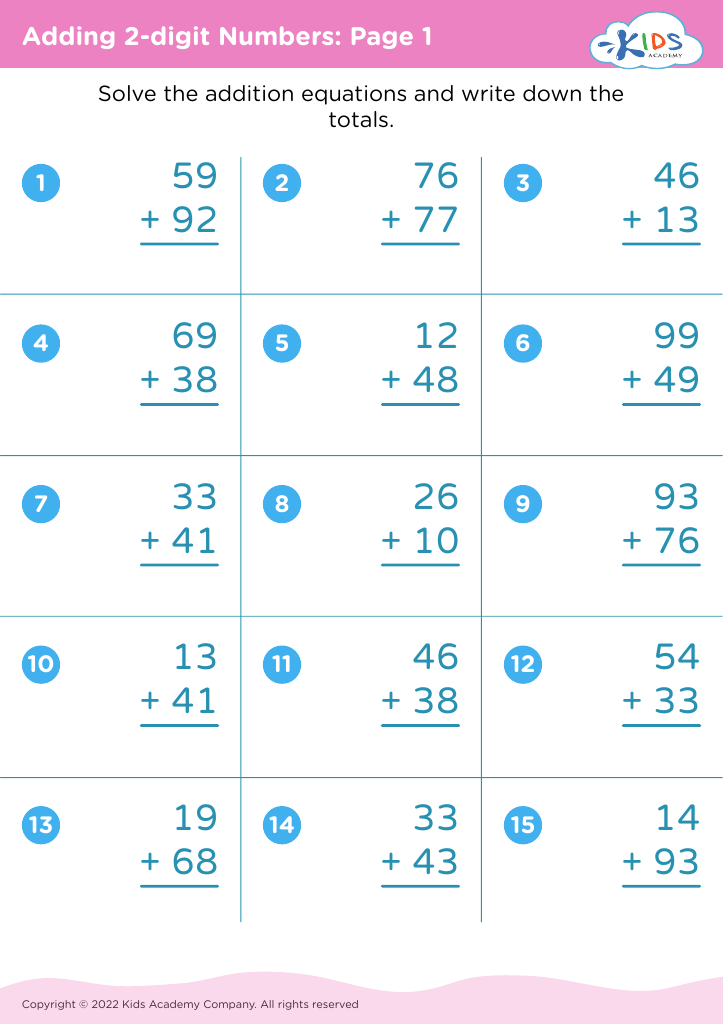
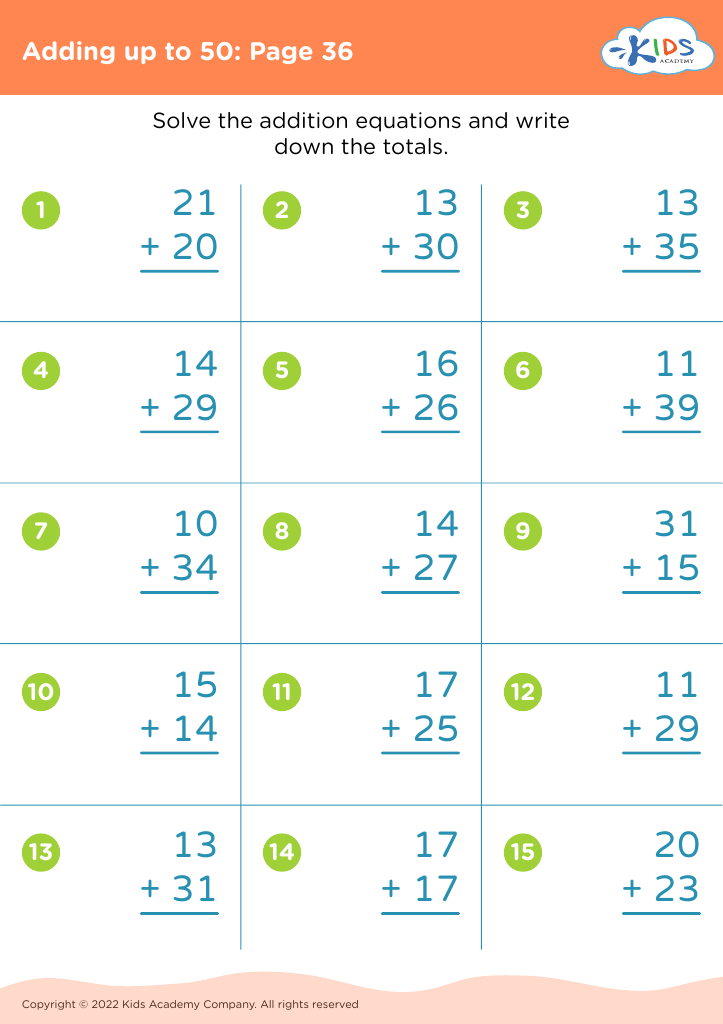








Recognizing numbers and understanding addition and subtraction are fundamental skills that act as building blocks for children's future learning in mathematics and everyday problem-solving. At ages 8-9, young students are navigating more complex concepts that rely on their ability to quickly identify numbers and perform basic arithmetic operations. Teachers and parents should care about the development of these skills because they directly influence a child's confidence and competence in a subject essential for academic success. By mastering addition and subtraction, children can smoothly progress to more advanced topics like multiplication, division, fractions, and beyond.
Moreover, these skills are critical outside the classroom as well. Children often encounter situations that require basic arithmetic, such as managing money, understanding time, and measuring ingredients in a recipe. Proficiency in these areas fosters independence and practical life skills.
Additionally, strong foundational math skills cultivate logical thinking and problem-solving abilities. Encouraging number recognition and knowledge of addition and subtraction helps children develop analytical skills that are transferable to various aspects of life, including computer science, economics, and day-to-day decision making. Hence, parents and teachers must prioritize and actively support the development of these critical early math skills to ensure both academic achievement and practical lifelong competencies for their children.








