Shape Recognition Addition & Subtraction Worksheets for Ages 8-9 - Page 2
31 filtered results
-
From - To
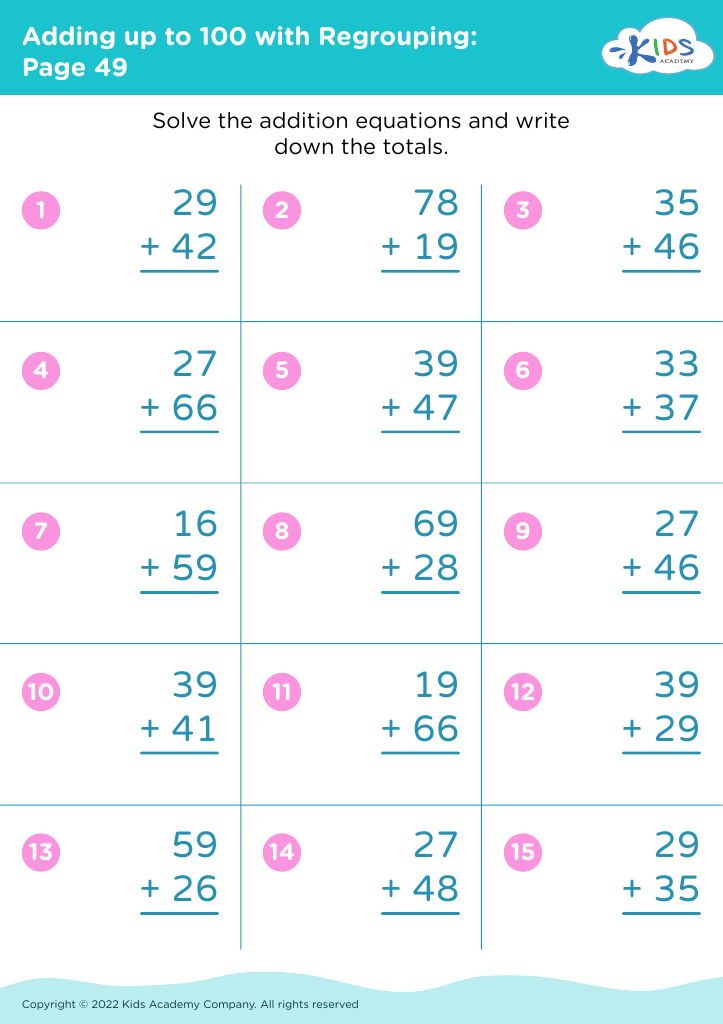
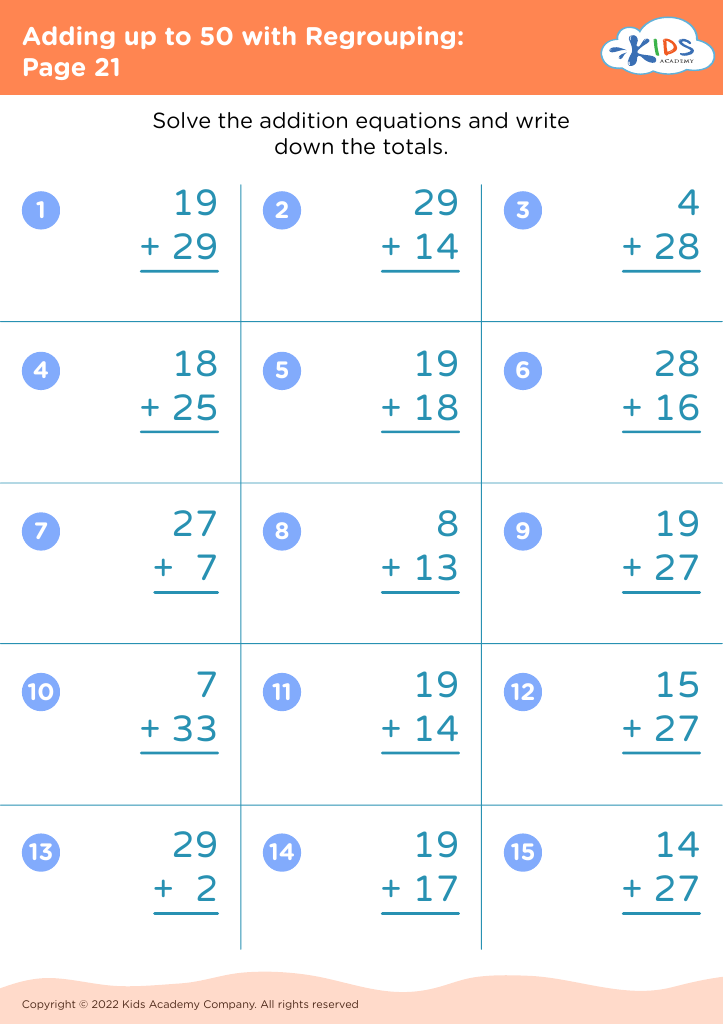
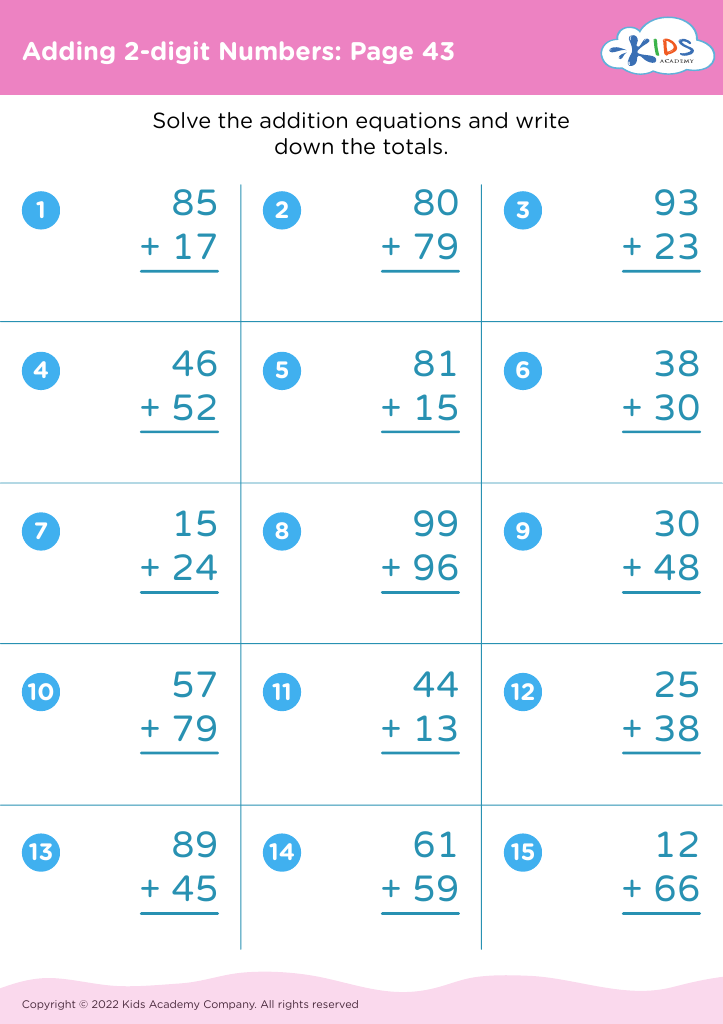
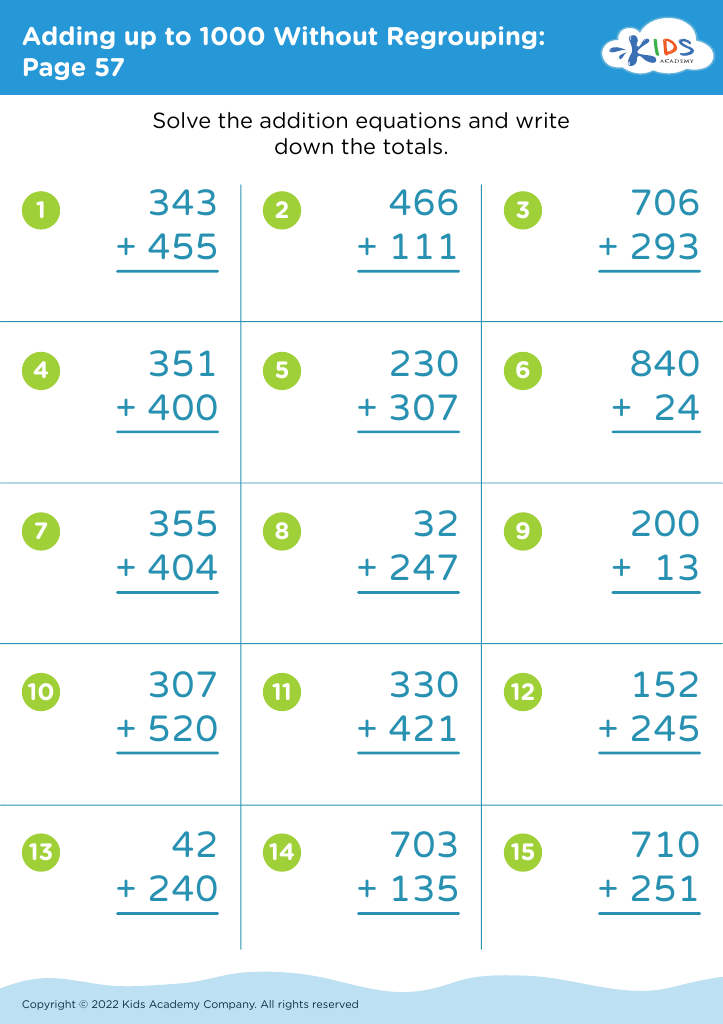
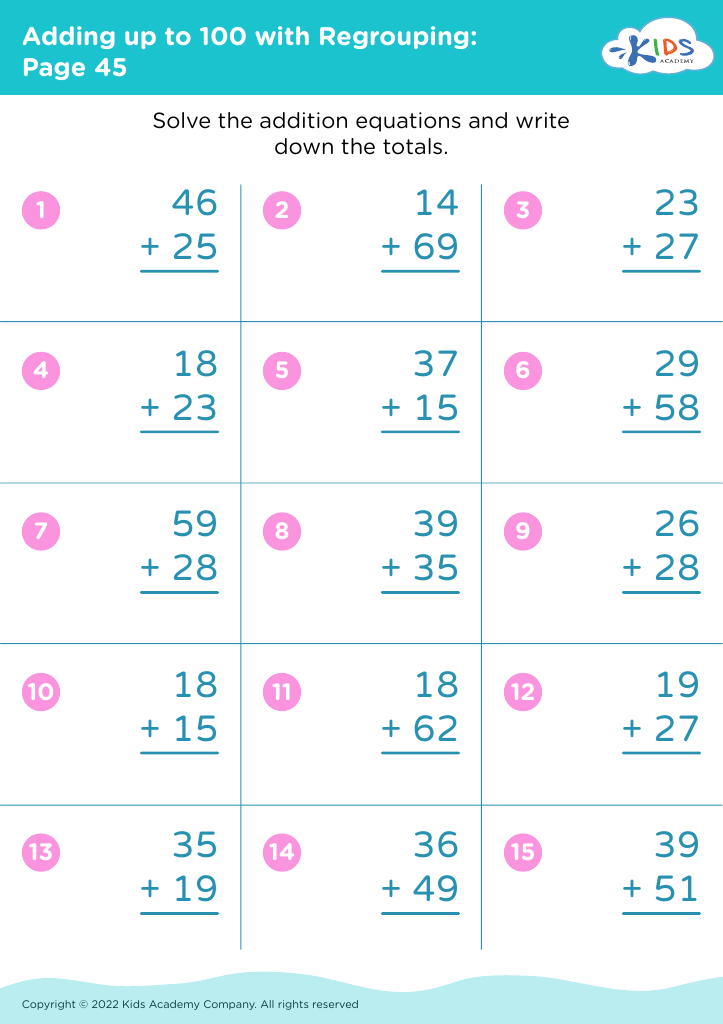
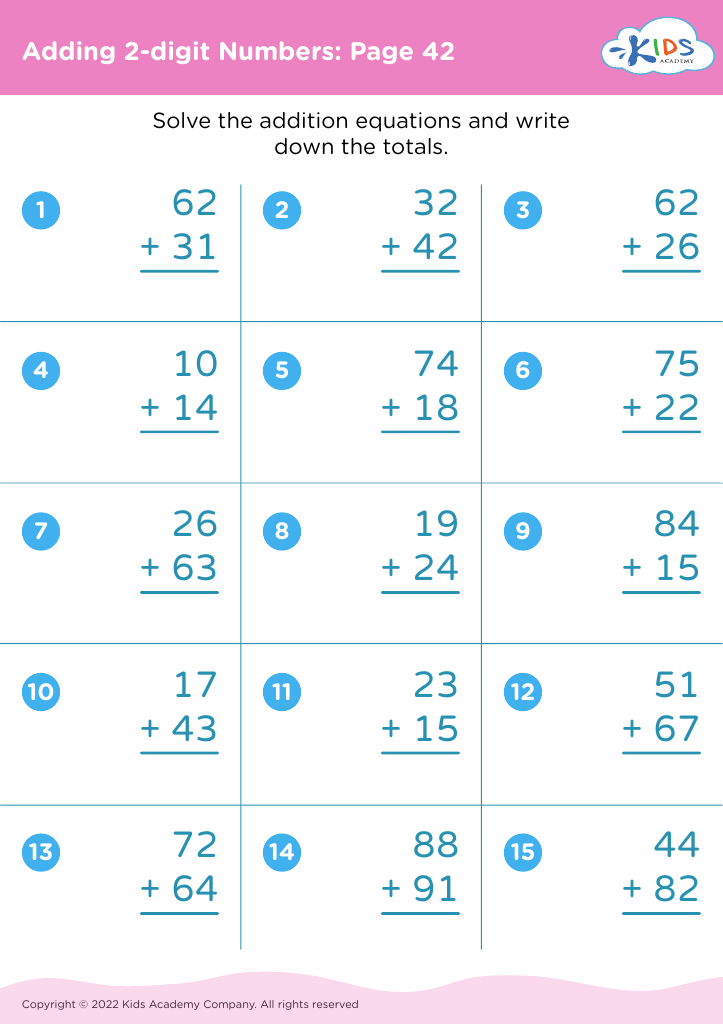
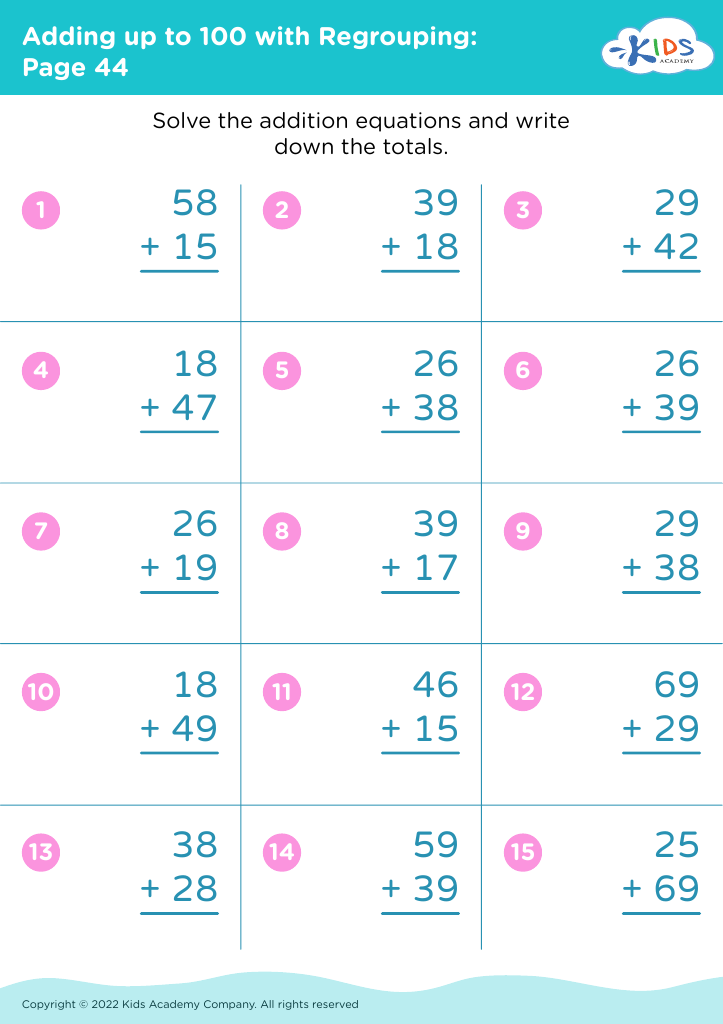








Parents and teachers should care about Shape Recognition, Addition, and Subtraction for children aged 8-9 because mastering these skills serves as the foundation for more advanced mathematical concepts and everyday problem-solving. At this pivotal age, children transition from basic arithmetic to more complex topics like fractions, geometry, and multi-step problem-solving. Effective shape recognition sharpens spatial awareness, critical for understanding geometric properties and relationships. This grasp directly benefits subjects like science and technology, enhancing children's overall academic performance.
Simultaneously, addition and subtraction are fundamental arithmetic operations that underpin almost all future math concepts. Proficiency in these areas ensures students can tackle more intricate operations confidently in the future, such as multiplication, division, and algebraic thinking. Moreover, these skills carry over to practical life scenarios, helping children develop critical thinking and decision-making abilities in everyday tasks, from budgeting allowance to measuring ingredients for a recipe.
Engaging with these concepts at an early age fosters a love for learning and builds self-confidence in a child's academic abilities. Therefore, by focusing on shape recognition, addition, and subtraction for kids ages 8-9, parents and teachers ensure the holistic development of essential skills that form the bedrock for lifelong learning and daily functioning.








