Understand patterns Addition & Subtraction Worksheets for Ages 8-9
6 filtered results
-
From - To
Discover our "Understand Patterns: Addition & Subtraction Worksheets" designed for ages 8-9! These engaging resources help children recognize and apply patterns in math, enhancing their addition and subtraction skills. Each worksheet combines fun activities with educational exercises to make learning enjoyable. Tailored for young learners, our sheets improve critical thinking, logical reasoning, and problem-solving abilities. Perfect for classroom use or extra practice at home, Kids Academy's worksheets give your child the tools to excel in math. Transform math learning into a delightful adventure with our expertly crafted, age-appropriate materials. Start exploring today!
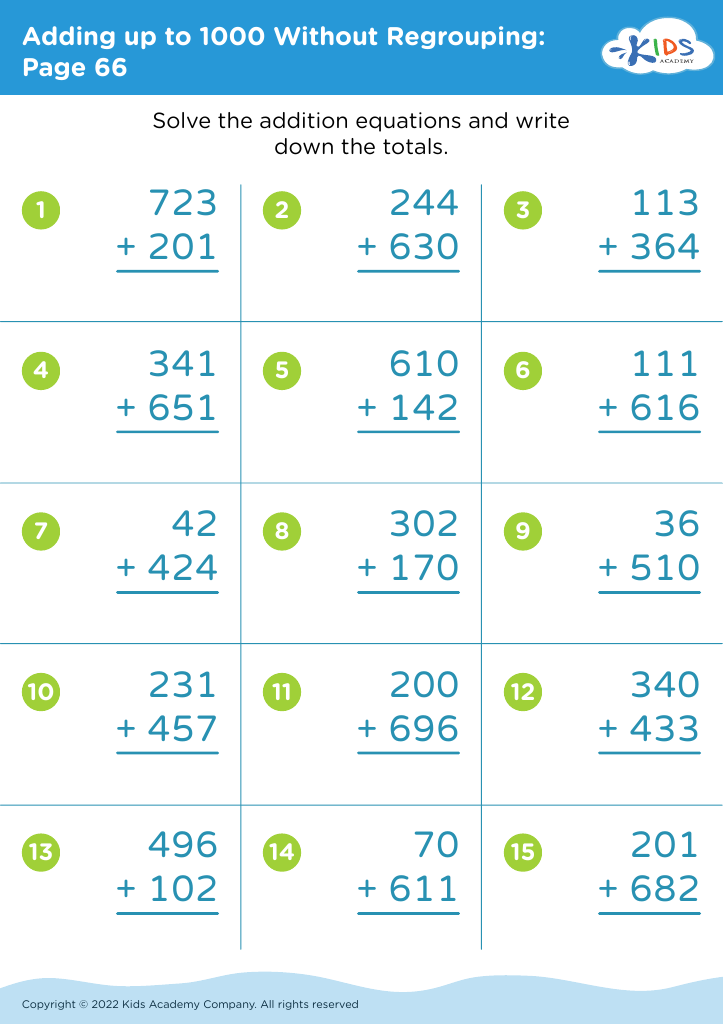
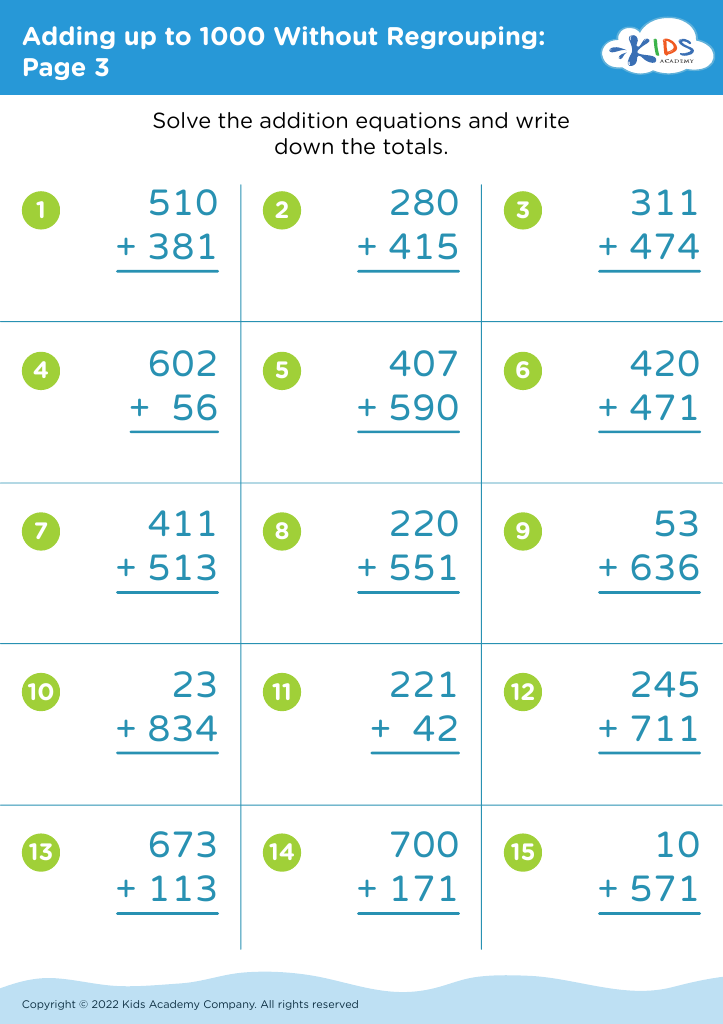
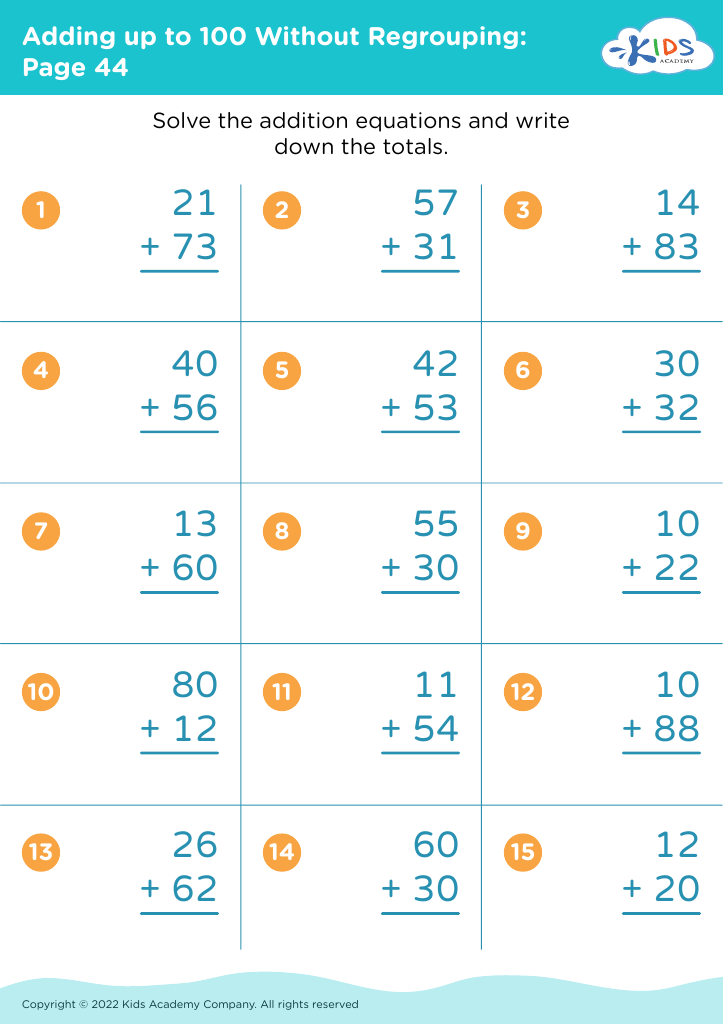
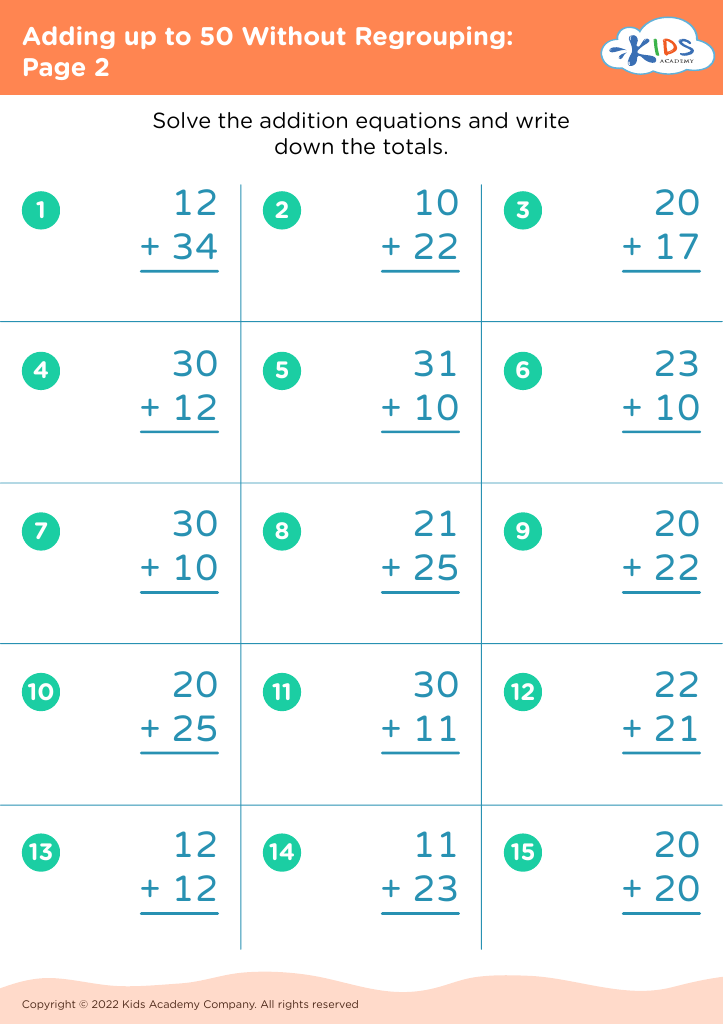
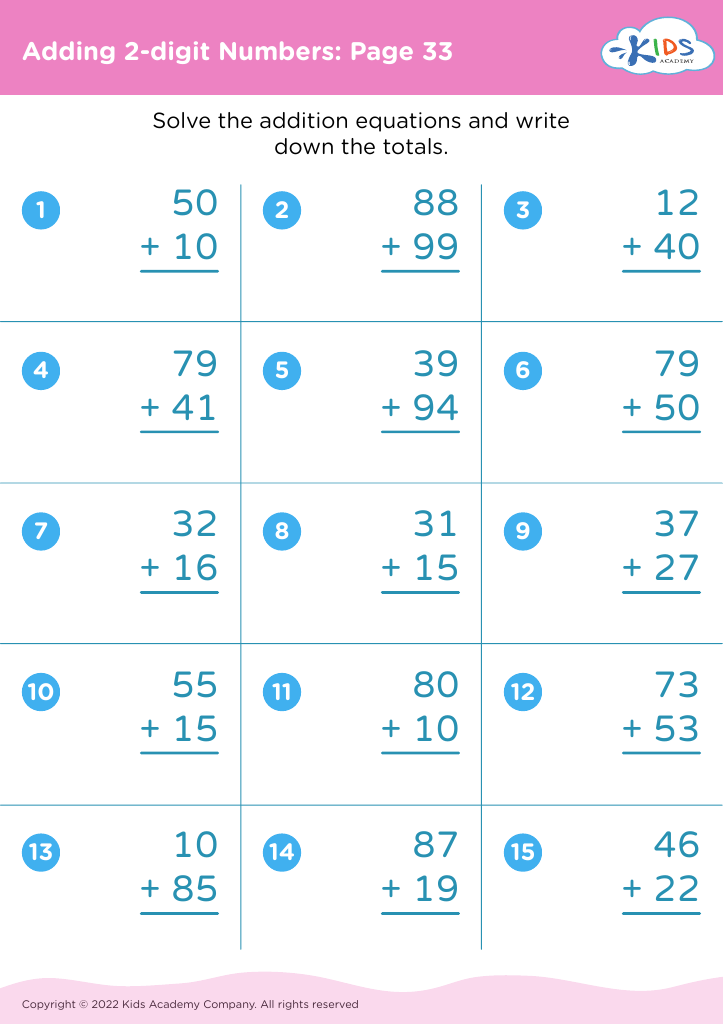
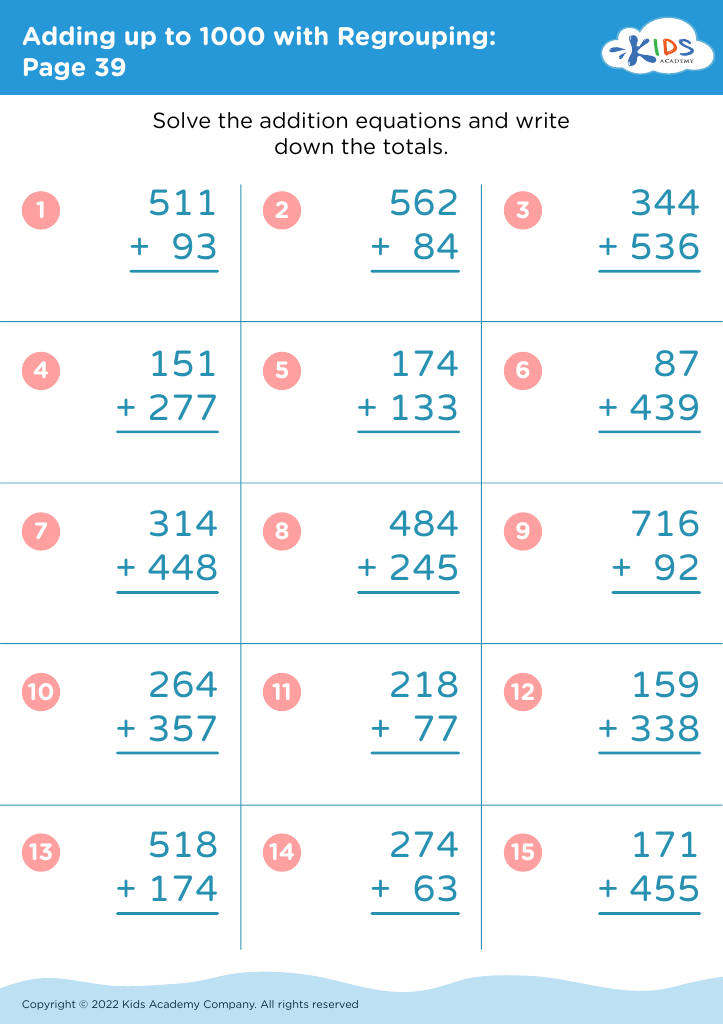








Understanding patterns in addition and subtraction is crucial for children aged 8-9, as it lays the groundwork for higher-level math and critical thinking skills. At this stage, kids transition from basic arithmetic to more complex concepts. Recognizing patterns helps them see relationships between numbers, making math less about memorization and more about understanding.
When children understand patterns, they can more easily grasp concepts like number sequences, place value, and even early algebra. For instance, noticing that adding two to a number repeatedly (e.g., 2, 4, 6, 8) creates a pattern helps kids make predictions and solve problems more efficiently.
For teachers, emphasizing patterns aids differentiation in the classroom, catering to diverse learning styles. Activities that highlight patterns can engage students and make math more enjoyable. It also encourages logical reasoning, a skill valuable across subjects.
For parents, supporting pattern recognition at home through games and real-life situations, like shopping or cooking, can reinforce classroom learning. It builds confidence and improves problem-solving abilities.
Thus, fostering an understanding of addition and subtraction patterns not only enhances mathematical proficiency but also equips children with vital cognitive tools, boosting their overall academic success and preparing them for future challenges.








