Understanding Sequences Addition & Subtraction Worksheets for Ages 8-9
13 filtered results
-
From - To
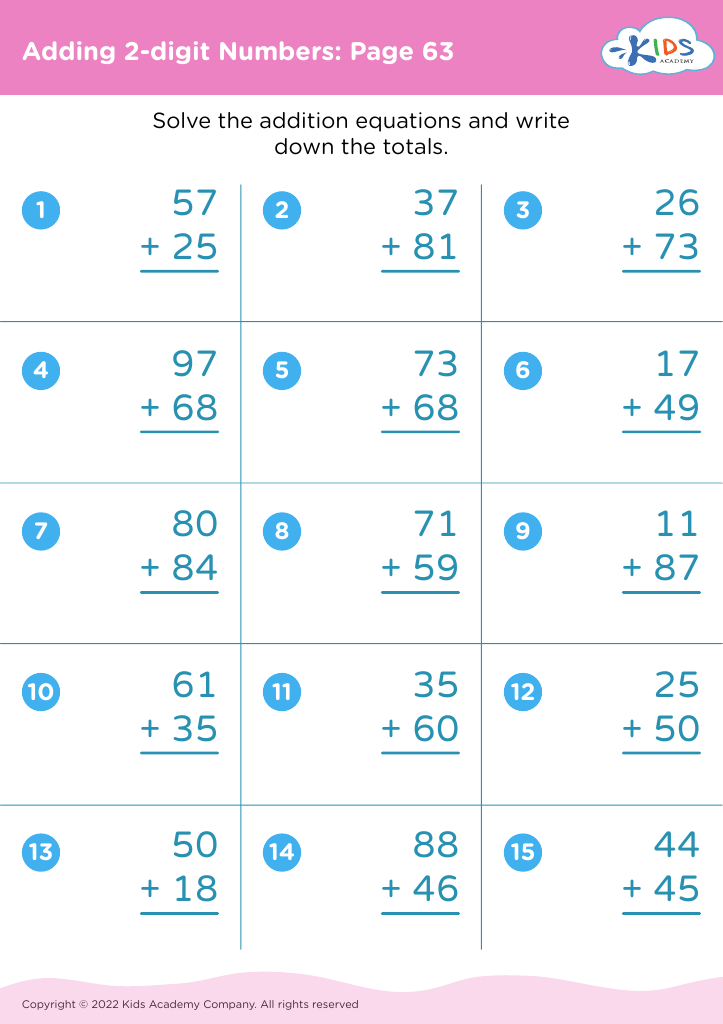
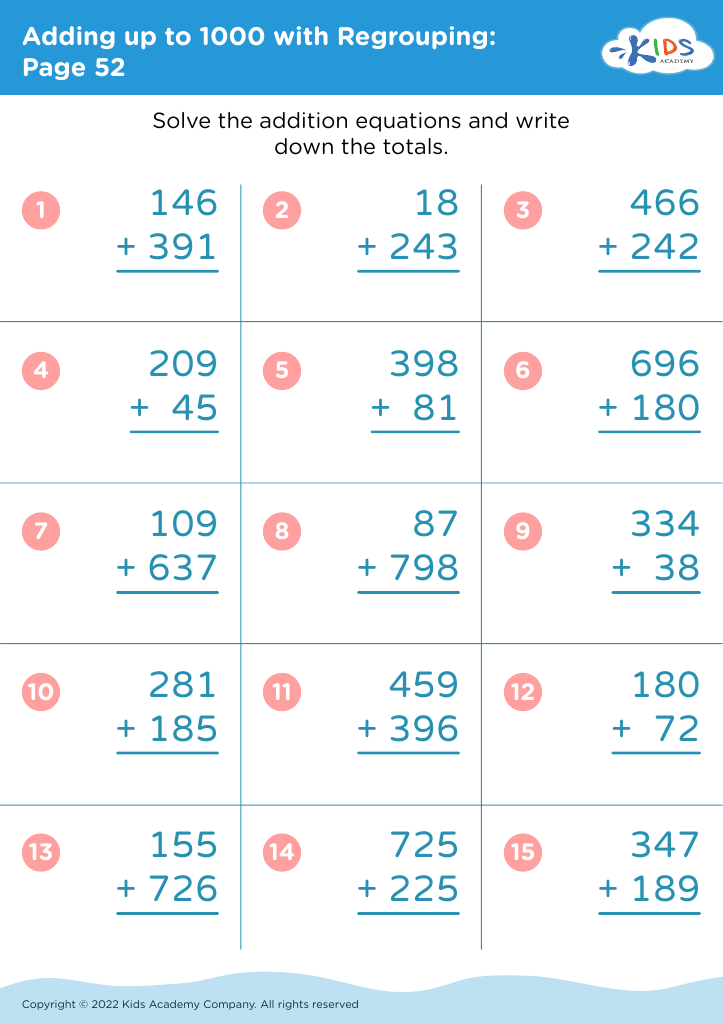
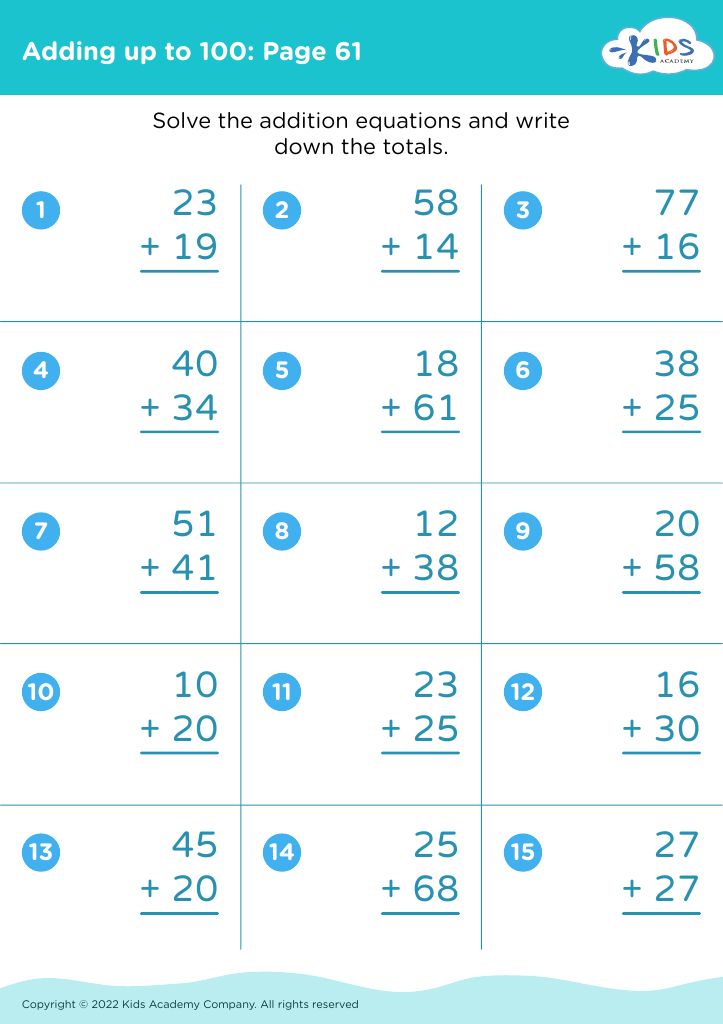
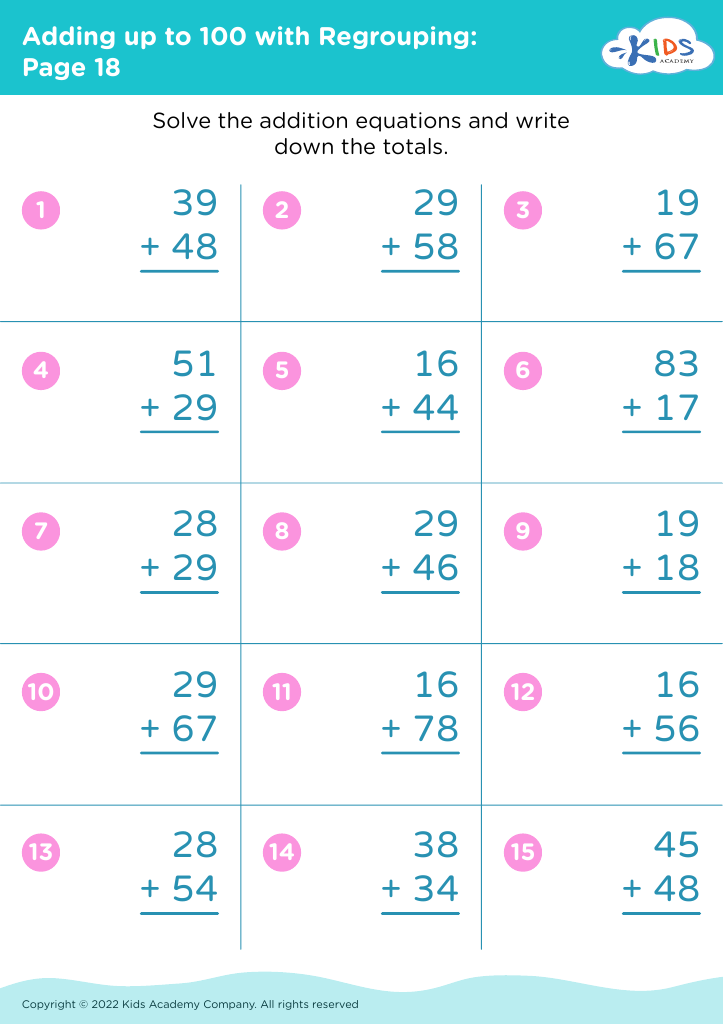
Unlock the magic of math with our "Understanding Sequences Addition & Subtraction Worksheets" for ages 8-9. These engaging and educational worksheets are designed to strengthen your child's grasp of numerical sequences while mastering addition and subtraction. Each exercise introduces fun, themed sequences to nurture critical thinking and problem-solving skills, perfect for young minds. Tailored to the 8-9 age group, these printable worksheets provide a solid foundation in pattern recognition and arithmetic operations. Ideal for classroom activities or at-home practice, let Kids Academy kindles a love for math, making learning enjoyable and effective!
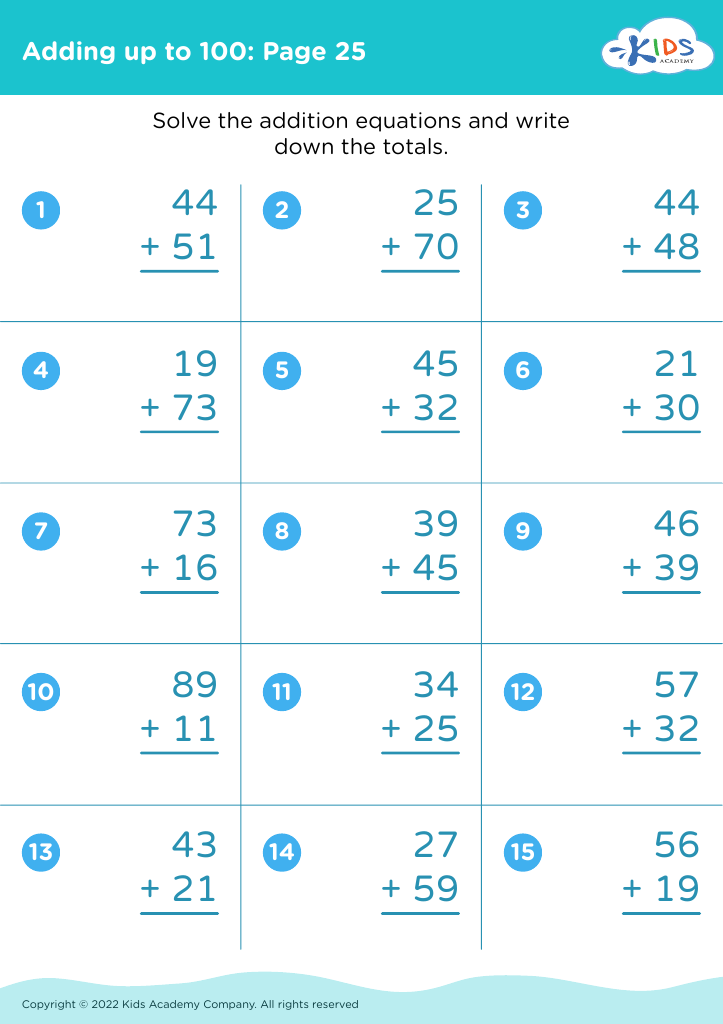
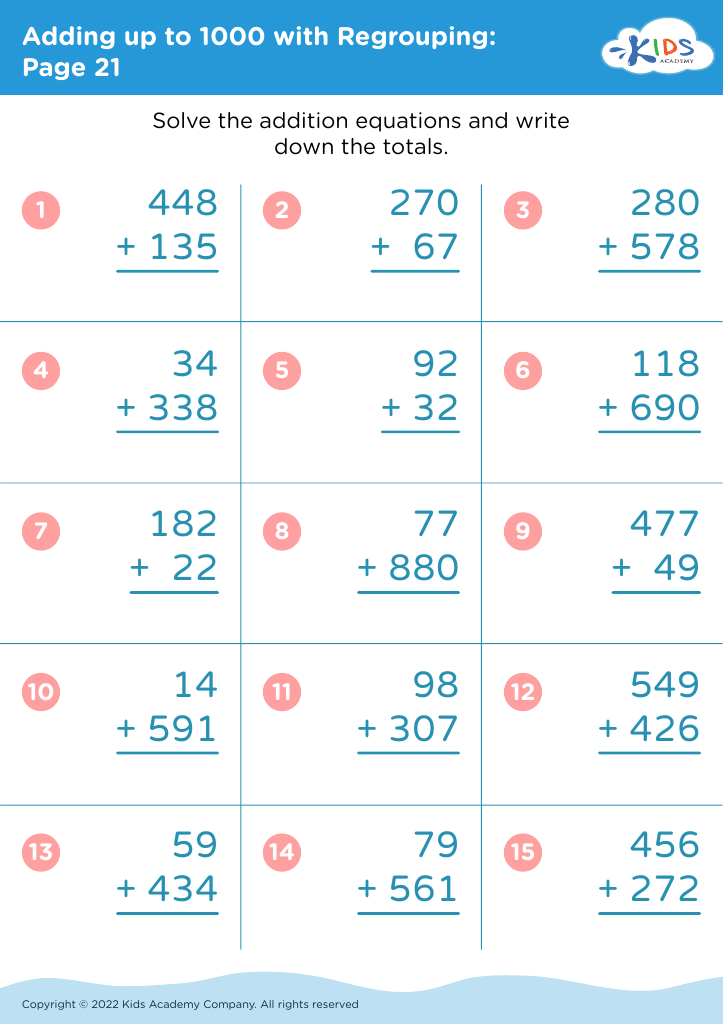
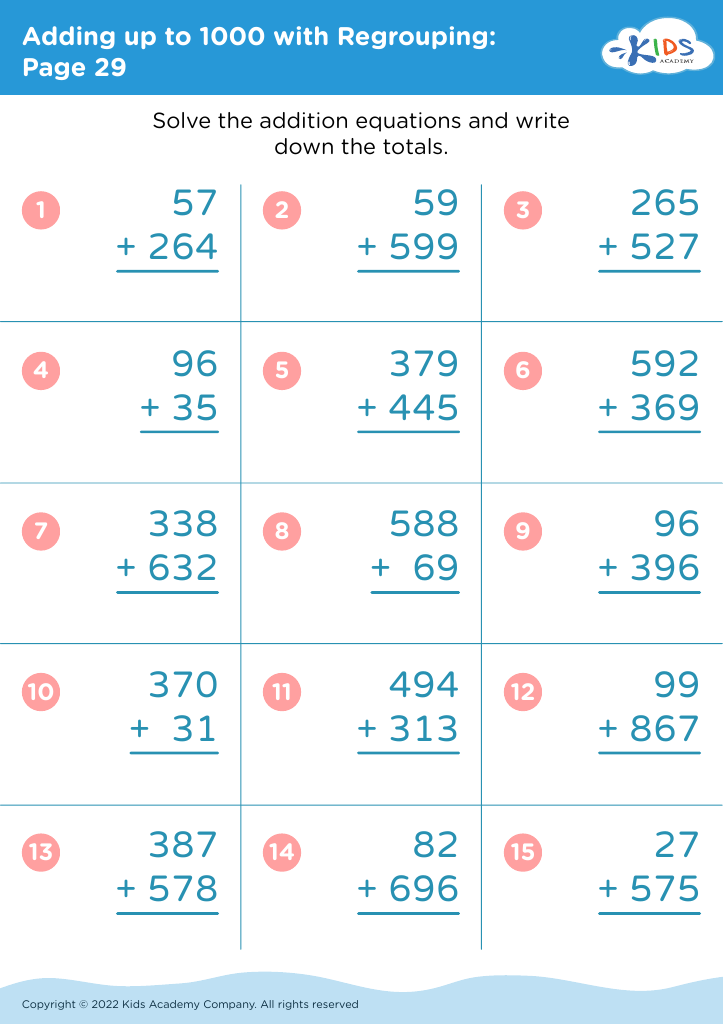
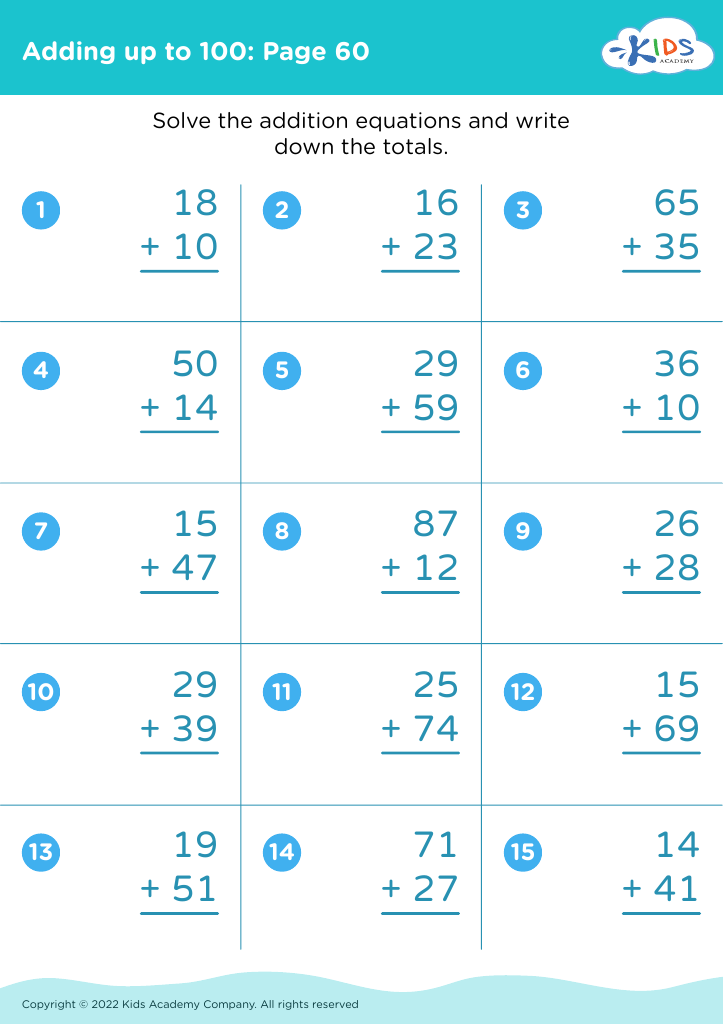
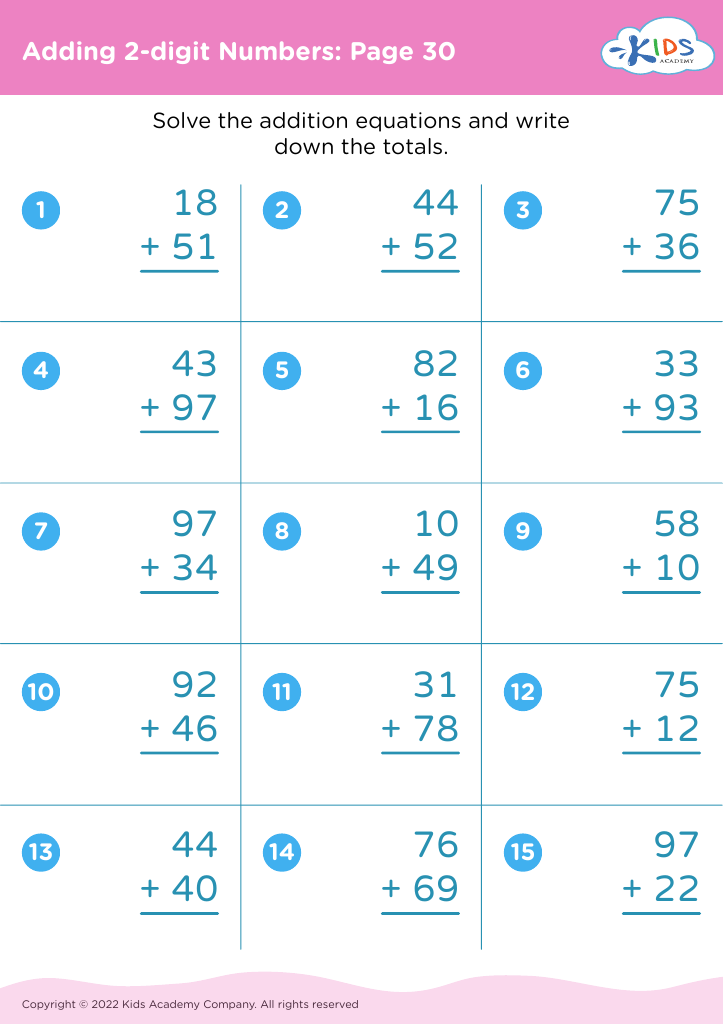
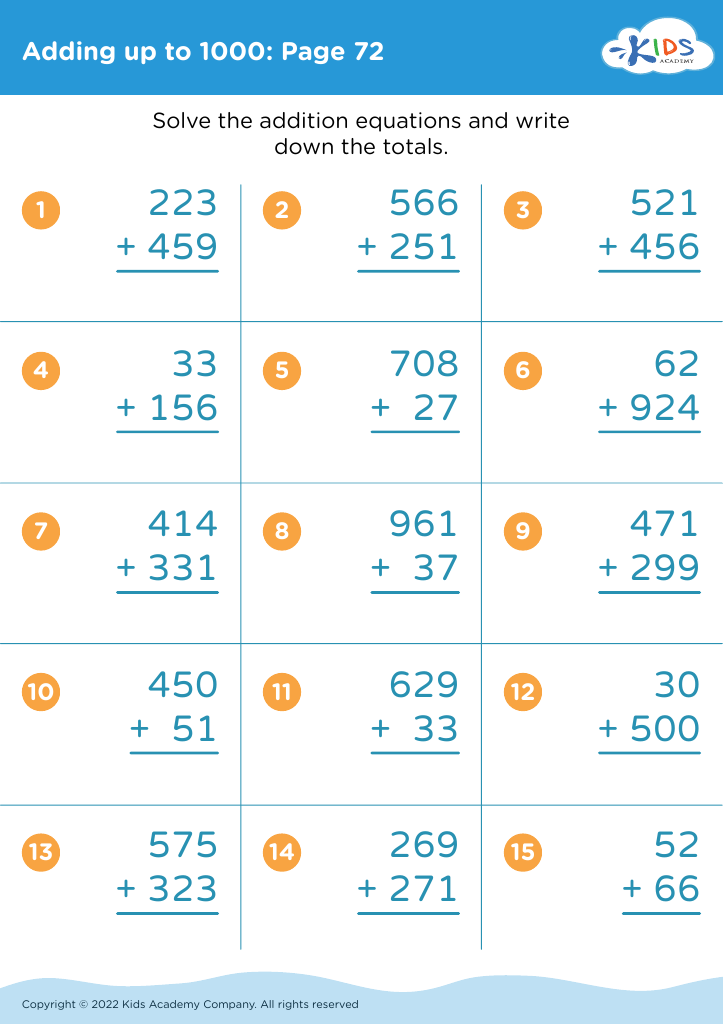
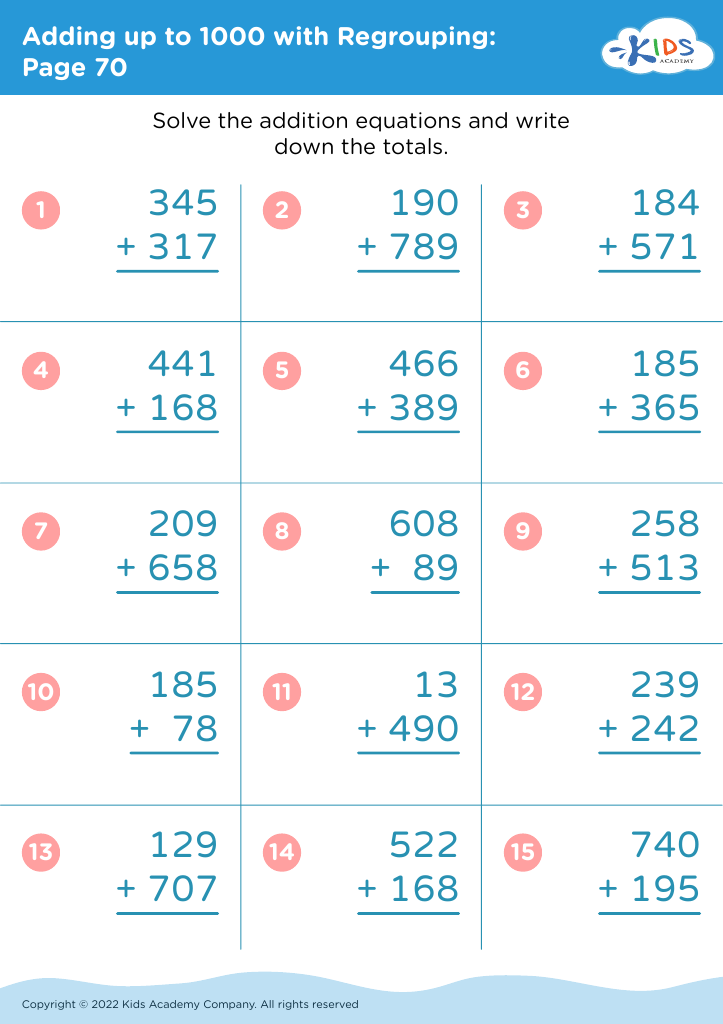
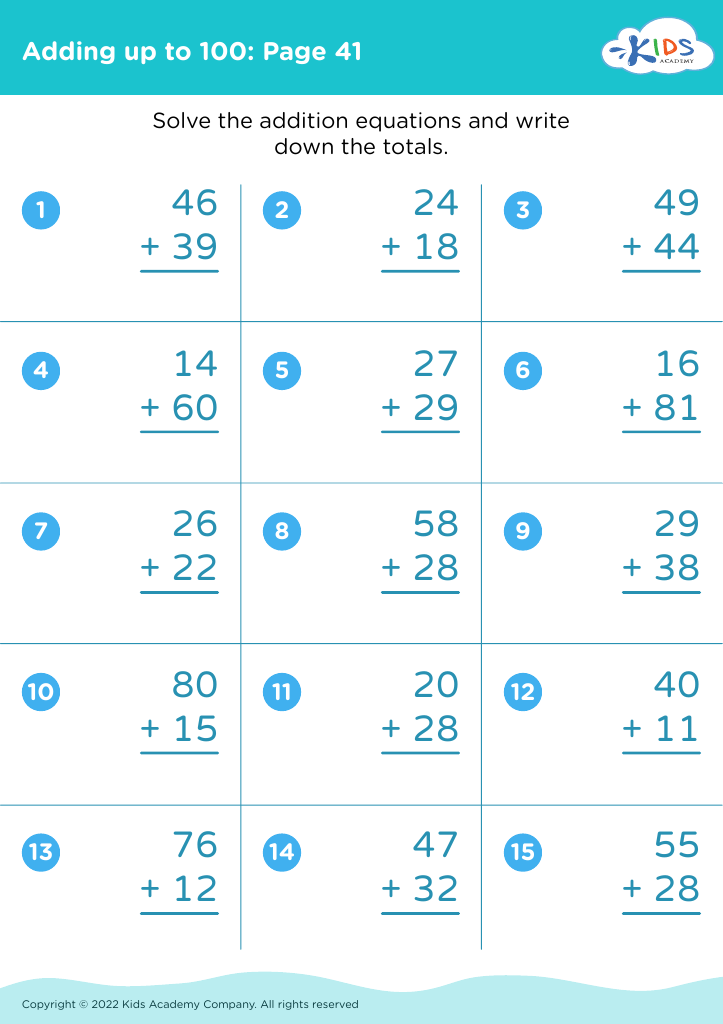
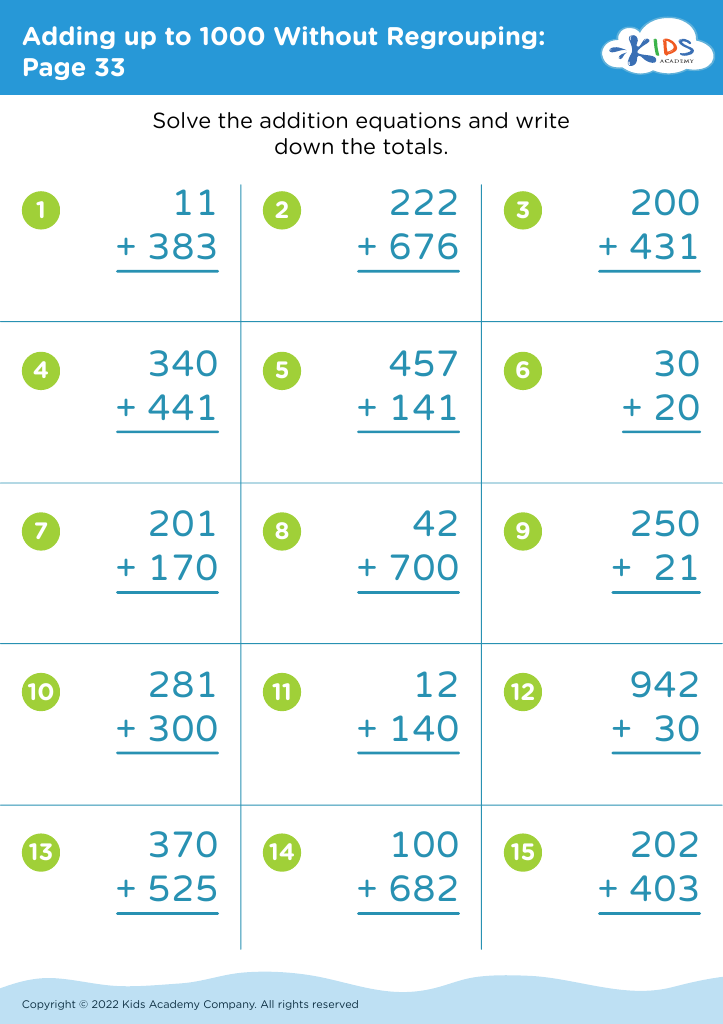








Understanding sequences in addition and subtraction is crucial for children aged 8-9, as it forms the foundation for more complex mathematical concepts and problem-solving skills they will encounter later. Sequences help children recognize patterns, which are essential for algebra and advanced arithmetic. By identifying and working within sequences, kids can develop logical thinking and the ability to predict future outcomes based on established rules.
For parents and teachers, nurturing this understanding can significantly boost a child's confidence and interest in mathematics. It provides a structured approach to problems, making computations easier and less prone to errors. As children grasp sequences, they are better equipped to tackle word problems and real-life scenarios that involve step-by-step procedures.
Moreover, mastering addition and subtraction within sequences supports other areas of learning, such as fractions, geometry, and data analysis. These subjects often require the same skills of recognising patterns and sequences. Engagement with sequences at a young age ensures that children build a solid mathematical foundation, leading to better academic performance and a greater appreciation for the subject.
In summary, while sequences might seem simple, they are a critical building block in a child’s mathematical education, setting the stage for future academic success and practical life skills in problem-solving and logical reasoning.








