Visual representation comprehension Addition & Subtraction Worksheets for Ages 8-9
5 filtered results
-
From - To
Discover our engaging Visual Representation Comprehension Addition & Subtraction Worksheets designed specifically for children aged 8-9. These worksheets help students enhance their mathematical understanding through visual aids, making complex concepts accessible and enjoyable. By incorporating visual representation, learners can conceptualize addition and subtraction, boosting their problem-solving skills and reinforcing their arithmetic knowledge. Our thoughtfully crafted exercises encourage critical thinking, making them an ideal resource for both classroom and home learning environments. Foster your child’s confidence in math with our interactive worksheets that promote deeper comprehension and mastery of addition and subtraction concepts, setting the foundation for future mathematical success.
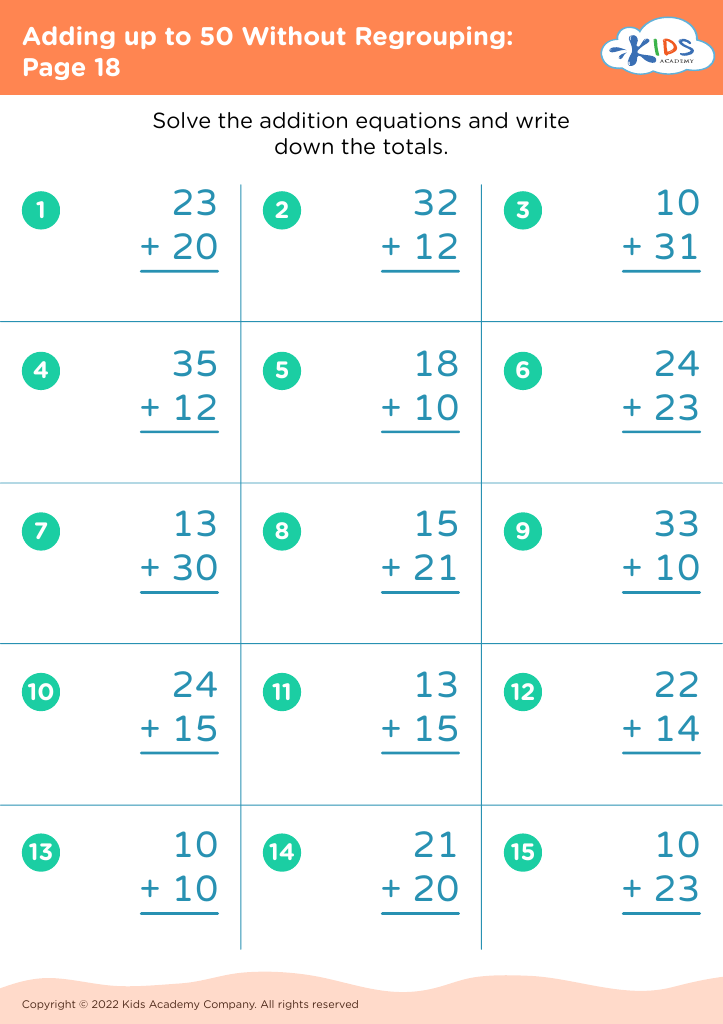
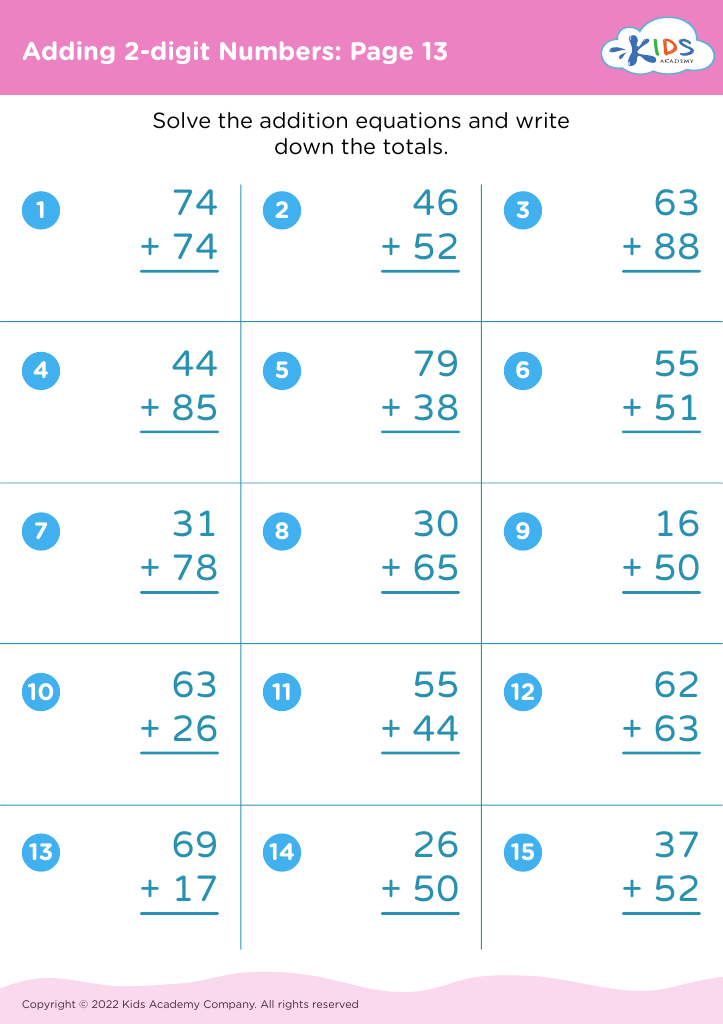
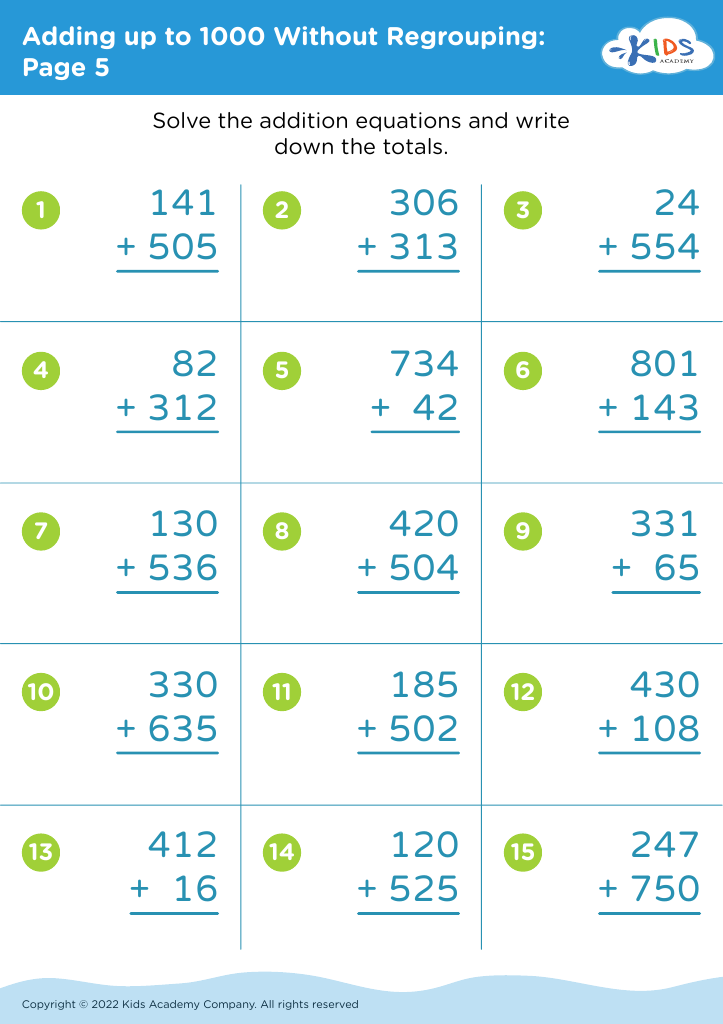
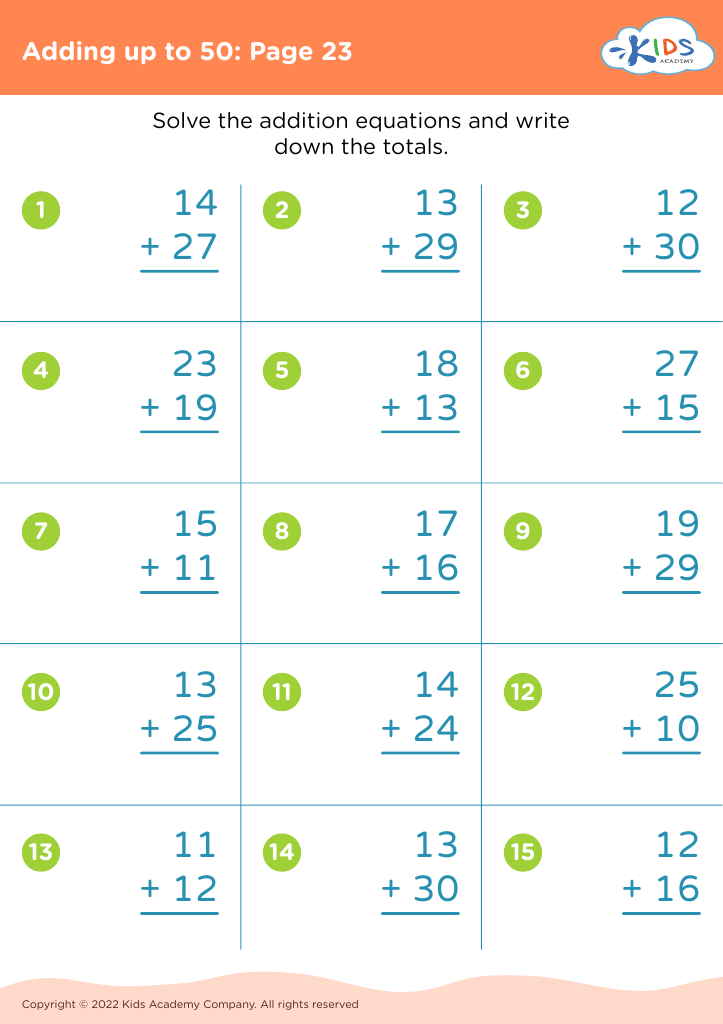
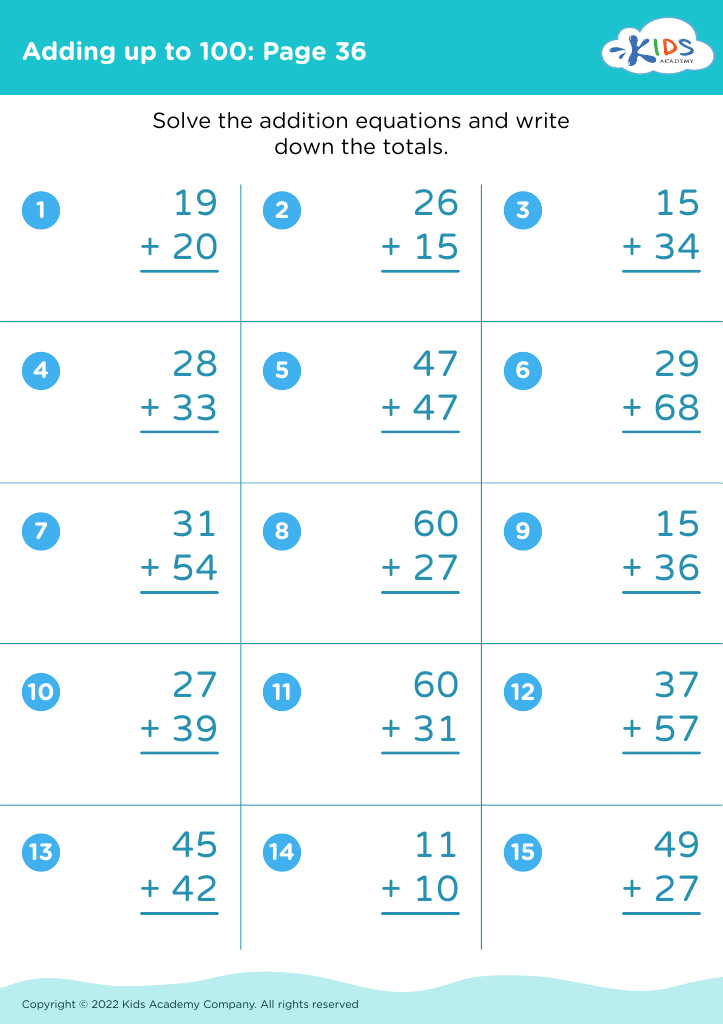








Visual representation comprehension in addition and subtraction is crucial for children aged 8-9 as it supports their mathematical development in several key ways. At this age, students are transitioning from concrete operations, where they need tangible objects to understand math concepts, to more abstract thinking. Visual tools like diagrams, number lines, or bar models help bridge this gap by allowing children to see relationships between numbers and the processes involved in addition and subtraction.
Furthermore, visual representation enhances problem-solving skills. By translating mathematical operations into visual formats, children can recognize patterns and relationships more easily, making it simpler to tackle complex problems. This understanding fosters a deeper grasp of number sense, helping students to develop logical reasoning skills they will need for future math concepts.
Parents and teachers should prioritize these strategies to ensure students build a strong foundational understanding of mathematics, which is crucial as they encounter more challenging concepts in later grades. Additionally, visual representation can boost confidence in students, as they can utilize these representations to check their work and achieve a sense of accomplishment. Ultimately, promoting visual comprehension equips children with both the skills and the confidence needed for academic success in mathematics and beyond.








