Addition of fractions Addition Worksheets for Ages 8-9
3 filtered results
-
From - To
Discover our engaging Addition of Fractions Worksheets designed specifically for children aged 8-9. These worksheets help young learners master the essential skill of adding fractions, building a strong mathematical foundation. With clear instructions and a variety of exercises, students will practice how to find common denominators and combine fractions effectively. Our user-friendly format ensures that children stay motivated and curious while learning. Perfect for teachers and parents alike, these worksheets can be easily printed and used at home or in the classroom. Start your child's journey to confidence in fractions today with these interactive resources!
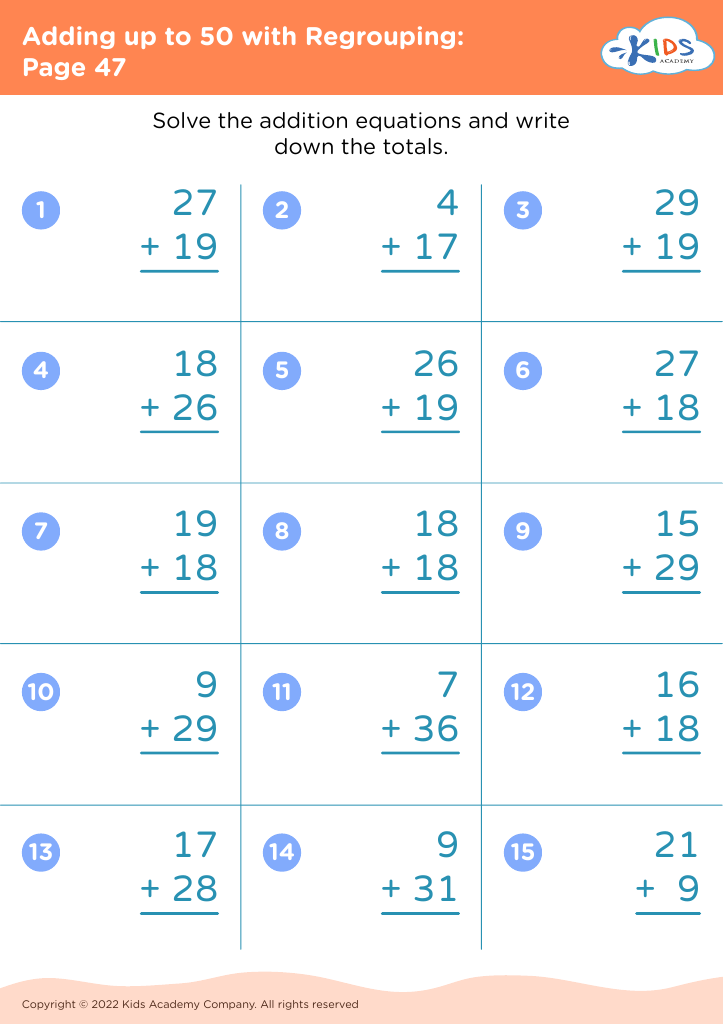
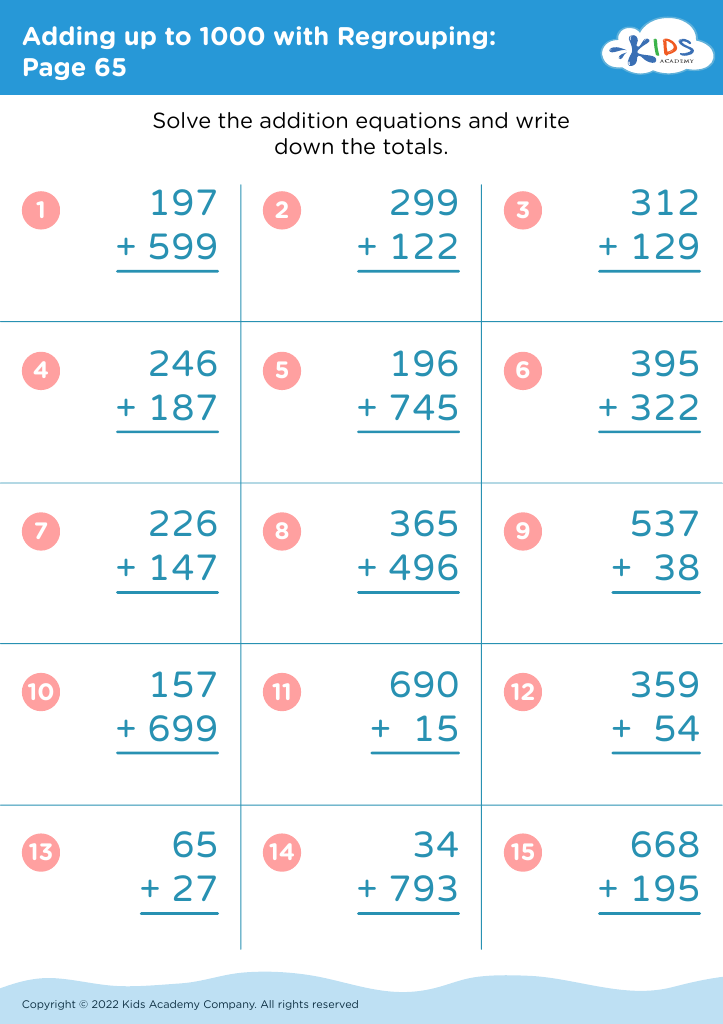
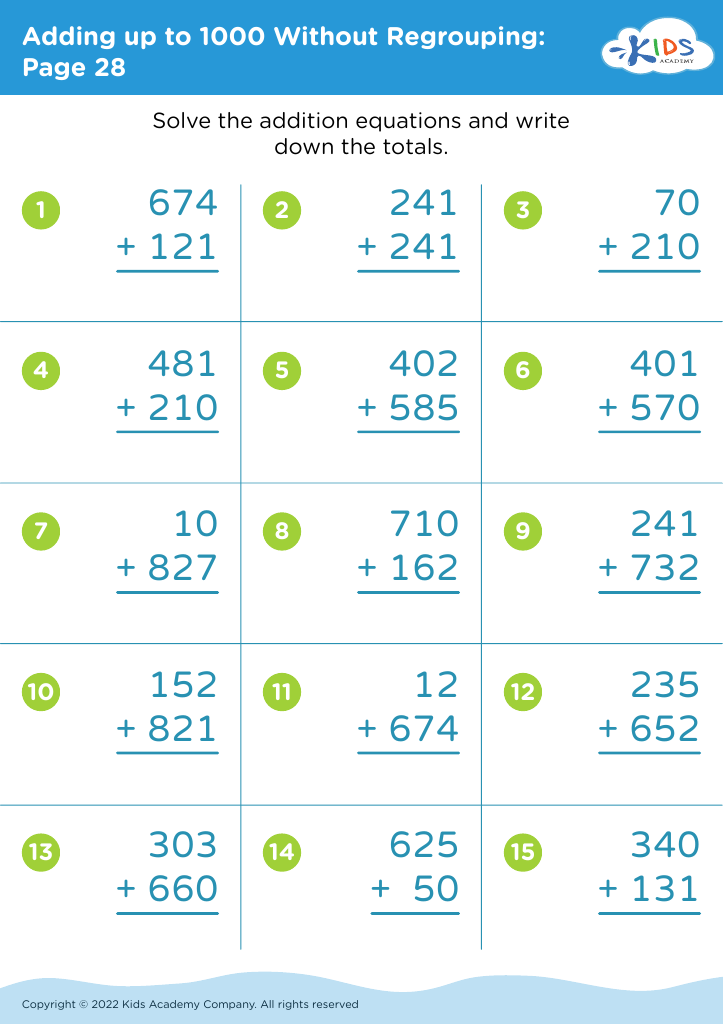








Parents and teachers should prioritize teaching the addition of fractions to children aged 8-9 because this foundational skill is crucial for a child's mathematical understanding and overall success in mathematics. At this age, students are transitioning from concrete concepts to more abstract mathematical ideas. Mastering fraction addition helps them develop problem-solving skills and enhances their ability to think critically about numbers and relationships.
Understanding fraction addition lays the groundwork for more complex operations and concepts, such as mixed numbers, fractions resemblance, and percentages, which they will encounter in future grades. Additionally, fraction work cultivates perseverance and attention to detail—skills valuable beyond math.
Moreover, integrating fraction addition into real-life contexts, like cooking or sharing, fosters practical applications of mathematics, making learning more relatable and engaging. Collaborative learning around this topic can also promote social skills as students work together to solve problems.
Ultimately, by placing an emphasis on addition of fractions from an early age, parents and teachers empower children with a robust mathematical toolbox that supports their academic growth and boosts their confidence in overcoming future challenges in mathematics.








