Filters

19 filtered results

Clear all filters
Favorites
With answer key
Interactive

19 filtered results

Difficulty Level

Grade


Ensure your child masters Basic Addition Skills with our engaging worksheets tailored for ages 8-9. At Kids Academy, we provide high-quality, printable worksheets designed to strengthen foundational math skills. Our interactive exercises make learning addition fun and effective, fostering confidence in young learners. With diverse and colorful activities, children practice adding single and double-digit numbers, improving their speed and accuracy. These worksheets align with educational standards and are perfect for both classroom and home use. Equip your child with the essential tools to succeed in math with our expertly crafted basic addition worksheets today.
Check out this FREE Trial Lesson on Addition for age 8-9!

Odd or Even

Favorites
With answer key
Interactive
  • 8-9
  • Basic Addition Skills
  • Addition
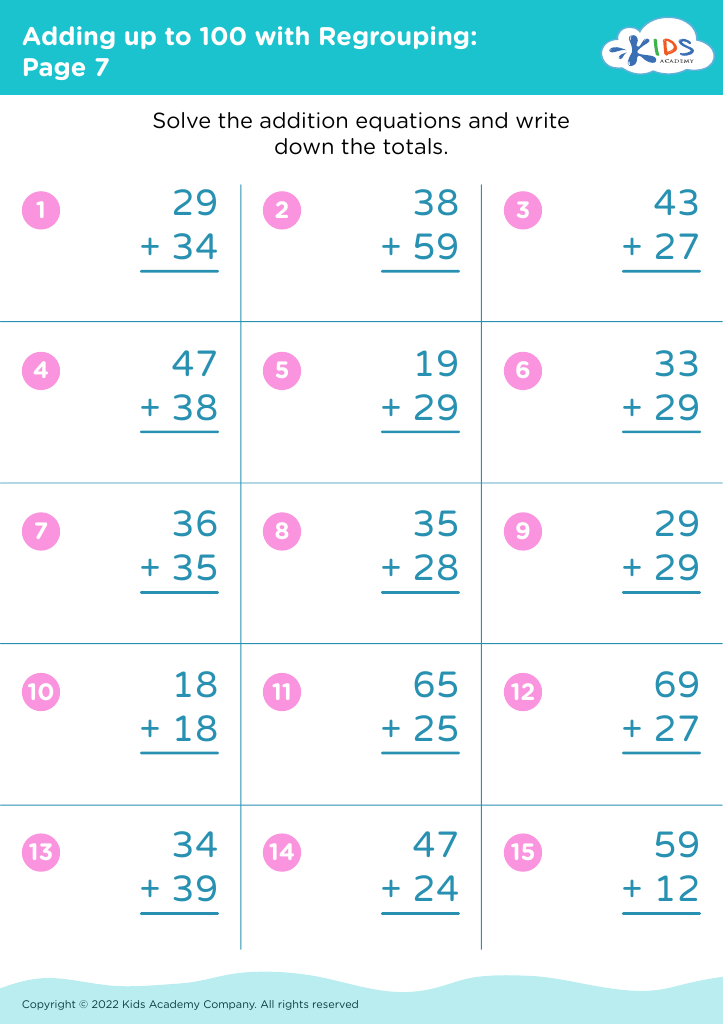
Adding up to 100 with Regrouping: Page 7
Worksheet
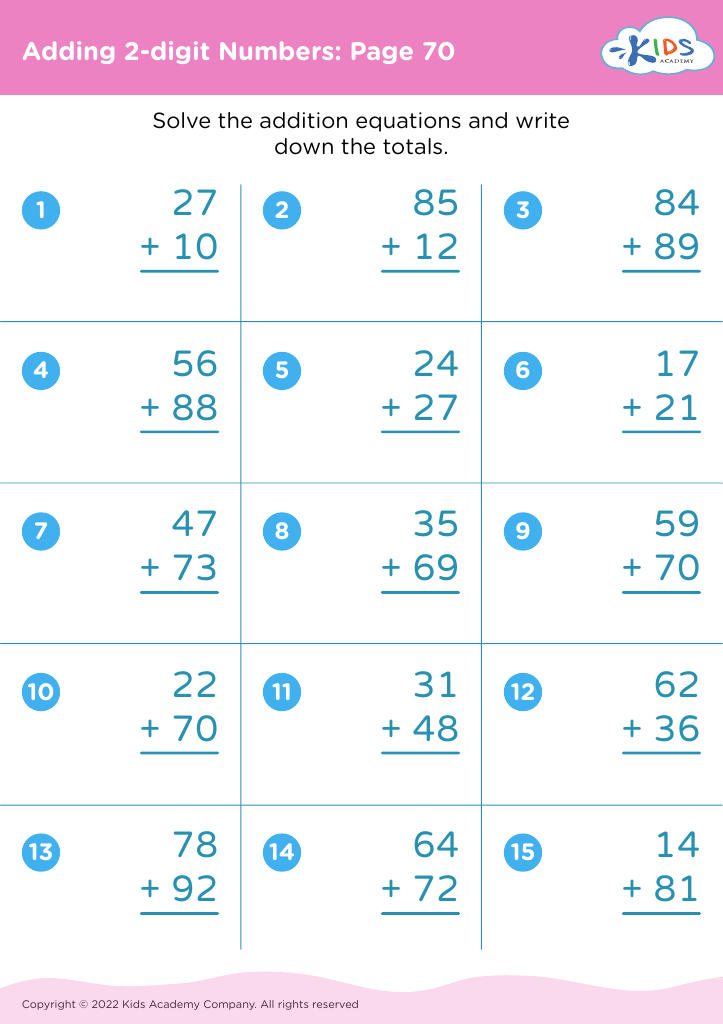
Adding 2-digit Numbers: Page 70

Adding 2-digit Numbers: Page 70

Adding 2-digit Numbers: Page 70
Worksheet
Counting Birds Worksheet

Counting Birds Worksheet

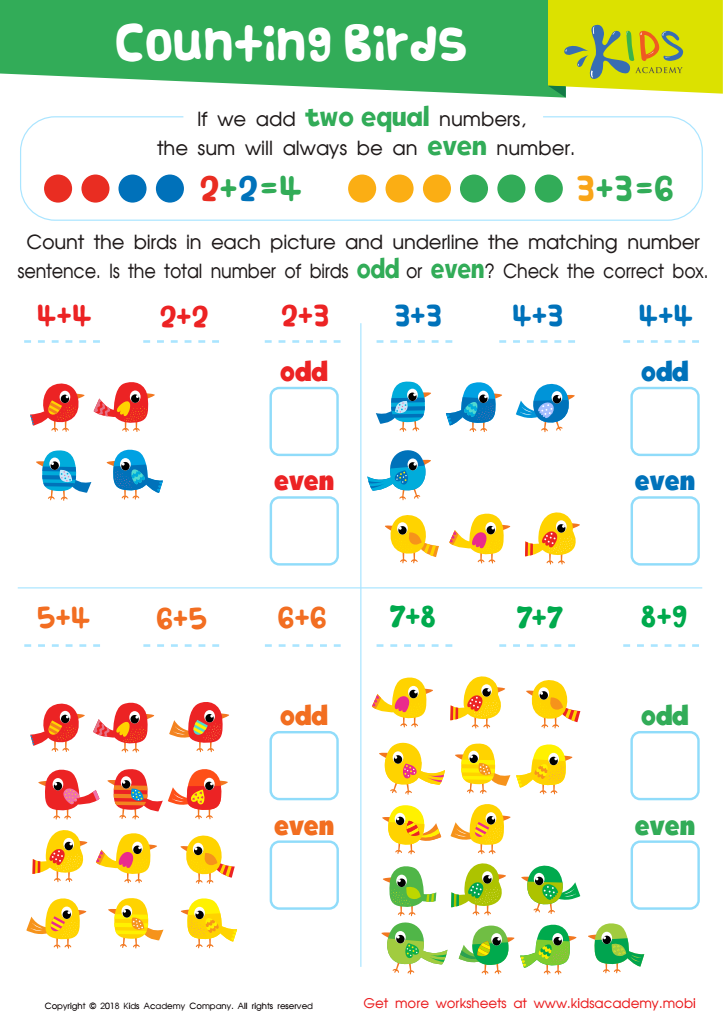
Help your child count and underline the matching number sentence in the worksheet. Ask them if the total number of birds in each picture is odd or even, then check the correct box. When two equal numbers are added, the sum is always an even number (e.g. 2+2=4, 4+4=8, both divisible by 2).
Counting Birds Worksheet
Worksheet
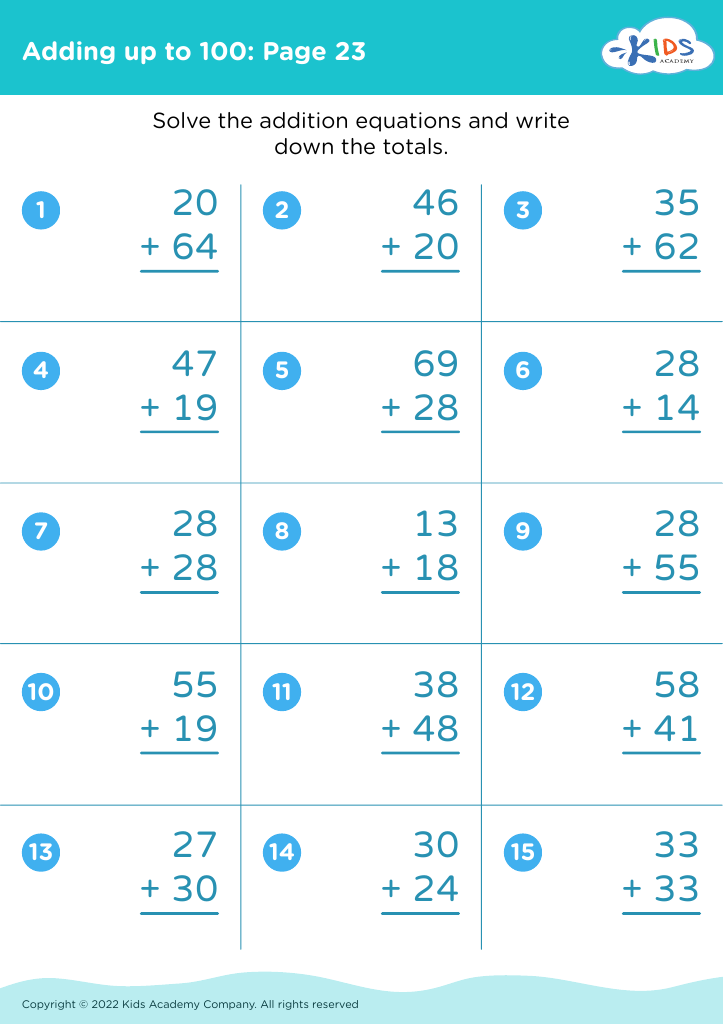
Adding up to 100: Page 23

Adding up to 100: Page 23

Adding up to 100: Page 23
Worksheet
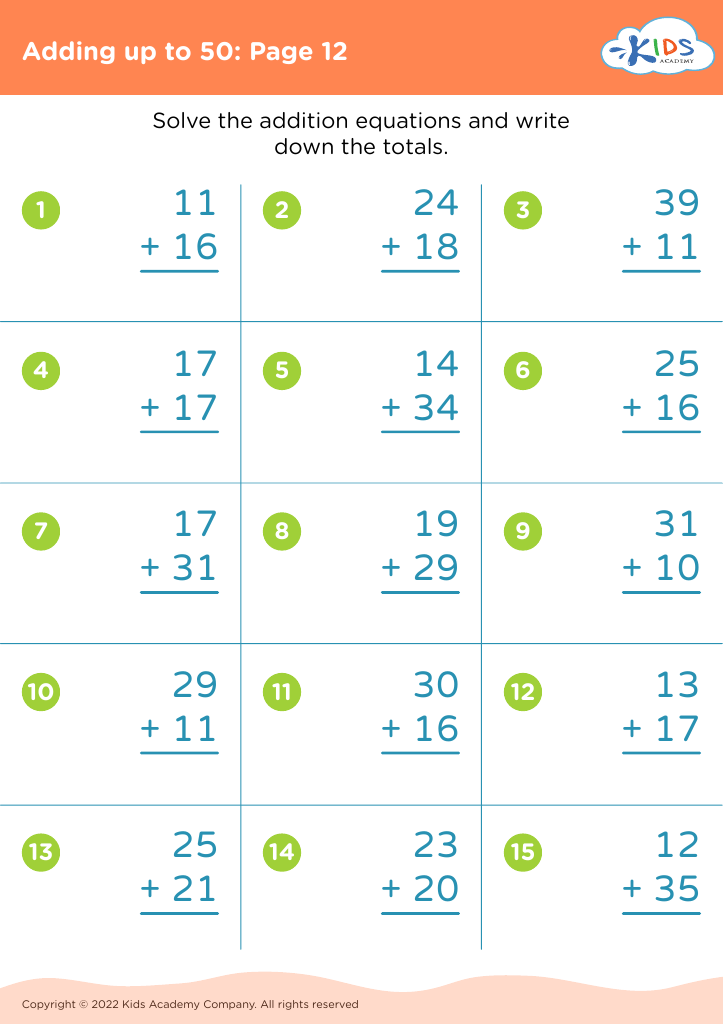
Adding up to 50: Page 12

Adding up to 50: Page 12

Adding up to 50: Page 12
Worksheet
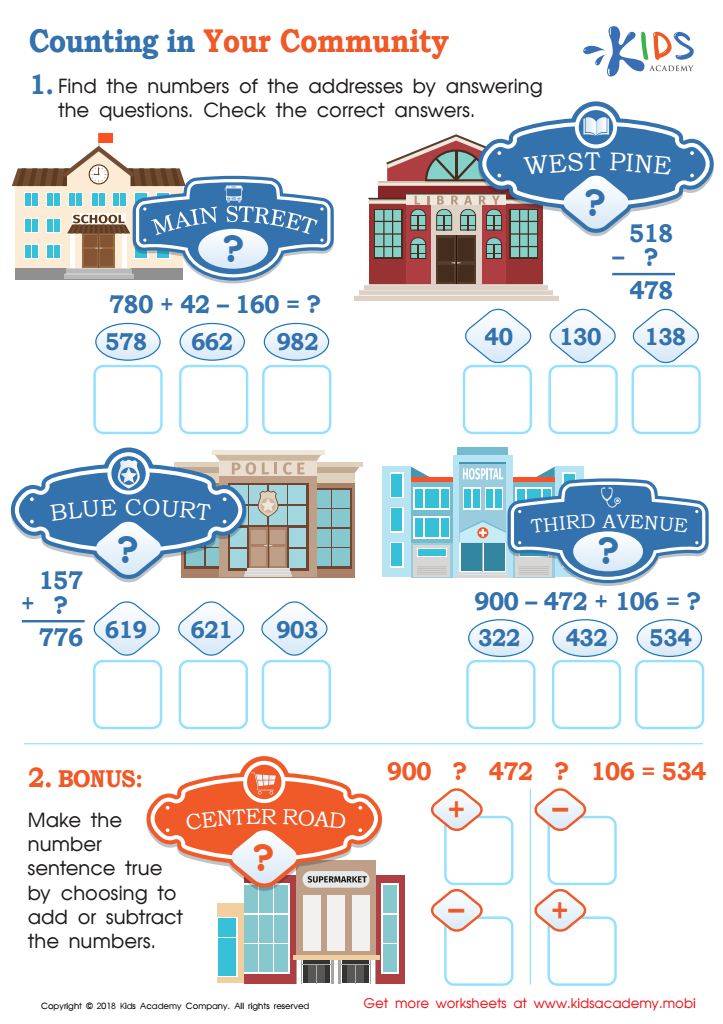
Counting in Your Community Worksheet
Counting in Your Community Worksheet
Introduce your kids to the idea of a community, where different people and buildings co-exist, each playing their part for the community's progress. Ask them to name the buildings they see in their community. Then work through this worksheet to find the numbers of the addresses by answering the questions. Check the answers once they've solved the equations.
Counting in Your Community Worksheet
Worksheet
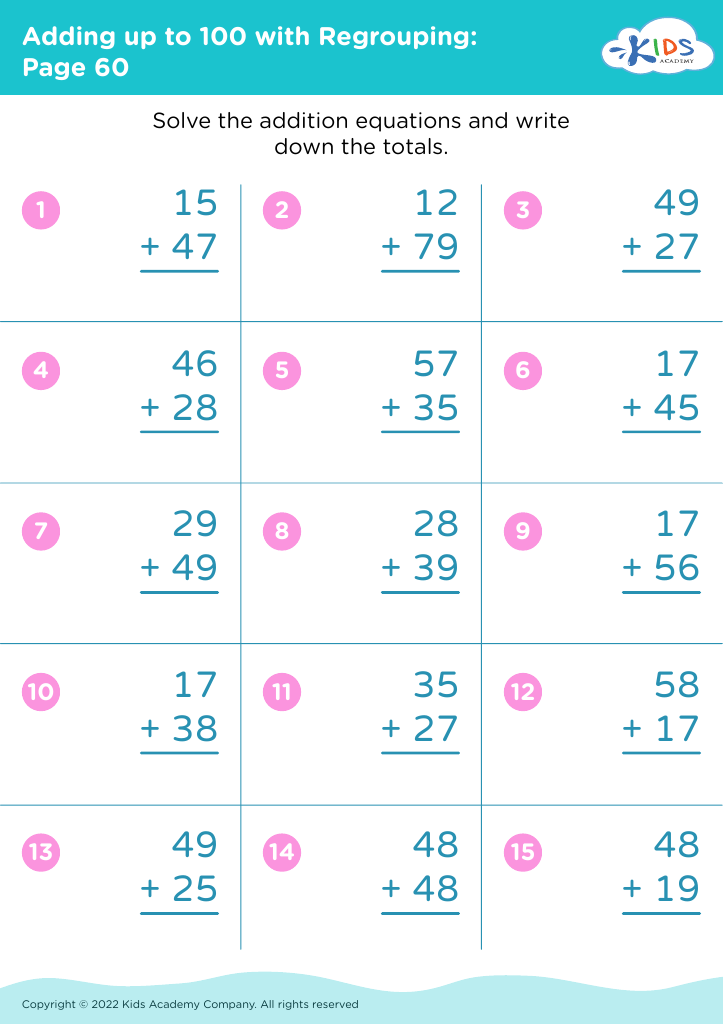
Adding up to 100 with Regrouping: Page 60
Worksheet
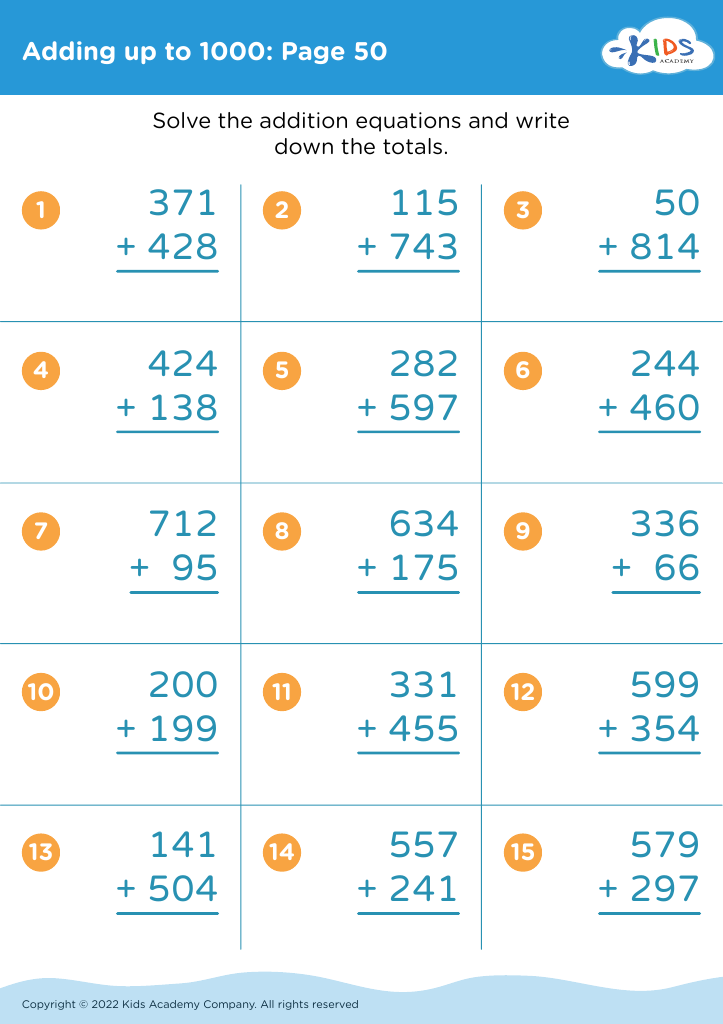
Adding up to 1000: Page 50

Adding up to 1000: Page 50

Adding up to 1000: Page 50
Worksheet
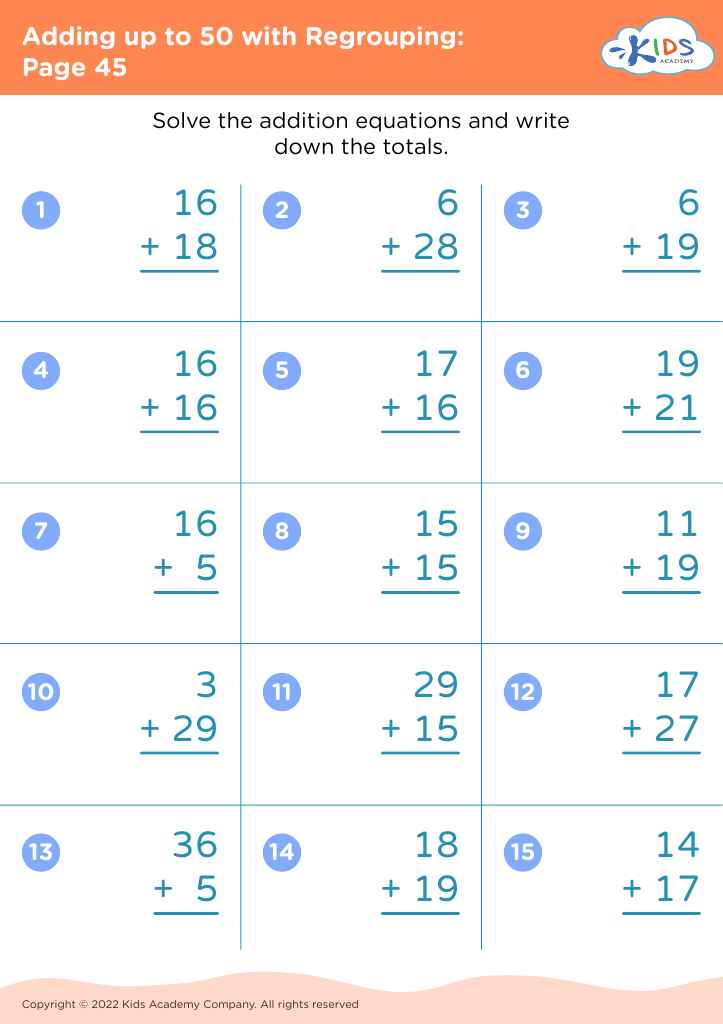
Adding up to 50 with Regrouping: Page 45
Worksheet
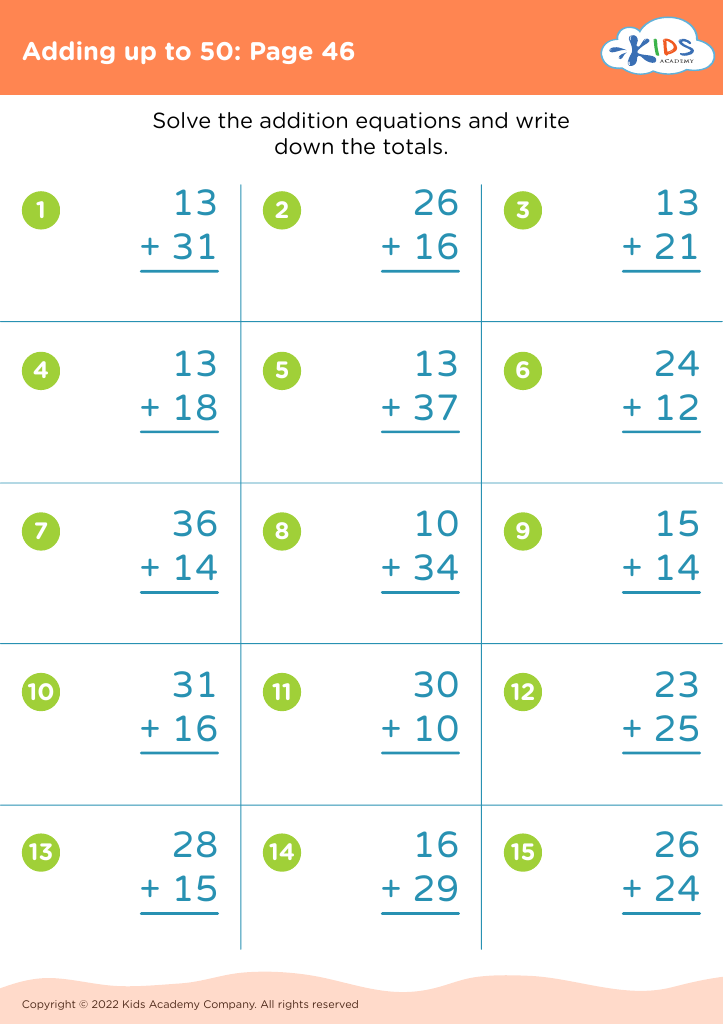
Adding up to 50: Page 46

Adding up to 50: Page 46

Adding up to 50: Page 46
Worksheet
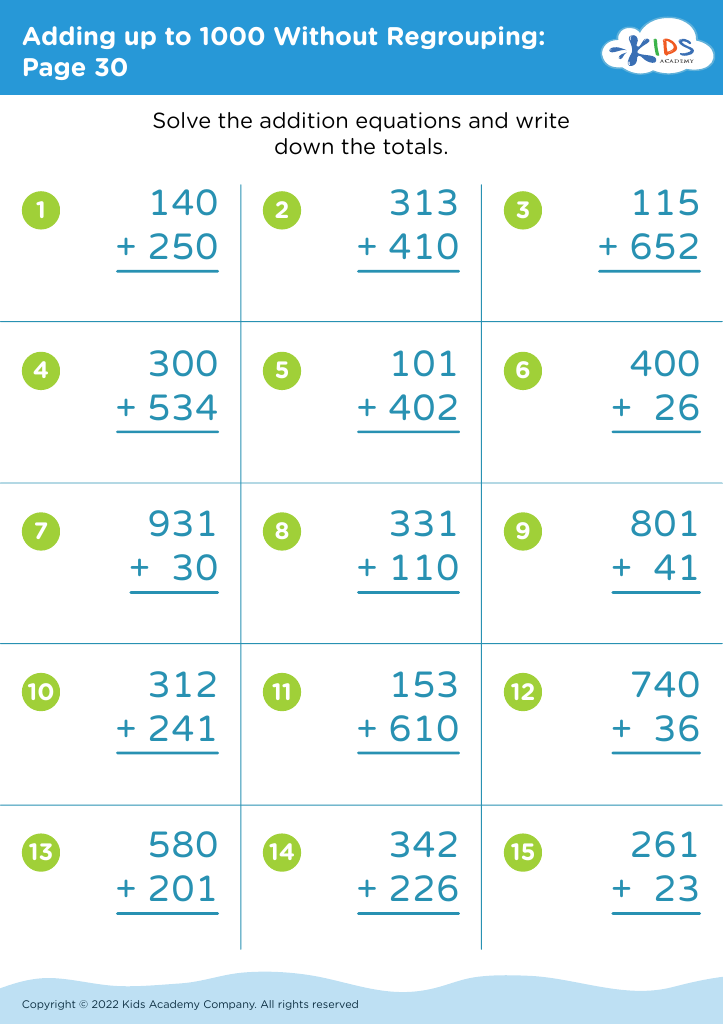
Adding up to 1000 Without Regrouping: Page 30
Worksheet
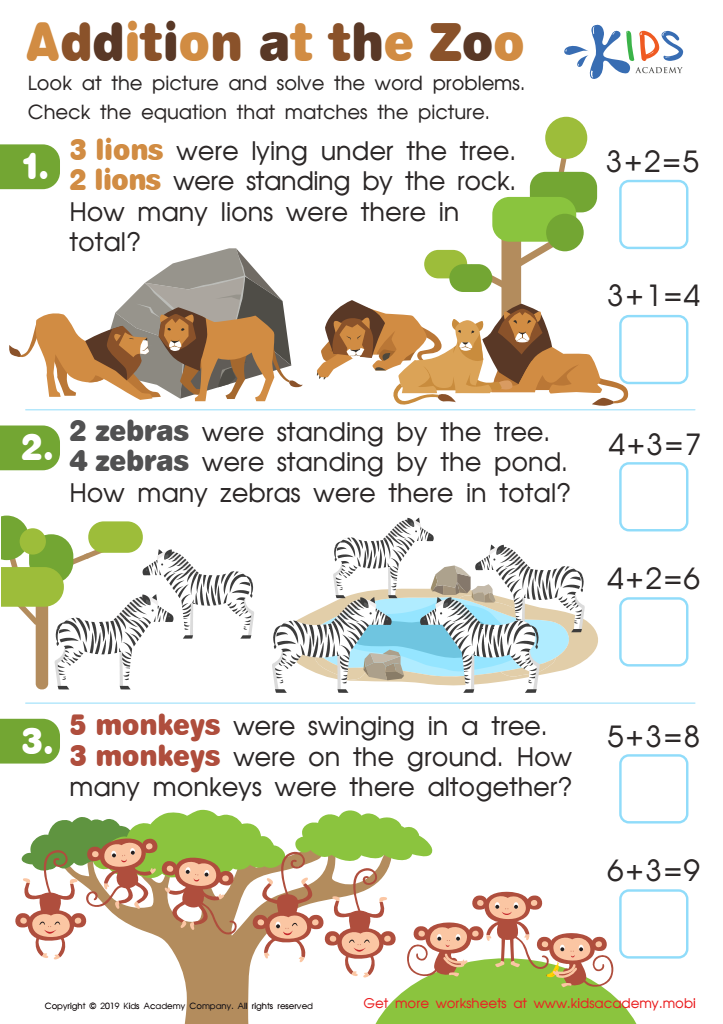
Addition at the Zoo Worksheet
Addition at the Zoo Worksheet
Visit the zoo with your kids and point out all the different animals. Ask them to name their favorites and identify animals on a worksheet. Challenge them to solve word problems related to the pictures. Ask them for the equation that fits the picture and check the answer.
Addition at the Zoo Worksheet
Worksheet
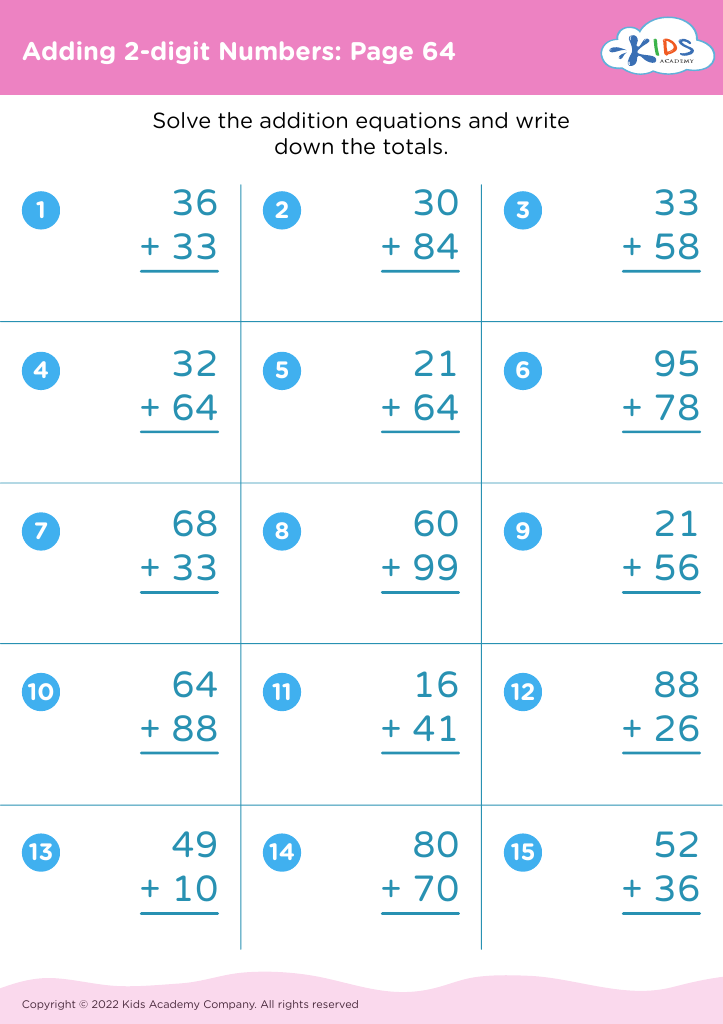
Adding 2-digit Numbers: Page 64

Adding 2-digit Numbers: Page 64

Adding 2-digit Numbers: Page 64
Worksheet
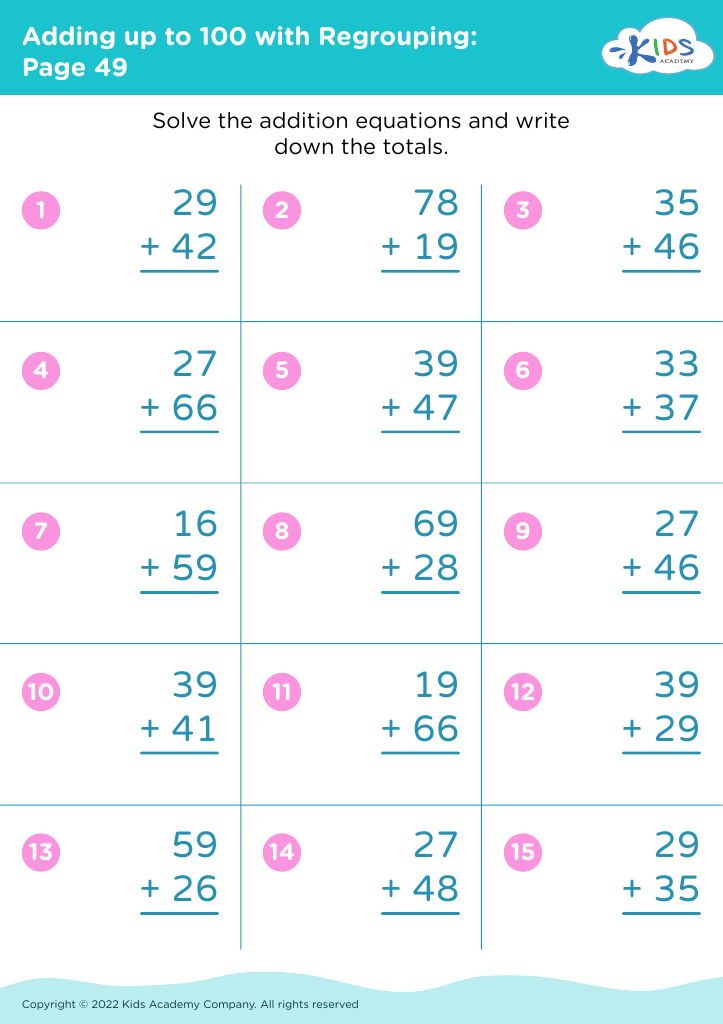
Adding up to 100 with Regrouping: Page 49
Worksheet
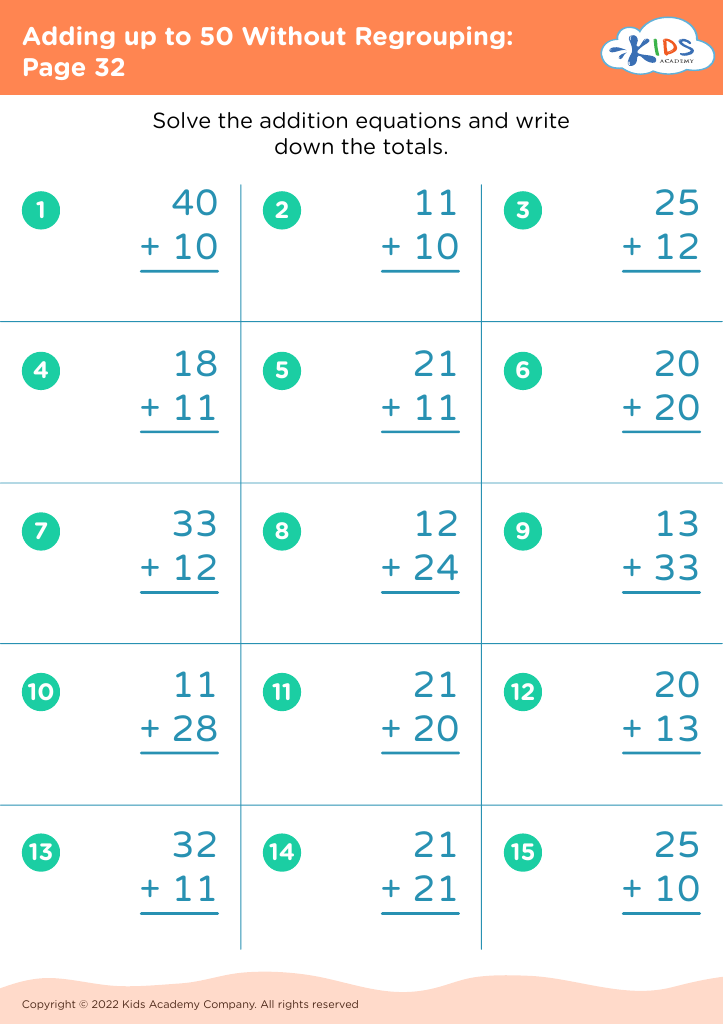
Adding up to 50 Without Regrouping: Page 32
Worksheet
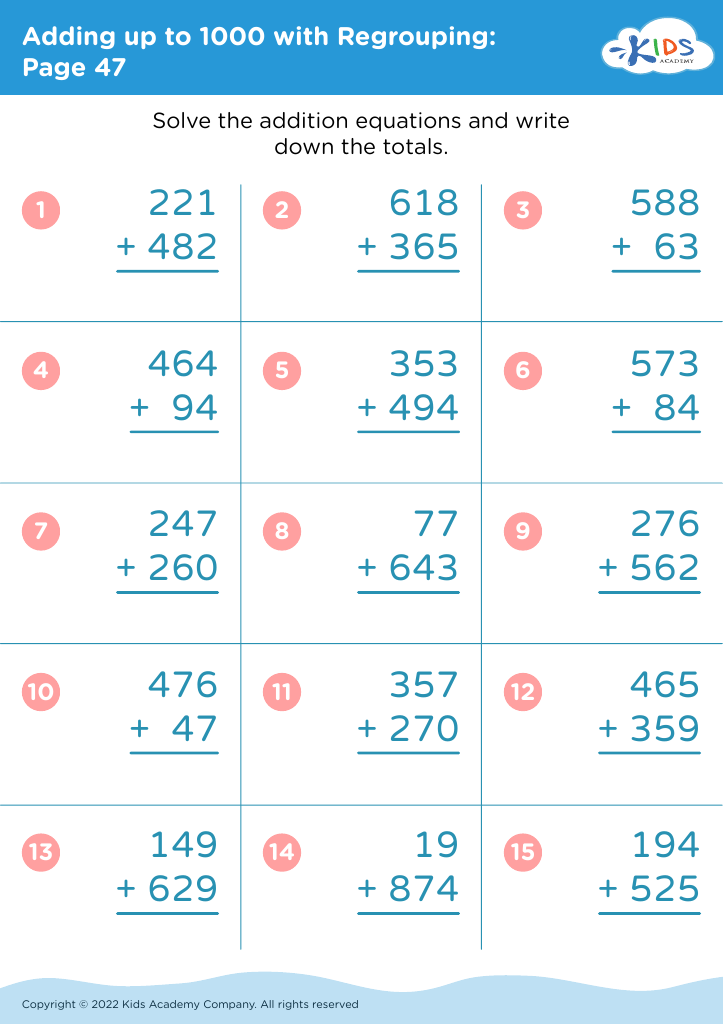
Adding up to 1000 with Regrouping: Page 47
Worksheet
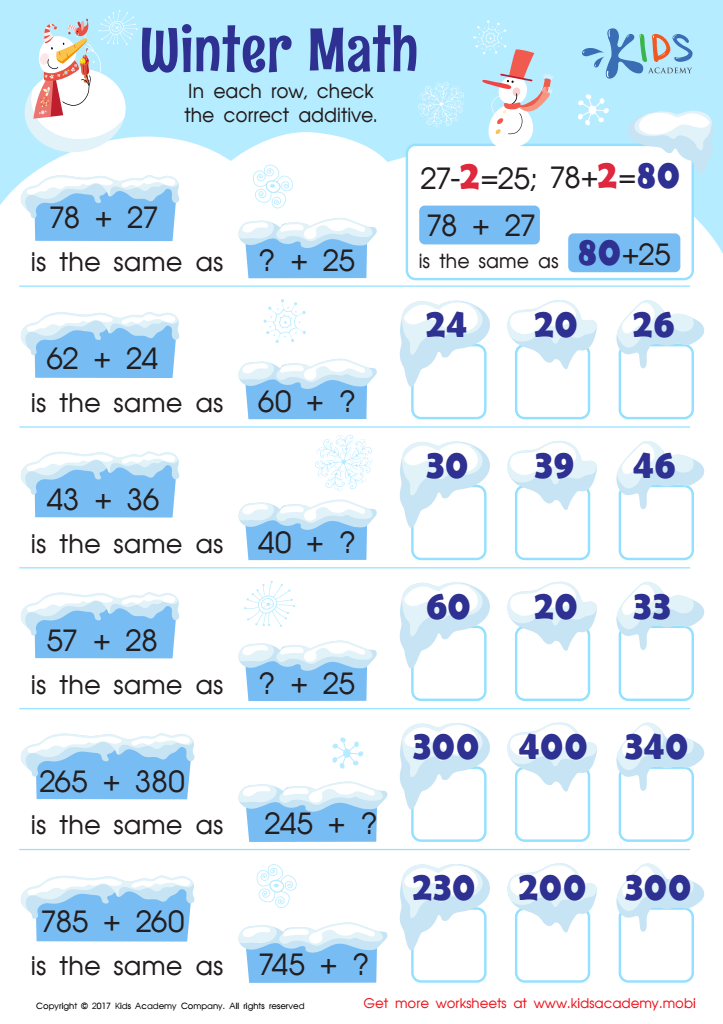
Free addition PDF worksheet for 3rd grade

Free Addition Worksheet

Perfect for a wintry day, challenge your 3rd grader to compare addition equations and fill in the missing numbers in the PDF. This winter-themed worksheet is sure to bring a smile while your 3rd grader practices their addition skills. Perfect for a blustery day, challenge your child to compare addition equations and complete the missing numbers in the PDF.
Free Addition Worksheet
Worksheet
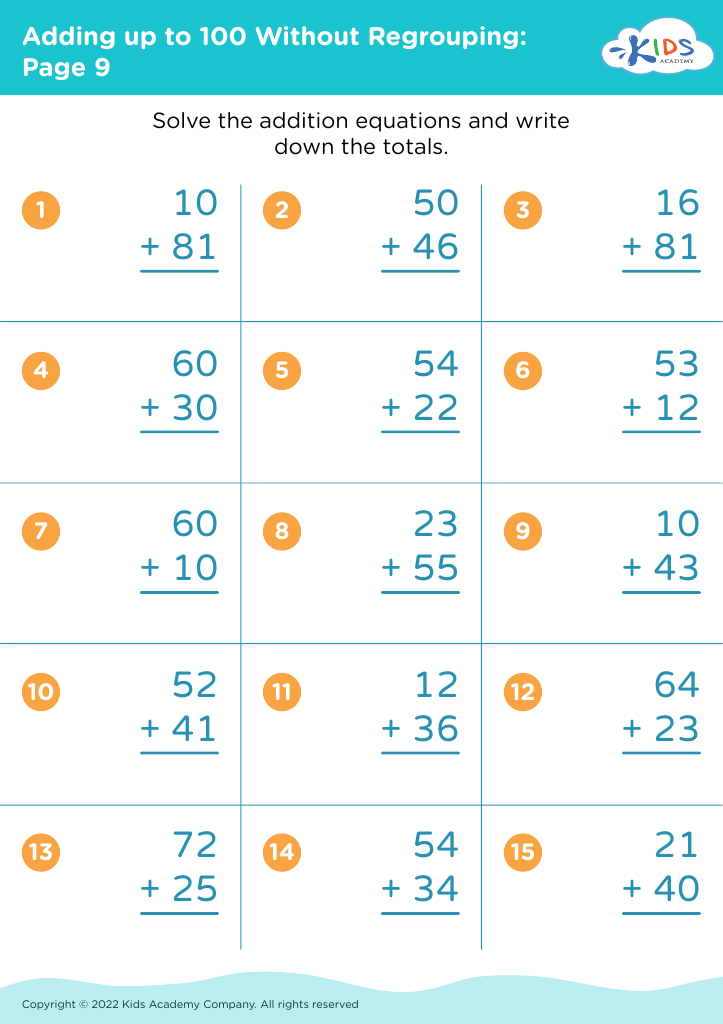
Adding up to 100 Without Regrouping: Page 9
Worksheet
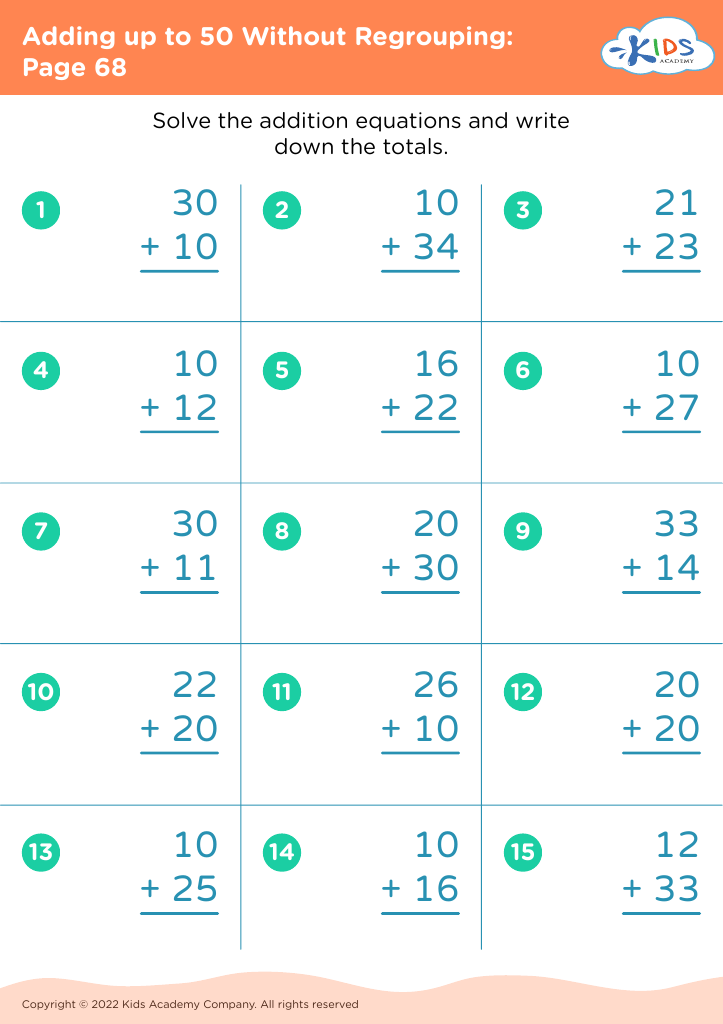
Adding up to 50 Without Regrouping: Page 68
Worksheet


Basic addition skills are foundational for children's success in math and overall cognitive development. At ages 8-9, children are building the critical thinking and problem-solving abilities that will support their broader academic journey. Here's why parents and teachers should prioritize this:

  1. Building Blocks: Addition is a fundamental component of arithmetic. Mastering it allows children to progress to more complex math concepts like multiplication, division, fractions, and algebra. A strong base in addition aids smoother transitions to these future subjects.

  2. Everyday Applications: Mathematics is not confined to the classroom. Children use addition daily, whether calculating money, measuring ingredients, or playing games. Proficiency in addition enhances their ability to navigate and understand the world around them.

  3. Confidence and Motivation: Successfully grasping basic math concepts boosts a child's confidence and interest in learning. Positive early experiences with addition can foster a lasting love for math and diminish math-related anxieties, paving the way for lifelong academic success.

  4. Cognitive Development: Early math skills correlate with higher problem-solving and logical-thinking abilities. Practicing addition strengthens neural pathways, aiding overall intellectual growth and benefiting other subject areas.

In summary, mastering basic addition skills during these early years is crucial. It creates strong educational foundations, fosters practical life skills, boosts confidence, and supports cognitive development, ultimately ensuring children are well-equipped for future learning challenges.