Filters

52 filtered results

Clear all filters
Favorites
With answer key
Interactive

52 filtered results

Difficulty Level

Grade


Boost your child's math skills with our engaging "Counting Practice Addition Worksheets" for ages 8-9. Designed to make learning fun, these worksheets help children master addition through interactive counting exercises. Each sheet challenges young learners to add numbers using visual aids and creative problems that keep them motivated. As they work through various levels of difficulty, children enhance their numerical fluency and confidence. Perfect for classroom use or at-home practice, our worksheets support key math standards and promote a strong foundation in arithmetic. Start building essential addition skills today and watch your child's love for math flourish!
Check out this FREE Trial Lesson on Addition for age 8-9!

X

Favorites
With answer key
Interactive
  • 8-9
  • Counting practice
  • Addition
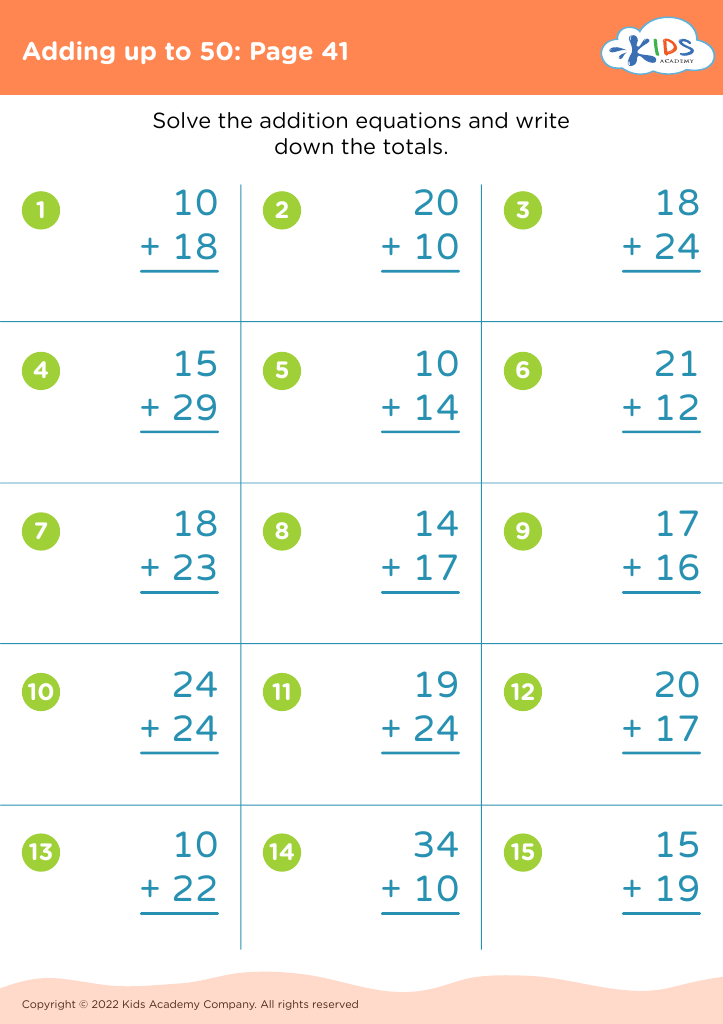
Adding up to 50: Page 41

Adding up to 50: Page 41

Adding up to 50: Page 41
Worksheet
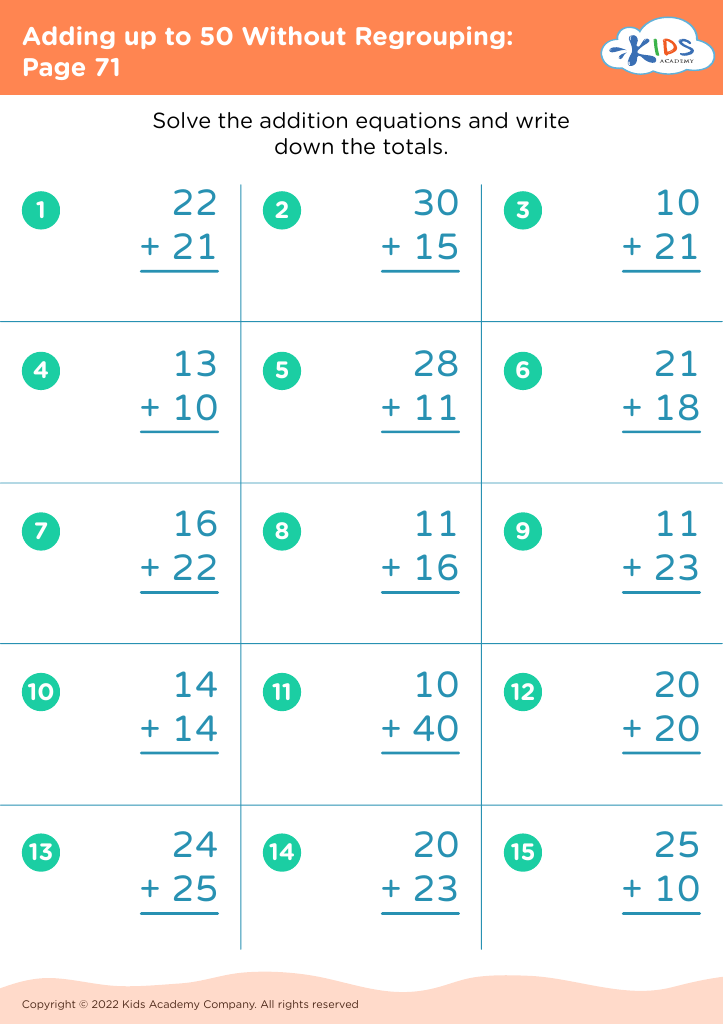
Adding up to 50 Without Regrouping: Page 71
Worksheet
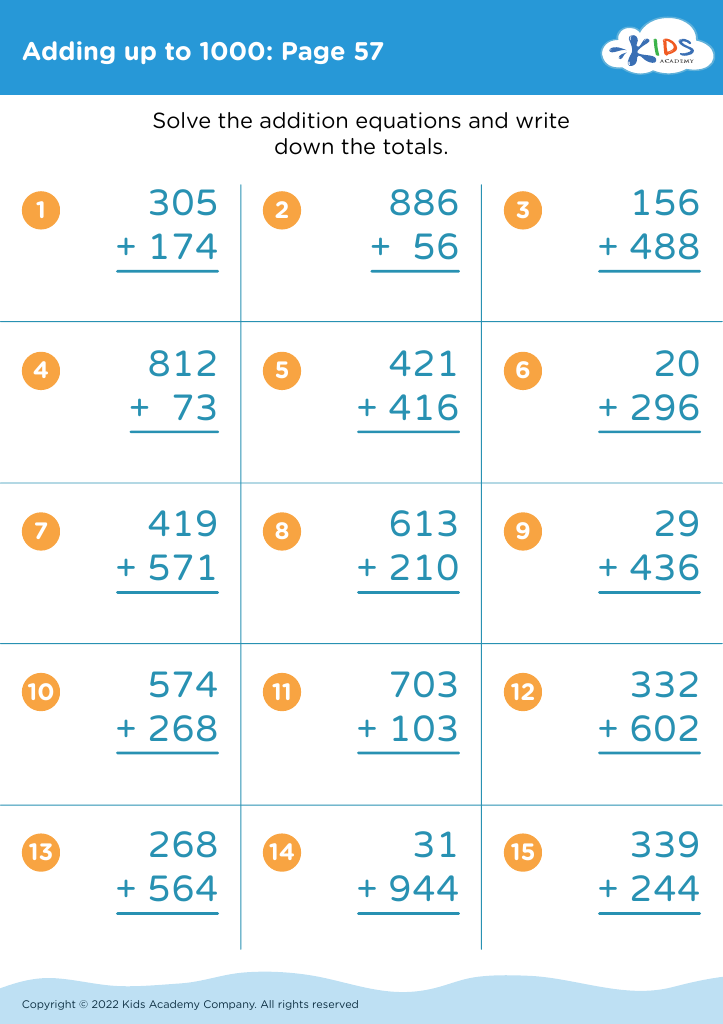
Adding up to 1000: Page 57

Adding up to 1000: Page 57

Adding up to 1000: Page 57
Worksheet
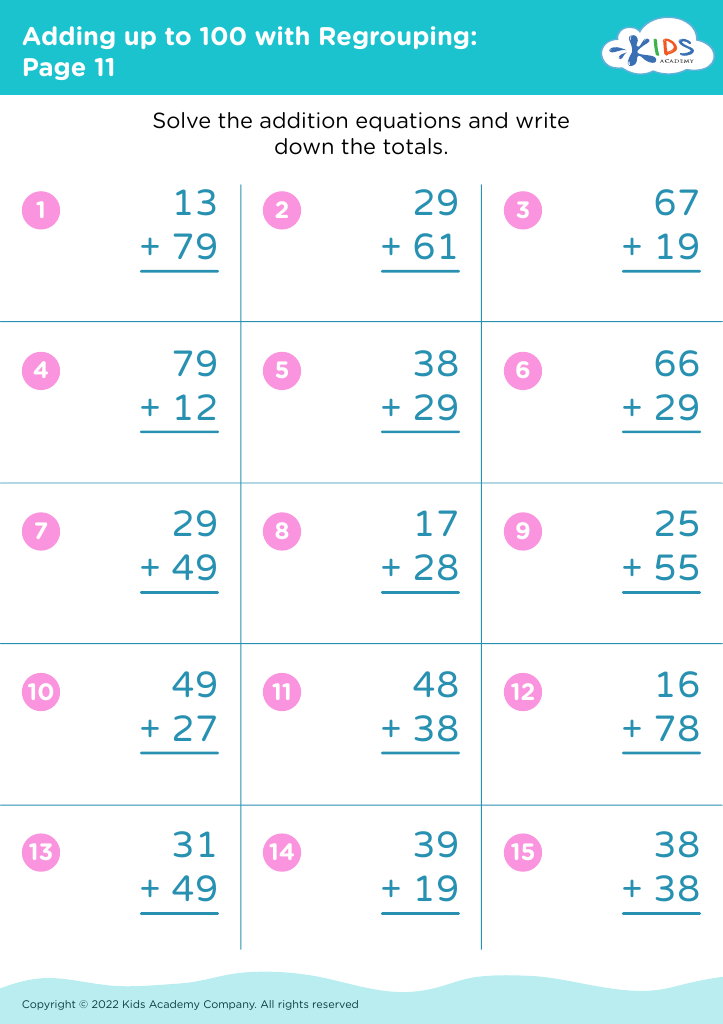
Adding up to 100 with Regrouping: Page 11
Worksheet
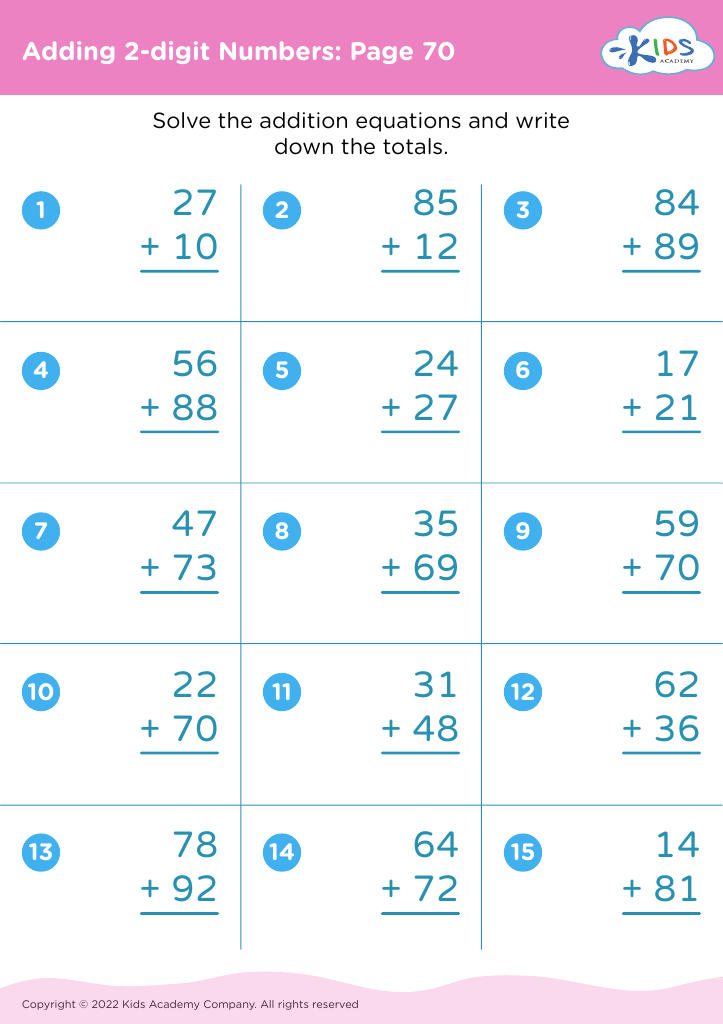
Adding 2-digit Numbers: Page 70

Adding 2-digit Numbers: Page 70

Adding 2-digit Numbers: Page 70
Worksheet
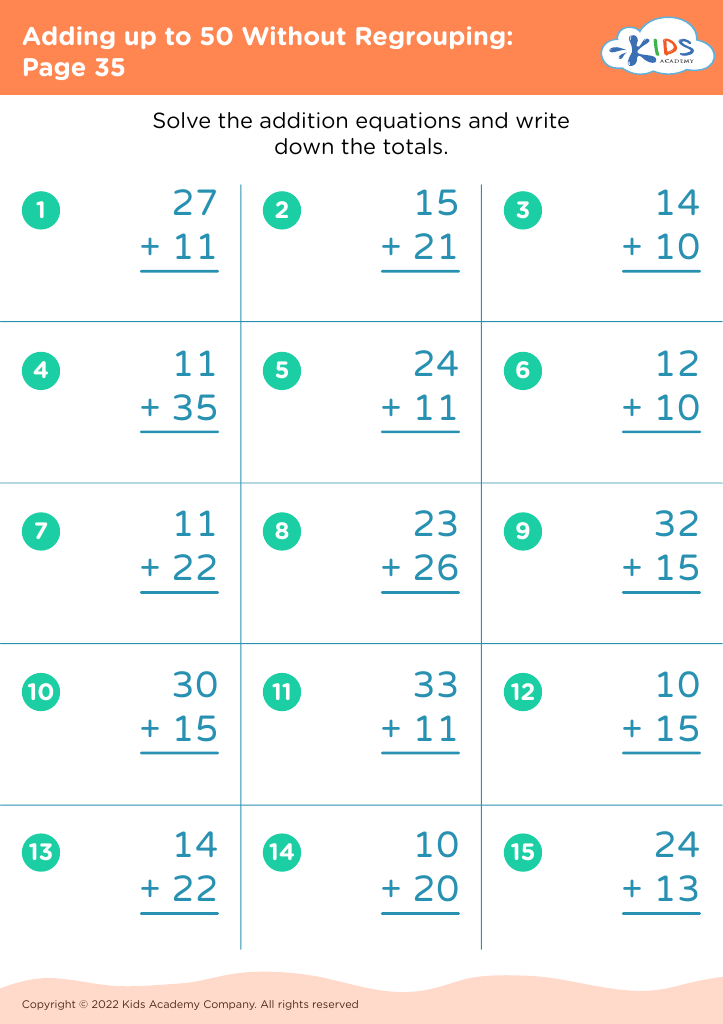
Adding up to 50 Without Regrouping: Page 35
Worksheet
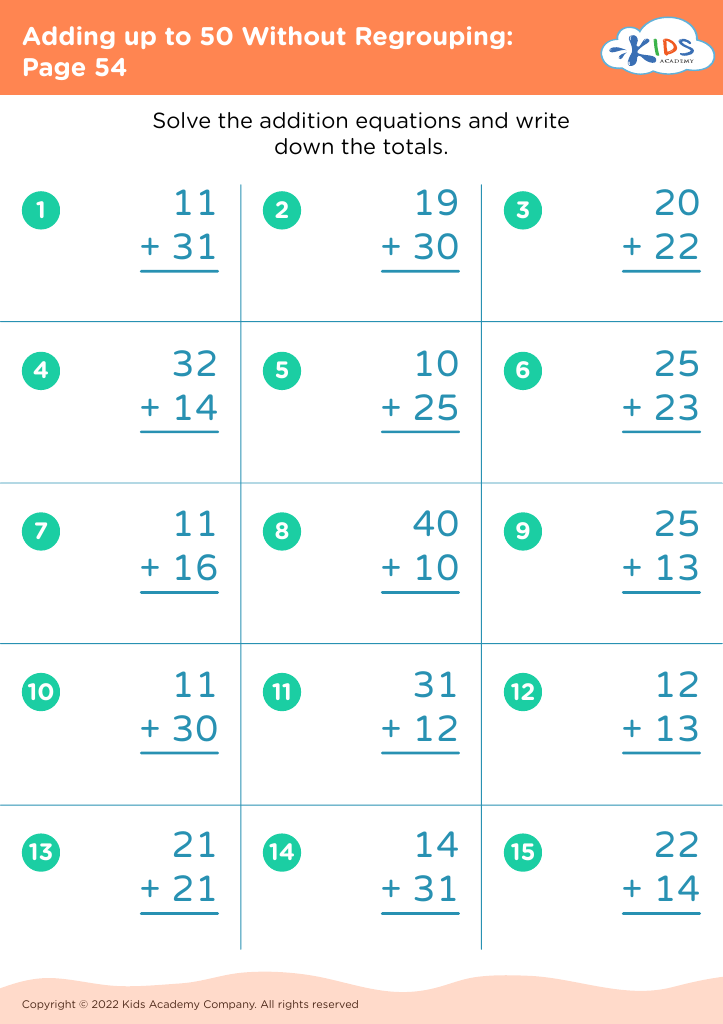
Adding up to 50 Without Regrouping: Page 54
Worksheet
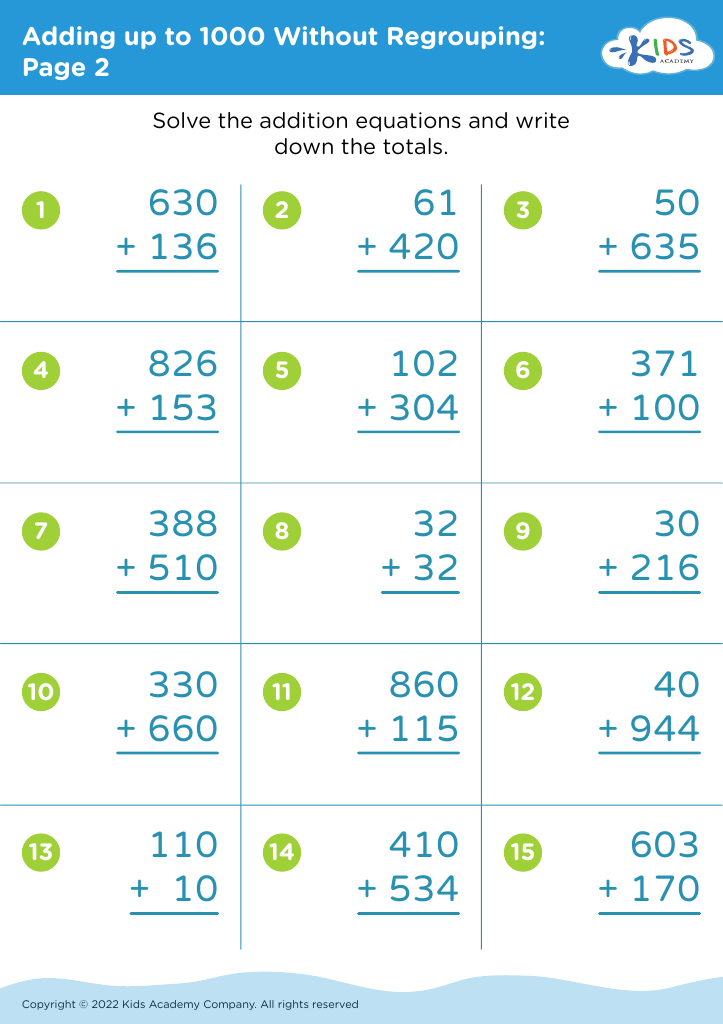
Adding up to 1000 Without Regrouping: Page 2
Worksheet
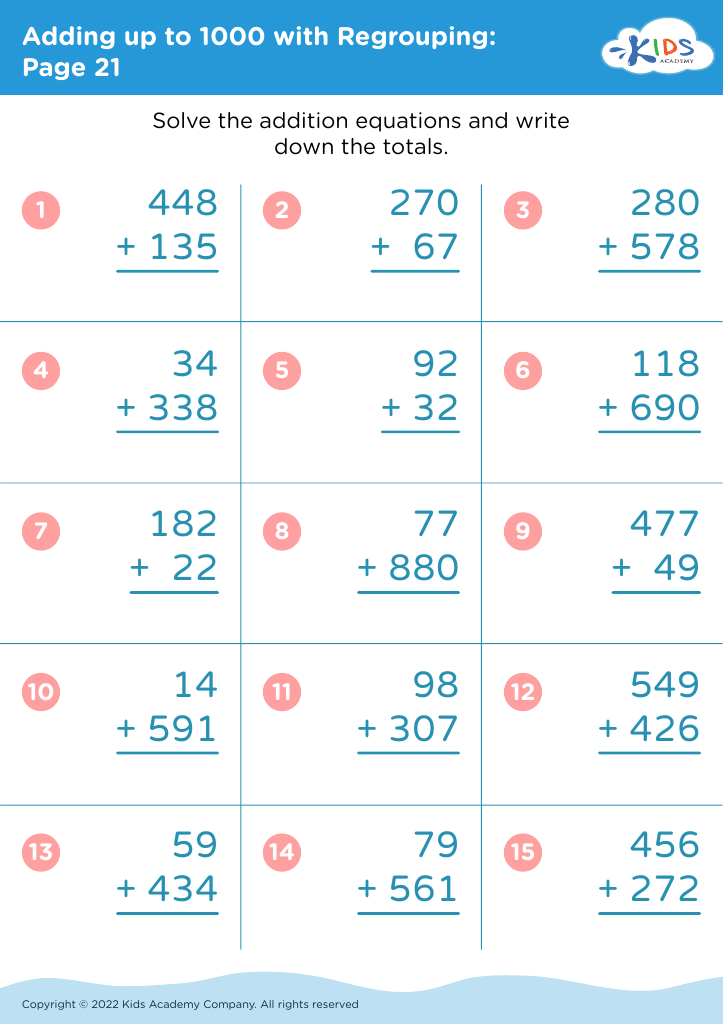
Adding up to 1000 with Regrouping: Page 21
Worksheet
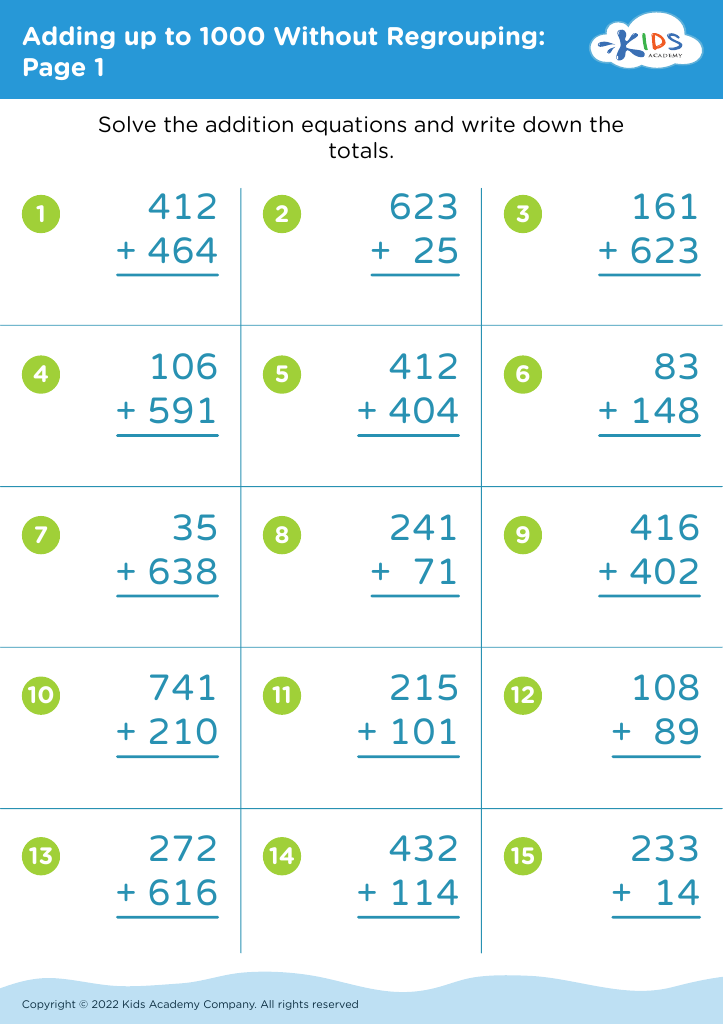
Adding up to 1000 Without Regrouping: Page 1
Worksheet
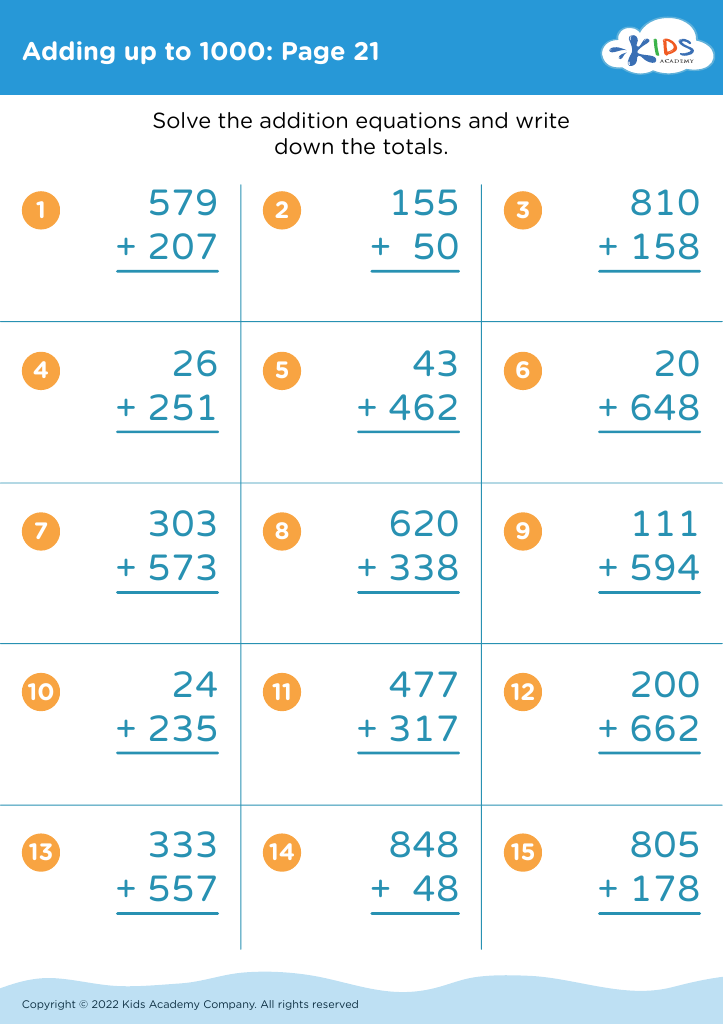
Adding up to 1000: Page 21

Adding up to 1000: Page 21

Adding up to 1000: Page 21
Worksheet
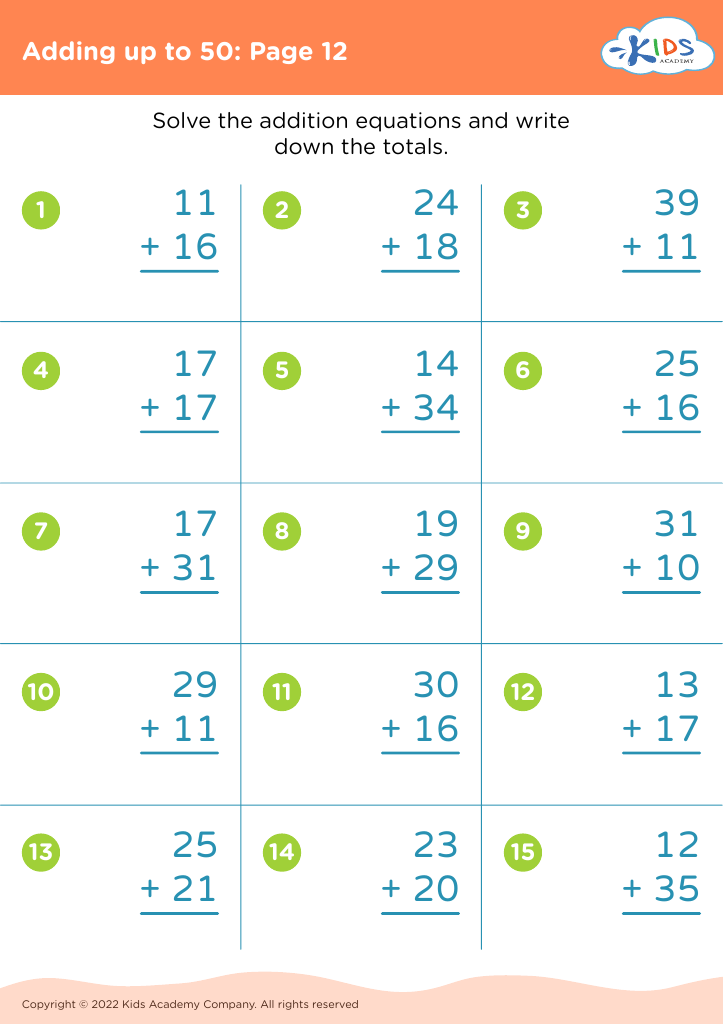
Adding up to 50: Page 12

Adding up to 50: Page 12

Adding up to 50: Page 12
Worksheet
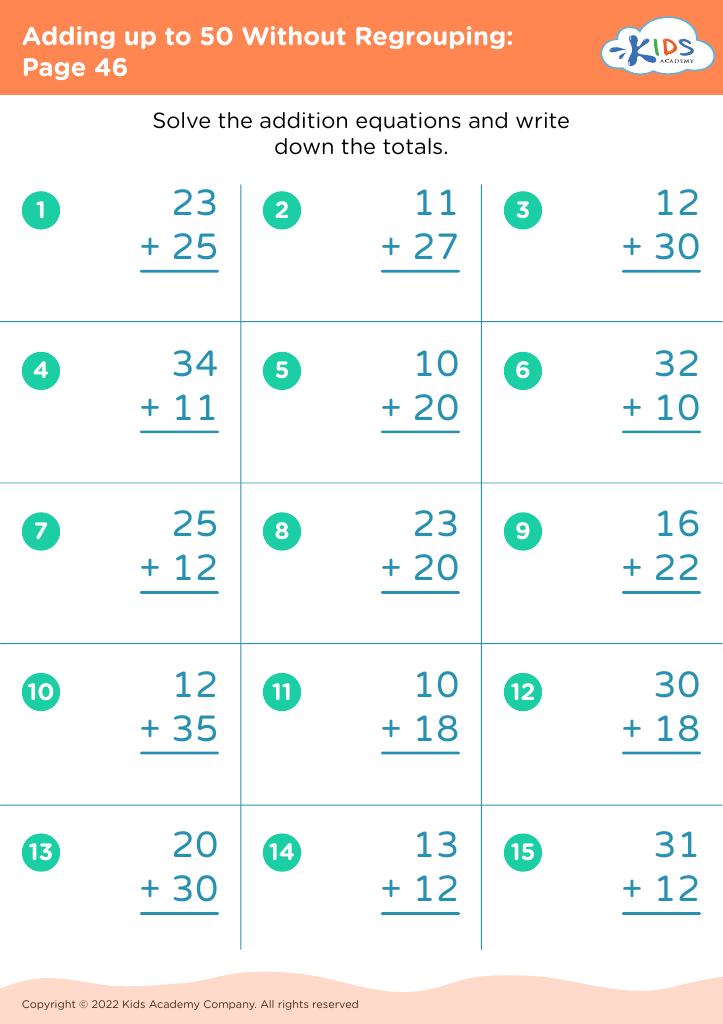
Adding up to 50 Without Regrouping: Page 46
Worksheet
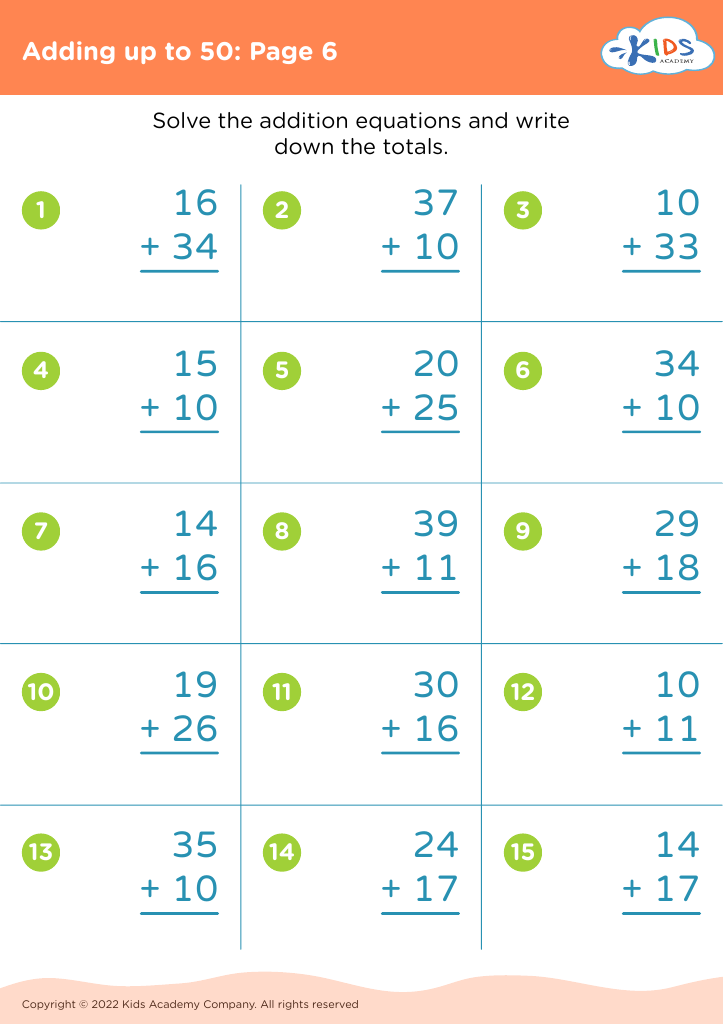
Adding up to 50: Page 6

Adding up to 50: Page 6

Adding up to 50: Page 6
Worksheet
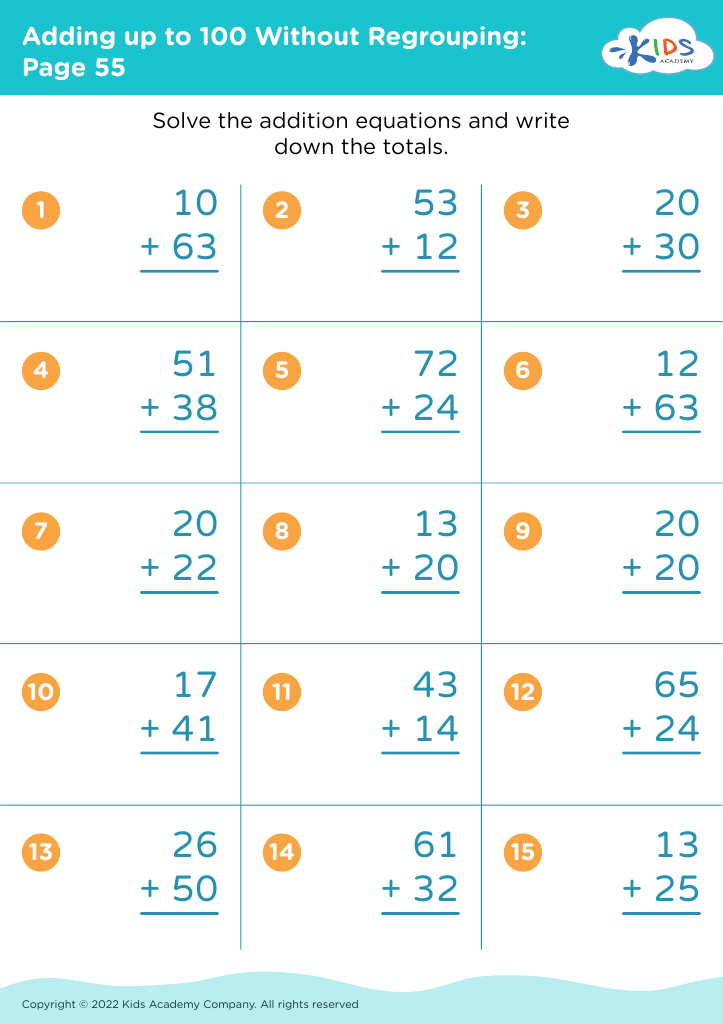
Adding up to 100 Without Regrouping: Page 55
Worksheet
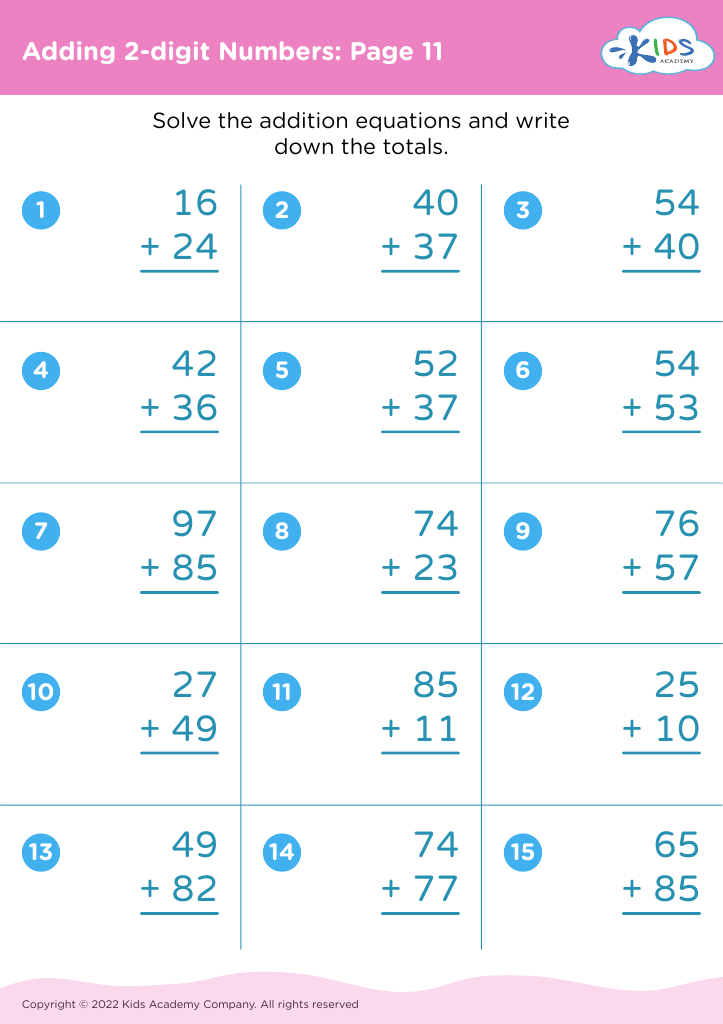
Adding 2-digit Numbers: Page 11

Adding 2-digit Numbers: Page 11

Adding 2-digit Numbers: Page 11
Worksheet
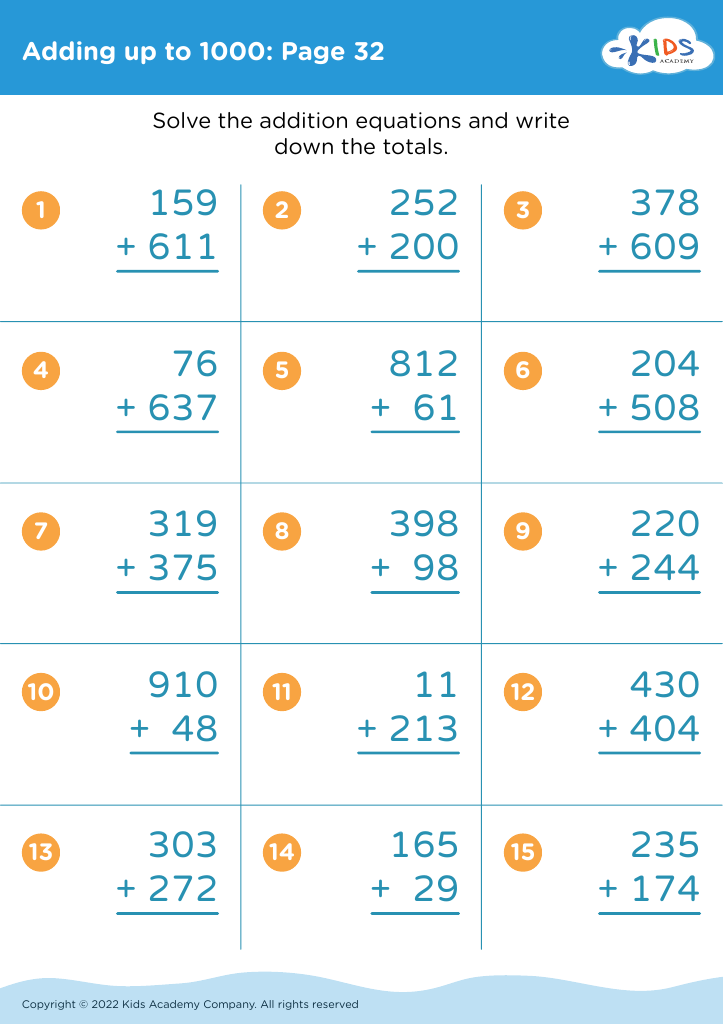
Adding up to 1000: Page 32

Adding up to 1000: Page 32

Adding up to 1000: Page 32
Worksheet
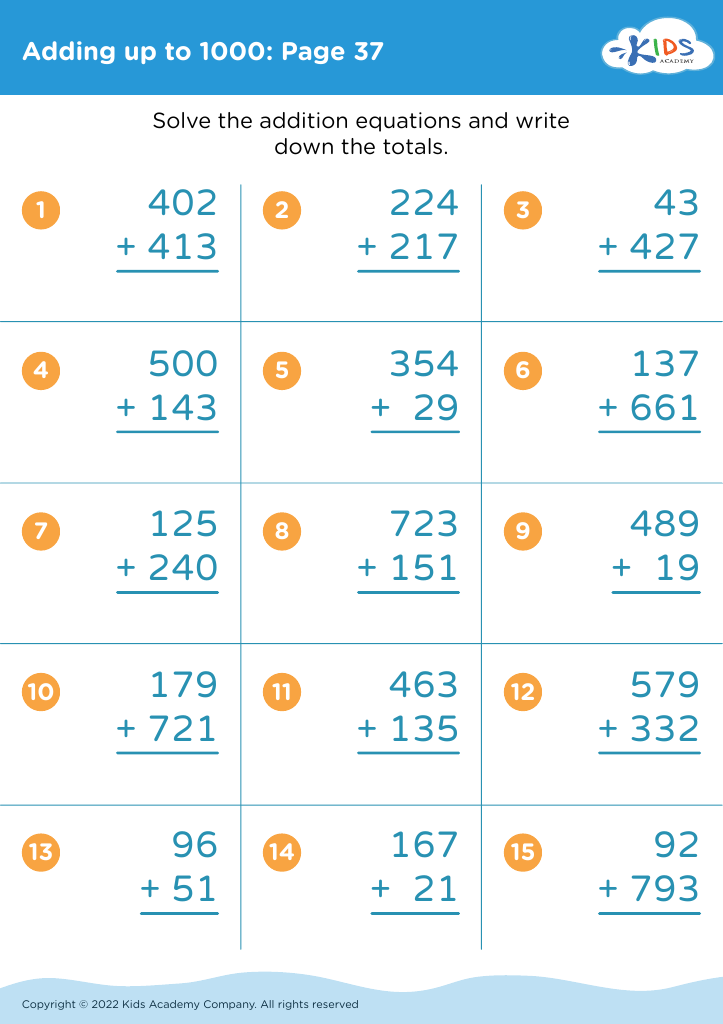
Adding up to 1000: Page 37

Adding up to 1000: Page 37

Adding up to 1000: Page 37
Worksheet
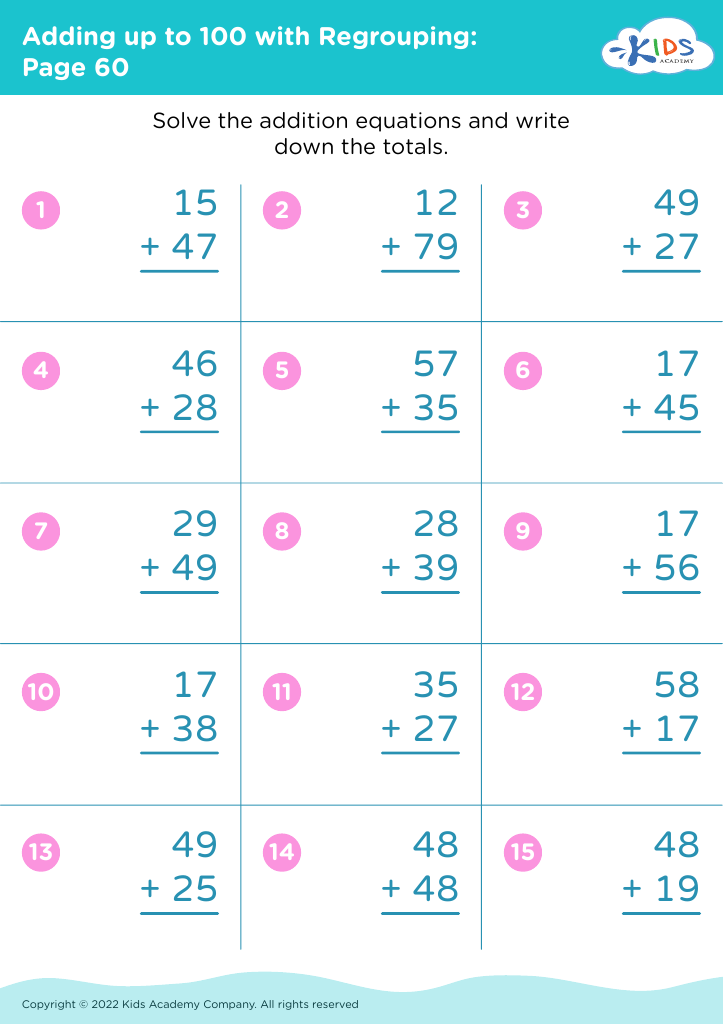
Adding up to 100 with Regrouping: Page 60
Worksheet
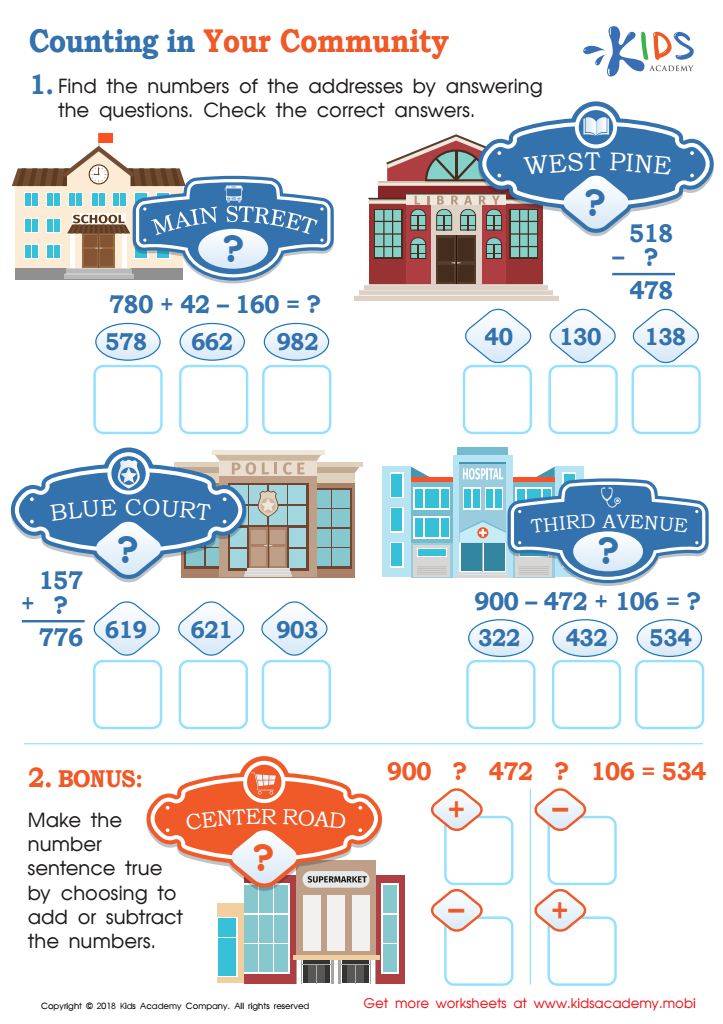
Counting in Your Community Worksheet

Counting in Your Community Worksheet

Introduce your kids to the idea of a community, where different people and buildings co-exist, each playing their part for the community's progress. Ask them to name the buildings they see in their community. Then work through this worksheet to find the numbers of the addresses by answering the questions. Check the answers once they've solved the equations.
Counting in Your Community Worksheet
Worksheet
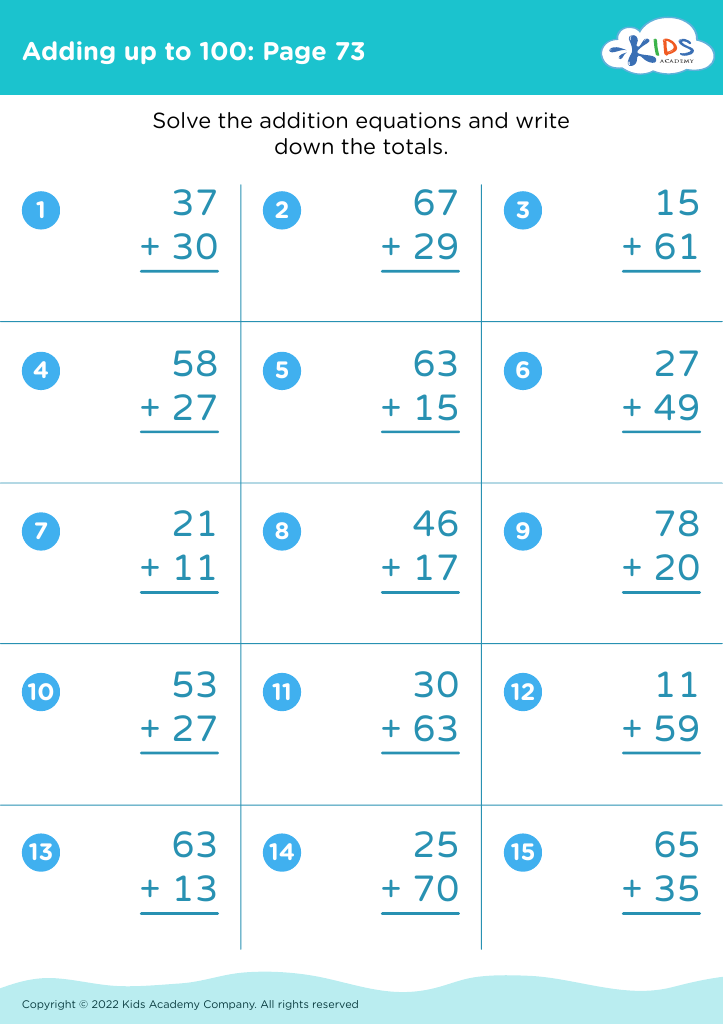
Adding up to 100: Page 73

Adding up to 100: Page 73

Adding up to 100: Page 73
Worksheet
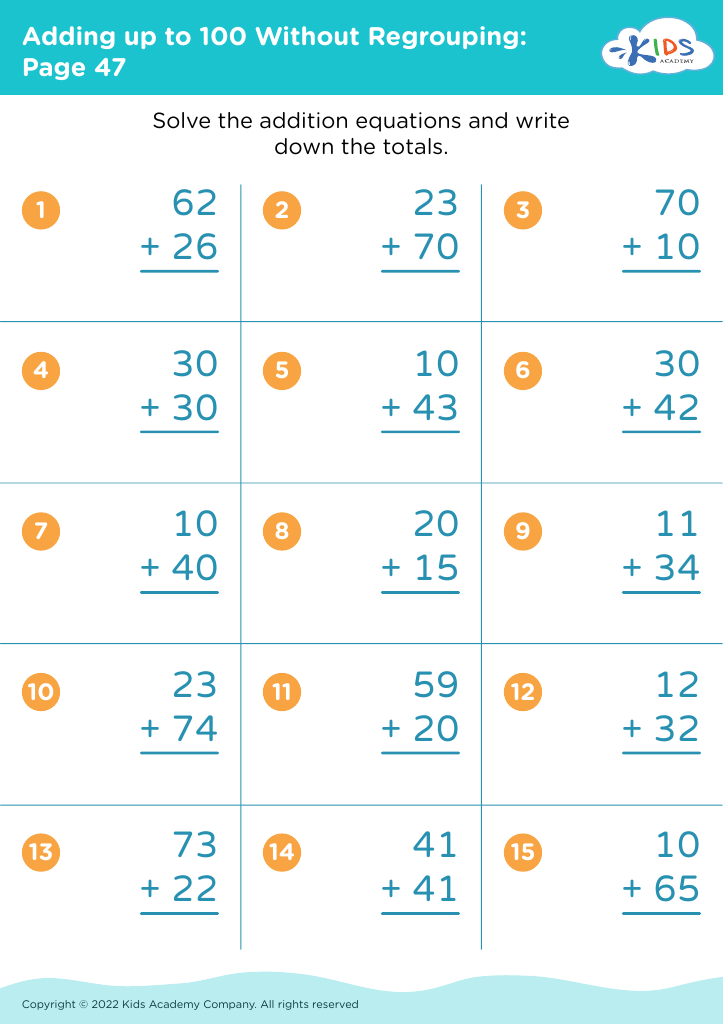
Adding up to 100 Without Regrouping: Page 47
Worksheet
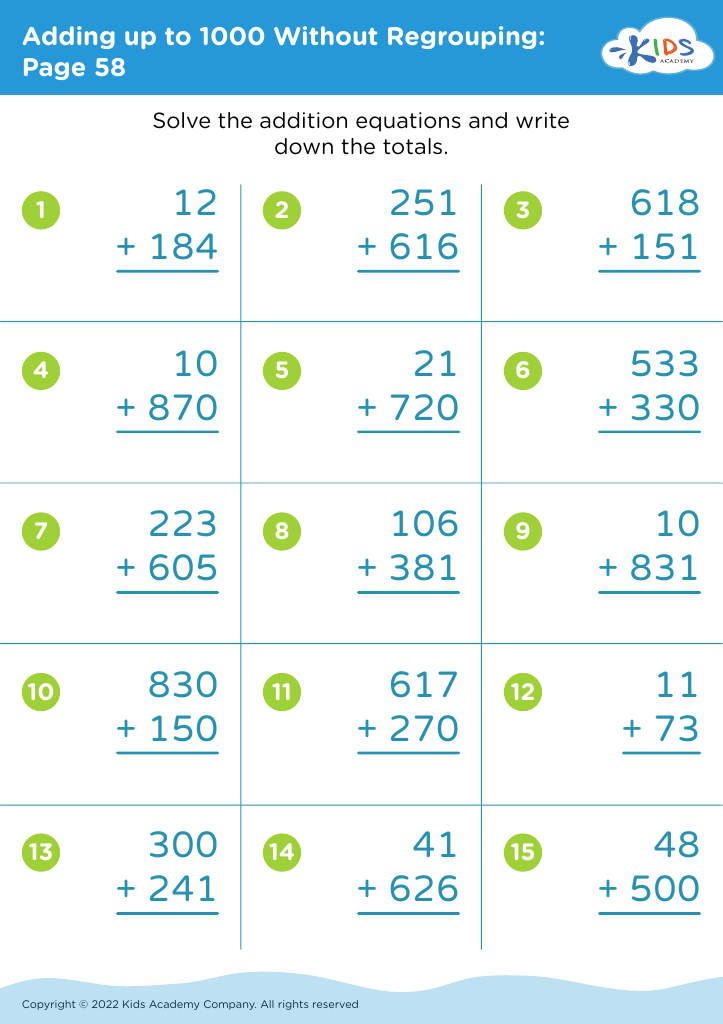
Adding up to 1000 Without Regrouping: Page 58
Worksheet
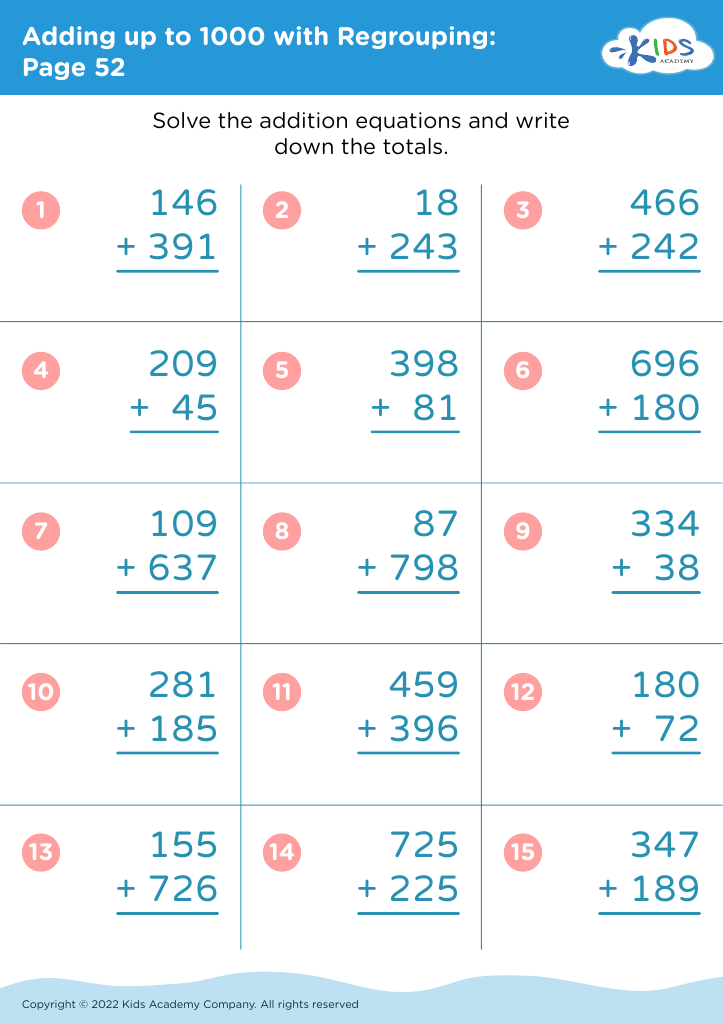
Adding up to 1000 with Regrouping: Page 52
Worksheet


Counting practice and addition are fundamental skills that lay the foundation for advanced mathematics learning. For children aged 8-9, mastering these skills is critical. Firstly, proficiency in addition helps develop number sense, which is the ability to understand and work with numbers flexibly and efficiently. This is crucial for more complex mathematical concepts they'll encounter in later grades, such as multiplication, division, fractions, and algebra.

Moreover, counting practice strengthens memory and attention to detail. As children learn to add numbers consistently, they also develop logical thinking and problem-solving skills. These abilities are essential, not only in math but across other subjects and daily life situations.

Additionally, early success in math builds confidence and fosters a positive attitude toward the subject. Many children (and eventually, adults) view math as intimidating or frustrating. Regular practice with counting and addition reduces math anxiety and sets children up for success, encouraging a mindset of resilience and curiosity.

Parents and teachers should support and encourage these practices to ensure children get the foundational skills they need to excel academically and handle practical tasks throughout their lives, such as budgeting, cooking, and understanding time.

In summary, counting practice and addition are critical at this age because they build essential mathematical skills, enhance cognitive development, and promote a positive learning attitude.