Filters

56 filtered results

Clear all filters
Favorites
With answer key
Interactive

56 filtered results

Difficulty Level

Grade


Check out this FREE Trial Lesson on Addition for age 8-9!

Short and Long Vowel Sort

Favorites
With answer key
Interactive
  • 8-9
  • Fraction simplification
  • Addition
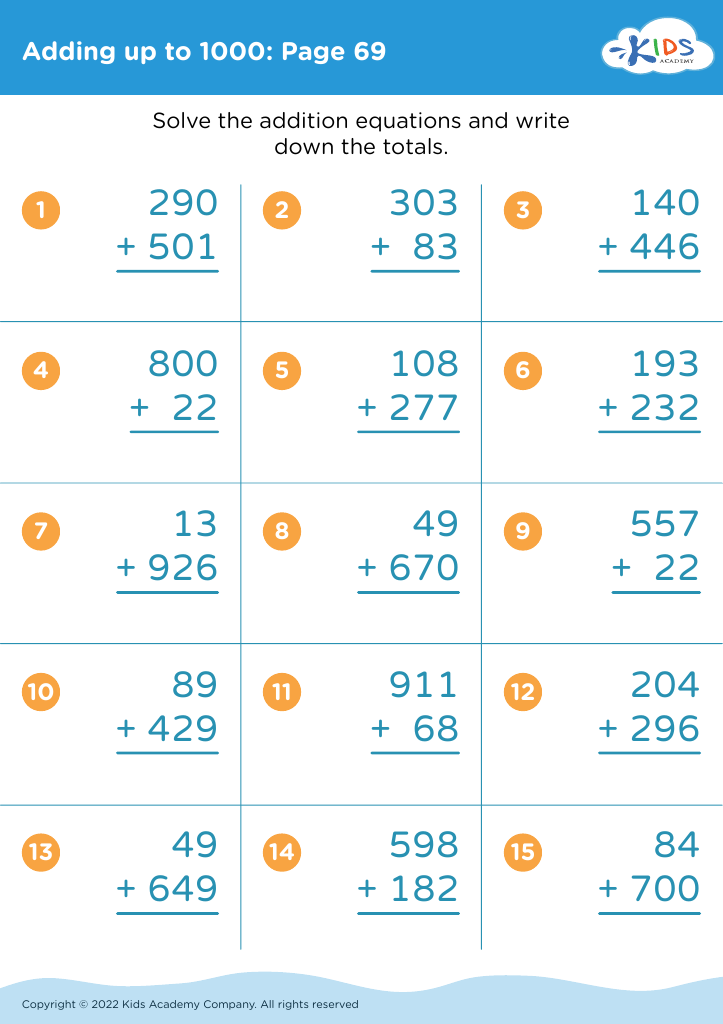
Adding up to 1000: Page 69

Adding up to 1000: Page 69

Adding up to 1000: Page 69
Worksheet
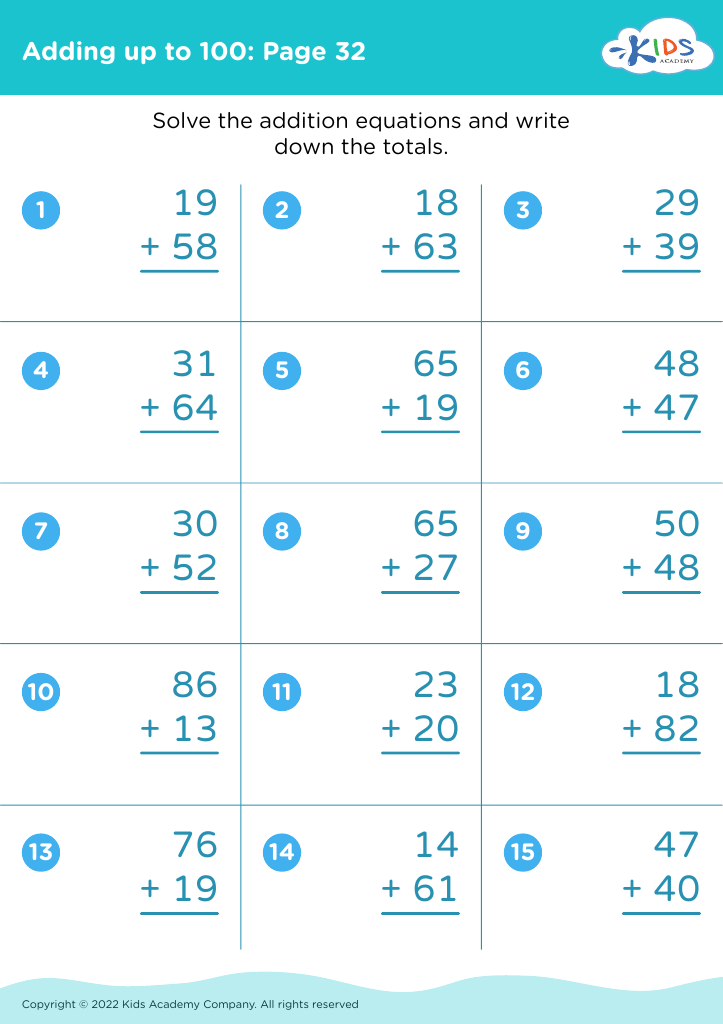
Adding up to 100: Page 32

Adding up to 100: Page 32

Adding up to 100: Page 32
Worksheet
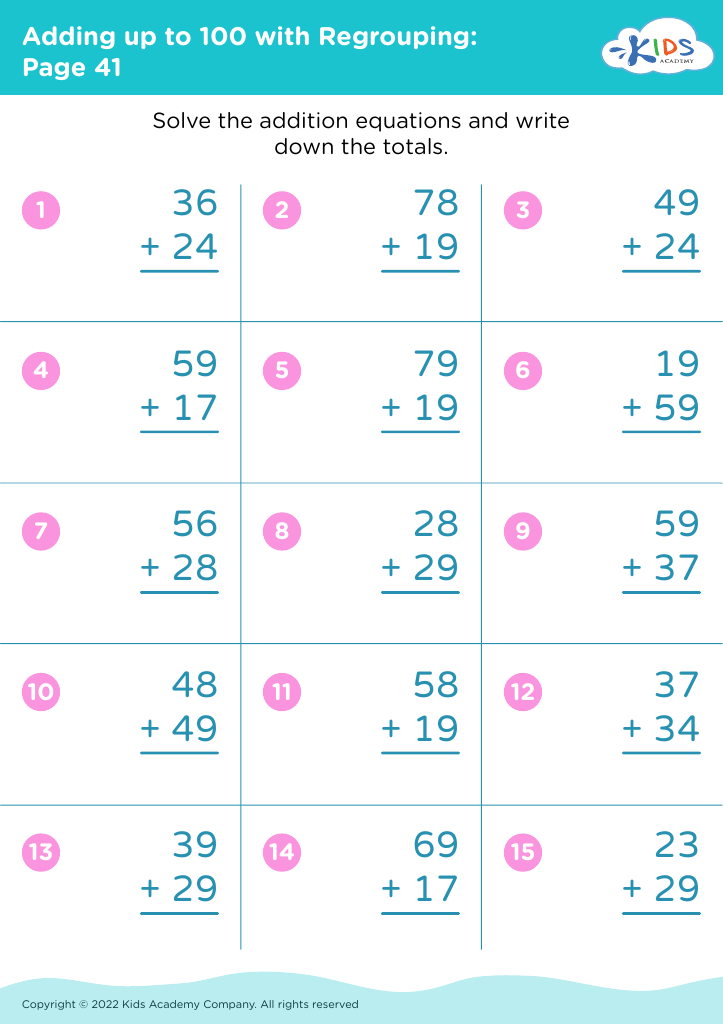
Adding up to 100 with Regrouping: Page 41
Worksheet
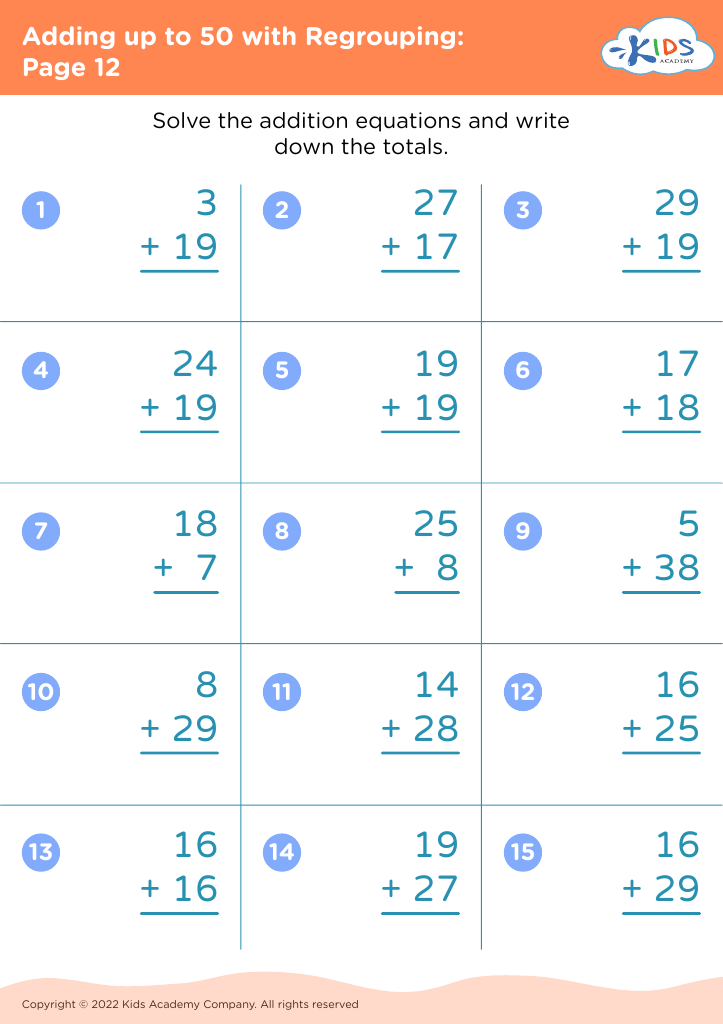
Adding up to 50 with Regrouping: Page 12
Worksheet
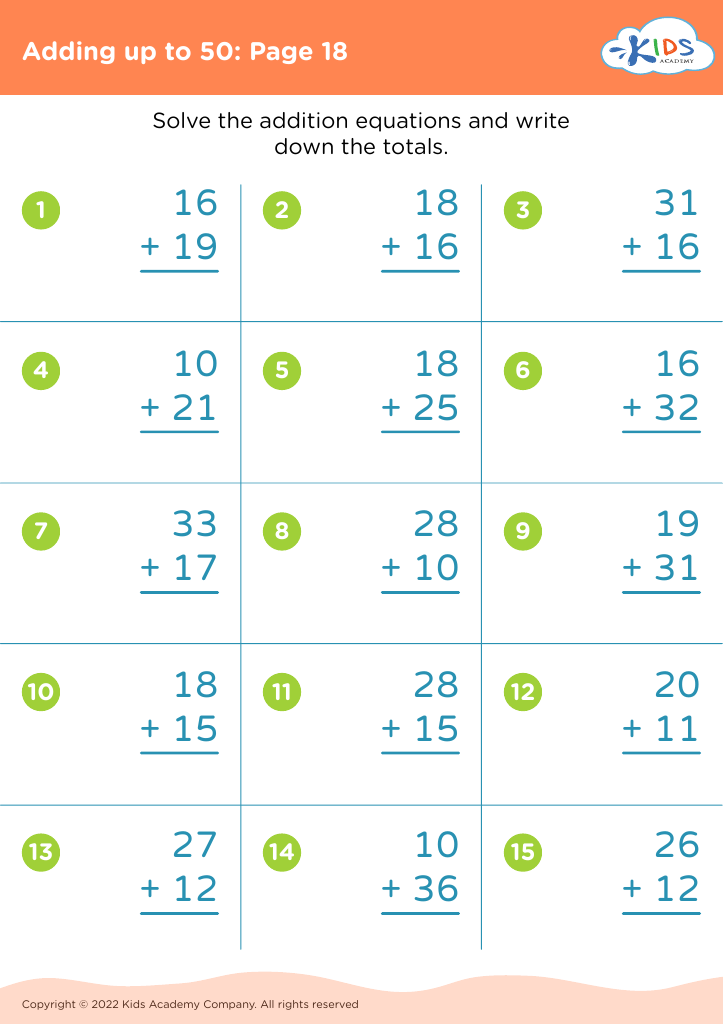
Adding up to 50: Page 18

Adding up to 50: Page 18

Adding up to 50: Page 18
Worksheet
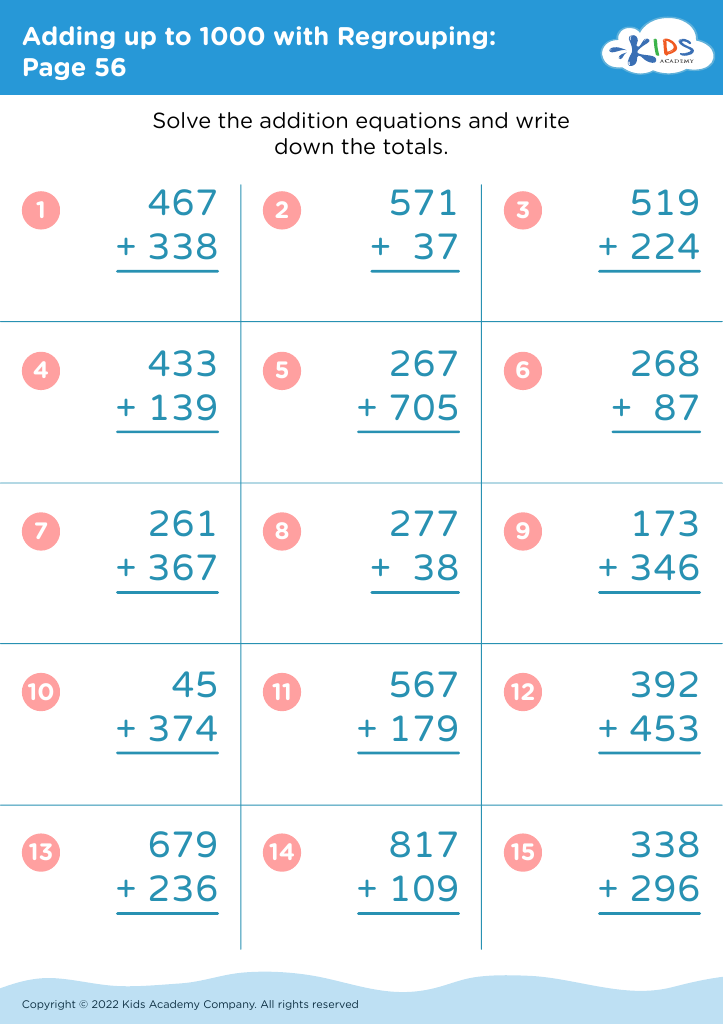
Adding up to 1000 with Regrouping: Page 56
Worksheet
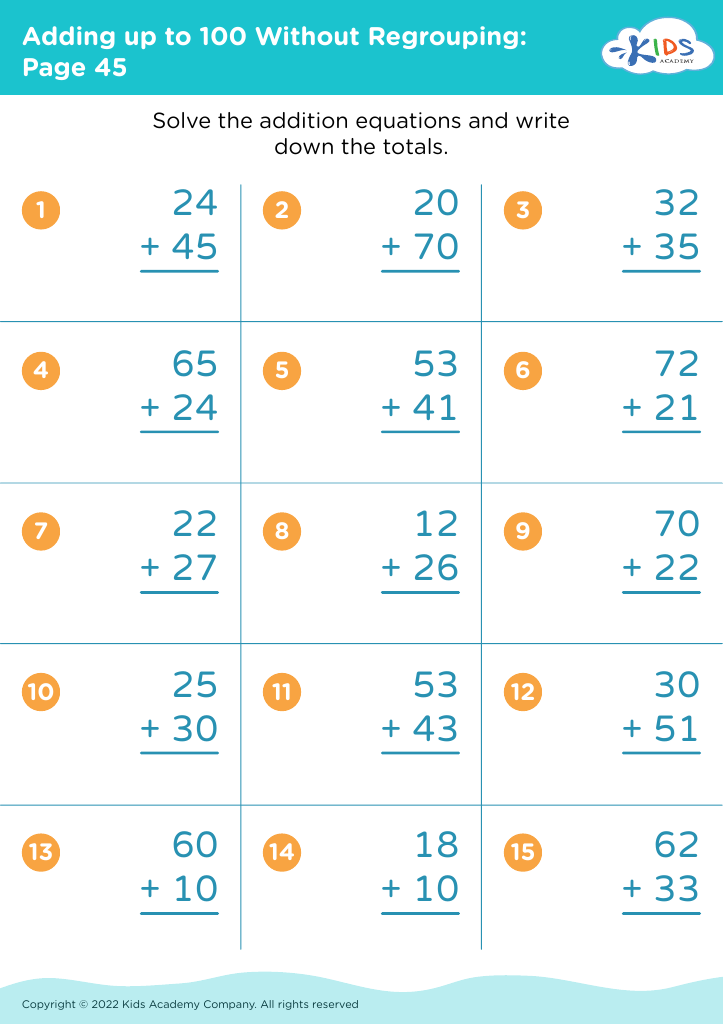
Adding up to 100 Without Regrouping: Page 45
Worksheet
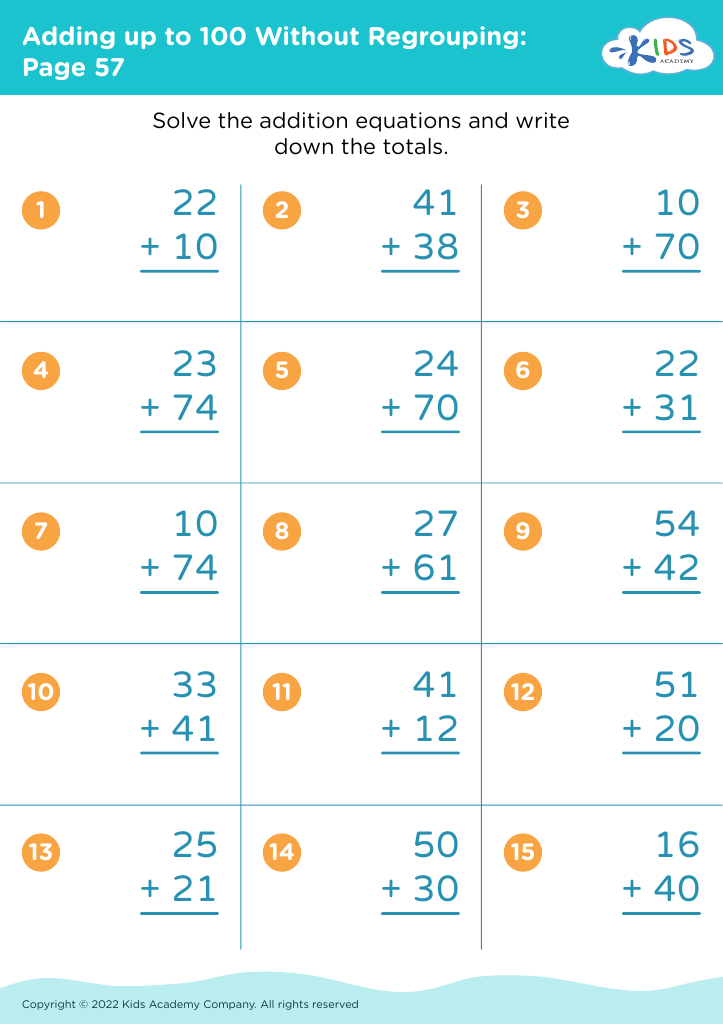
Adding up to 100 Without Regrouping: Page 57
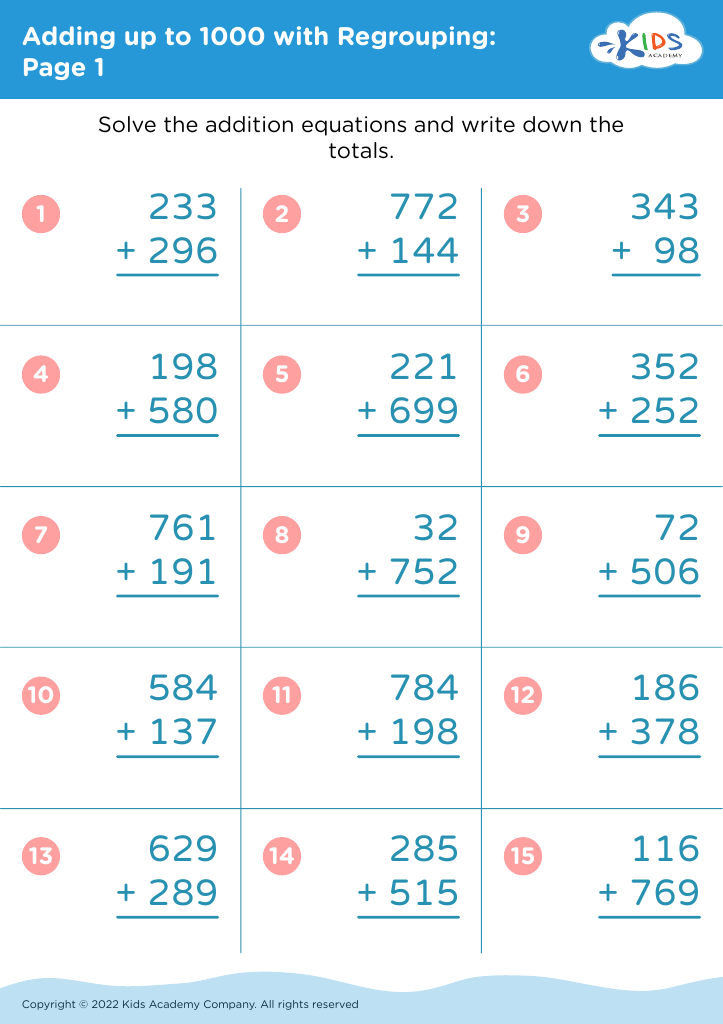
Worksheet
Adding up to 1000 with Regrouping: Page 1
Worksheet
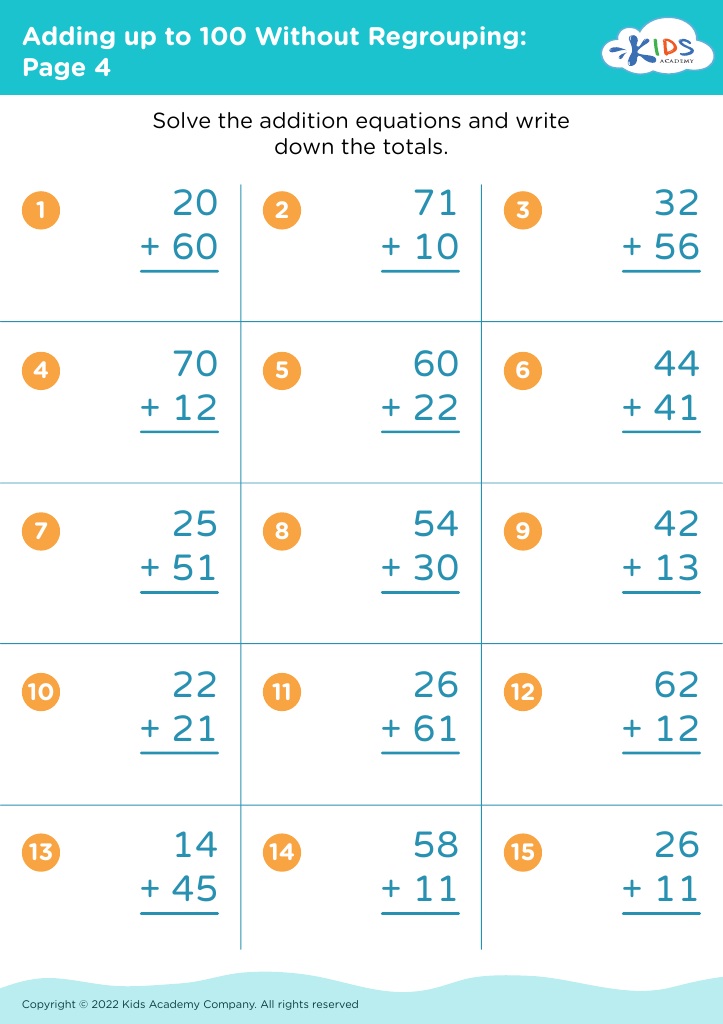
Adding up to 100 Without Regrouping: Page 4
Worksheet
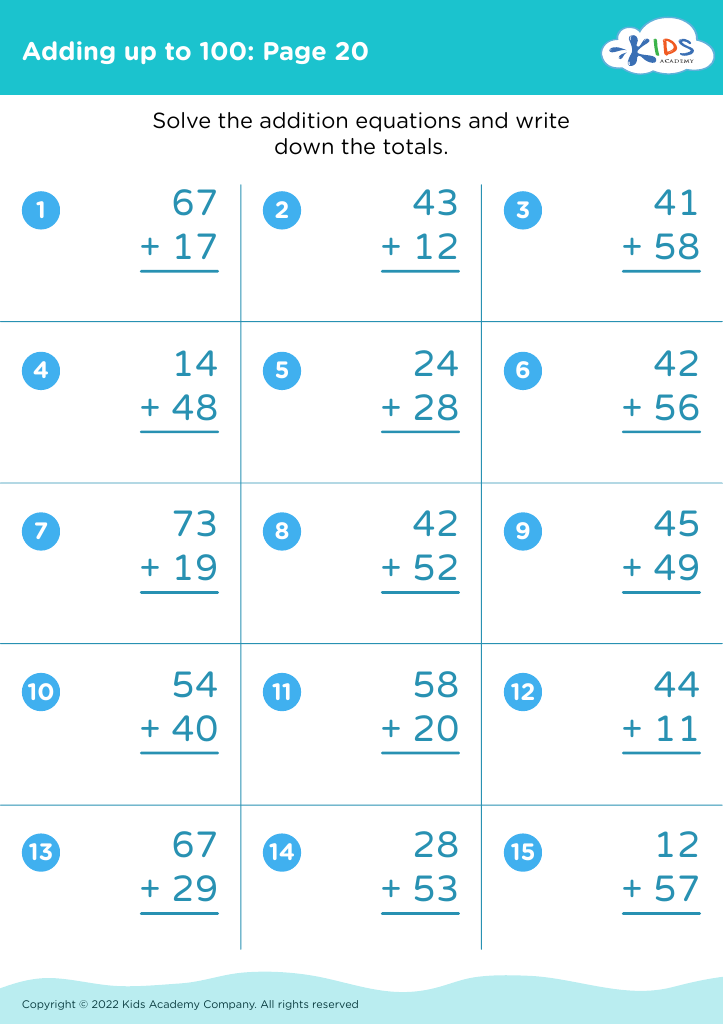
Adding up to 100: Page 20

Adding up to 100: Page 20

Adding up to 100: Page 20
Worksheet
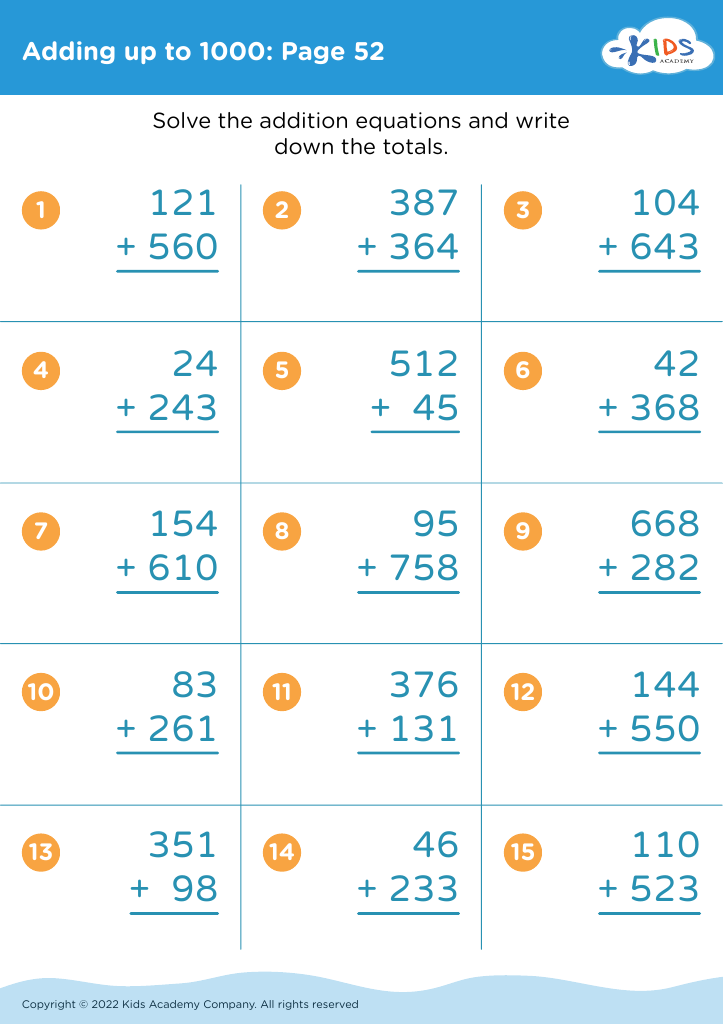
Adding up to 1000: Page 52

Adding up to 1000: Page 52

Adding up to 1000: Page 52
Worksheet
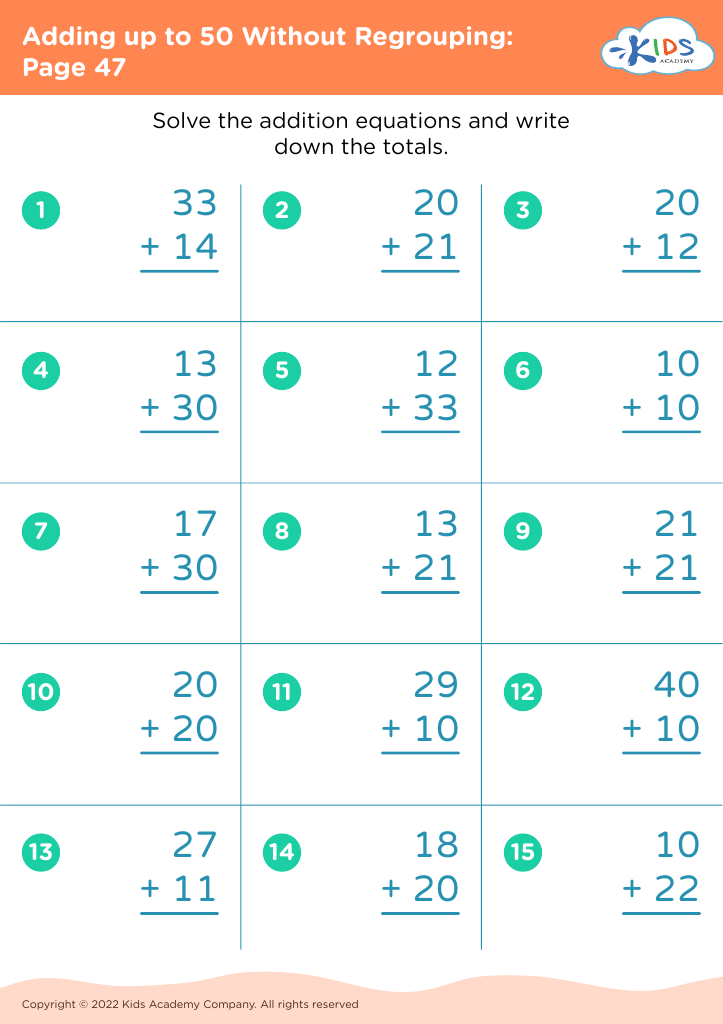
Adding up to 50 Without Regrouping: Page 47
Worksheet
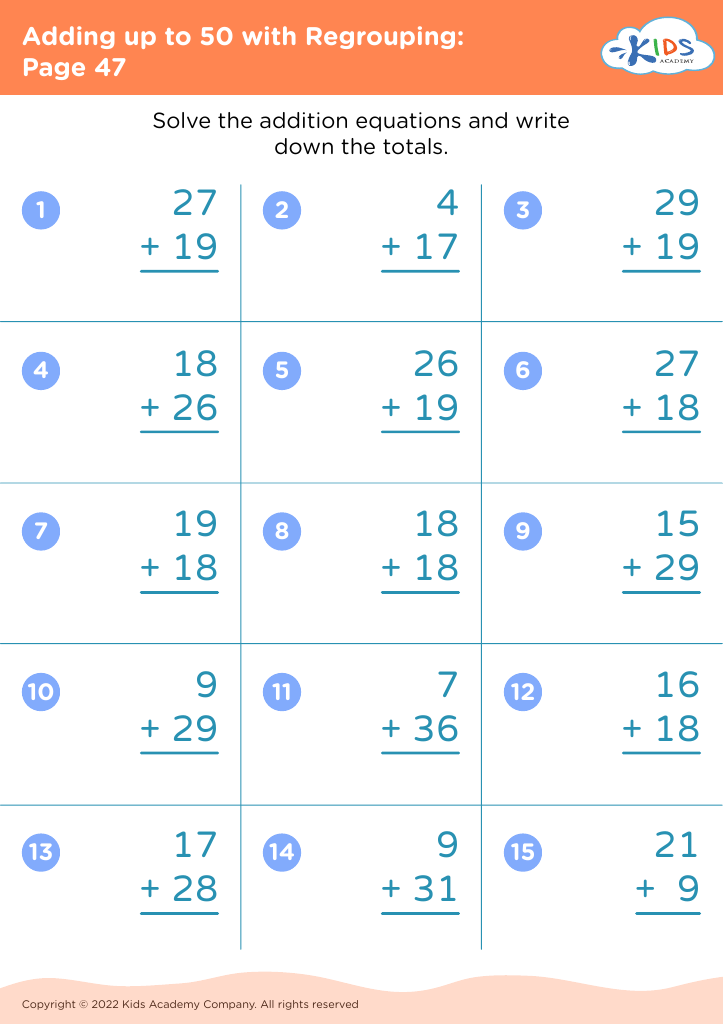
Adding up to 50 with Regrouping: Page 47
Worksheet
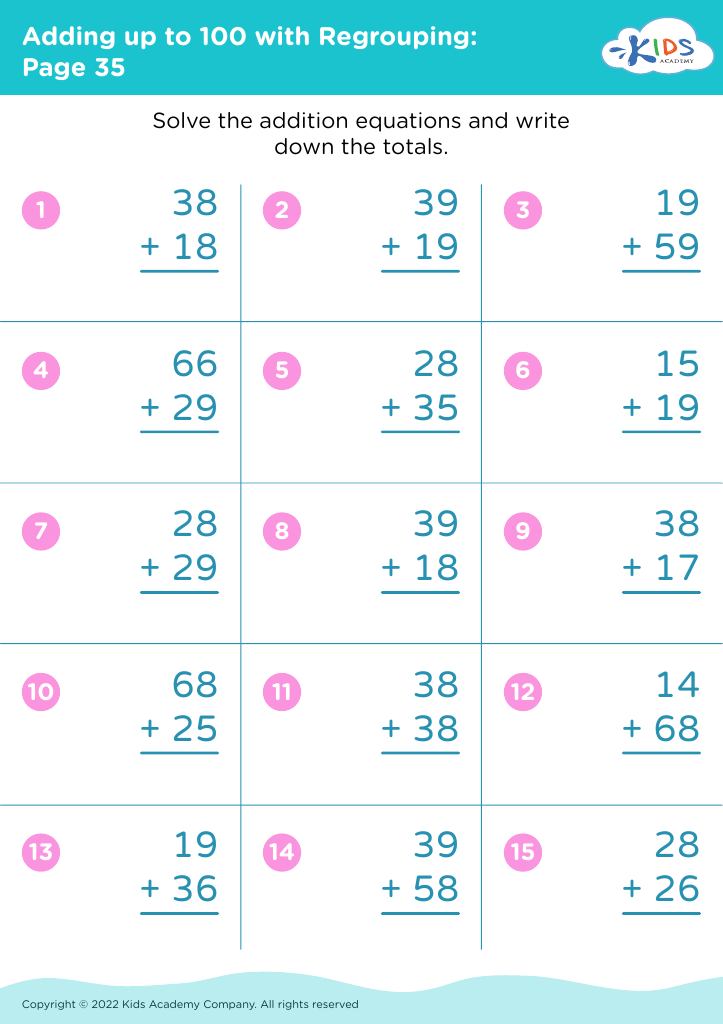
Adding up to 100 with Regrouping: Page 35
Worksheet
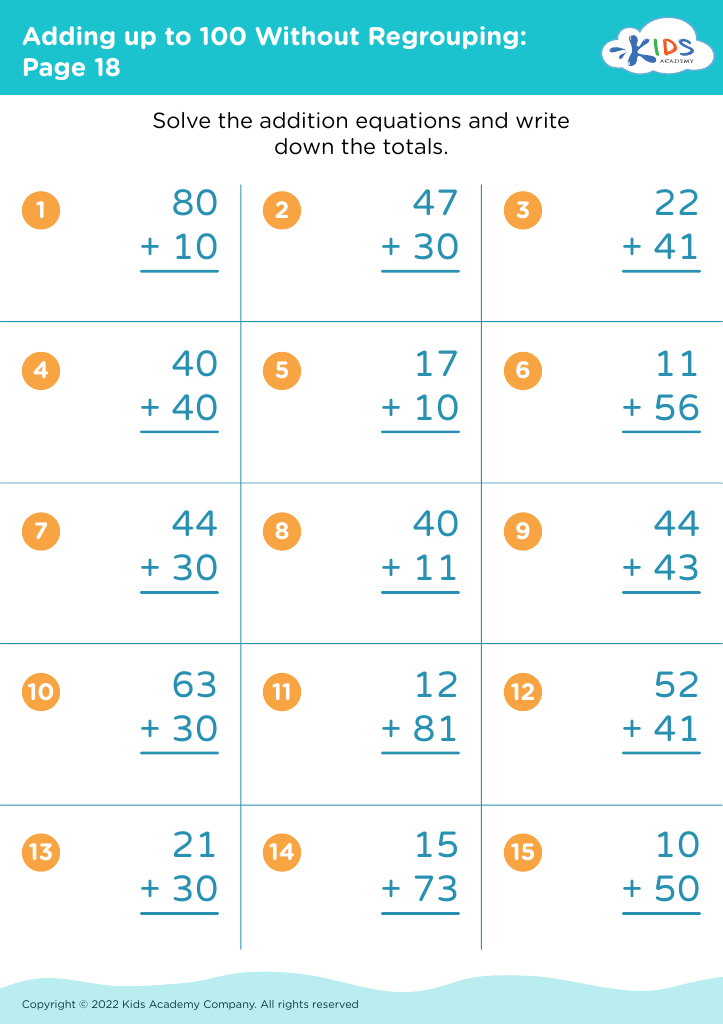
Adding up to 100 Without Regrouping: Page 18
Worksheet
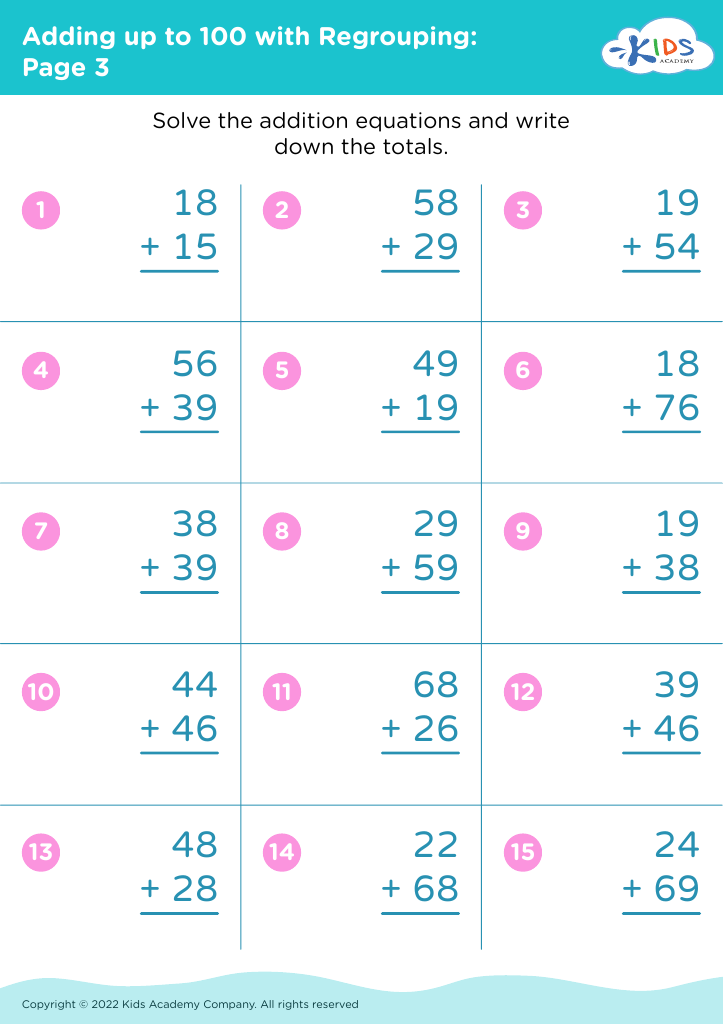
Adding up to 100 with Regrouping: Page 3
Worksheet
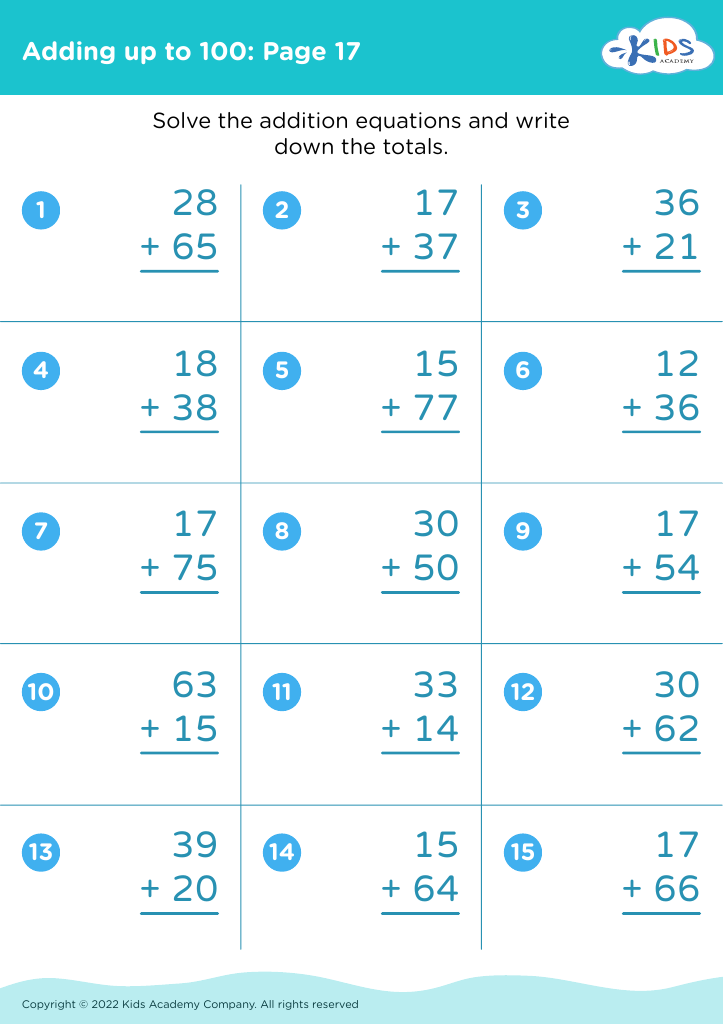
Adding up to 100: Page 17

Adding up to 100: Page 17

Adding up to 100: Page 17
Worksheet
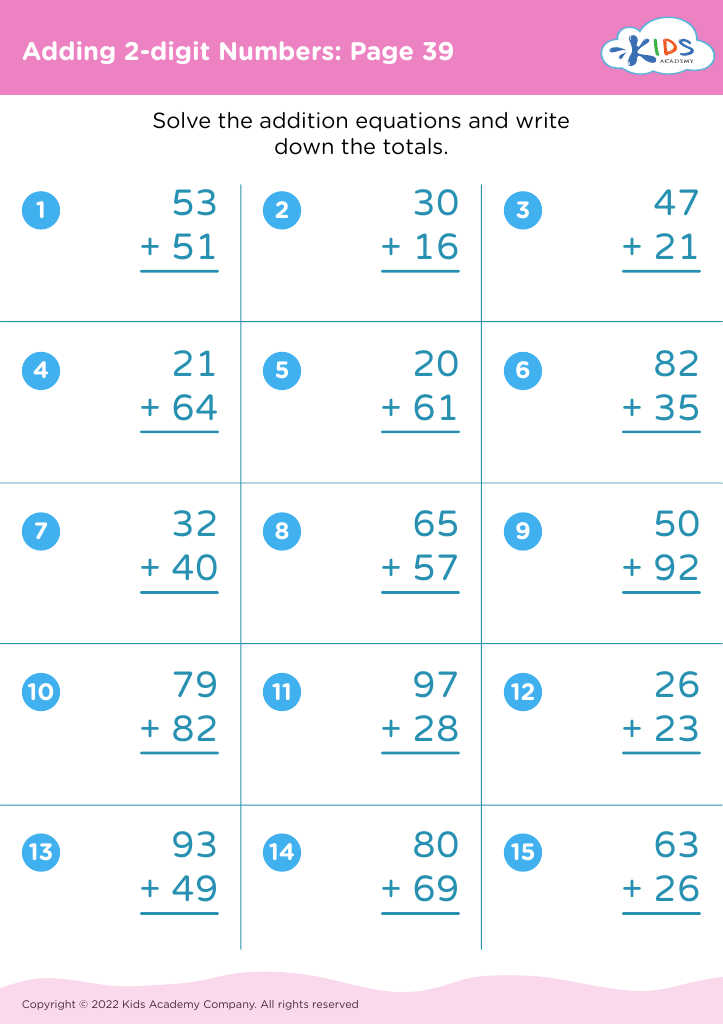
Adding 2-digit Numbers: Page 39

Adding 2-digit Numbers: Page 39

Adding 2-digit Numbers: Page 39
Worksheet
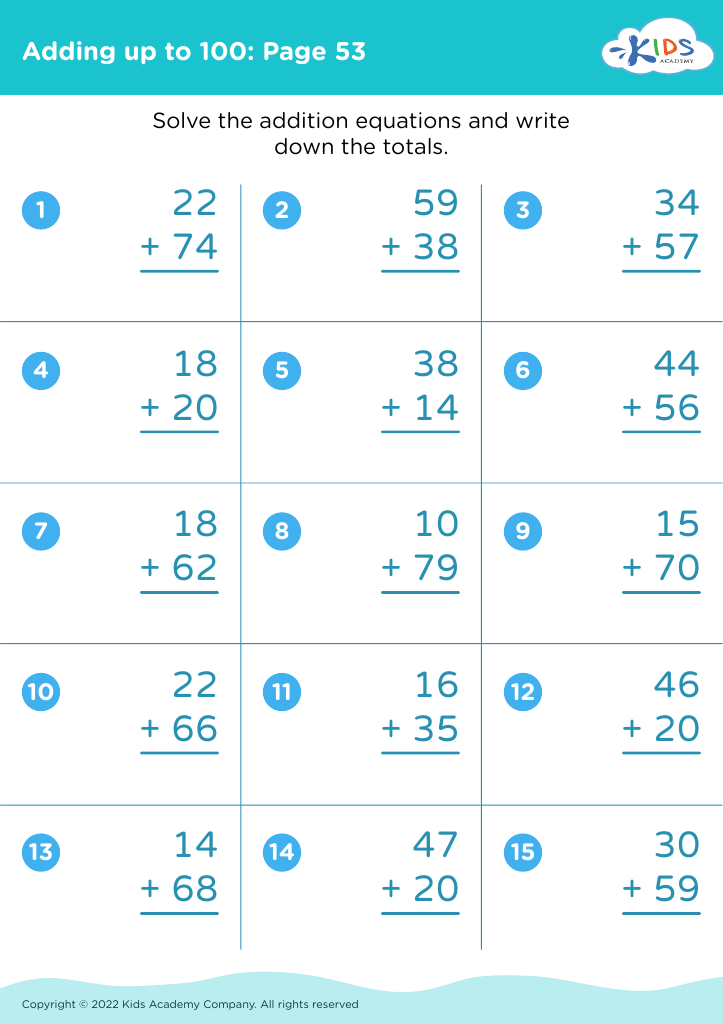
Adding up to 100: Page 53

Adding up to 100: Page 53

Adding up to 100: Page 53
Worksheet
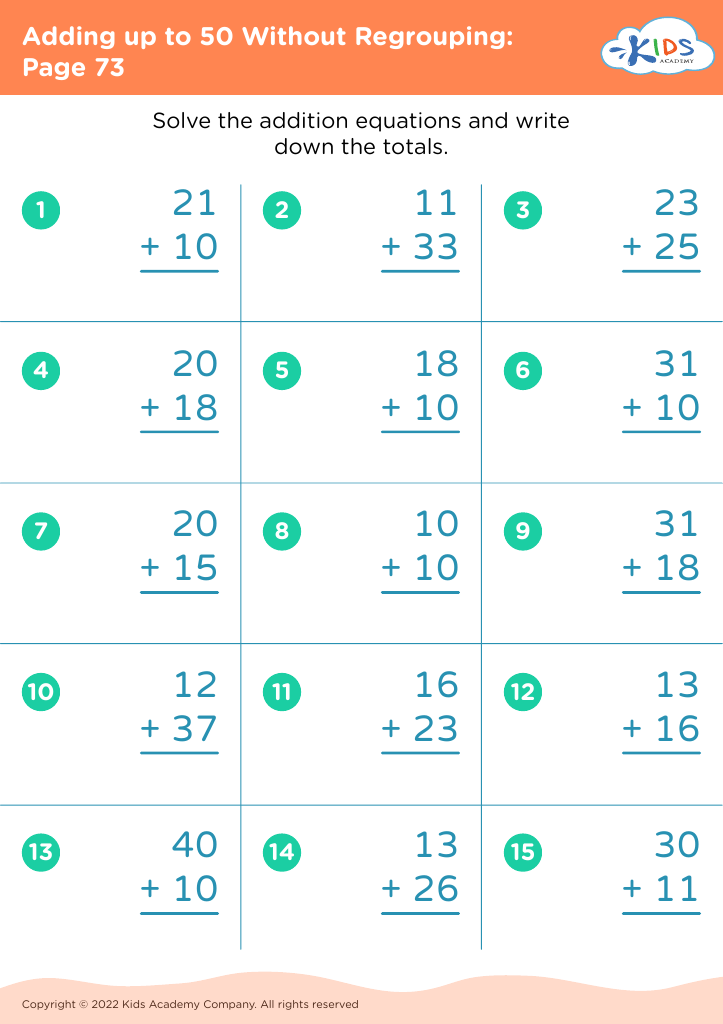
Adding up to 50 Without Regrouping: Page 73
Worksheet
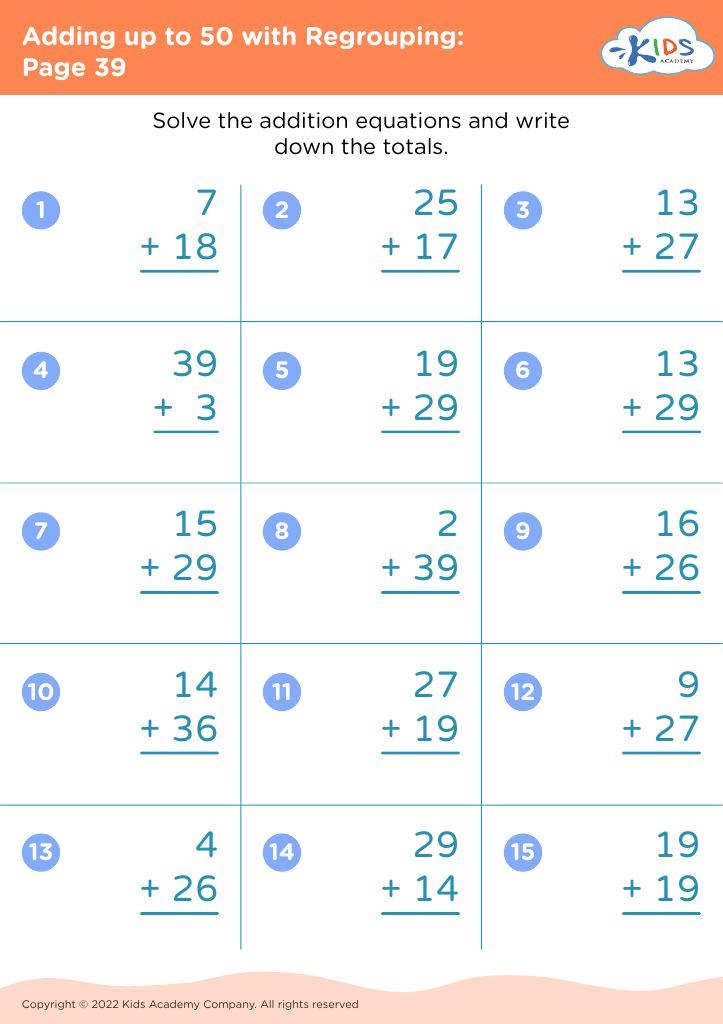
Adding up to 50 with Regrouping: Page 39
Worksheet
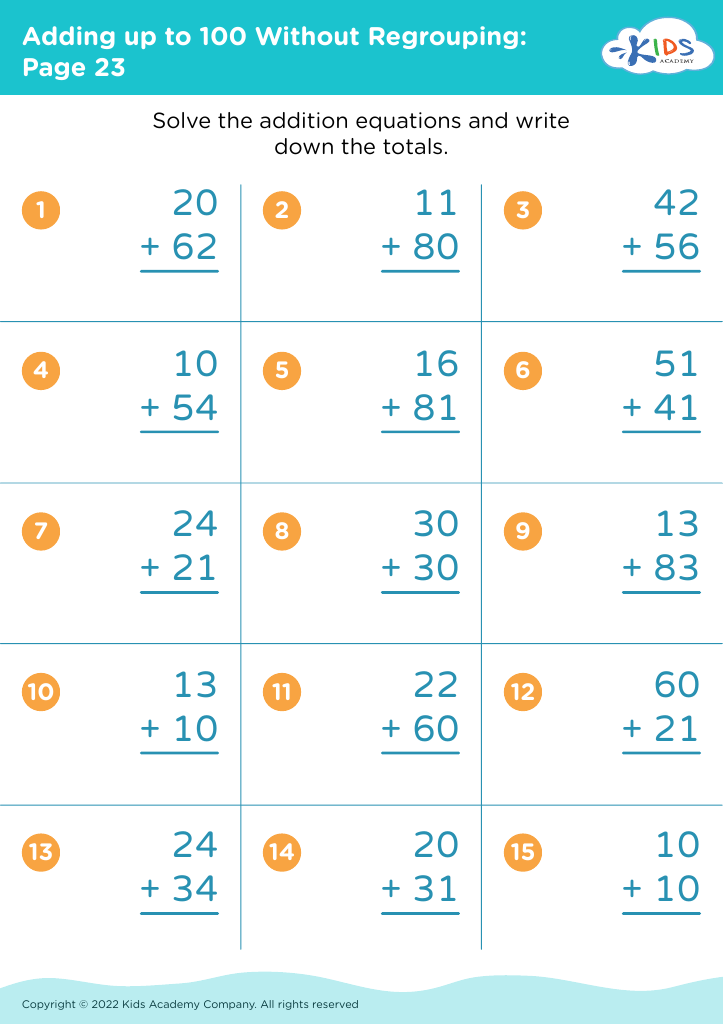
Adding up to 100 Without Regrouping: Page 23
Worksheet
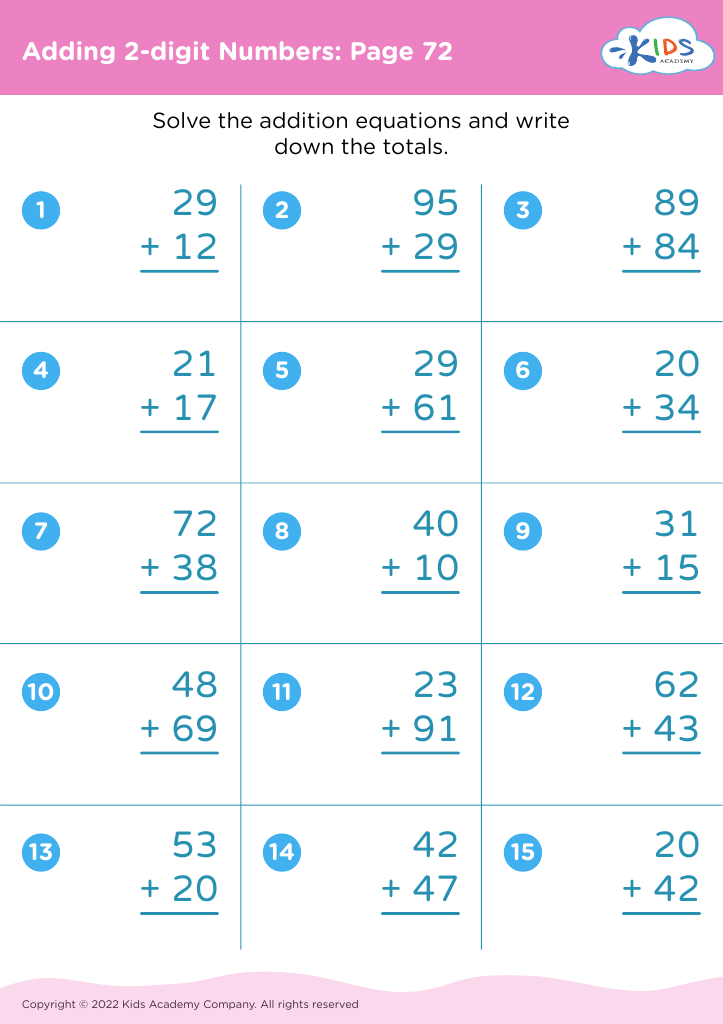
Adding 2-digit Numbers: Page 72

Adding 2-digit Numbers: Page 72

Adding 2-digit Numbers: Page 72
Worksheet


Fraction simplification and addition are crucial mathematical concepts for children aged 8-9, laying the foundation for more advanced arithmetic. At this age, students begin to encounter fractions more regularly, whether it's in practical situations like cooking or in academic settings dealing with measurements, ratios, and basic algebra. Understanding how to simplify fractions enhances their ability to solve problems efficiently and accurately. It also fosters a deeper comprehension of number relationships, which is essential for future mathematical success.

Teaching students to add fractions helps them develop critical thinking skills as they learn to find common denominators and visualize different parts of a whole. This process encourages them to approach problems methodically and strengthens their overall numeracy skills. Additionally, having a solid grasp of these concepts boosts confidence in their mathematical abilities, motivating students to engage more deeply with the subject.

Parents and teachers play a vital role in reinforcing these skills through engaging activities and real-life examples, such as cooking or crafting, where fractions are prevalent. By actively focusing on fraction simplification and addition, they can help children navigate more complex mathematical concepts in the future, ultimately setting them up for success both academically and in everyday life.