Learn new vocabulary Addition Worksheets for Ages 8-9
4 filtered results
-
From - To
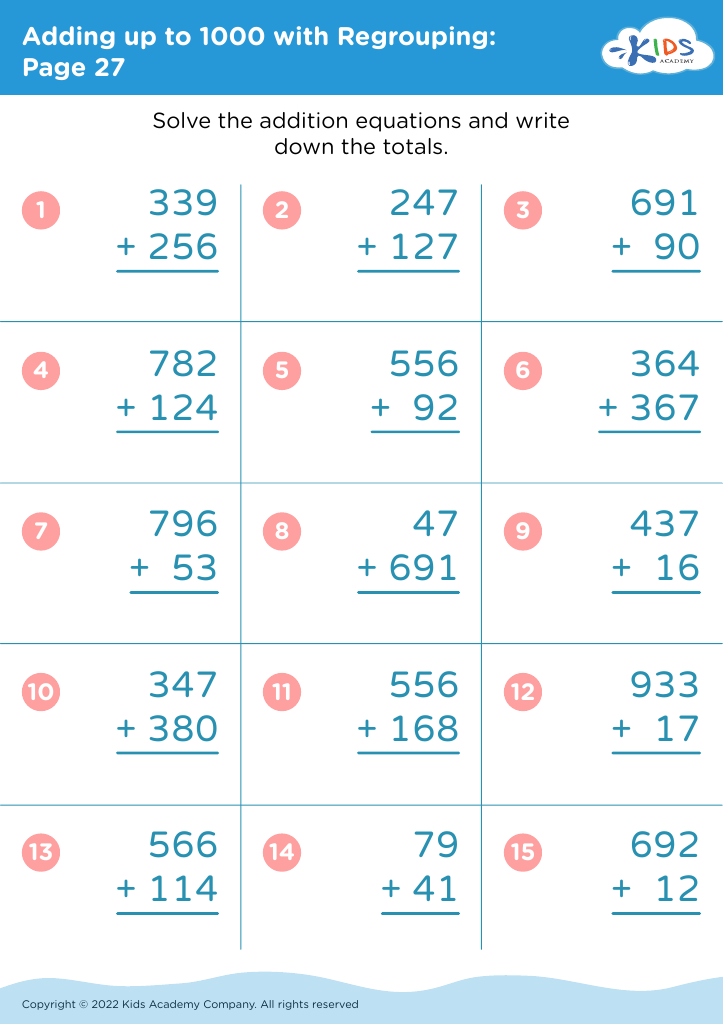
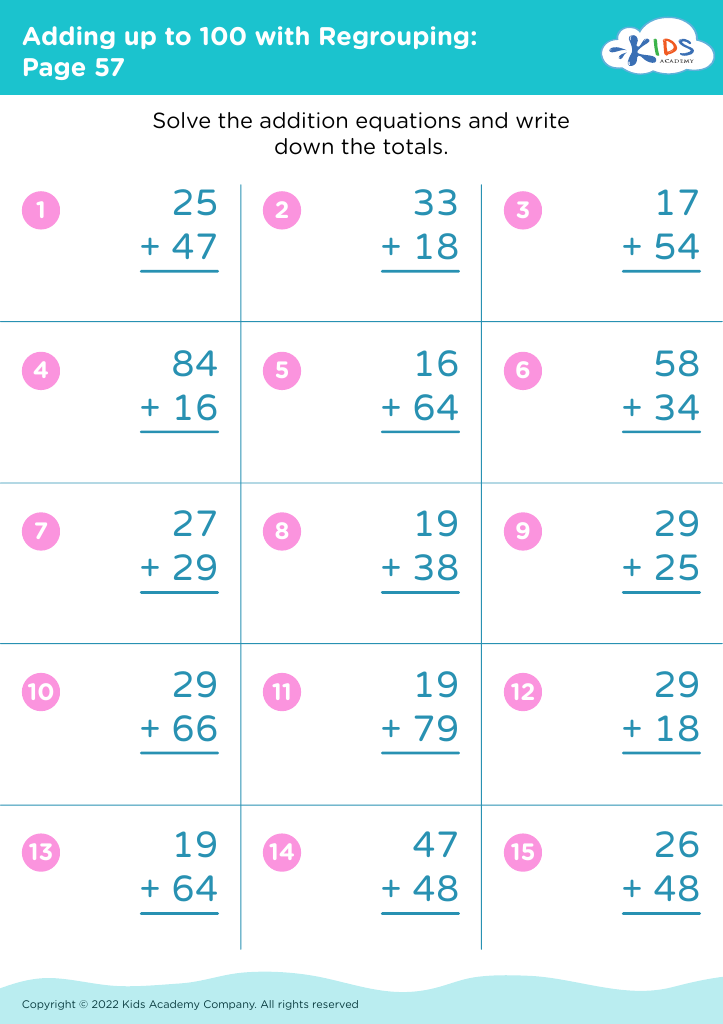
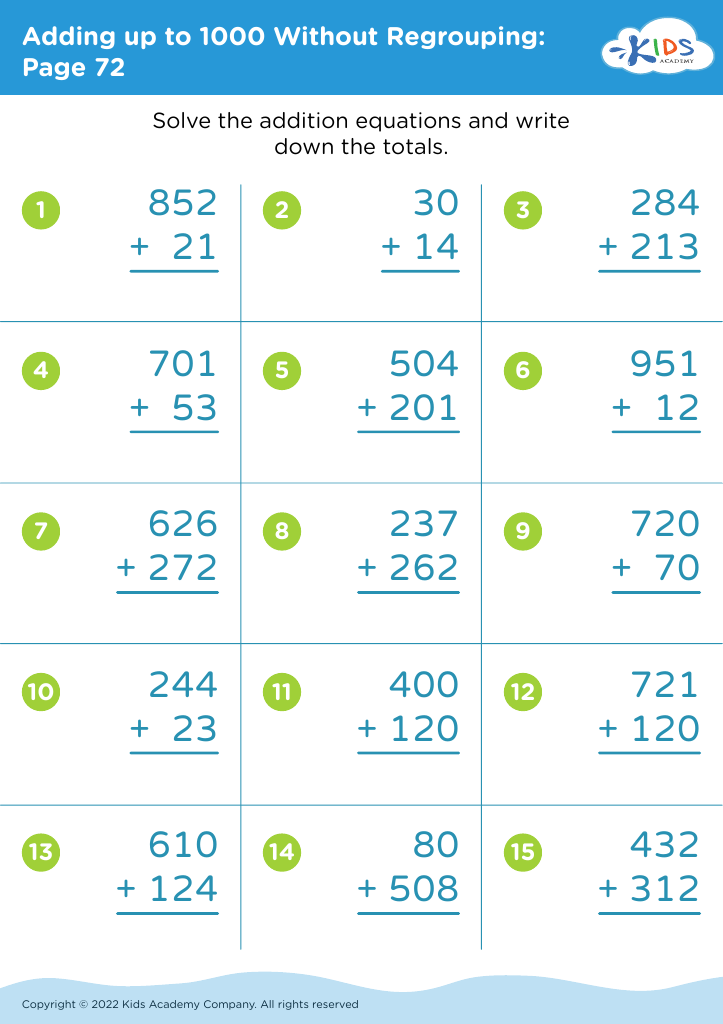
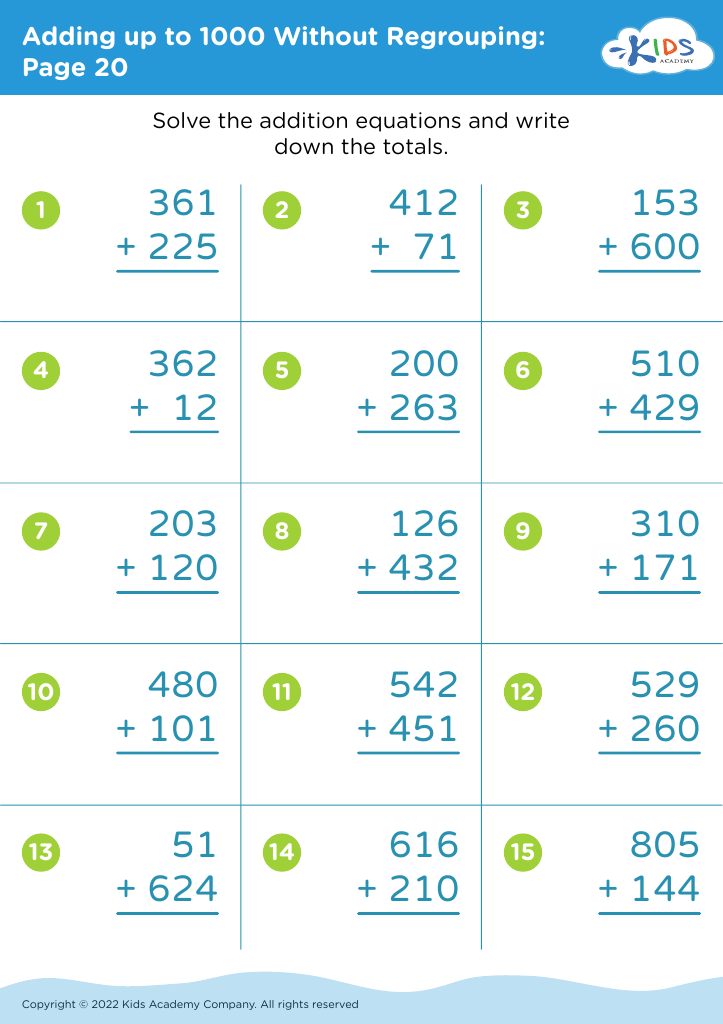
Explore our engaging vocabulary addition worksheets designed specifically for children ages 8-9! These interactive resources help young learners develop essential math vocabulary while enhancing their addition skills. Our comprehensive worksheets combine visual aids and straightforward exercises to make learning fun and effective. Each worksheet focuses on critical terms that assist in comprehending addition concepts, setting a strong foundation for future math success. Ideal for parents and teachers alike, these printable activities encourage independent learning and reinforce classroom lessons. Unlock your child's potential in math with our vocabulary addition worksheets and help them gain confidence while they learn!





.jpg)

Parents and teachers should prioritize introducing new vocabulary related to addition for children aged 8-9 for several compelling reasons. At this stage, students are solidifying their foundational math skills, making it crucial to connect mathematical concepts with appropriate language. Understanding terms like “sum,” “addend,” “total,” and “calculate” enhances their comprehension and enables them to articulate their thought processes more effectively.
Encouraging vocabulary expansion not only aids in math fluency but also boosts overall literacy skills. When children learn to describe their problem-solving strategies and the steps they take to arrive at an answer, they develop critical thinking and communication skills essential for future academic success. This vocabulary also bridges the gap between mathematical concepts and real-world applications, fostering a deeper understanding of how addition is used in everyday situations.
Moreover, a robust mathematical vocabulary can decrease anxiety and frustration in learning, as students feel more equipped to engage with new challenges. It lays a strong foundation for more complex concepts in later grades. Therefore, actively promoting relevant addition vocabulary is key in nurturing competent, confident learners who can navigate the interconnected worlds of math and language.








