
Number identification Addition Worksheets for Ages 8-9
4 filtered results
Difficulty Level
Grade
Age
-
From - To
Subject
Activity
Standards
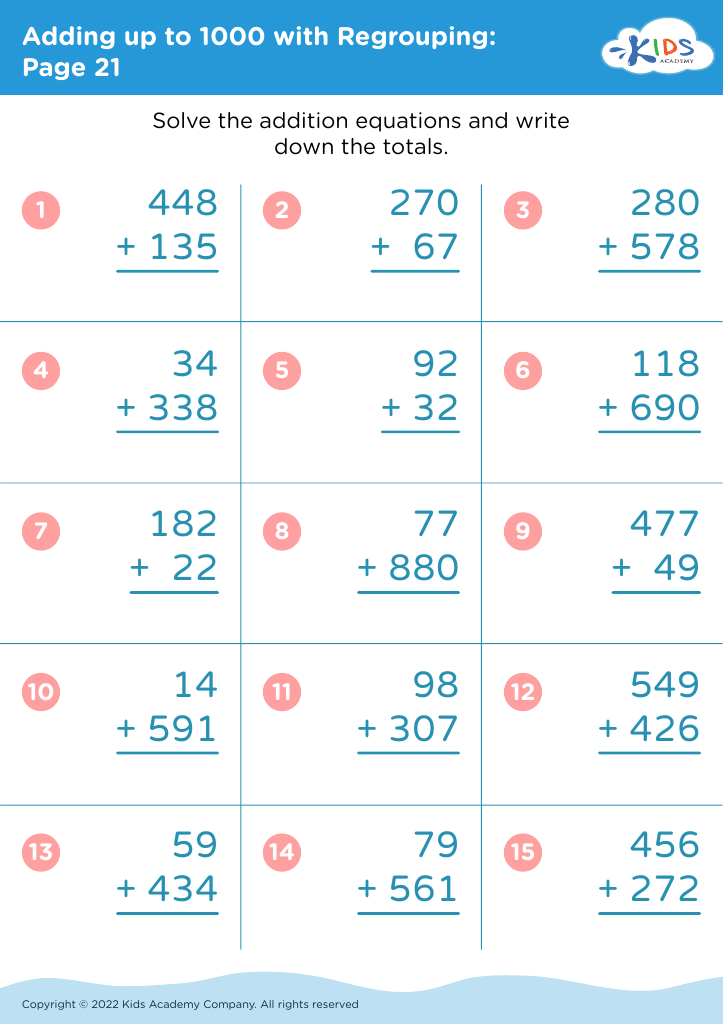
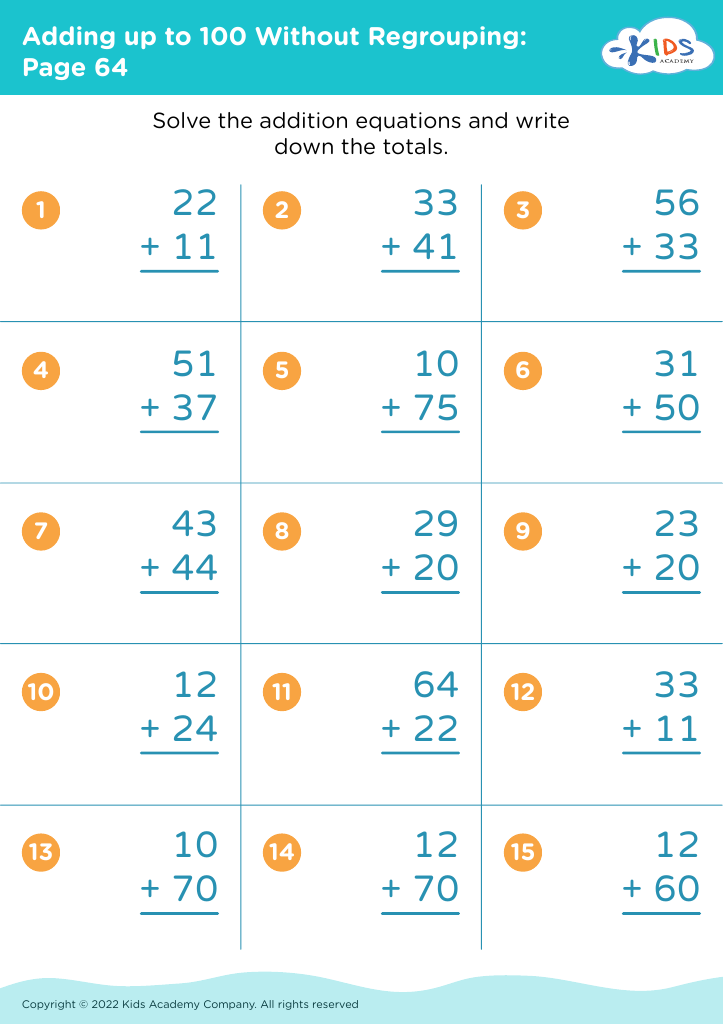
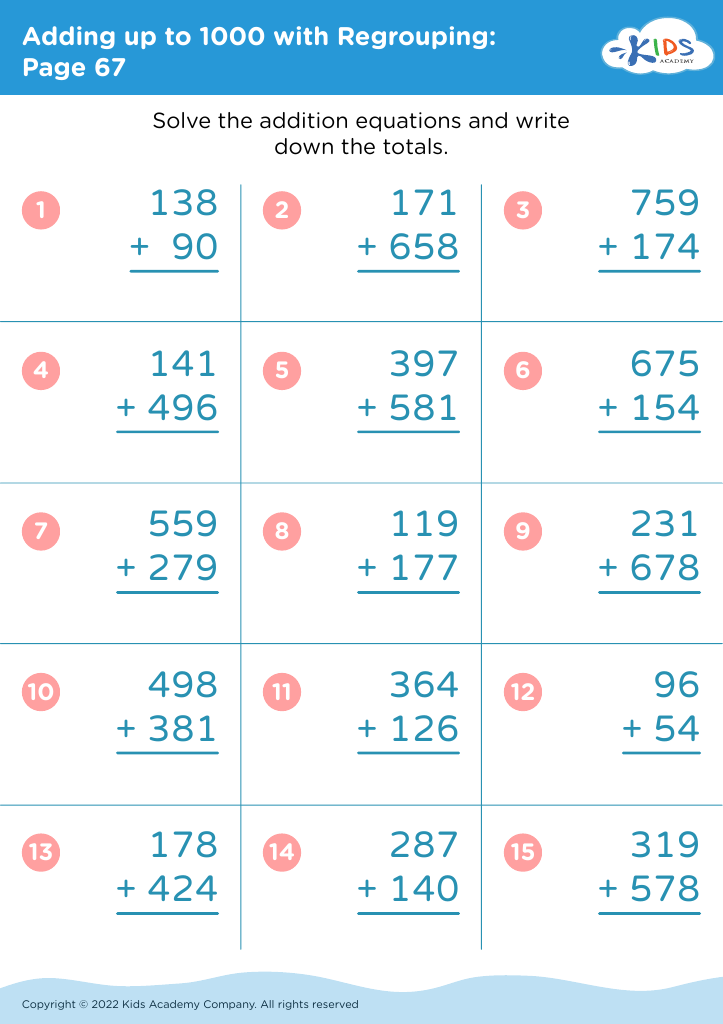
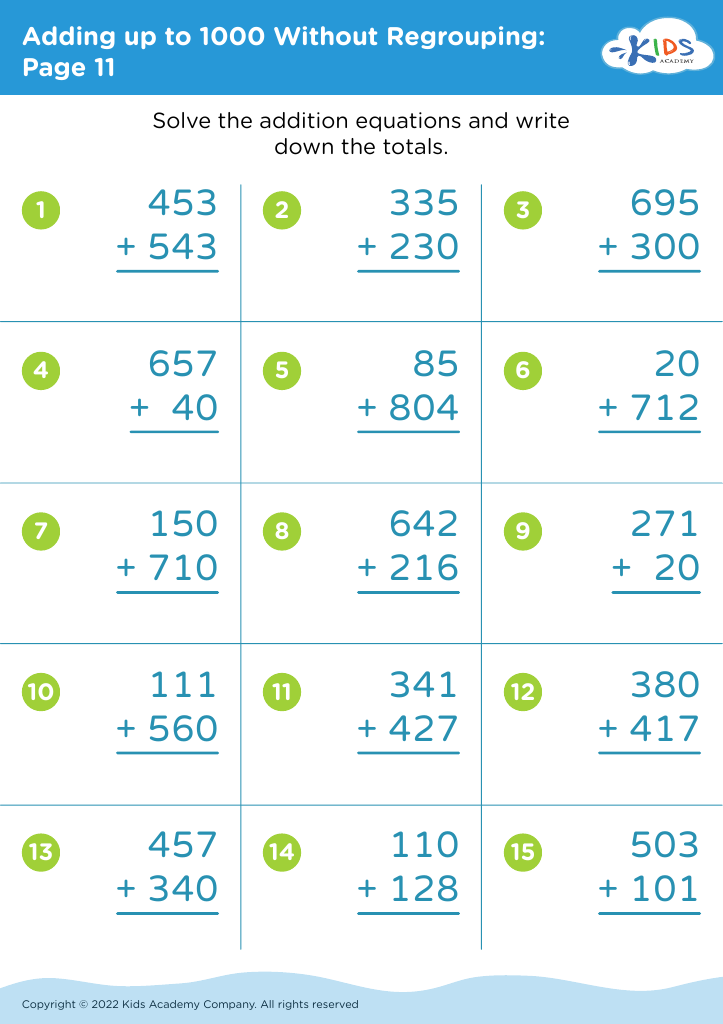
Enhance your child's math skills with our "Number Identification Addition Worksheets for Ages 8-9." These worksheets are expertly designed to help young learners master addition by focusing on number identification. With engaging activities tailored to second-grade students, kids will boost their confidence and accuracy in addition problems. Each worksheet includes varied exercises, making learning fun and effective. Perfect for classroom use or at-home practice, our worksheets support common core standards, ensuring your child stays on track with their math curriculum. Unlock your child's potential in math with our comprehensive addition worksheets today!
Favorites
With answer key
Interactive
Join Kids Academy for Free
Who is primarily going to use this learning content?


.jpg)





Understanding number identification and addition is crucial for children aged 8-9 as it forms the building blocks of mathematical literacy, a vital skill in everyday life and future education. At this age, developing a strong foundation in basic math concepts can significantly influence a child's confidence and ability in more complex subjects later on.
First, number identification enables children to recognize and grasp the value and order of numbers, which is essential for performing simple to advanced calculations. Without this fundamental skill, children might struggle with more complicated math topics such as multiplication, division, and fractions.
Moreover, mastering addition at an early age is a stepping stone to understanding more advanced mathematical operations. Addition helps children improve their problem-solving skills, logical thinking, and the ability to make sense of numerical patterns and relationships. These cognitive abilities are not limited to math; they are transferable to other areas of learning and problem-solving in daily life.
By focusing on number identification and addition, parents and teachers are providing children with the tools they need to succeed academically. This early success in math can boost students' confidence, fostering a positive attitude toward math and education overall. Therefore, fostering these skills in children aged 8-9 creates a solid foundation for their academic journey and equips them for future success.








