Number Recognition Addition Worksheets for Ages 8-9 - Page 6
129 filtered results
-
From - To
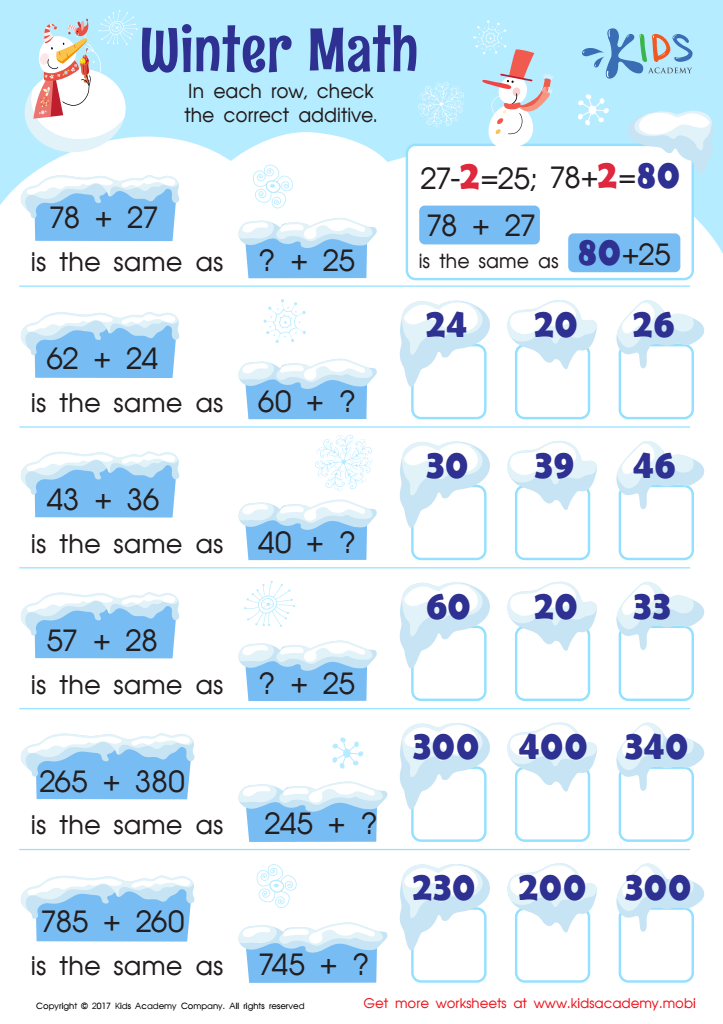
Free Addition Worksheet
 Assign to My Students
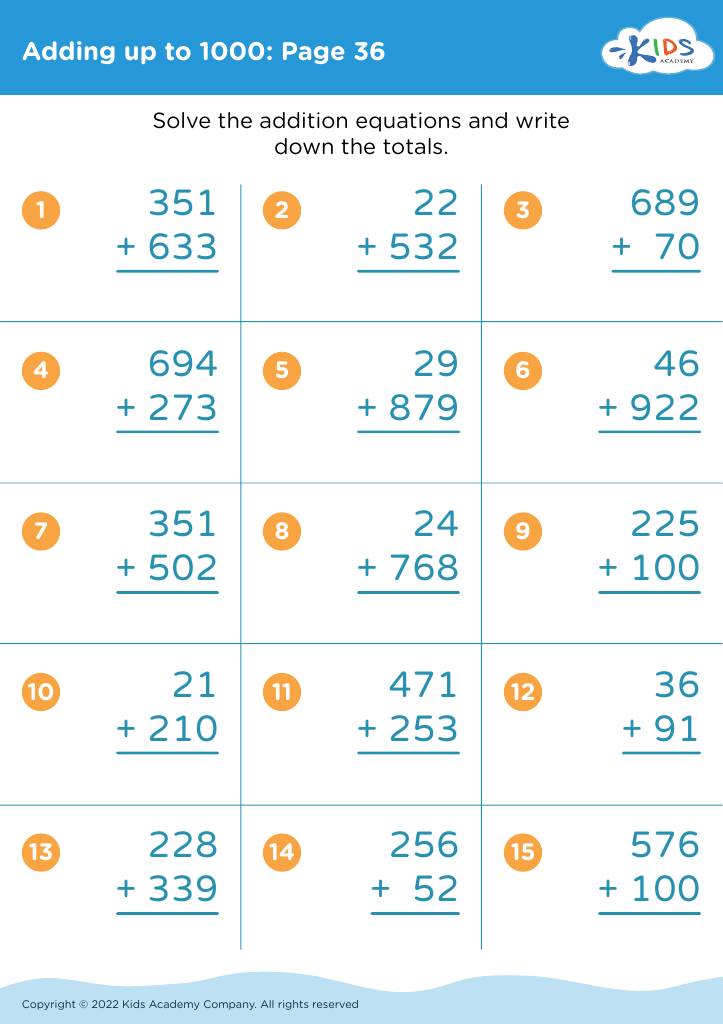
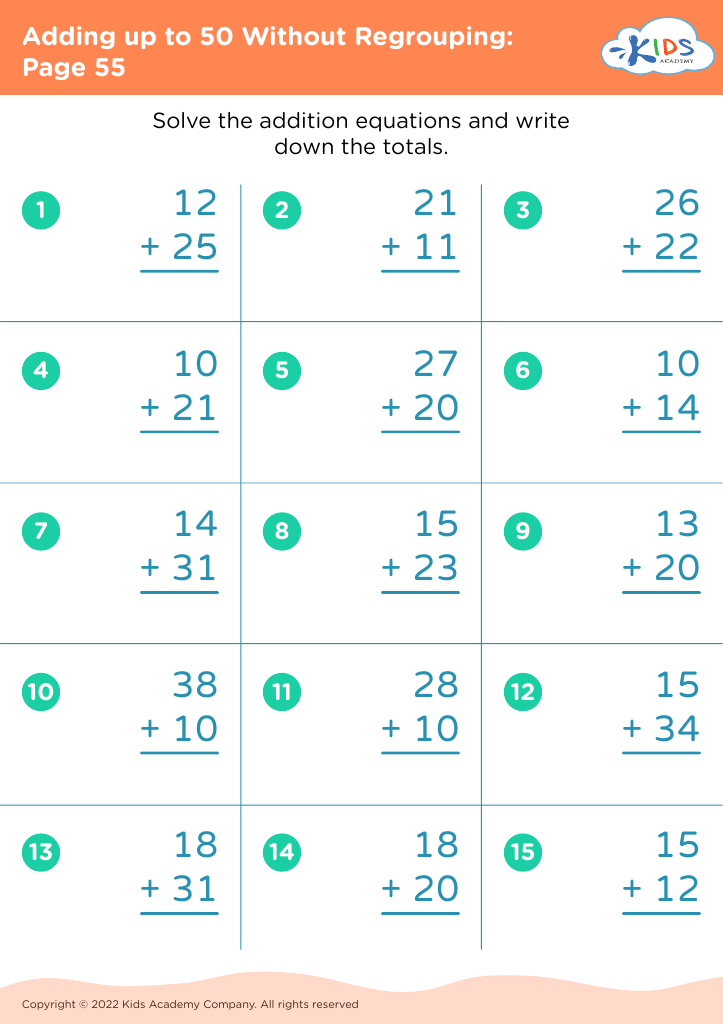
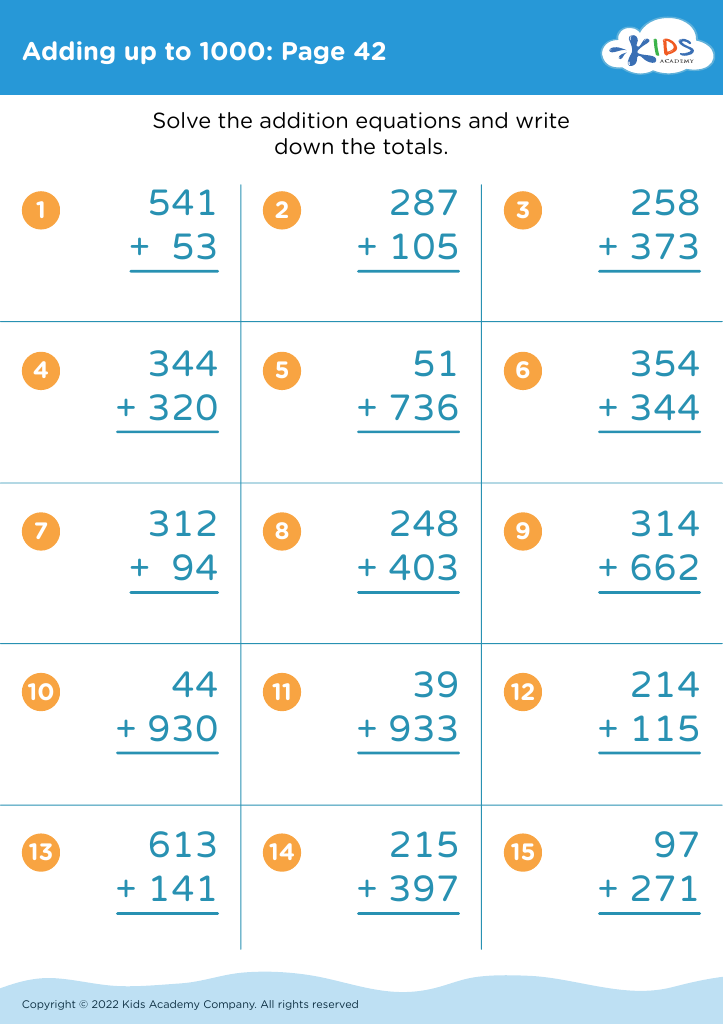
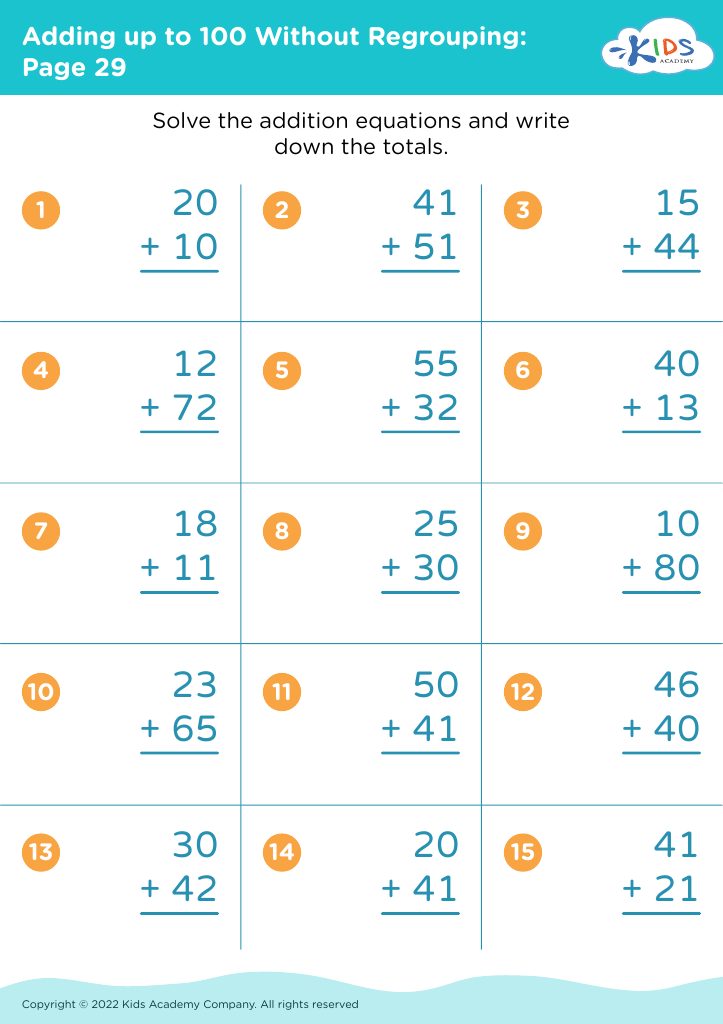
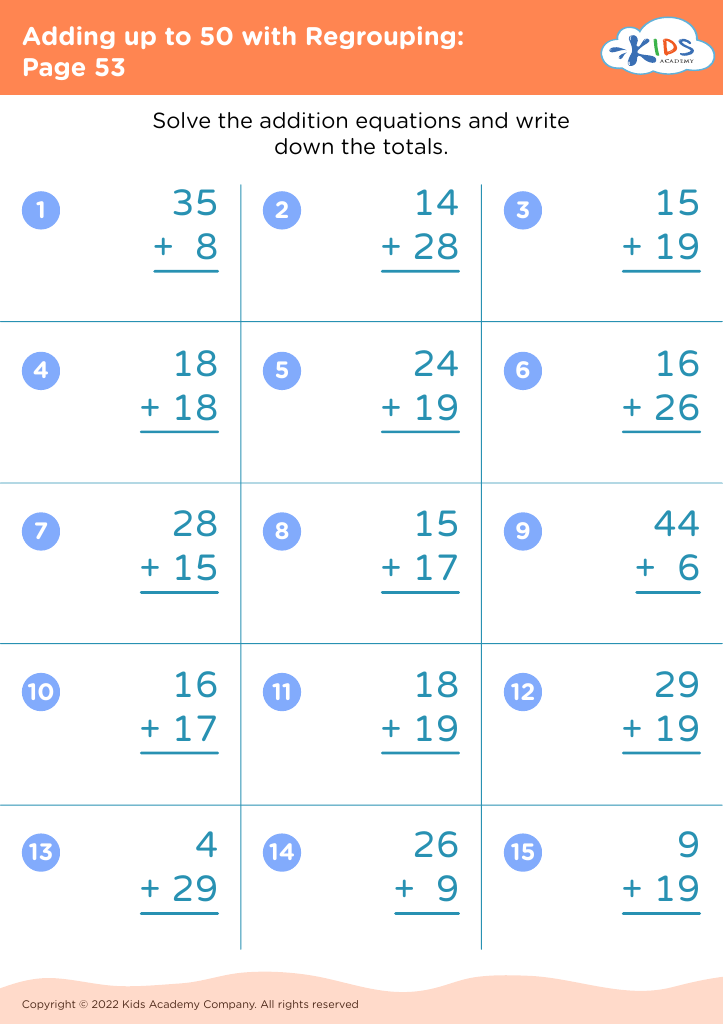
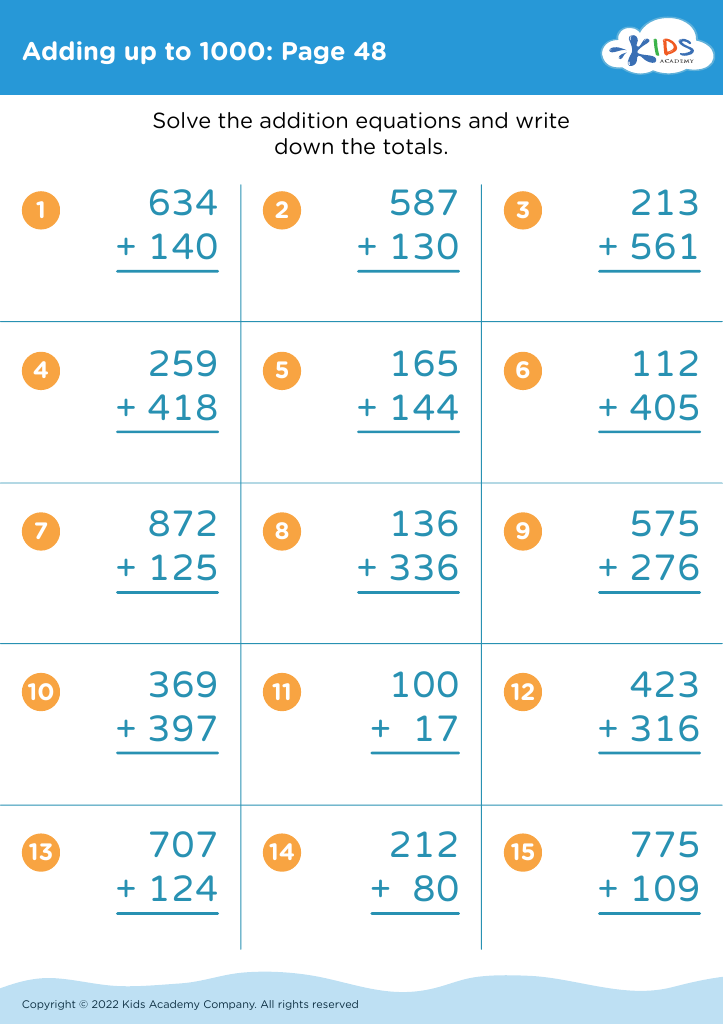
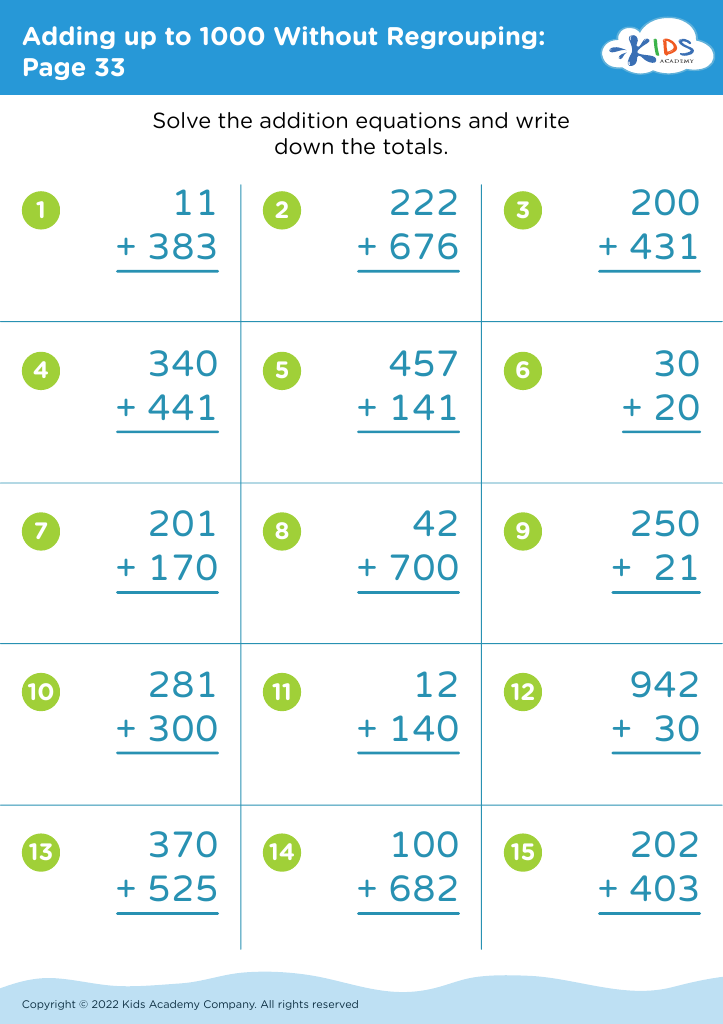
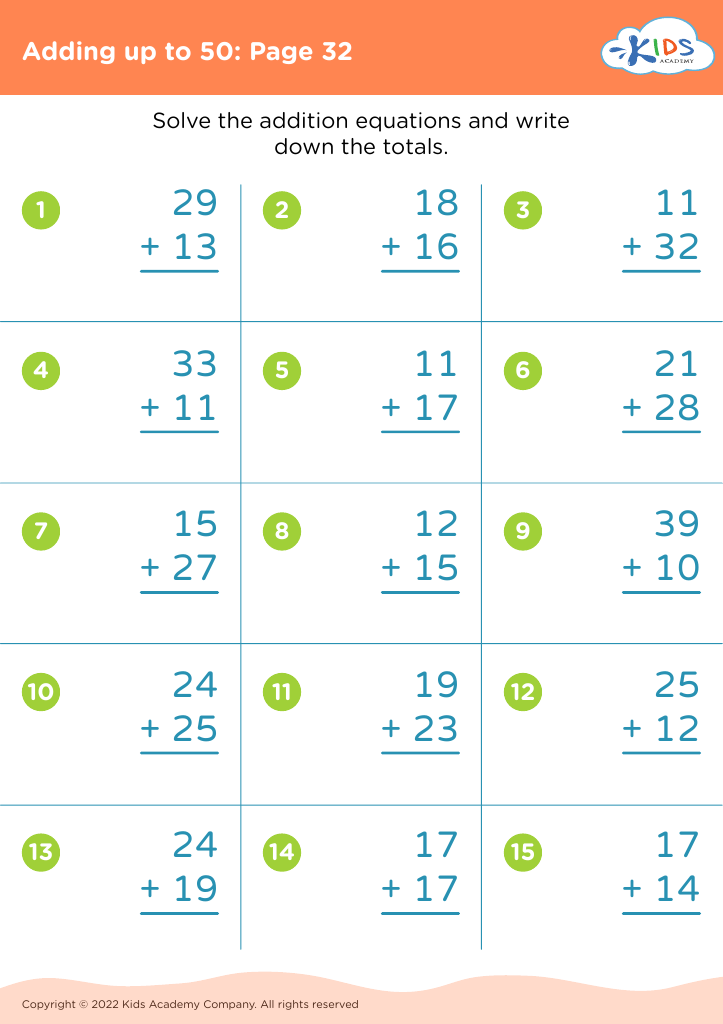








Number recognition and addition skills are fundamental building blocks for mathematical understanding in children aged 8-9. At this developmental stage, children transition from simple counting to more complex mathematical operations. Ensuring proficient number recognition helps children identify, understand, and manipulate numbers confidently. Inaccurate number recognition may lead to errors and confusion, impeding future learning progress.
Understanding addition is equally critical as it forms the basis for more advanced mathematical concepts like subtraction, multiplication, and division. Proficiency in addition enhances problem-solving skills and numerical fluency. For children aged 8-9, mastering these skills supports cognitive development, enabling them to address real-world situations involving numbers, such as handling money or measuring objects.
Moreover, early proficiency in these areas cultivates a positive attitude towards mathematics. Children who feel confident in their math skills are more likely to participate actively in class, further strengthening their competency. Parents and teachers play an essential role by creating a supportive learning environment, using engaging methods like educational games or interactive activities to make learning enjoyable.
Ultimately, prioritizing number recognition and addition not only influences academic success but also lays a strong foundation for lifelong numeracy skills, critical thinking, and self-confidence.








