Our Problem-Solving Practice Addition Worksheets are designed for kids aged 8-9 to enhance their math skills. These engaging activities offer a variety of addition problems that help in reinforcing arithmetic concepts, critical thinking, and logical reasoning. Each worksheet is curated to make learning fun and effective, allowing children to apply their knowledge to real-world scenarios. With colorful illustrations and a structured approach, these worksheets motivate young learners to improve their problem-solving abilities. Ideal for both classroom use and at-home practice, our resources aim to build a strong foundation in math and boost confidence in students.
Check out this FREE Trial Lesson on Addition for age 8-9!

Standard Addition

Favorites
With answer key
Interactive
  • 8-9
  • Problem-solving practice
  • Addition
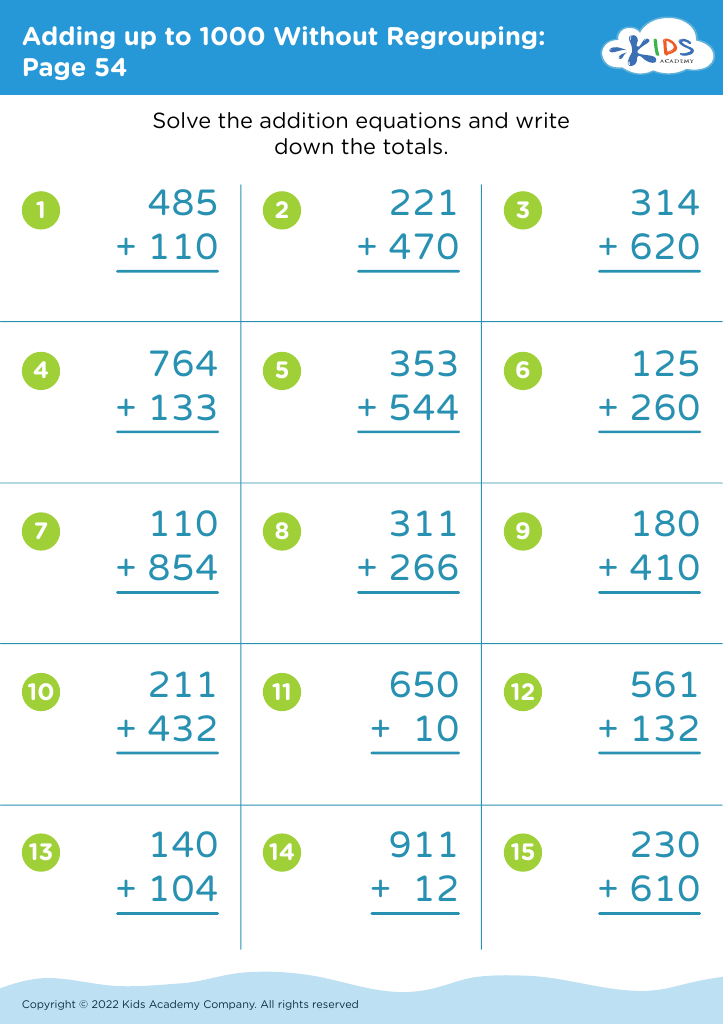
Adding up to 1000 Without Regrouping: Page 54
Worksheet
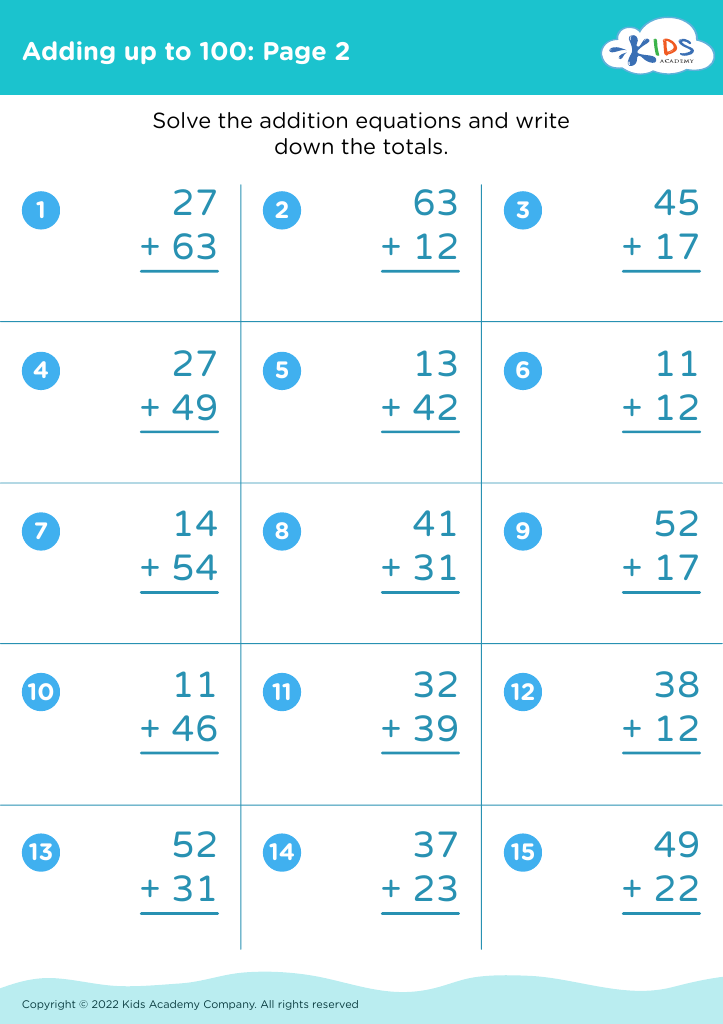
Adding up to 100: Page 2

Adding up to 100: Page 2

Adding up to 100: Page 2
Worksheet
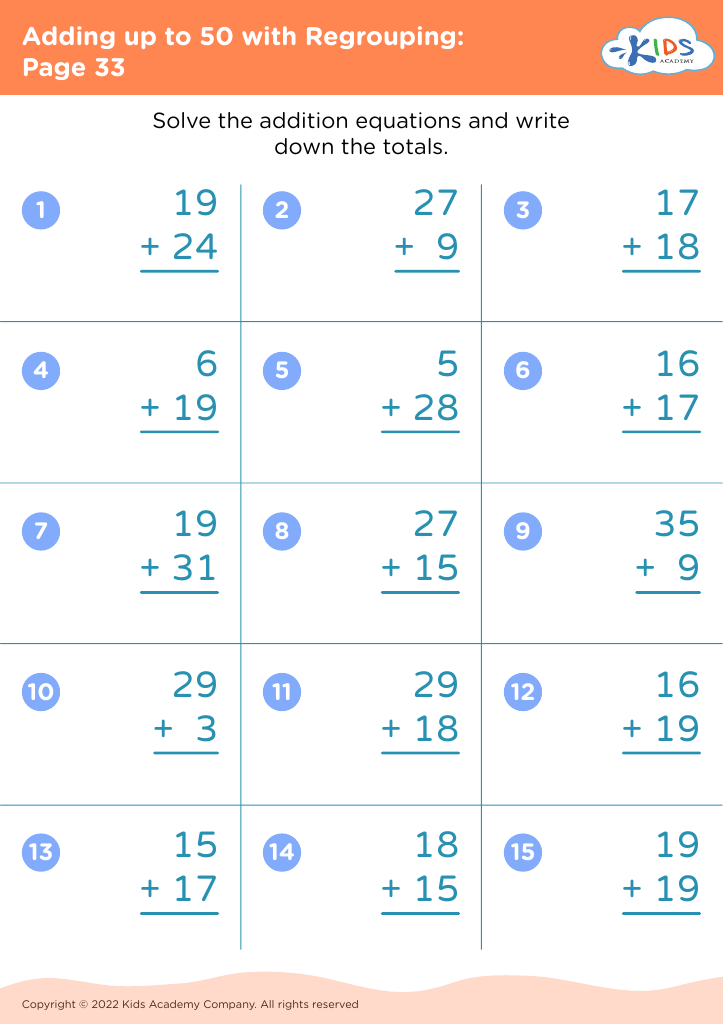
Adding up to 50 with Regrouping: Page 33
Worksheet
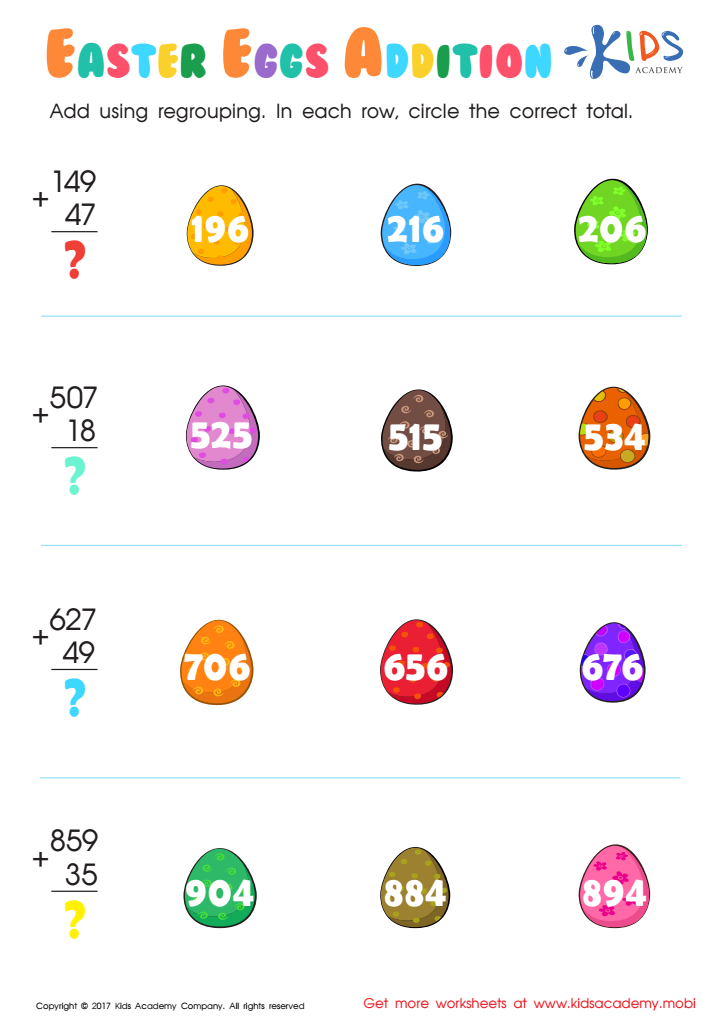
Addition with regrouping worksheet

Addition with Regrouping Worksheet

Try this fun holiday-themed addition with regrouping worksheet! Kids can practice adding while regrouping using bright, colorful holiday images. It's a great way to make math exciting, and keep their interest piqued!
Addition with Regrouping Worksheet
Worksheet
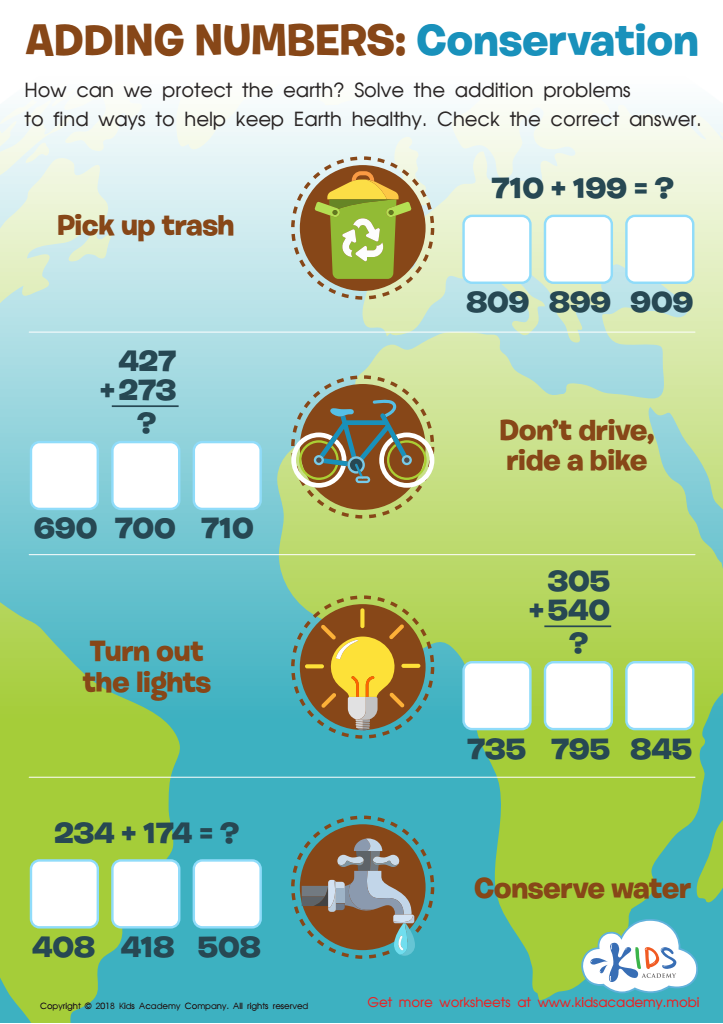
Adding Numbers: Conservation Worksheet
Adding Numbers: Conservation Worksheet
We all live on the Earth, which provides us with the vital necessities for survival. Unfortunately, we too often take advantage of this, causing pollution, water wastage and global warming. Help teach your kids how we can protect our planet - ask them to come up with good ideas and work together to find solutions. Challenge them to solve the subtraction problems to see what they can do to help keep the Earth healthy.
Adding Numbers: Conservation Worksheet
Worksheet
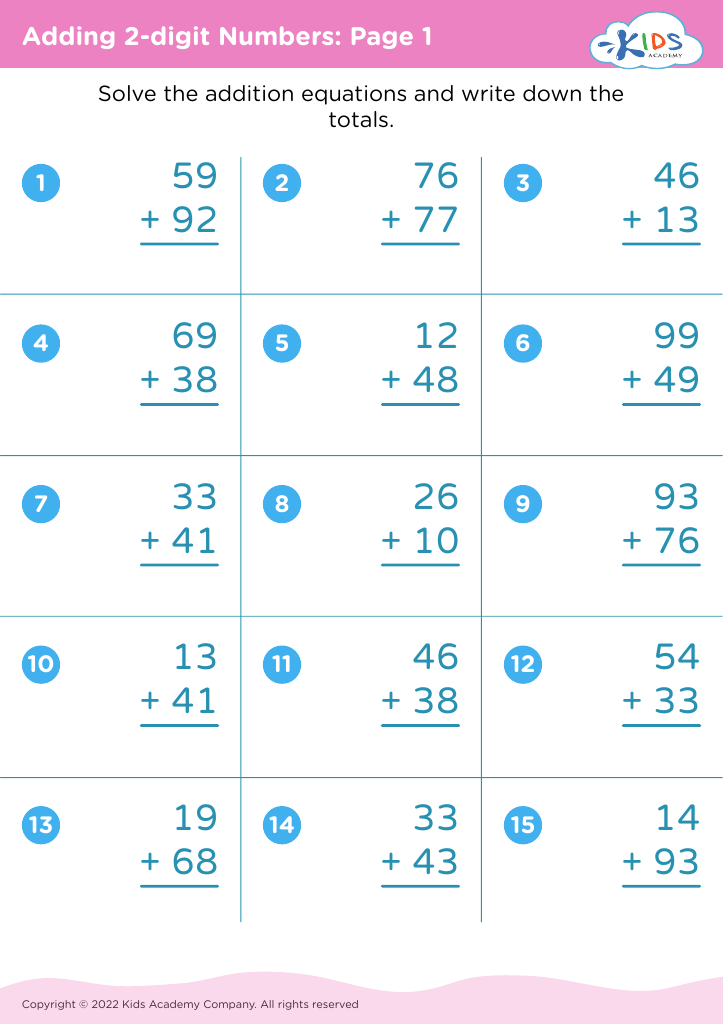
Adding 2-digit Numbers: Page 1

Adding 2-digit Numbers: Page 1

Adding 2-digit Numbers: Page 1
Worksheet
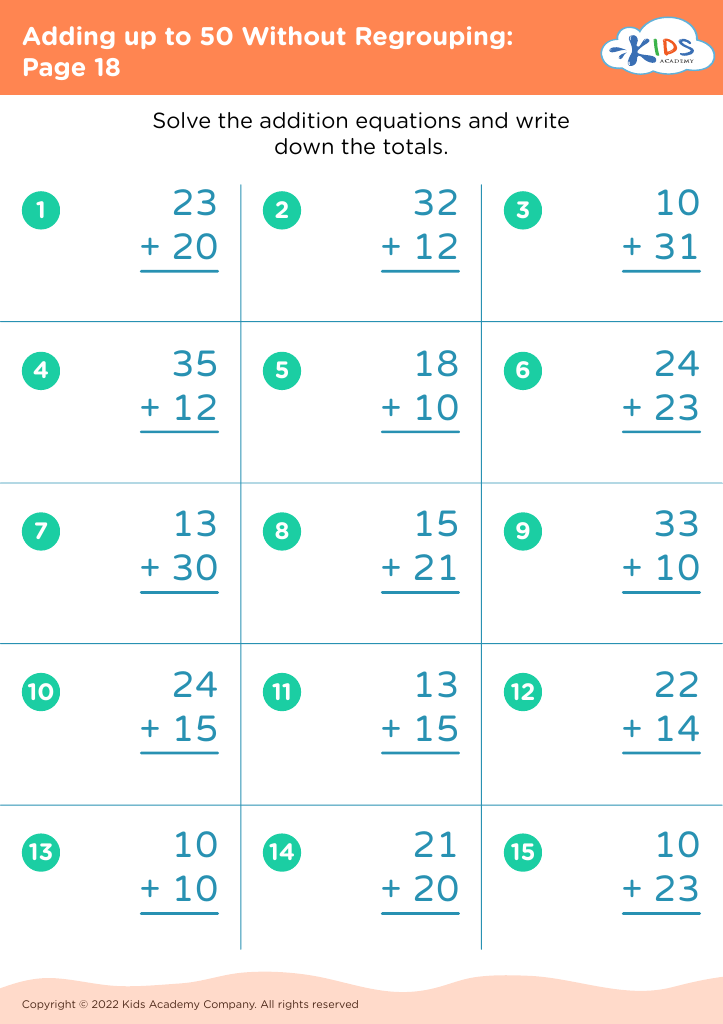
Adding up to 50 Without Regrouping: Page 18
Worksheet
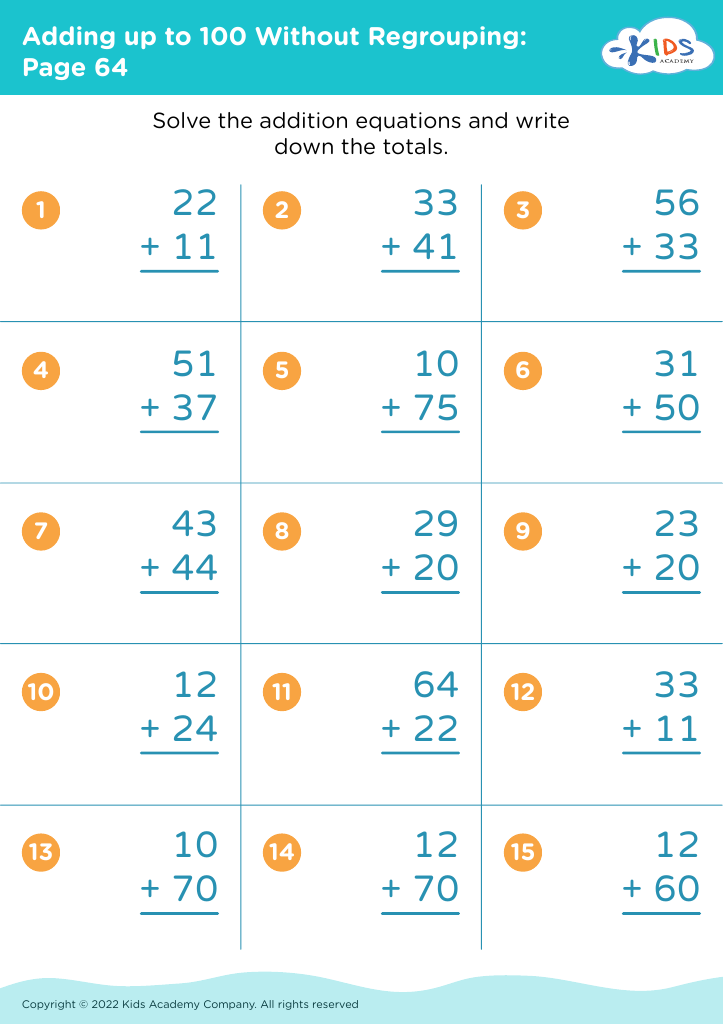
Adding up to 100 Without Regrouping: Page 64
Worksheet
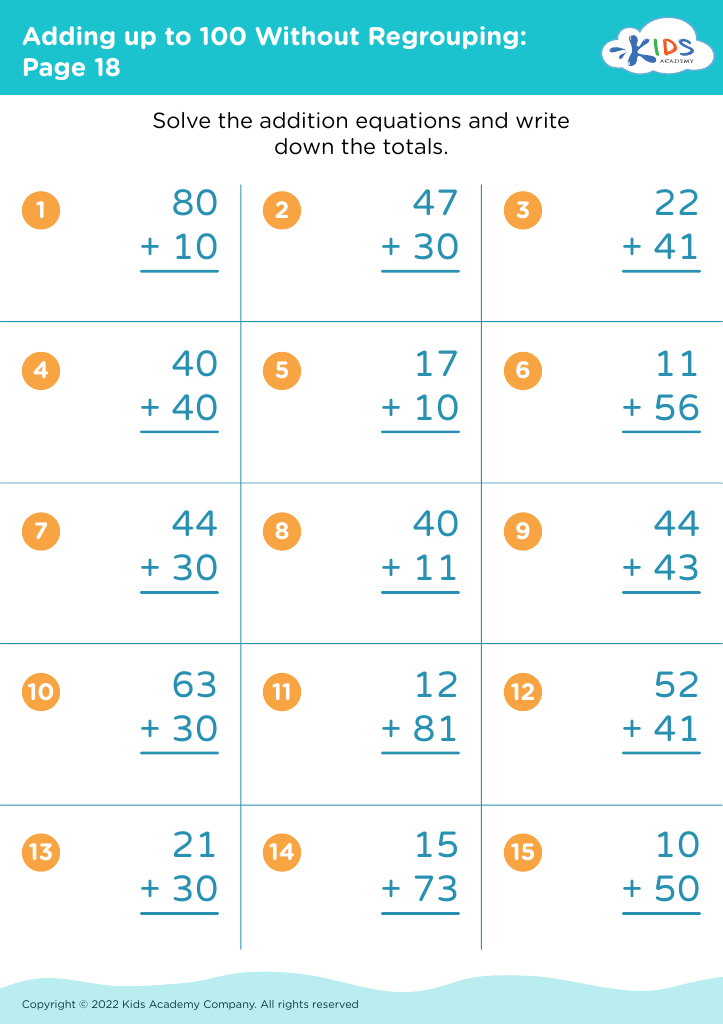
Adding up to 100 Without Regrouping: Page 18
Worksheet
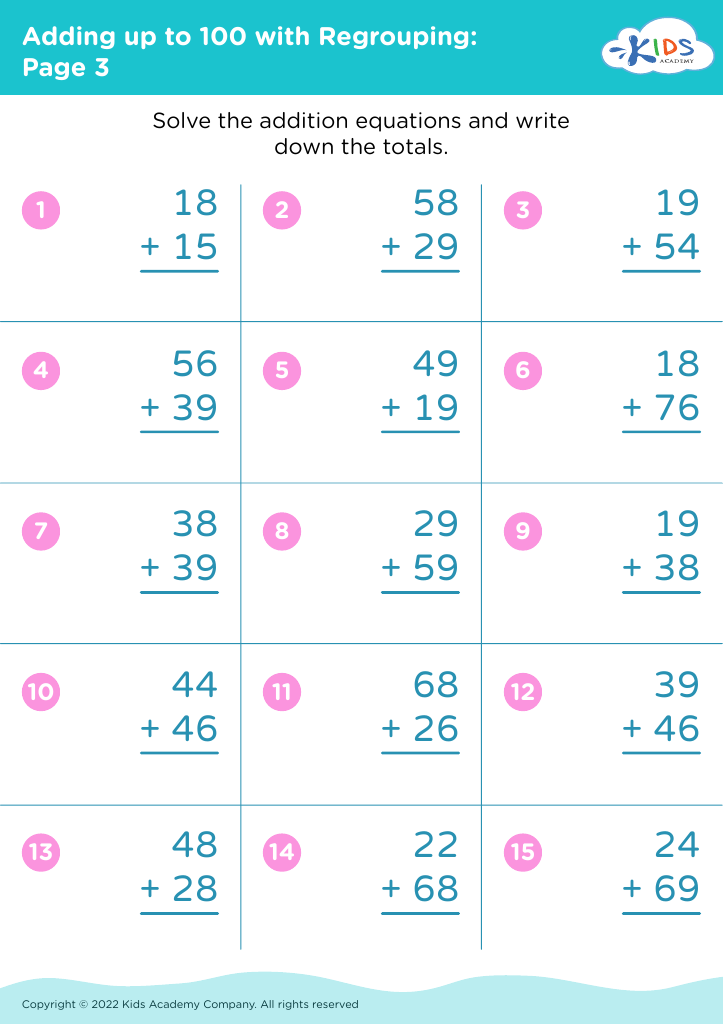
Adding up to 100 with Regrouping: Page 3
Worksheet
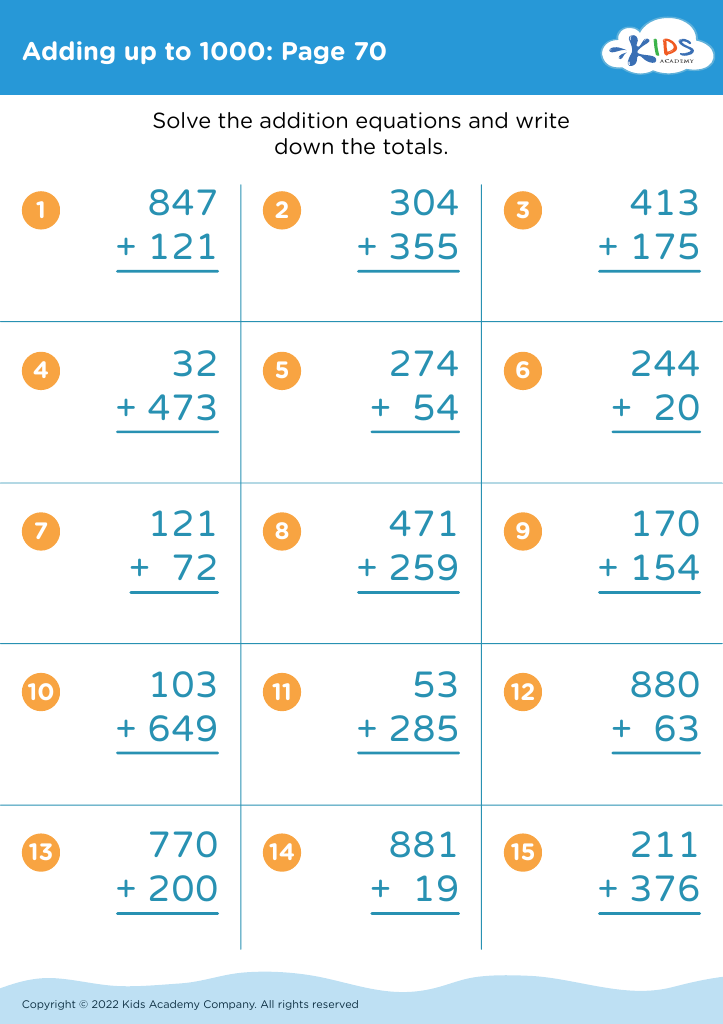
Adding up to 1000: Page 70

Adding up to 1000: Page 70

Adding up to 1000: Page 70
Worksheet
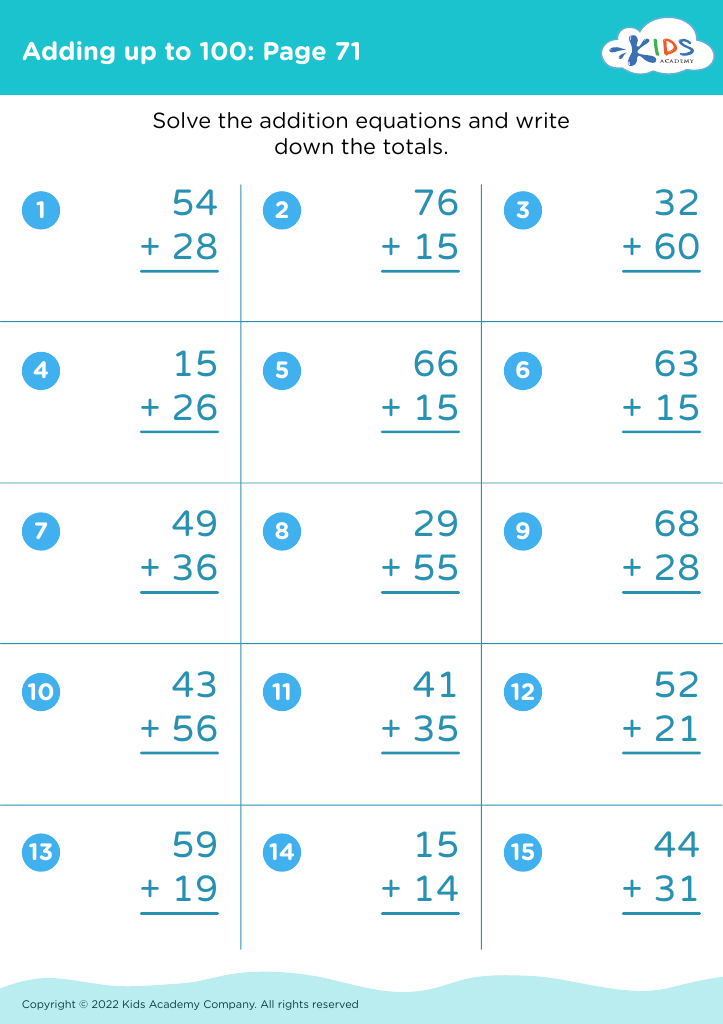
Adding up to 100: Page 71

Adding up to 100: Page 71

Adding up to 100: Page 71
Worksheet
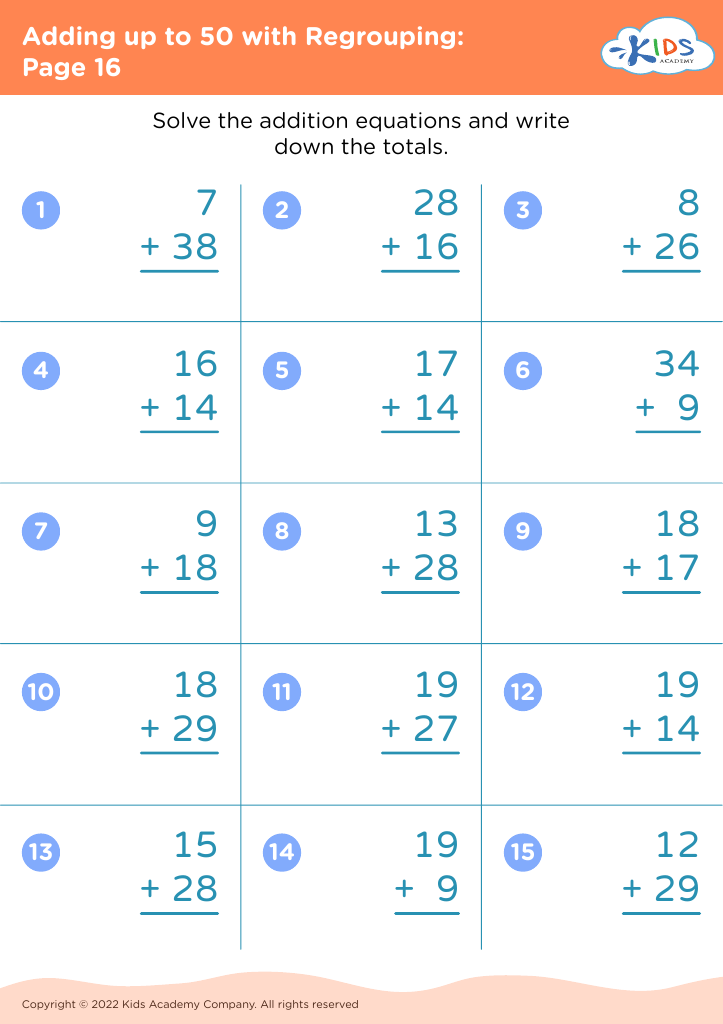
Adding up to 50 with Regrouping: Page 16
Worksheet
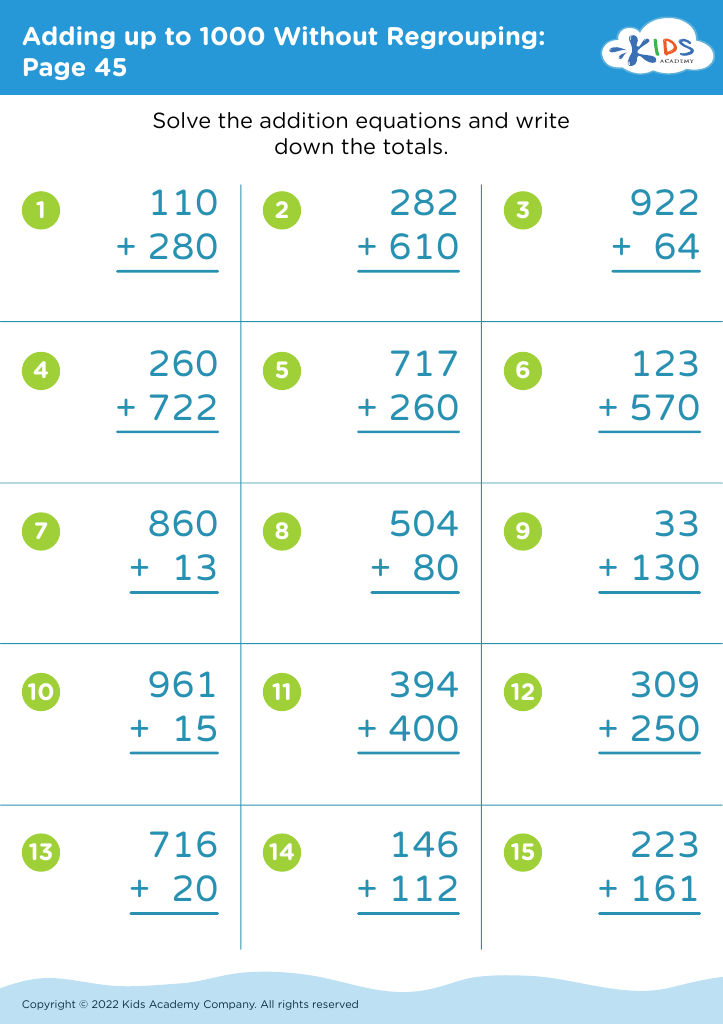
Adding up to 1000 Without Regrouping: Page 45
Worksheet


Problem-solving practice in addition for children aged 8-9 is crucial for several reasons. At this stage, children are not only learning how to add numbers but are also developing essential cognitive and mathematical skills. Engaging with addition problems enhances their ability to think logically, recognize patterns, and develop number sense, which are foundational skills for more complex math concepts in later grades.

Moreover, problem-solving practice encourages perseverance and creativity. When faced with an addition problem, children must identify various strategies to find the solution. This kind of critical thinking fosters resilience, as they learn to approach challenges from different angles and persist through setbacks.

Additionally, mastering addition through problem-solving builds confidence. As children successfully solve problems, they gain a sense of accomplishment, which boosts their overall enthusiasm and motivation for learning. This positive attitude towards math can lead to a lifelong interest in STEM subjects.

For parents and teachers, fostering these skills in an engaging and supportive environment ensures that children develop a solid math foundation. This foundation not only helps in academic achievement but also in daily activities that require math, such as handling money or measuring ingredients for recipes. Thus, emphasizing problem-solving practice in addition during these formative years sets children on a path to success both in and out of the classroom.