Time conversion skills Addition Worksheets for Ages 8-9
3 filtered results
-
From - To
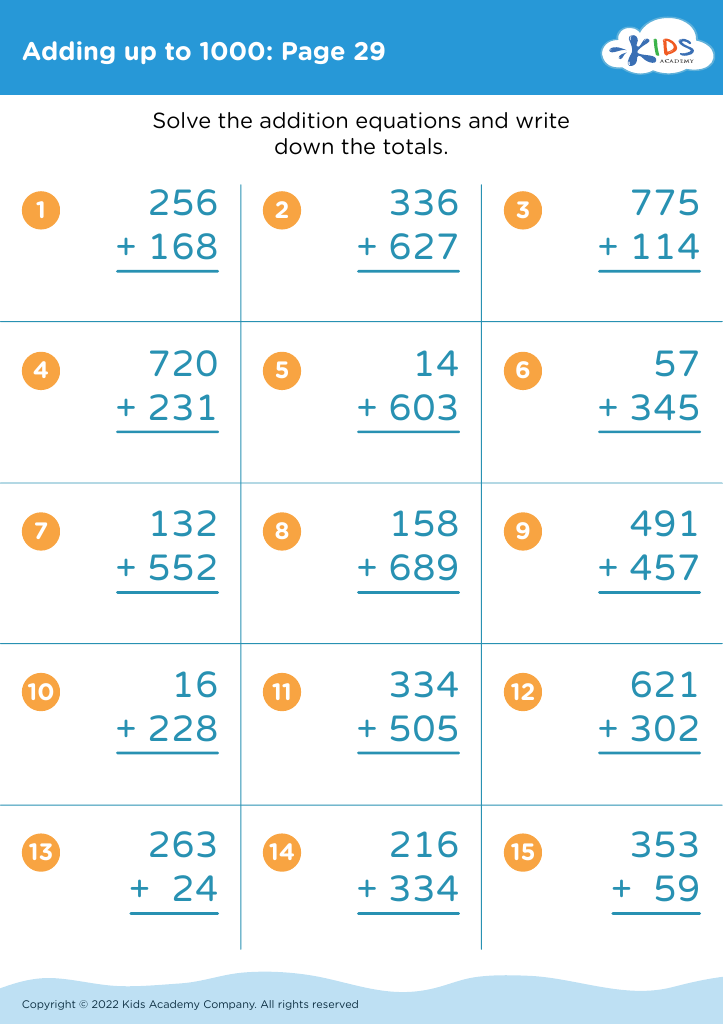
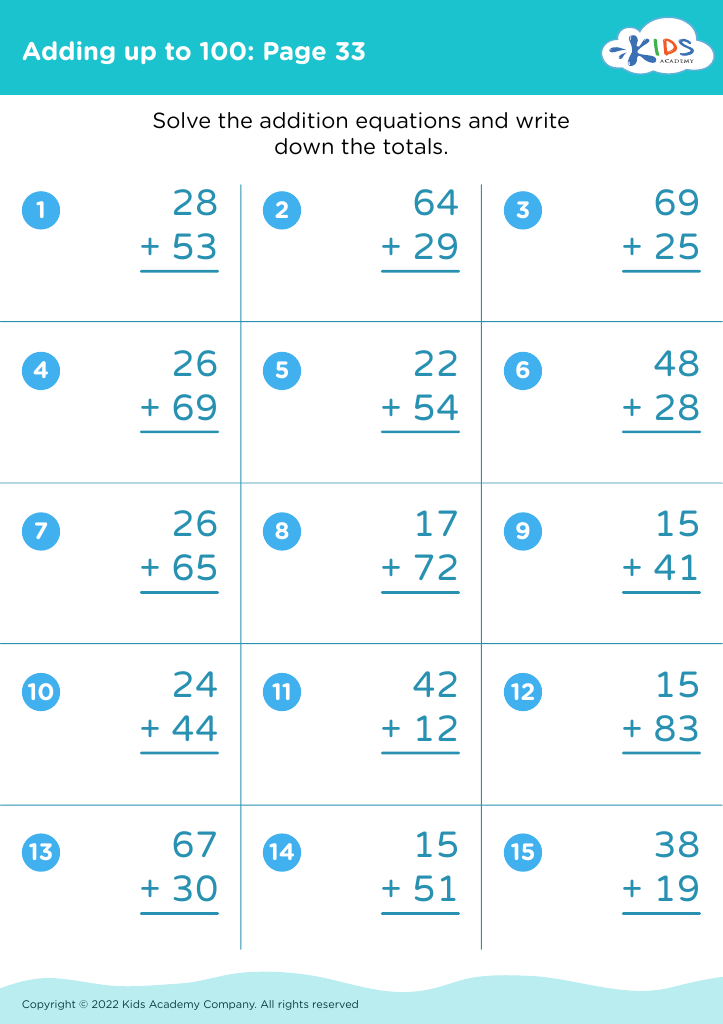
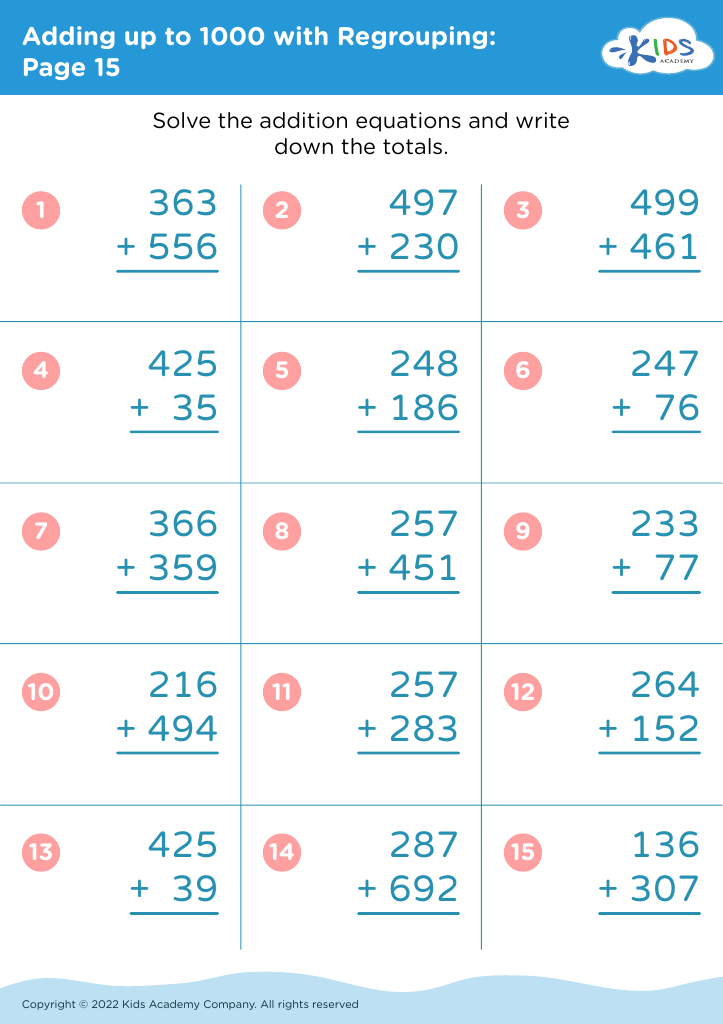
Enhance your child's time-telling abilities with our engaging "Time Conversion Skills Addition Worksheets" designed for ages 8-9. These worksheets provide a fun and educational way for kids to practice crucial math skills, including converting time between hours and minutes and adding different time intervals. Perfect for third graders, our exercises aid in understanding time concepts better, promoting both accuracy and speed. Printable and easy-to-follow, these worksheets can complement school lessons or be used at home for extra practice. Equip your child with the essential skills to master time conversion and boost their overall math proficiency.








Time conversion skills are crucial for children aged 8-9 because they not only help in academic learning but also prepare them for daily life. When children learn to add hours and minutes, they understand the concept of time better, making it easier for them to follow schedules and manage tasks efficiently. This foundational skill supports stronger math proficiency, fostering confidence as they tackle more complex problems in the future.
Additionally, mastering time conversion equips children to handle real-world situations independently. For instance, they'll be able to figure out how long it takes to get ready for school or how much time is left before an event, thus enhancing their organizational skills. These abilities are essential as they contribute to a child's overall sense of responsibility and self-discipline.
From an educational perspective, integrating time-based math problems promotes critical thinking and enhances students' ability to break down tasks into manageable parts. It aids in spatial-temporal reasoning, which is connected to better understanding in STEM subjects. At this age, the curriculum often includes word problems involving time, and proficiency can lead to better academic results.
Involving parents in this learning process also strengthens the parent-child connection and creates an opportunity for practical, everyday teaching moments, whether during cooking, planning family outings, or managing weekend chores. Hence, developing time conversion skills at an early age has far-reaching benefits for a child's cognitive and practical development.








