Understand subtraction Addition Worksheets for Ages 8-9
6 filtered results
-
From - To
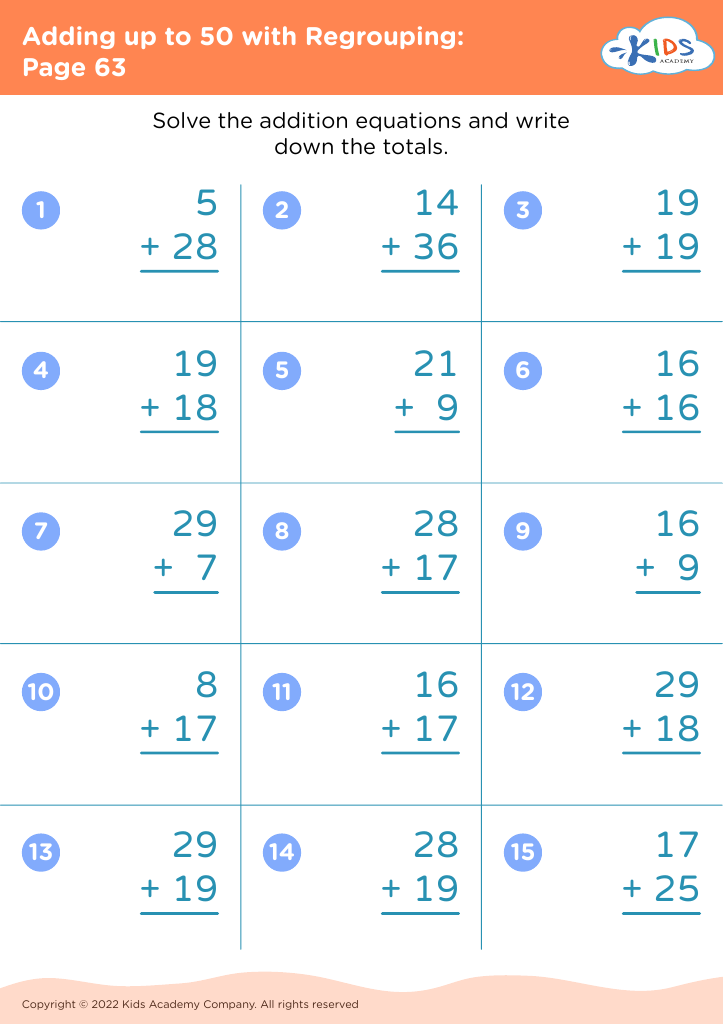
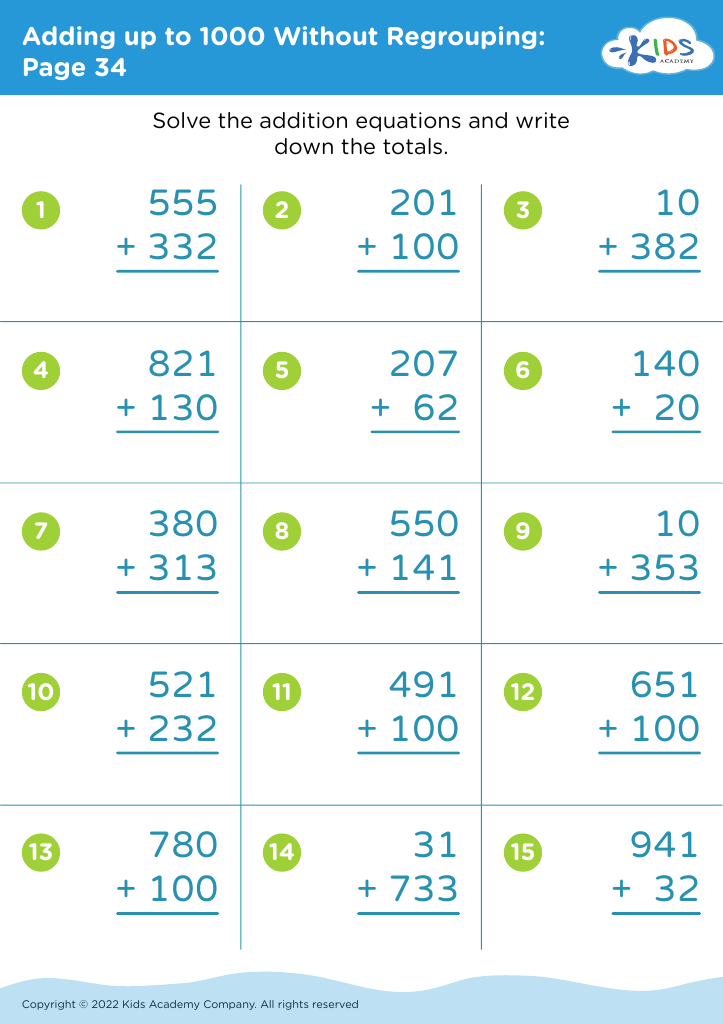
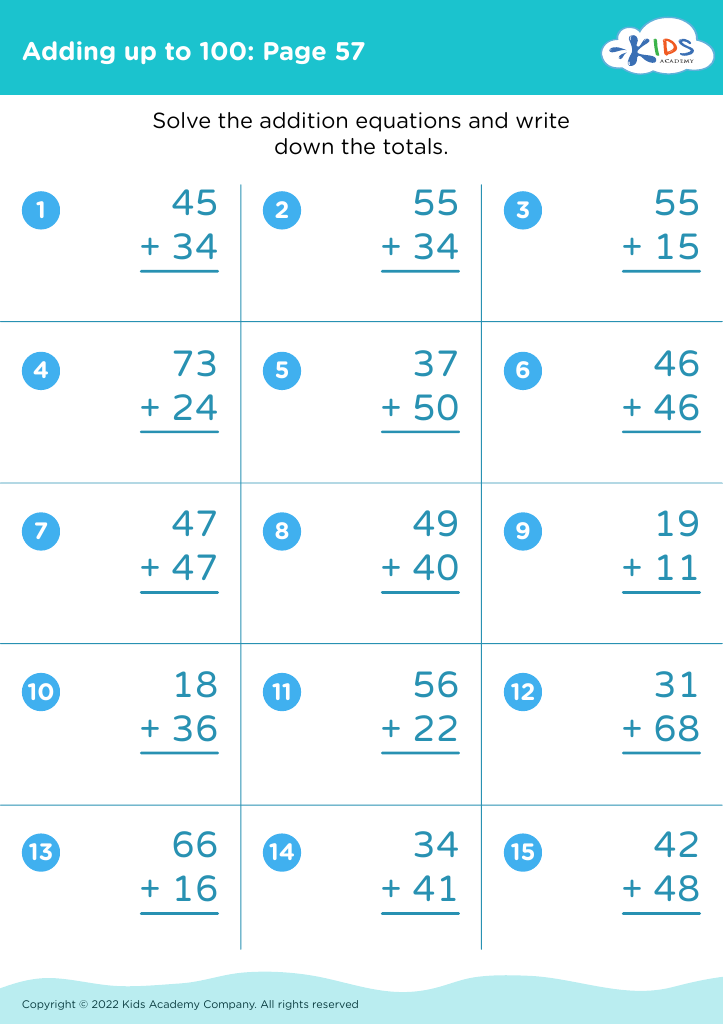
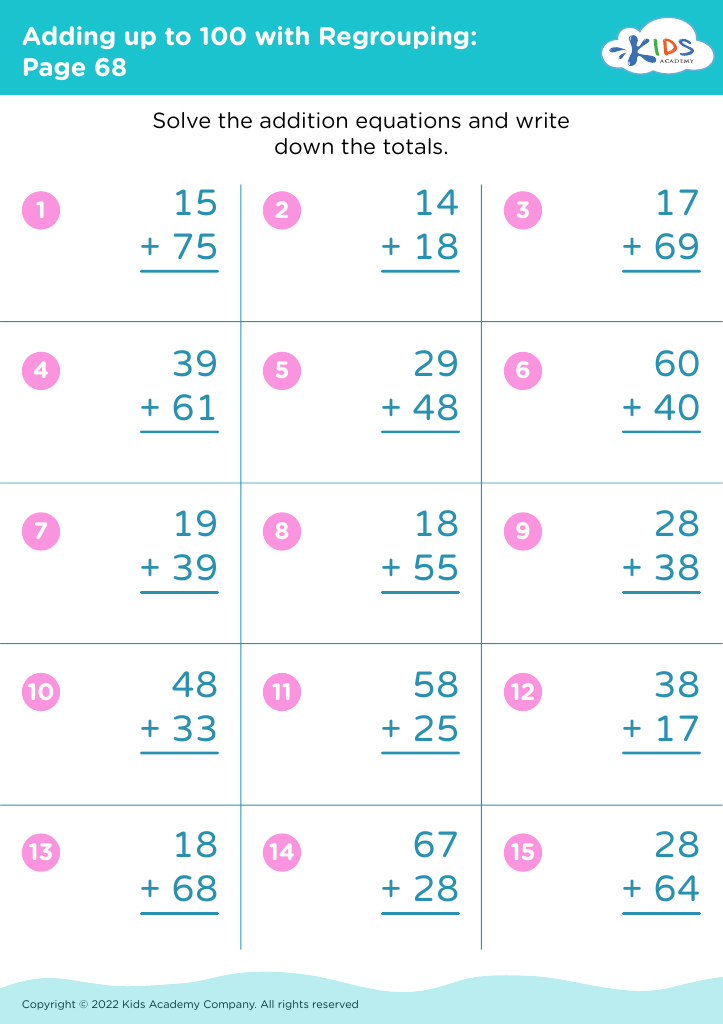
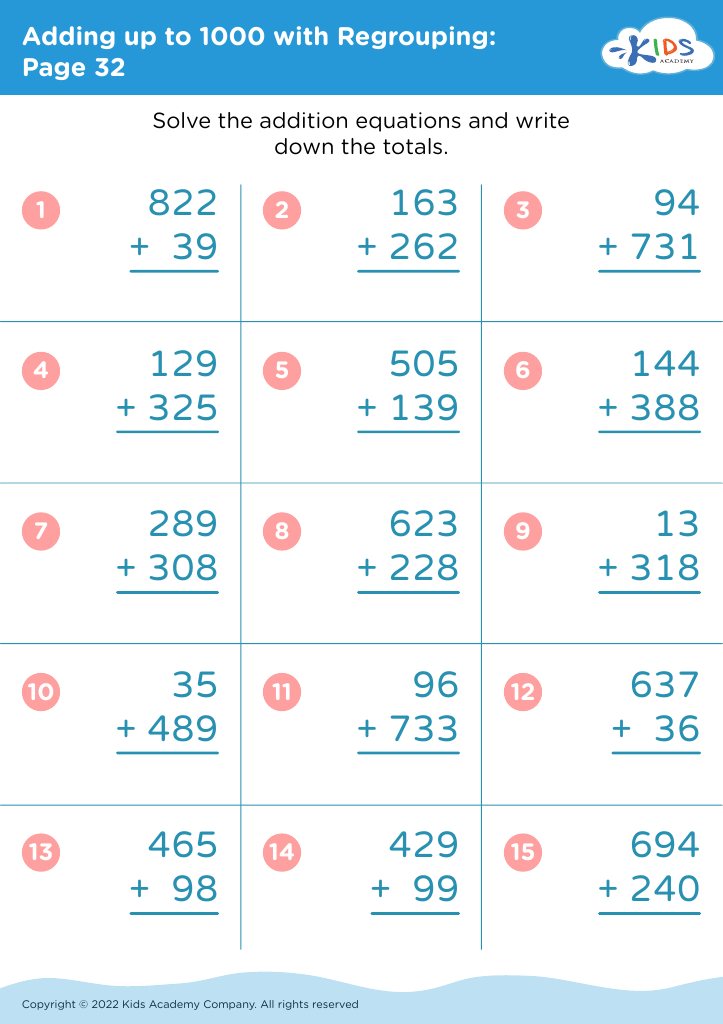
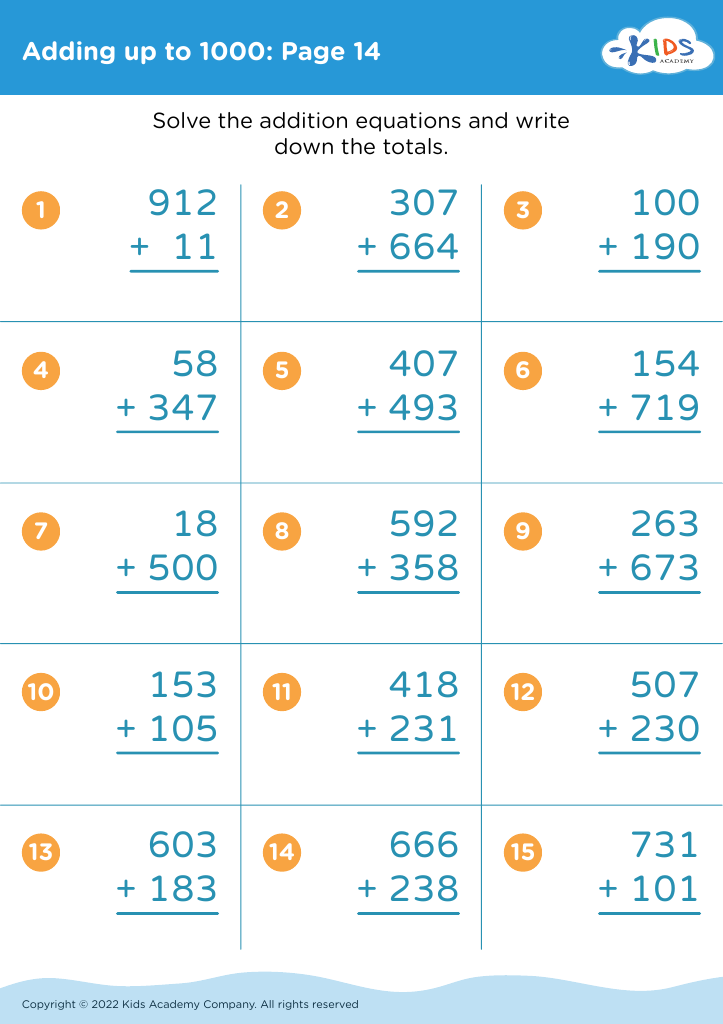
Explore our Understanding Subtraction Addition Worksheets, designed specifically for children aged 8-9! These engaging resources help young learners develop a strong grasp of addition and subtraction concepts. With a variety of exercises, including word problems and visual aids, children will enhance their critical math skills while boosting confidence. Our worksheets provide clear explanations and interactive activities that encourage problem-solving and analytical thinking. Ideal for homeschooling or classroom use, these printable materials make learning fun and effective. Help your child master subtraction and addition with our thoughtfully crafted worksheets, ensuring they build a solid foundation for future mathematical success!








Understanding addition and subtraction is crucial for children aged 8-9 as these foundational skills are central to their mathematical development. At this age, children transition from basic arithmetic to more complex problem-solving and critical thinking strategies, often applying these skills in real-life situations, such as budgeting, measuring, and planning.
When parents and teachers emphasize the importance of mastering these operations, they help children build confidence and encourage a positive attitude toward math. Proficient addition and subtraction skills enable children to tackle shared assignments more easily and increase their participation in mathematical discussions.
Moreover, these foundational skills are significant precursors to more advanced concepts like multiplication, division, fractions, and decimals. Without a solid grasp of addition and subtraction, children may struggle as math becomes increasingly complex.
Additionally, being proficient in these operations promotes cognitive skills such as logical reasoning and pattern recognition. Engaging in fun activities, games, or real-life scenarios to practice these skills can also strengthen the parent-child or teacher-student bond, creating a supportive learning environment. By recognizing the importance of strong arithmetic skills, parents and teachers can inspire deeper learning and enthusiasm for math among young learners.








