Understanding patterns Addition Worksheets for Ages 8-9
28 filtered results
-
From - To
Explore our "Understanding Patterns Addition Worksheets for Ages 8-9" to boost your child's math skills. These engaging and interactive worksheets help students recognize and predict number patterns through addition, enhancing their problem-solving abilities. Designed for children ages 8-9, these resources align with educational standards to support classwork and independent learning. With colorful visuals and fun exercises, your child will develop a solid understanding of addition patterns, setting a strong foundation for advanced math concepts. Visit Kids Academy to access these essential tools and make math practice enjoyable and effective!
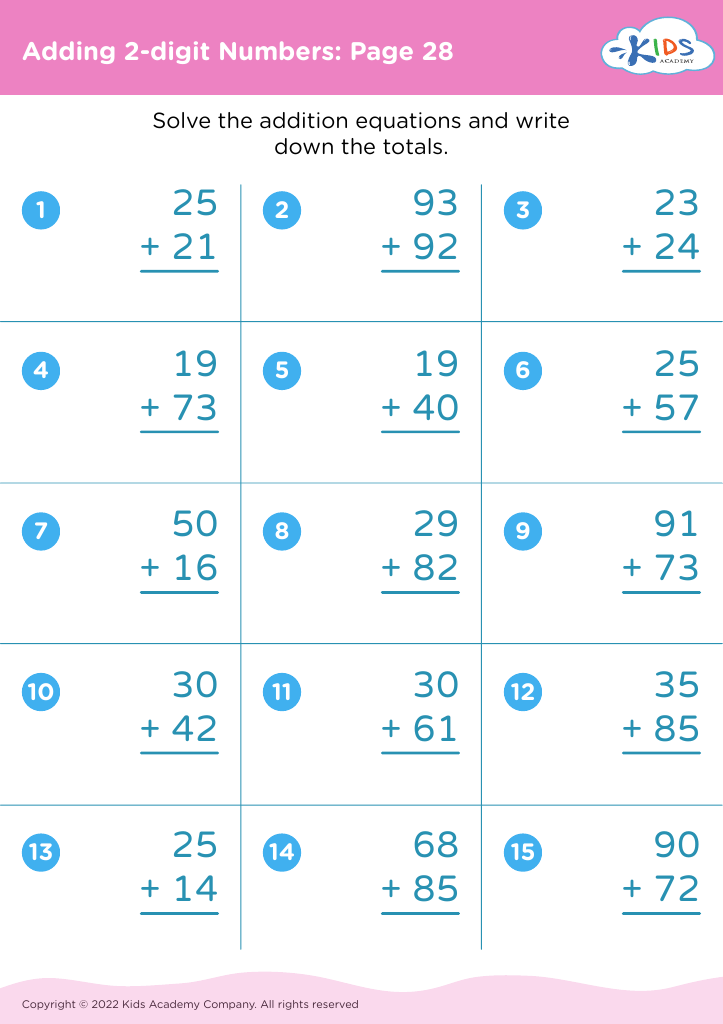
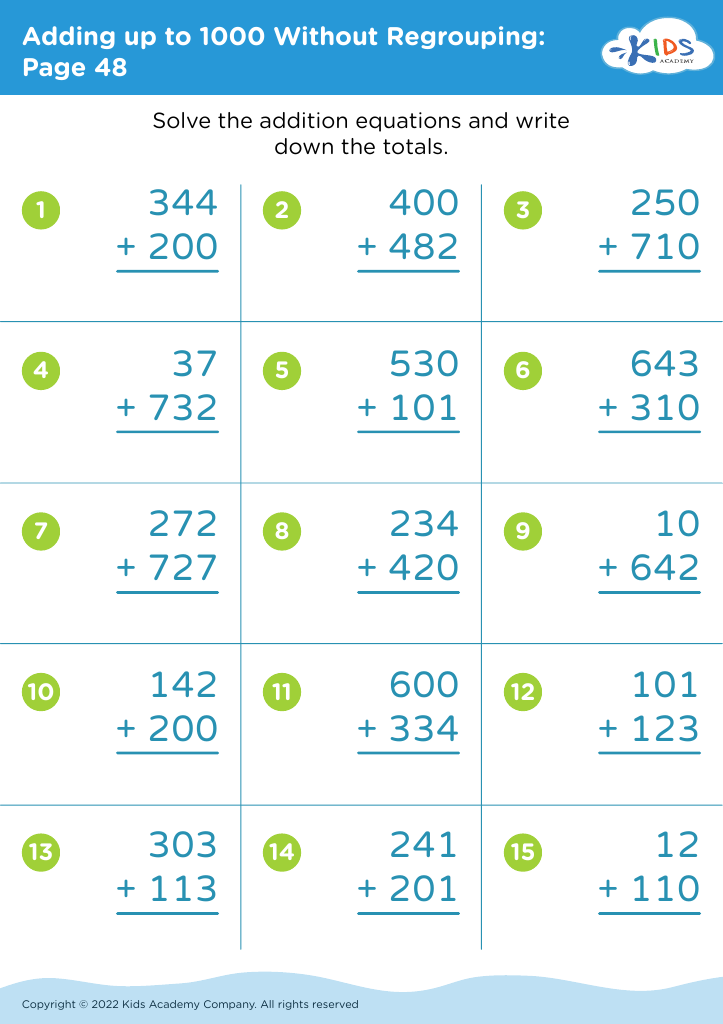
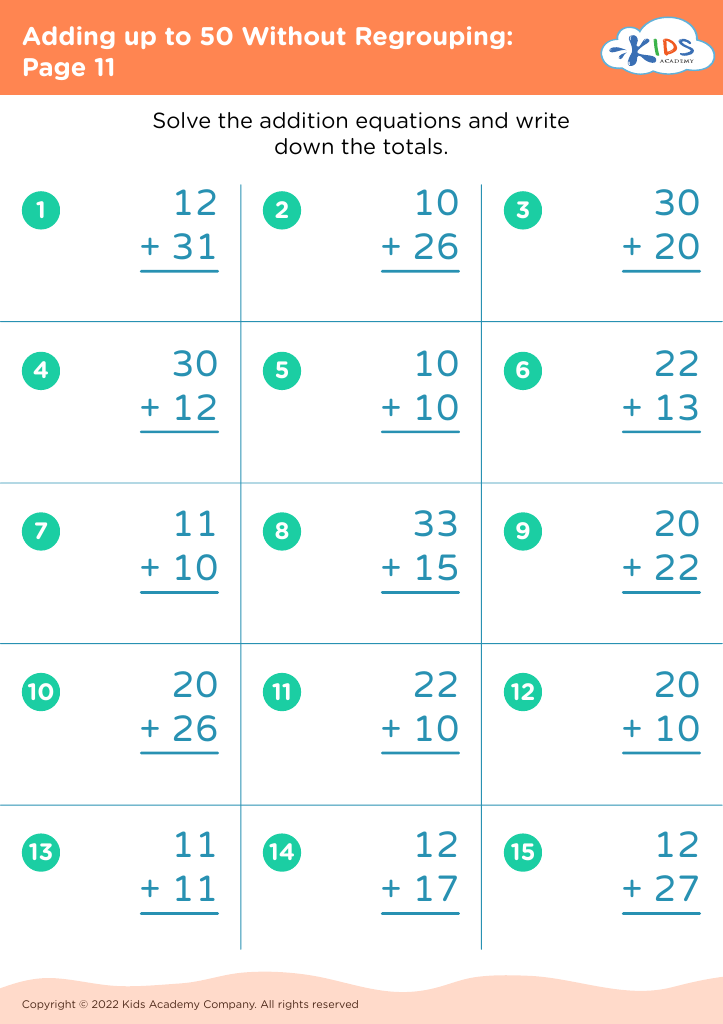
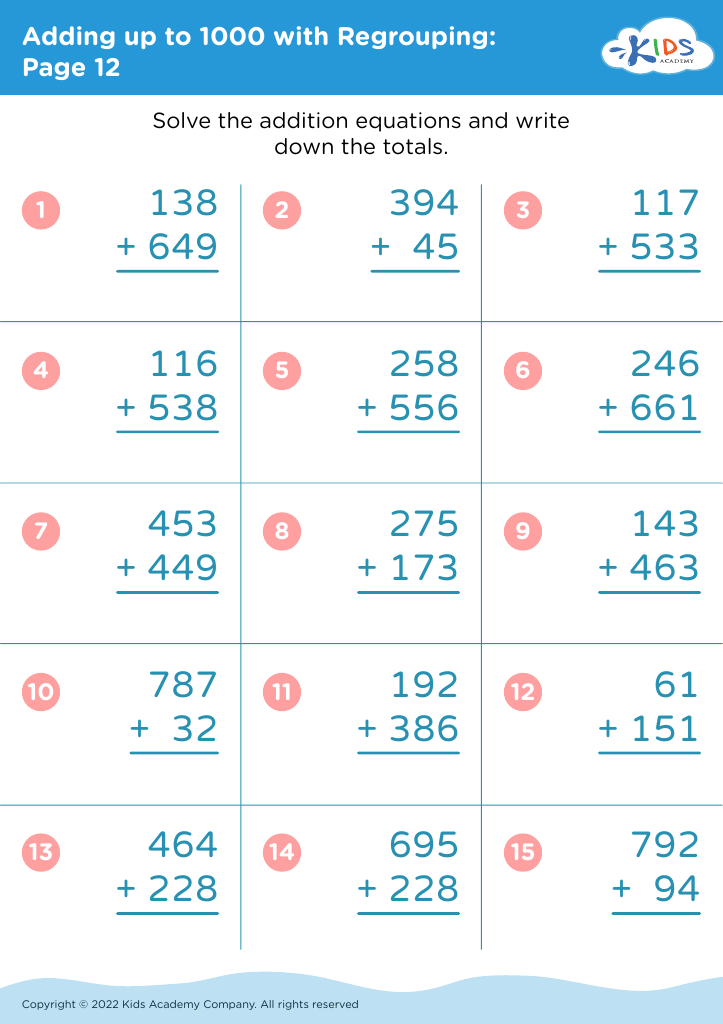
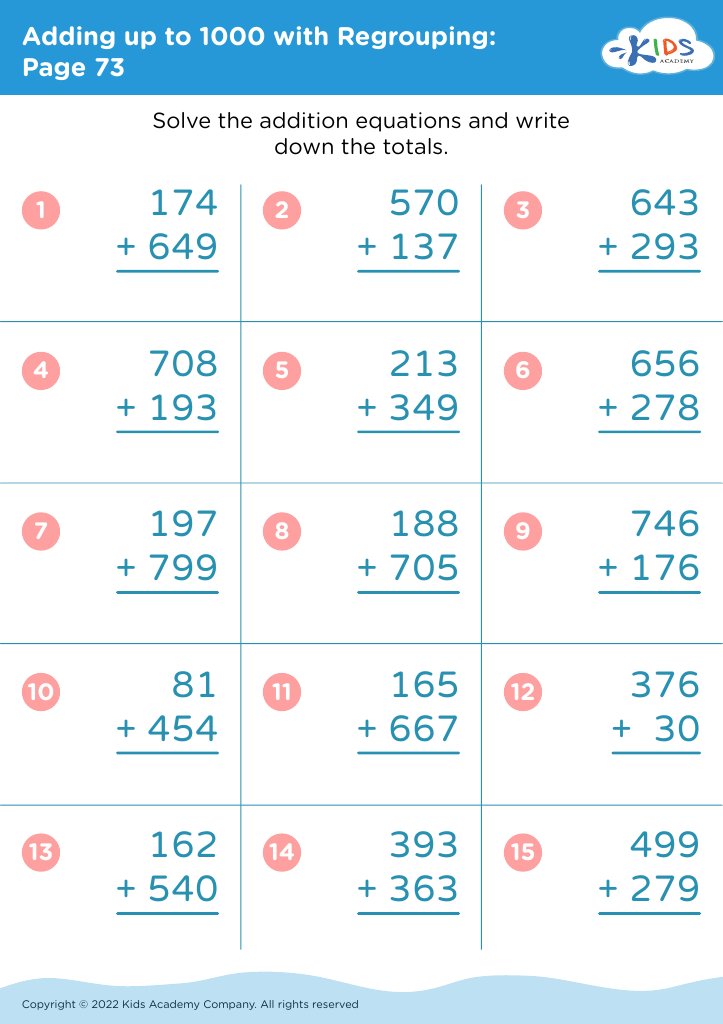
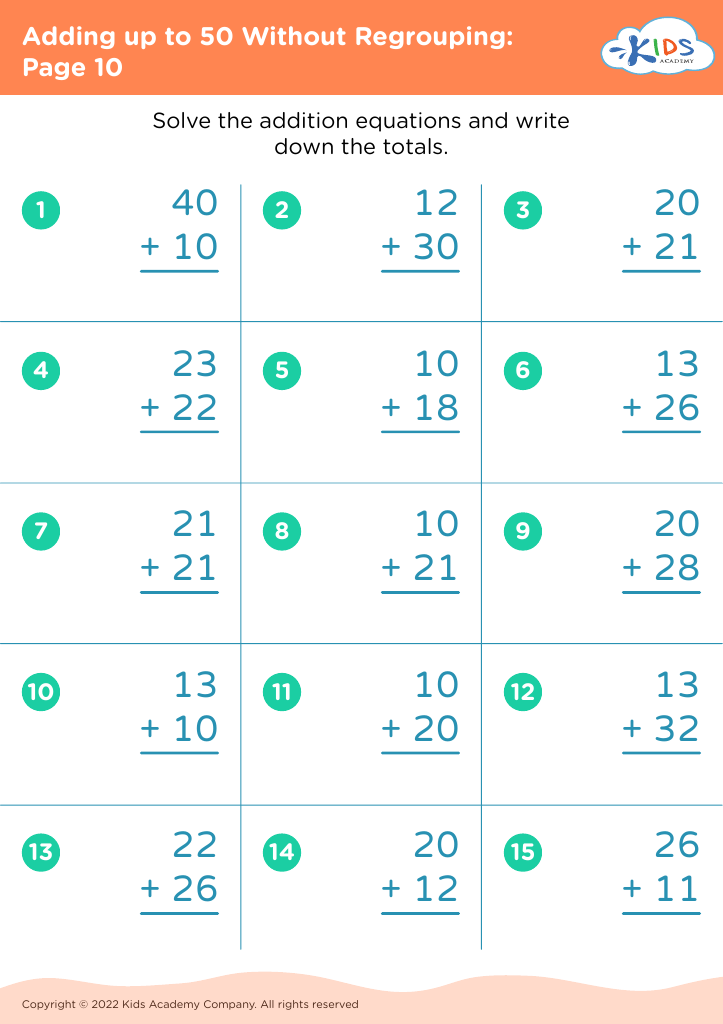
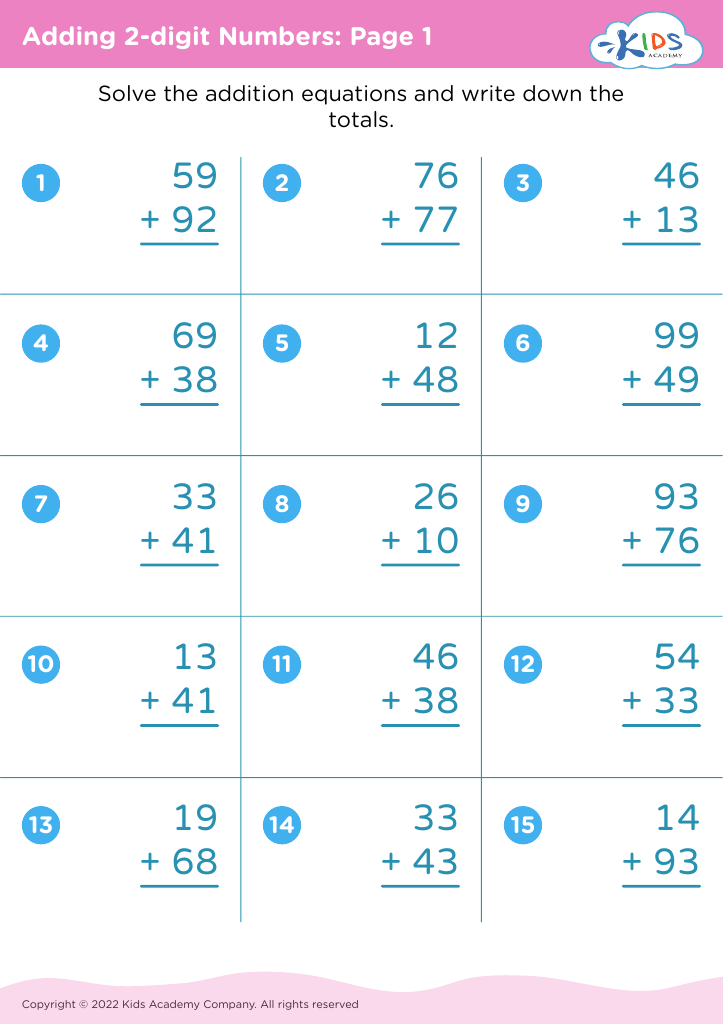
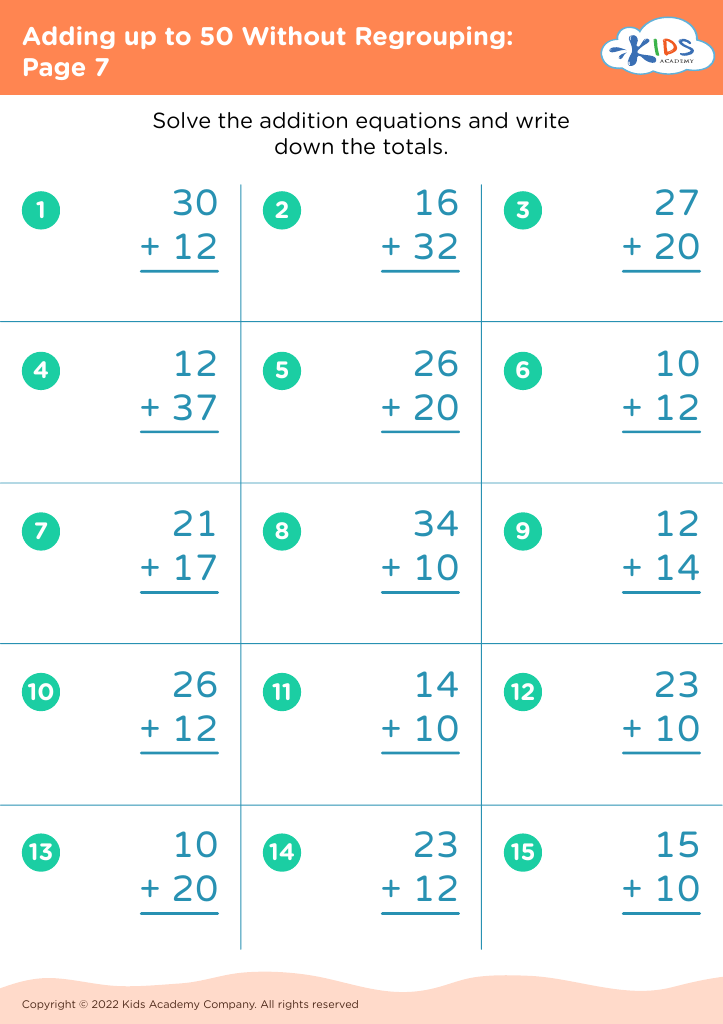
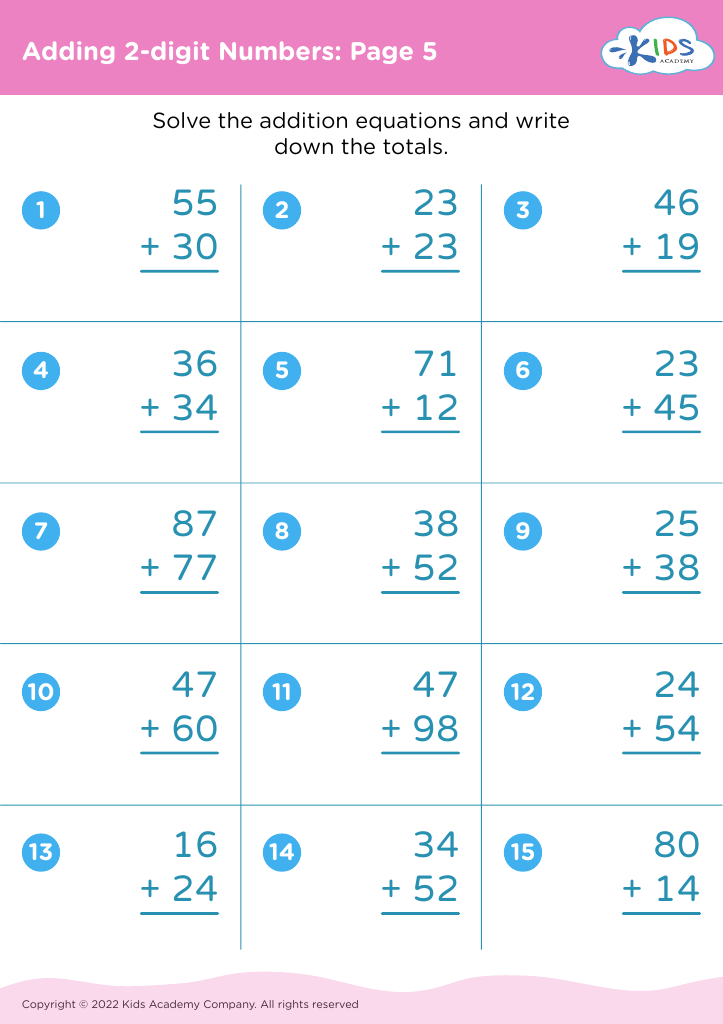
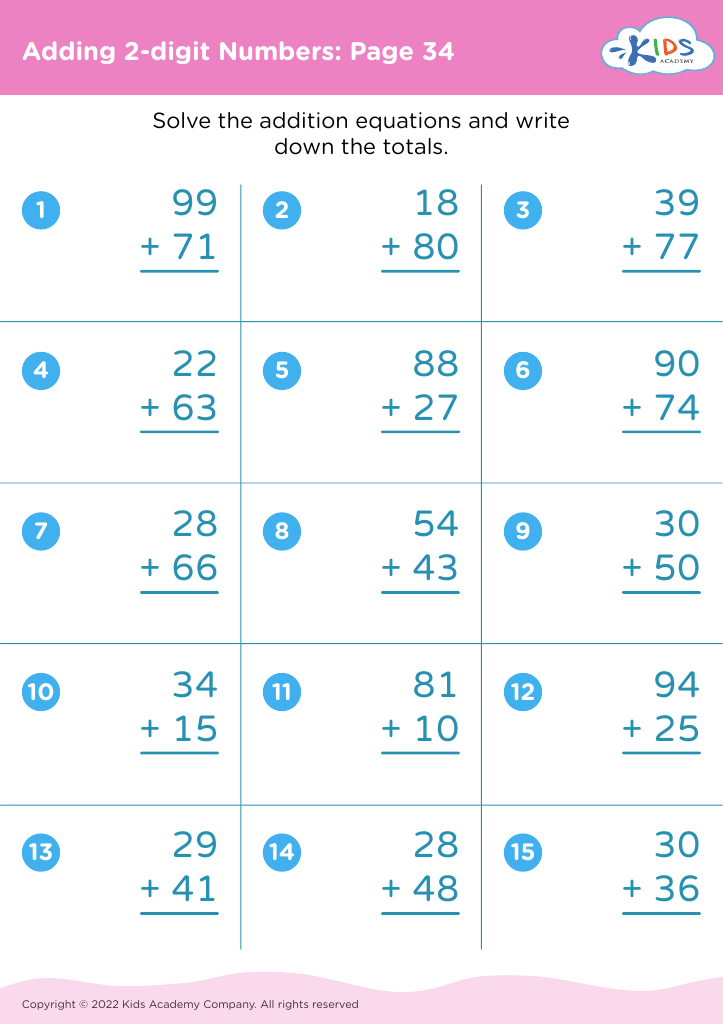
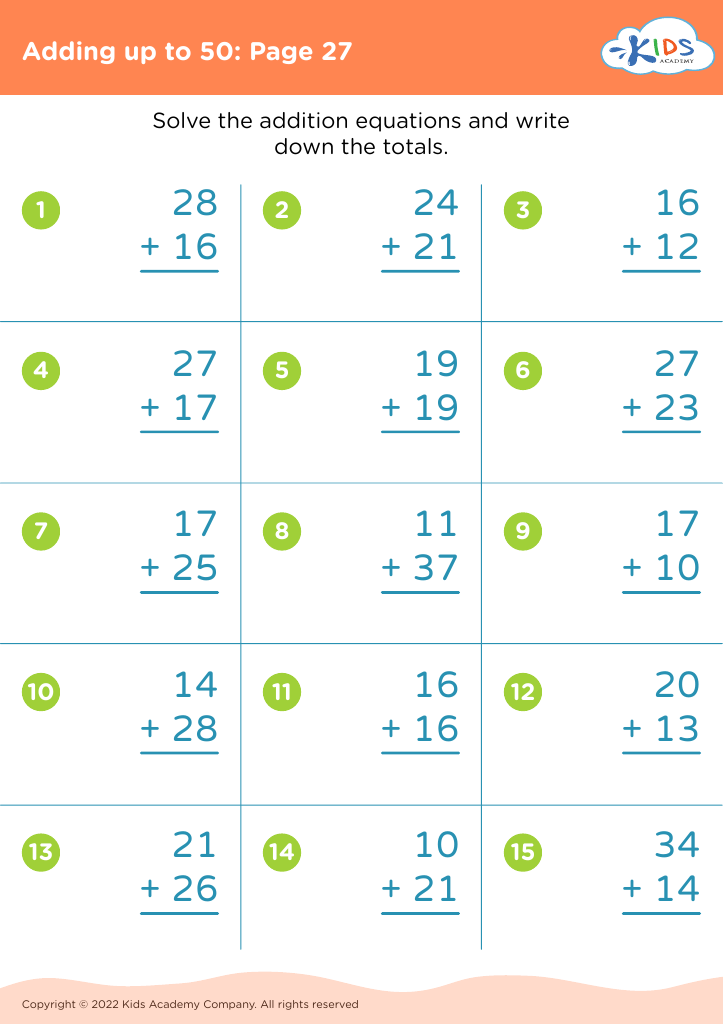
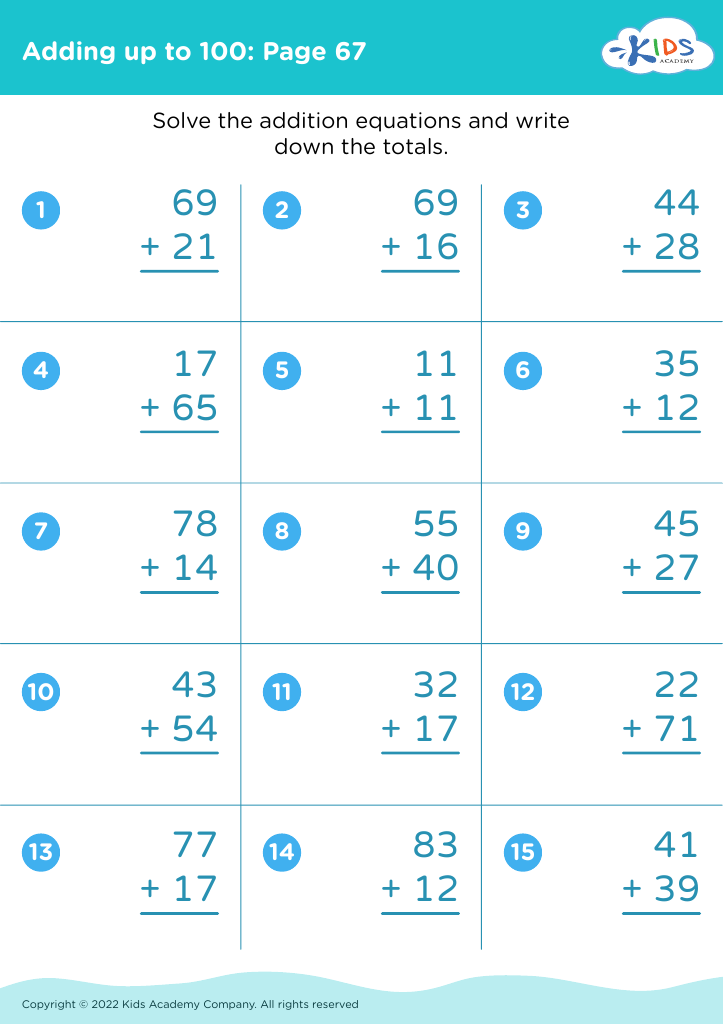
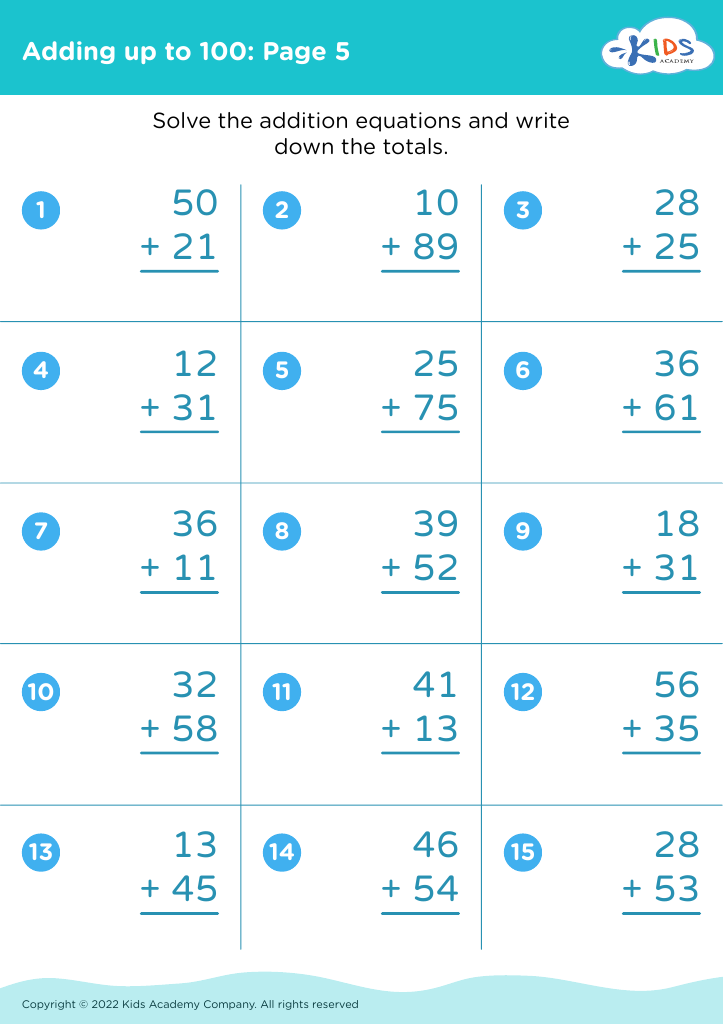
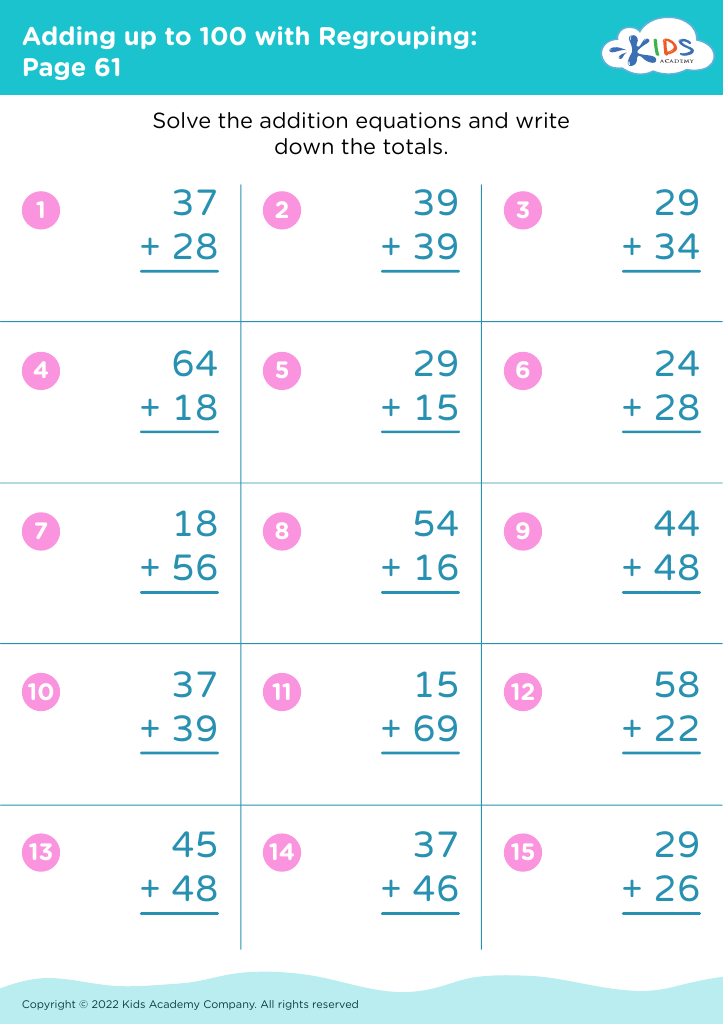
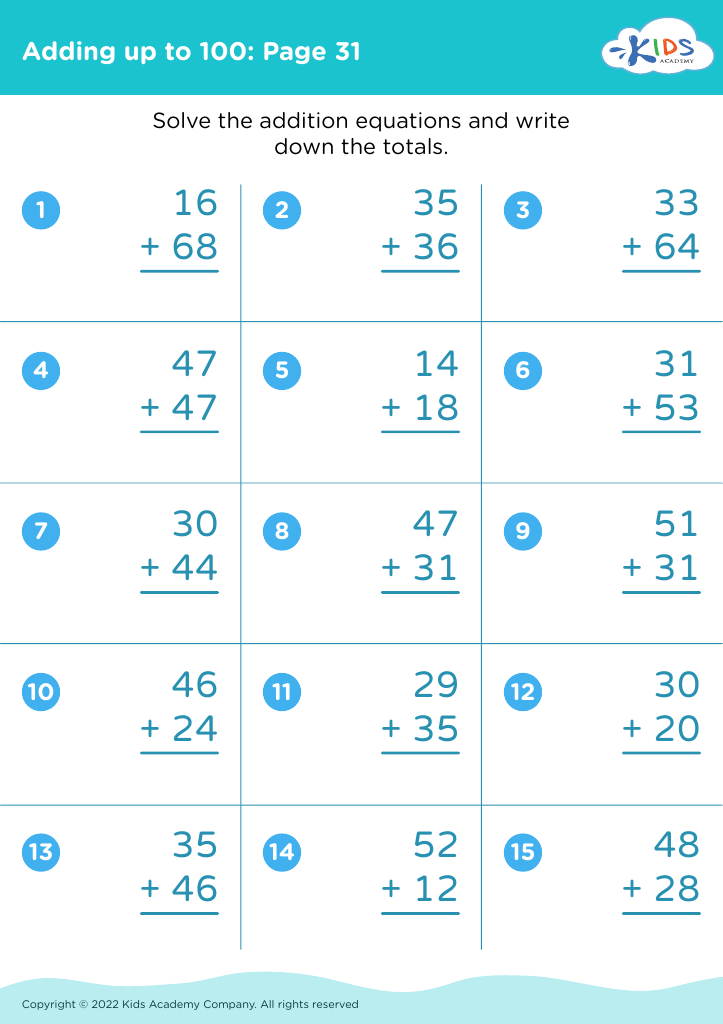
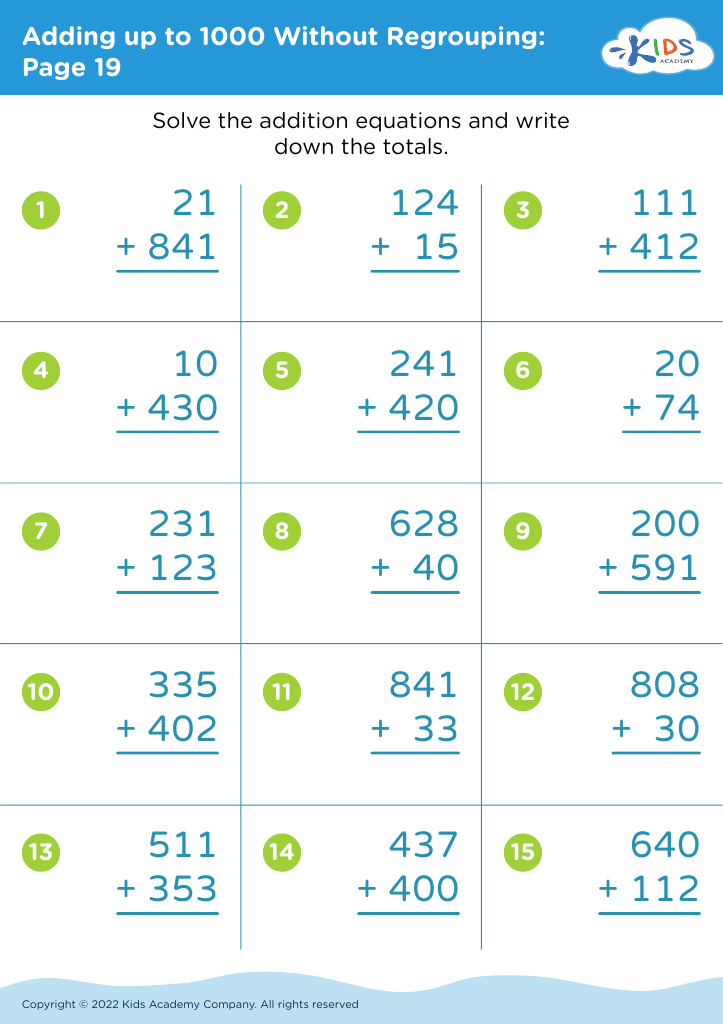
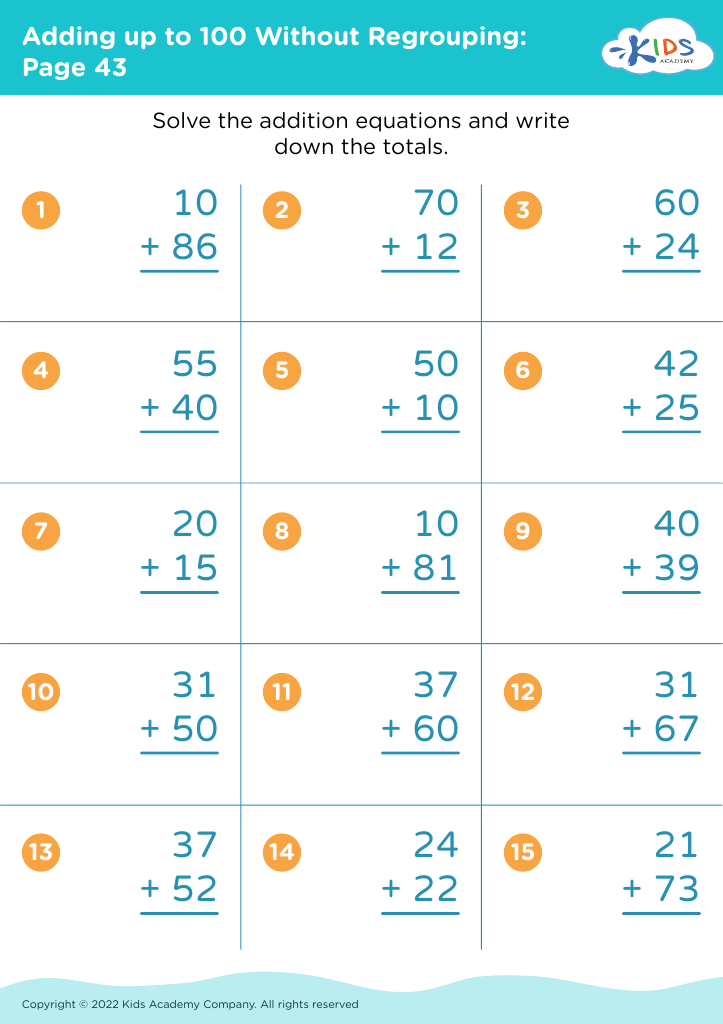
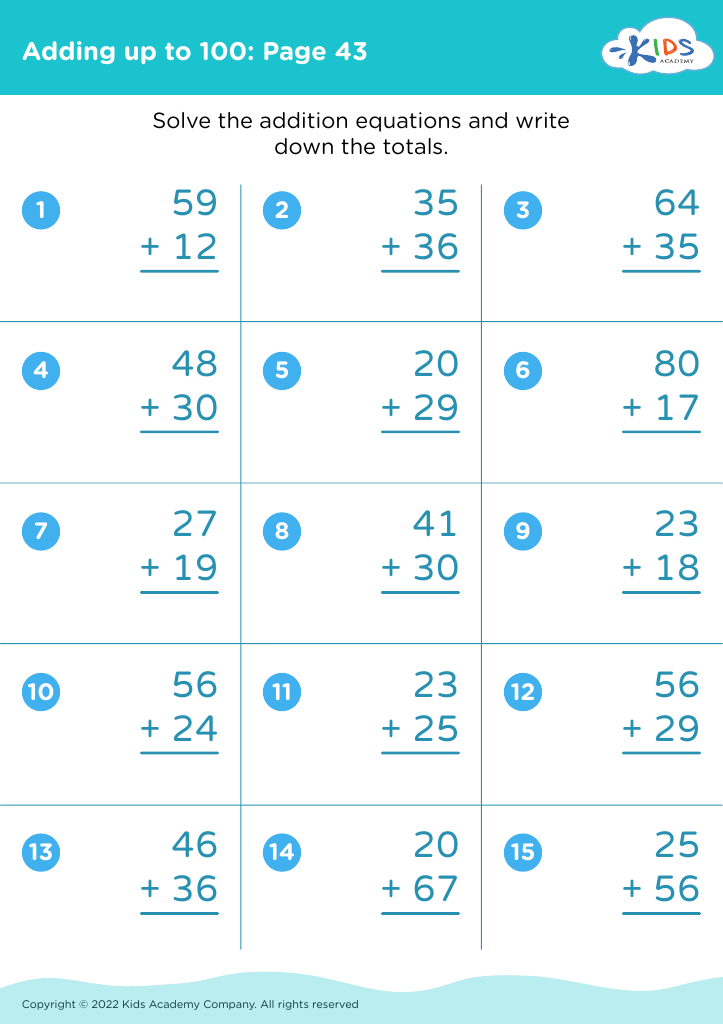
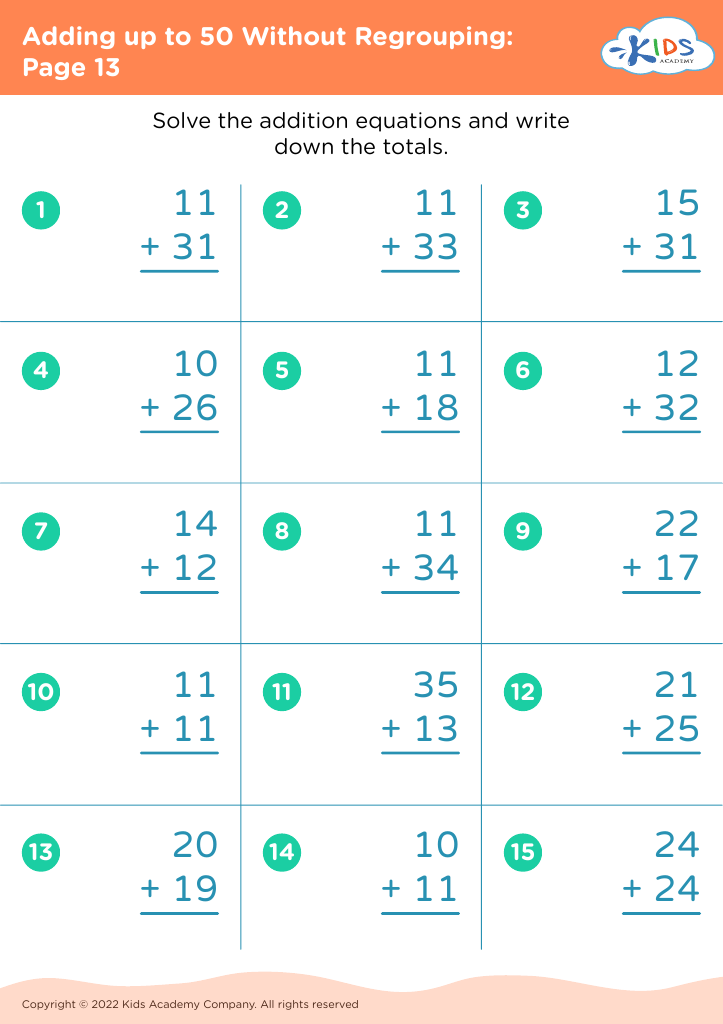
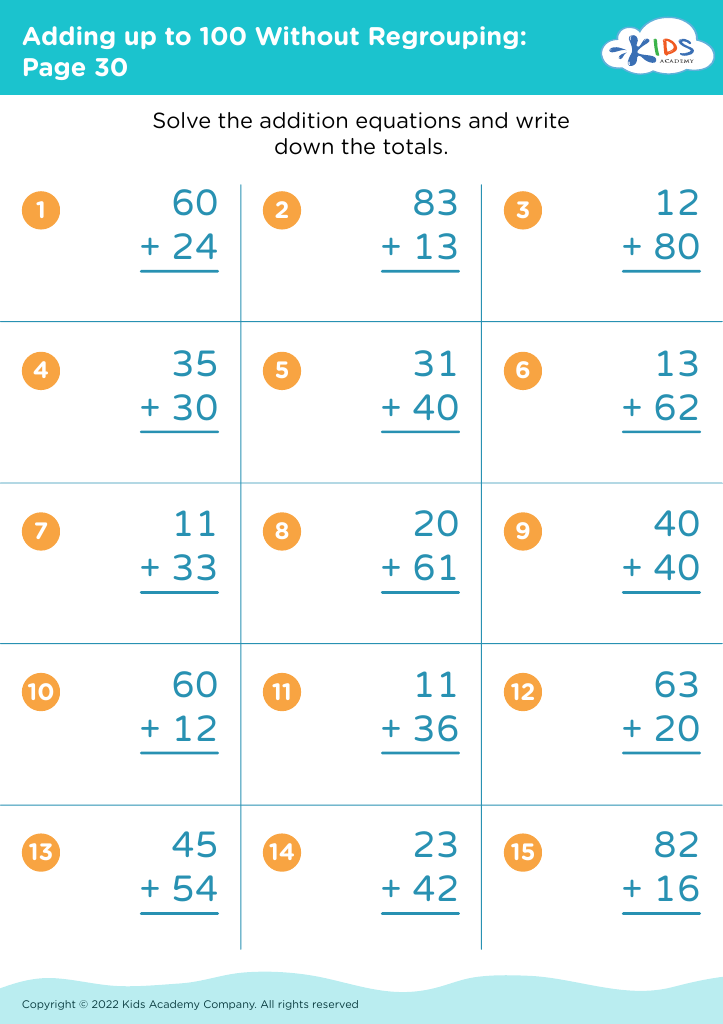
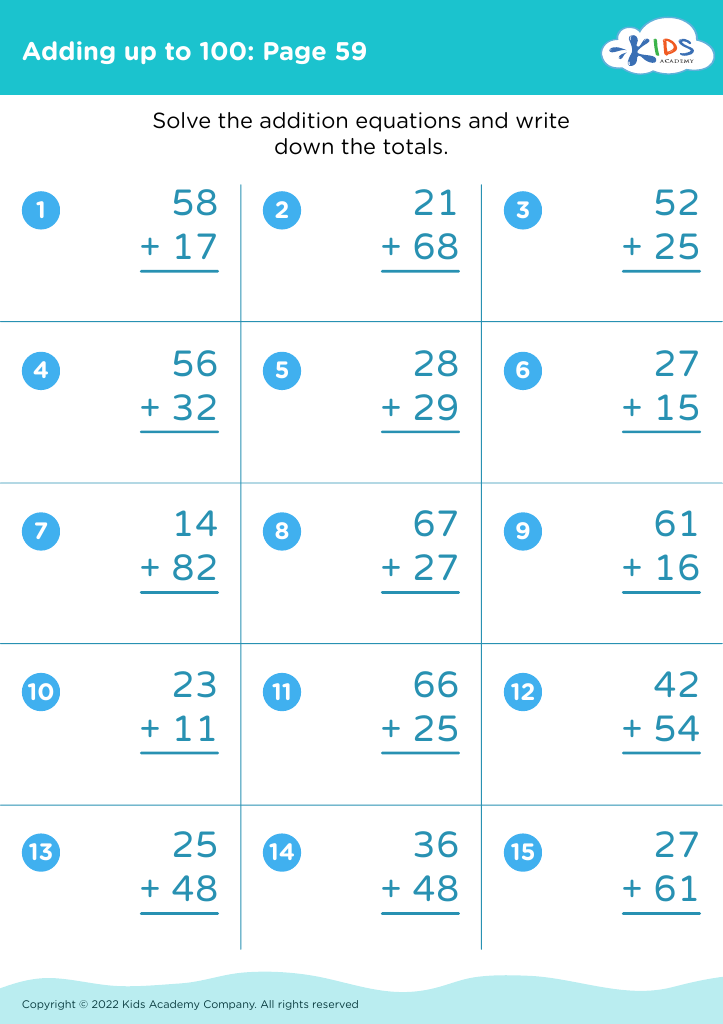
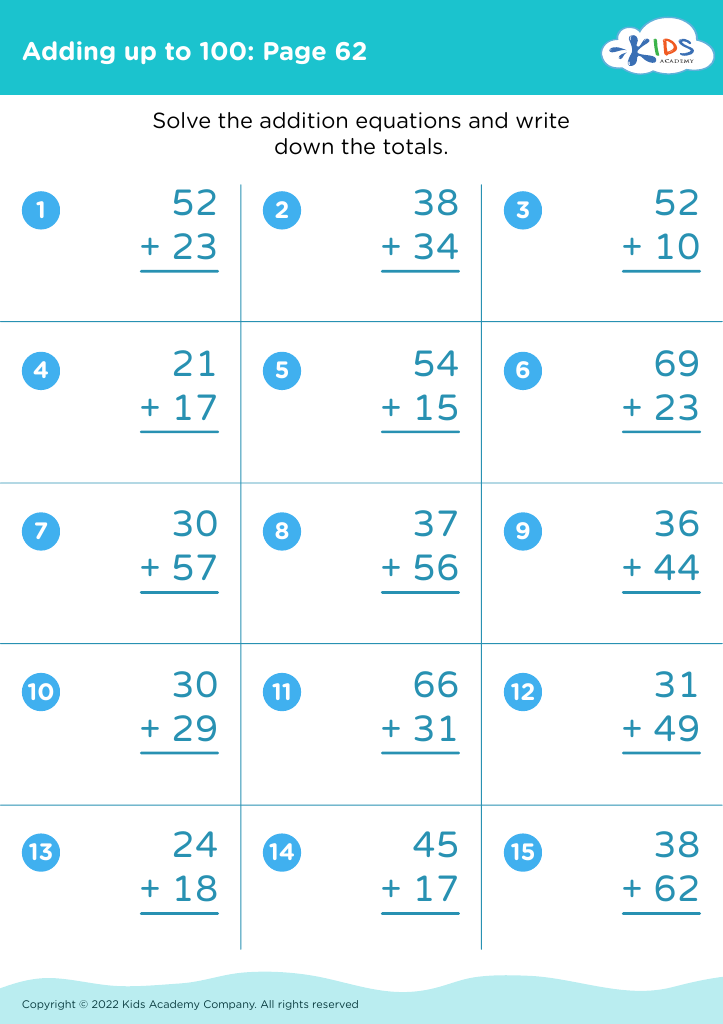
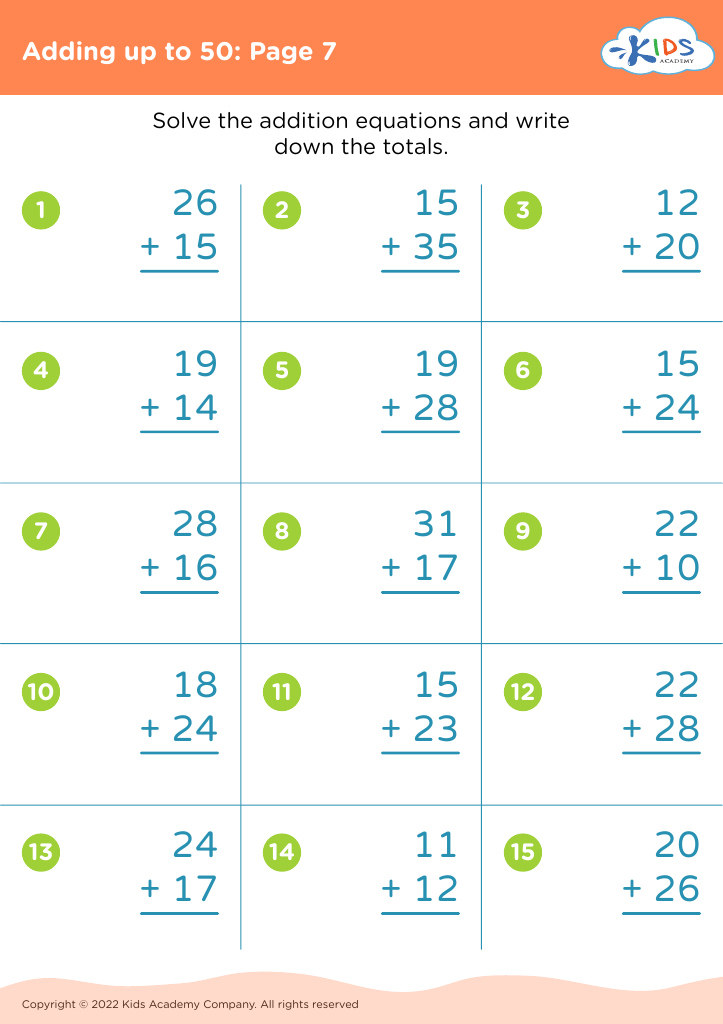
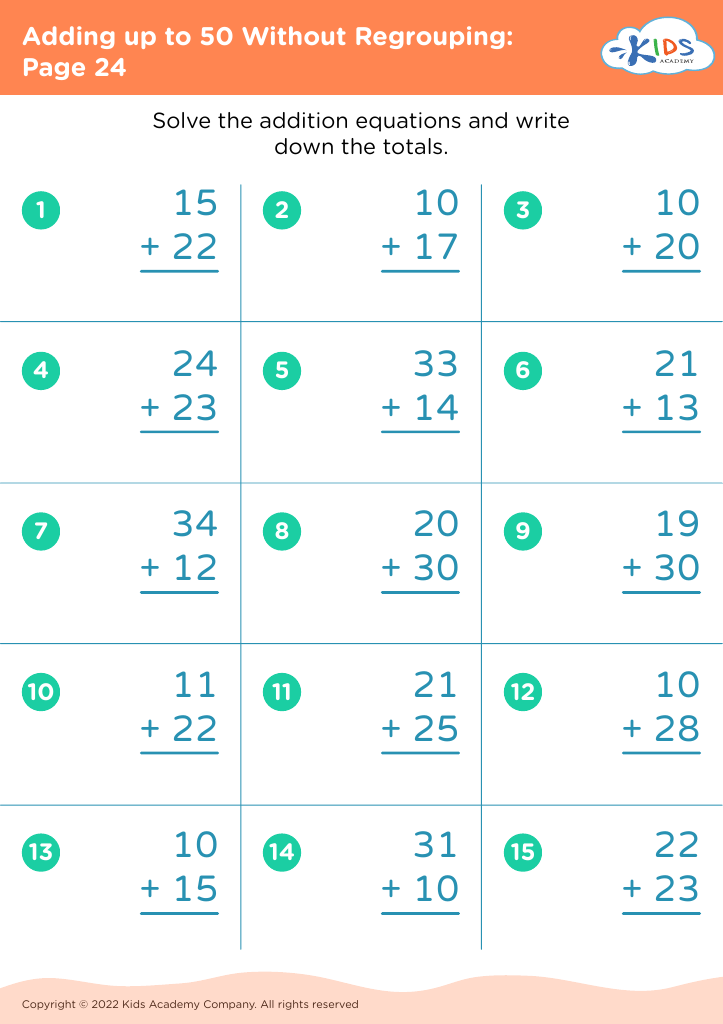








Understanding addition patterns is a fundamental skill for children aged 8-9, and it deserves attention from both parents and teachers. At this stage in their development, children are transitioning from simple arithmetic to more complex problem-solving. Recognizing patterns in addition helps them enhance critical thinking skills and mathematical reasoning, which are crucial for tackling more advanced concepts like multiplication, division, and algebra later on.
Moreover, an understanding of addition patterns supports overall numeracy. When children can identify that adding 10 to a number always shifts its digit place (e.g., 23 + 10 = 33), or that numbers increment predictably (like skip counting by 2s), they build a strong mental framework for handling numbers flexibly and efficiently. This foundational knowledge makes math less intimidating and boosts confidence, making future learning experiences more positive and engaging.
Additionally, familiarity with addition patterns has practical benefits in everyday life. From calculating costs while shopping to coding and statistics in technology fields, real-world applications of these skills are vast. Encouraging pattern recognition in addition prepares children not just for academic success, but for practical, everyday tasks, instilling a sense of competence and independence. Thus, fostering this ability is essential for balanced, holistic development in both academic and real-life contexts.








