Understanding quantity Addition Worksheets for Ages 8-9
7 filtered results
-
From - To
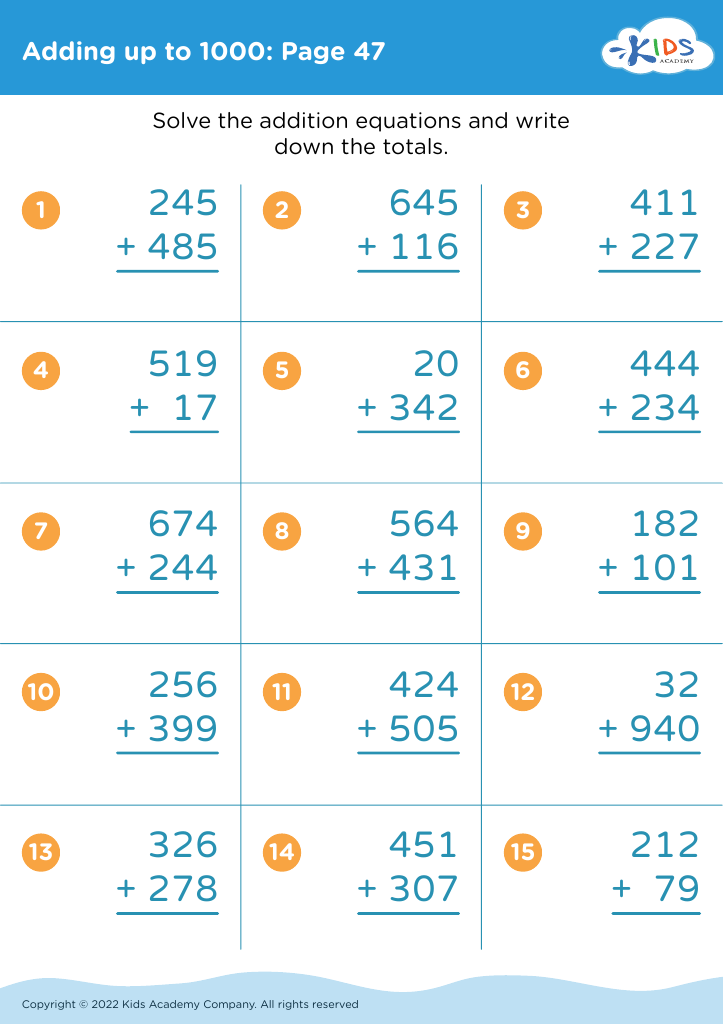
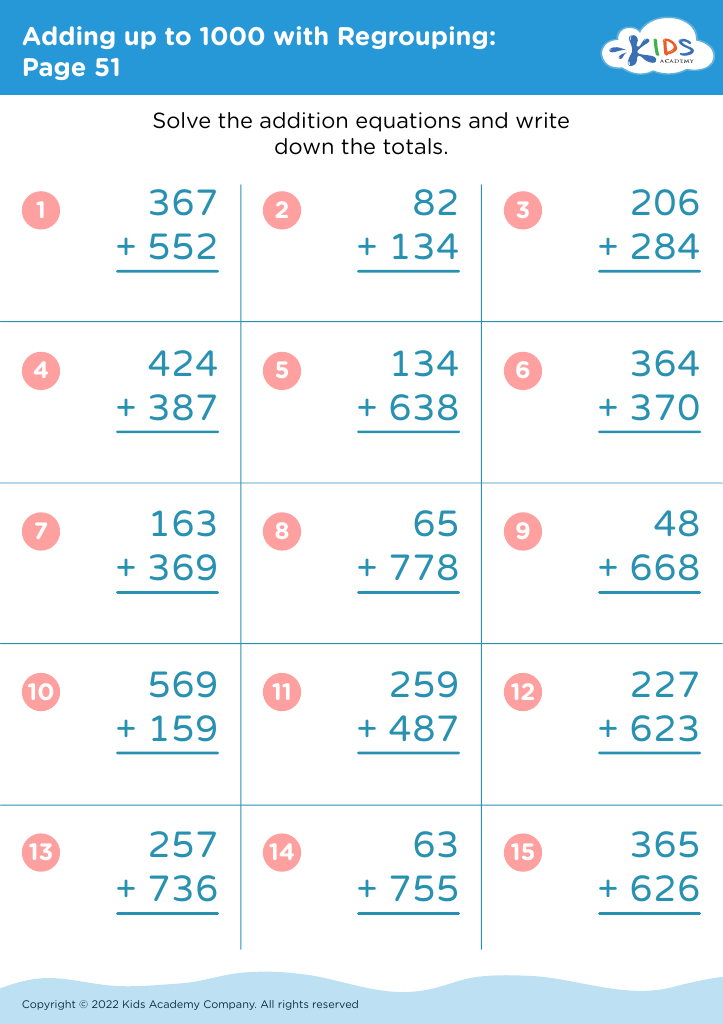
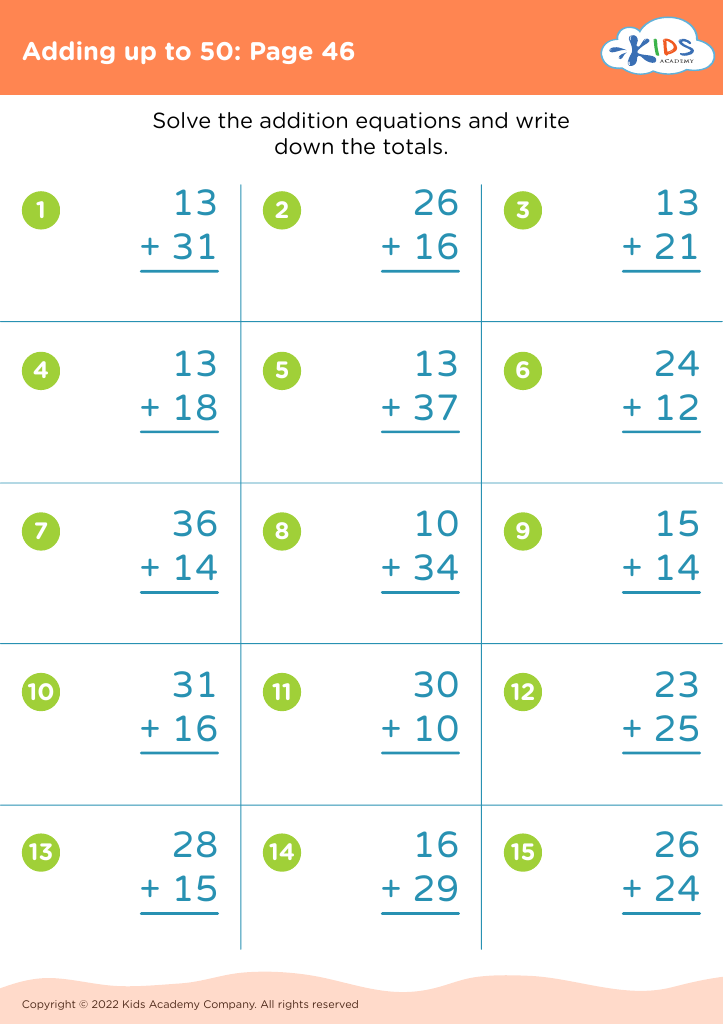
Enhance your child’s arithmetic skills with our "Understanding Quantity Addition Worksheets." These engaging activities are designed specifically for ages 8-9, helping young learners grasp the concept of addition with easy-to-understand visuals and exercises. Our worksheets make addition fun and interactive, fostering a strong mathematical foundation. These carefully crafted resources support cognitive development by encouraging critical thinking, pattern recognition, and problem-solving skills. With a variety of challenges suitable for different learning levels, your child will build confidence in math and be prepared for more advanced concepts. Download now to start transforming your child's learning experience today!
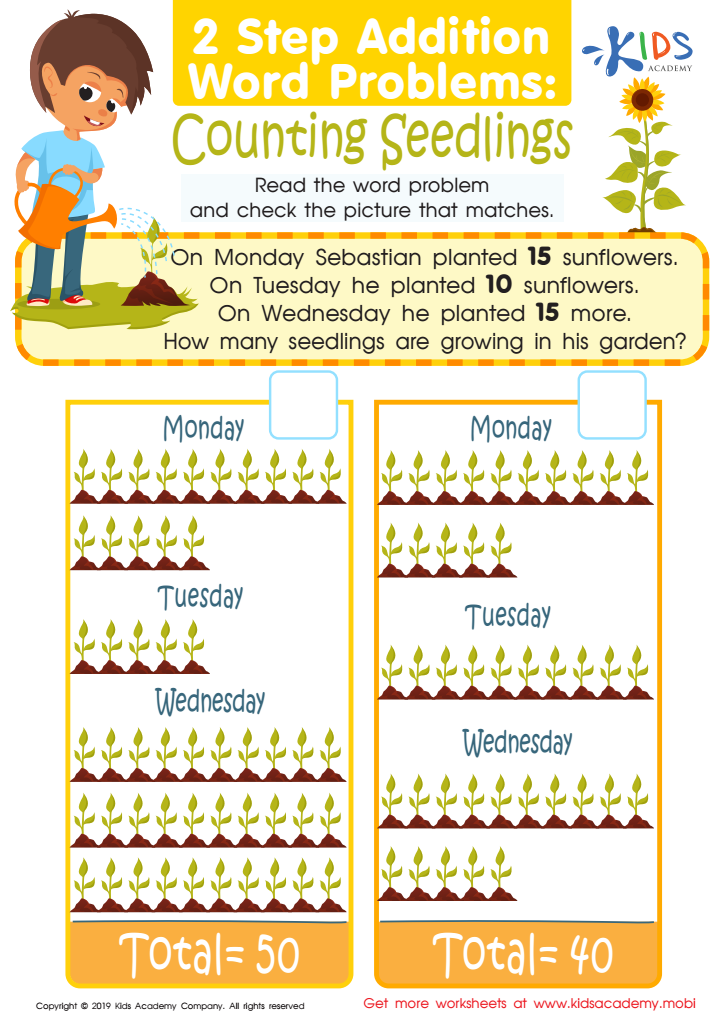
Counting Seedlings Worksheet
 Assign to My Students
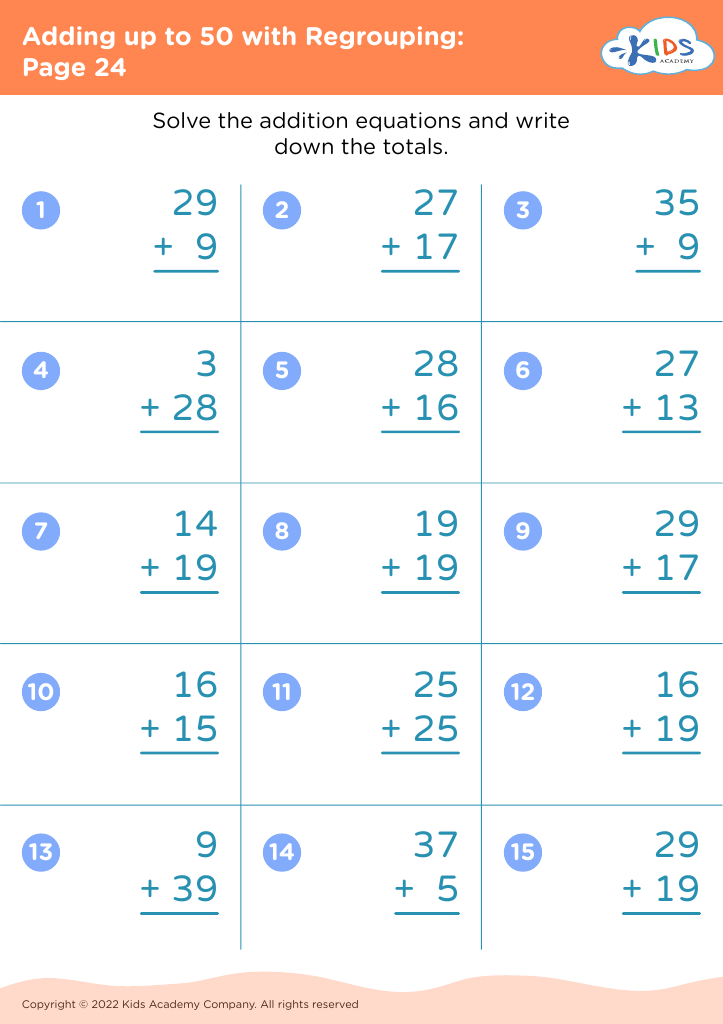
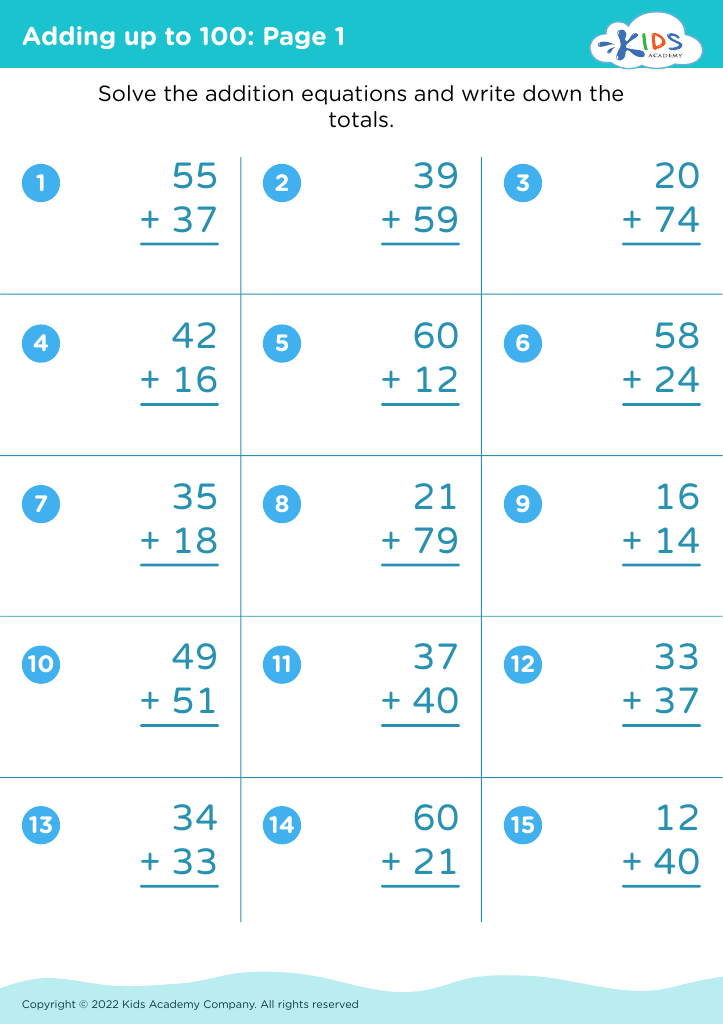
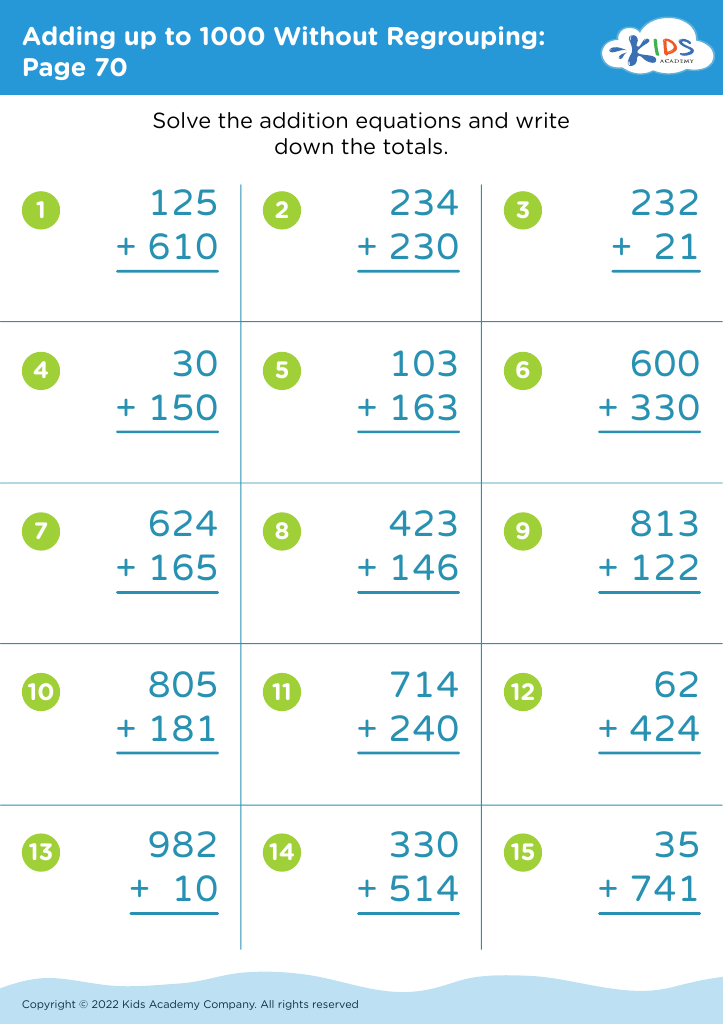








Understanding quantity addition at ages 8-9 is crucial as it lays the foundation for higher mathematical thinking and everyday problem-solving skills. At this developmental stage, children's brains are highly receptive to learning fundamental concepts that will shape their academic and cognitive development.
For parents, fostering an understanding of quantity addition helps ensure that children can navigate daily tasks that involve math, such as handling money or measuring ingredients in recipes. It's not just about getting the right answers but developing a sense of numerical relationships and logical thinking.
Teachers, on the other hand, have the responsibility to prepare students for future academic success. By focusing on quantity addition, teachers help students grasp concepts such as the commutative property (e.g., 4 + 5 is the same as 5 + 4) and the importance of place value when adding larger numbers. This topic is aligned with many educational curriculums and standards that seek to develop students' abilities in more complex mathematical operations as they progress through school.
Moreover, early competence in addition increases students' confidence and reduces math anxiety, making them more enthusiastic about engaging in more advanced math topics. Thus, addressing this area thoughtfully aligns with overall educational goals and enhances lifelong skills in logical reasoning and critical thinking.








