Vocabulary Building Addition Worksheets for Ages 8-9
5 filtered results
-
From - To
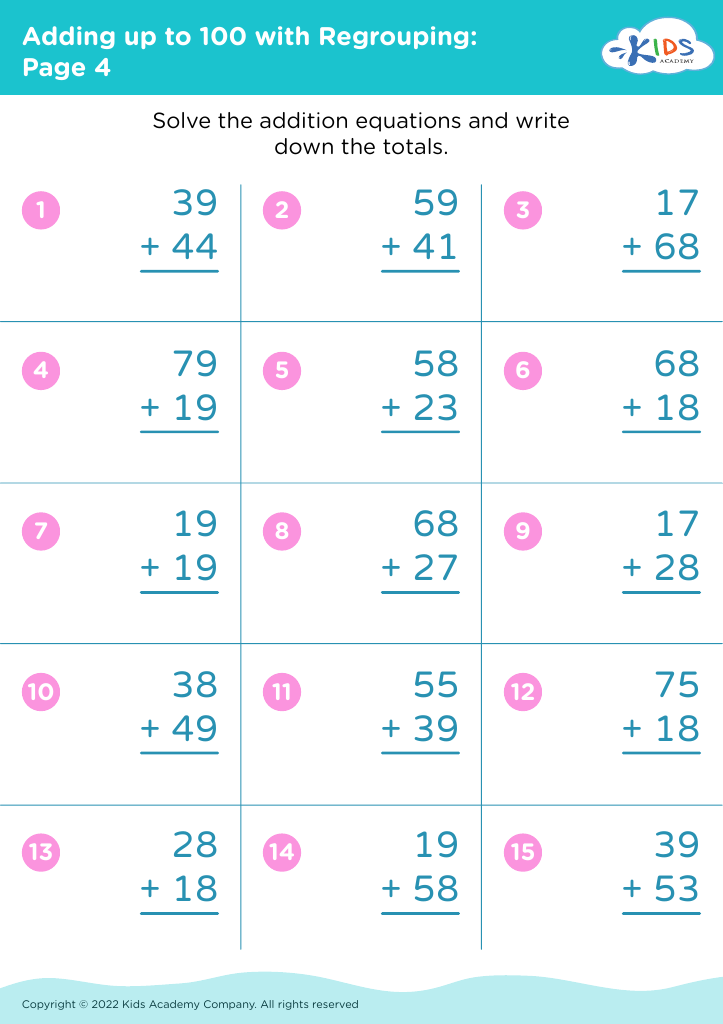
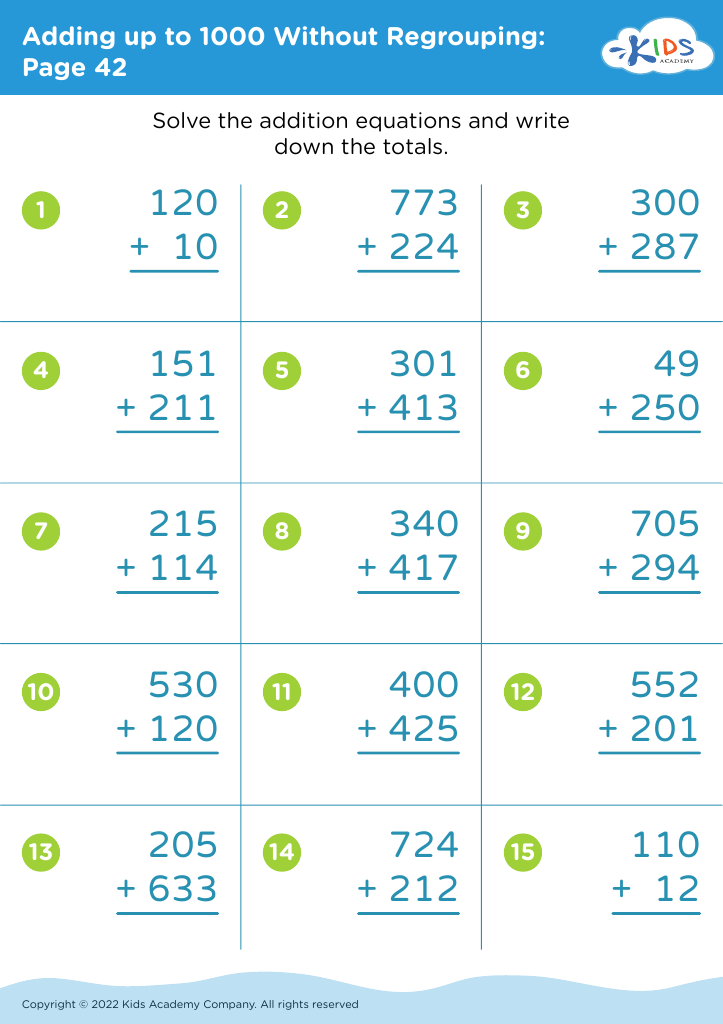
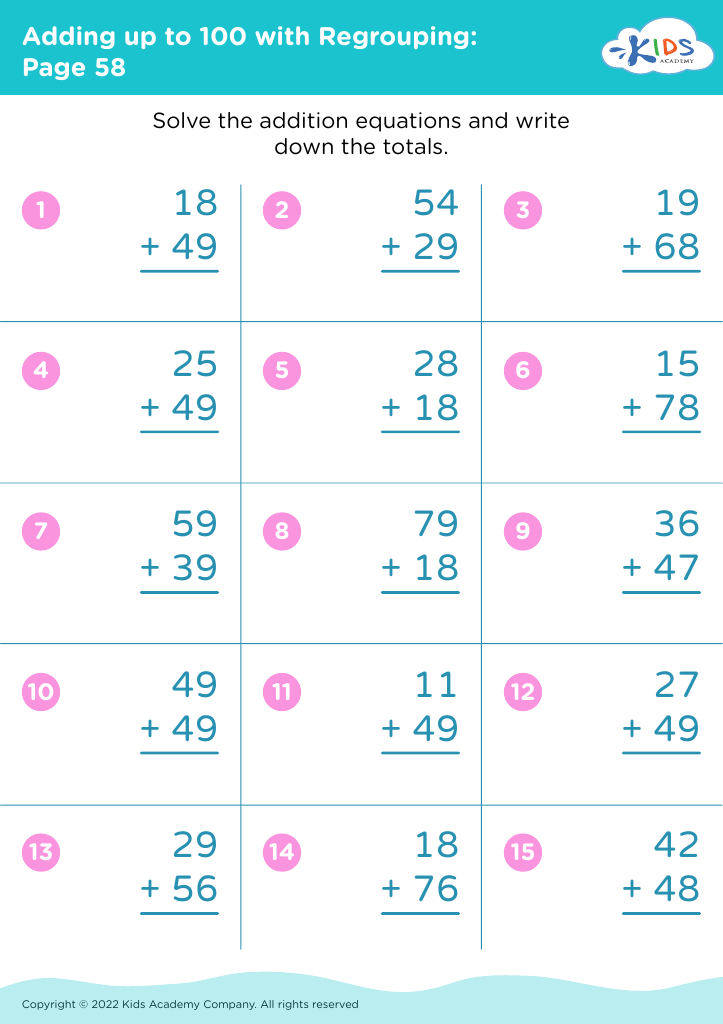
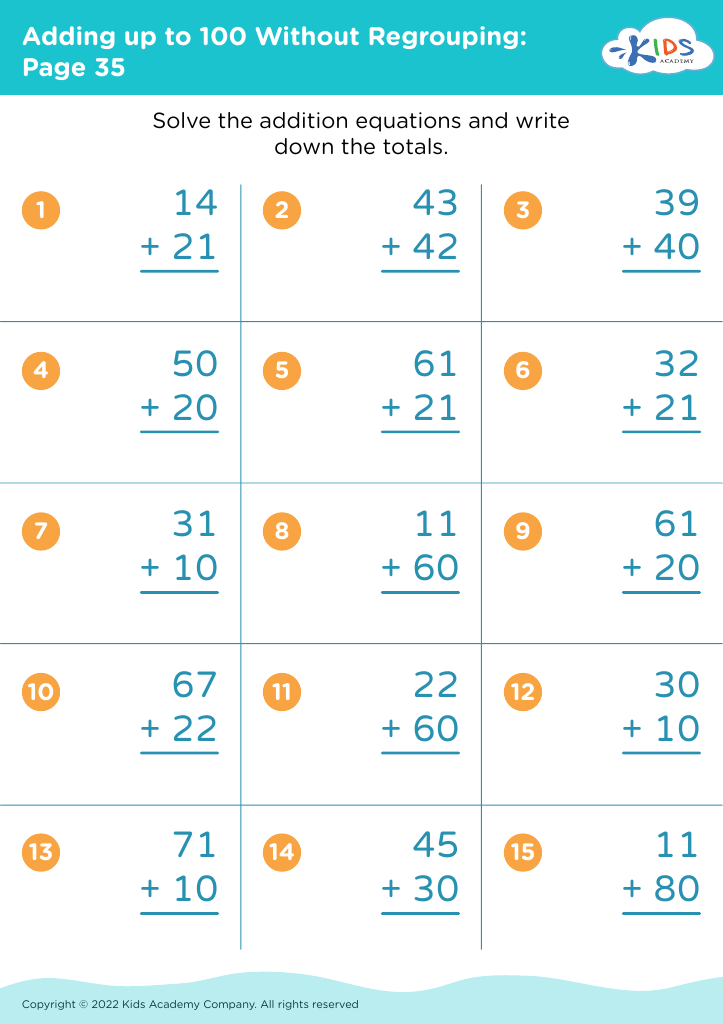
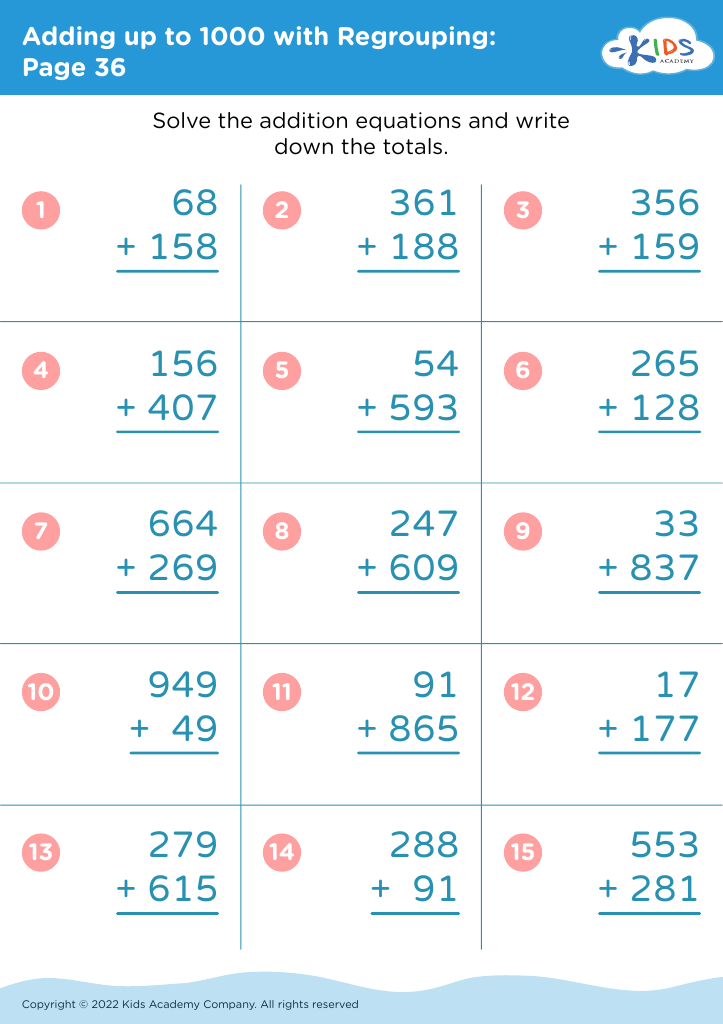
Enhance your child's vocabulary and math skills with our Vocabulary Building Addition Worksheets designed for ages 8-9. These engaging worksheets combine the fundamentals of addition with essential word comprehension, fostering a holistic learning experience. By solving addition problems and matching them with relevant vocabulary, students reinforce their understanding of mathematical concepts while expanding their language skills. Our resources promote critical thinking and creativity, ensuring that learning is both effective and enjoyable. Perfect for classroom or home use, these worksheets are a valuable tool for parents and teachers looking to enrich their students' education. Start building vocabulary and confidence today!







Vocabulary building is crucial for children aged 8-9 as it lays a foundational stone for their academic success and effective communication skills. At this age, kids are transitioning from learning to read to reading to learn, making a rich vocabulary essential for their comprehension and learning across subjects. When they encounter unfamiliar words in texts, a limited vocabulary can hinder their understanding and engagement.
Moreover, a robust vocabulary enhances critical thinking and boosts confidence in expressing thoughts and opinions. It enables children to articulate their ideas clearly, fostering positive interactions with peers and adults. Furthermore, vocabulary isn’t only about knowing words—it’s about understanding their meanings, uses, and nuances, which are pivotal in developing reading and writing skills.
Parents and teachers play a vital role in vocabulary building by incorporating engaging strategies such as reading together, using new words in conversations, and encouraging play-based learning that introduces diverse vocabulary. Investing in vocabulary development now equips children for future academic challenges and encourages a lifelong love of learning. Therefore, recognizing the importance of vocabulary for 8-9-year-olds is essential for helping them thrive in school and beyond.








