Vocabulary development Addition Worksheets for Ages 8-9
5 filtered results
-
From - To
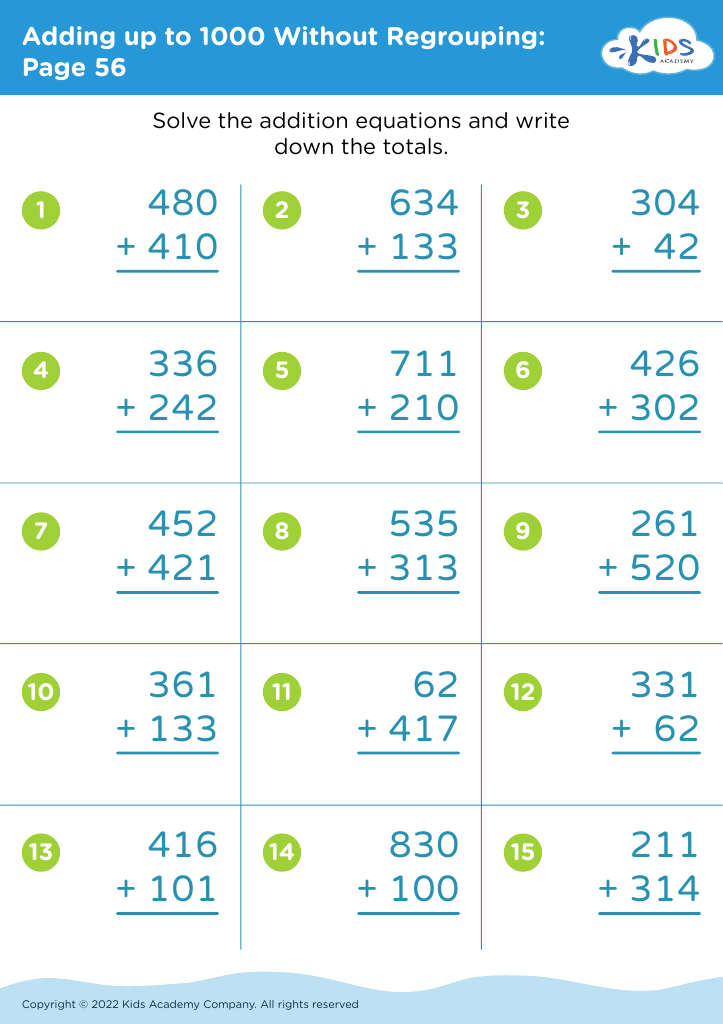
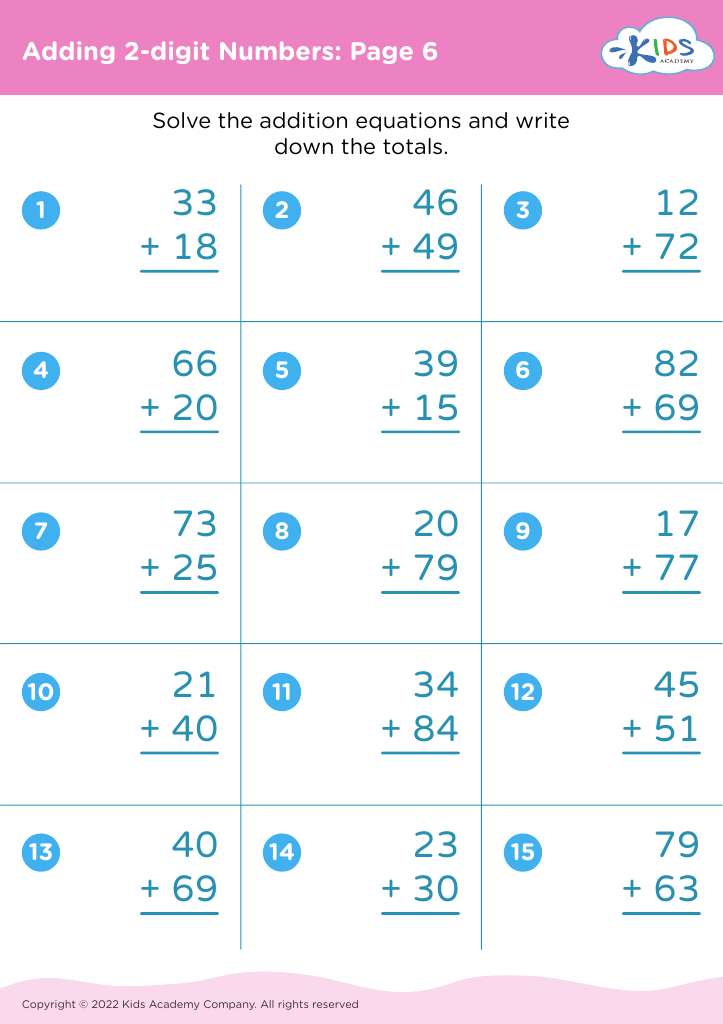
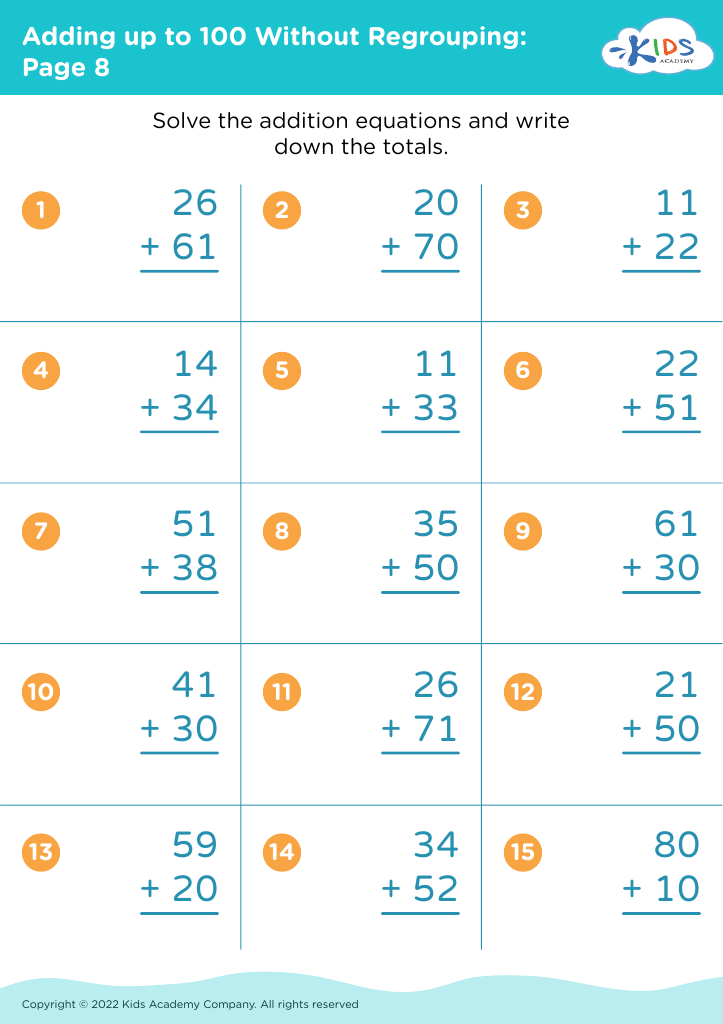
Enhance your child's vocabulary while they strengthen their addition skills with our engaging Vocabulary Development Addition Worksheets for ages 8-9! These thoughtfully designed printables blend mathematical practice with vocabulary enrichment, making learning both fun and effective. Each worksheet provides various activities that challenge students to use key math terms and improve their understanding of concepts related to addition. By combining these skills, your child will build confidence in their academic abilities and enhance communication in math. Perfect for classroom or home use, our worksheets offer a dynamic approach to mastering both math and vocabulary, ensuring a well-rounded educational experience. Start today!










Vocabulary development for children aged 8-9 is crucial for several reasons, and both parents and teachers play a pivotal role in fostering this growth. During this stage, children undergo significant cognitive and linguistic advances, and a robust vocabulary not only enhances their reading comprehension but also enriches their communication skills. A strong vocabulary enhances critical thinking, allowing children to articulate their thoughts and emotions effectively.
Furthermore, vocabulary serves as the foundation for future academic success across subjects. Adequate vocabulary can improve understanding in math and science, where specific terms are essential for grasping complex concepts. Children with a rich vocabulary are also more likely to express their ideas creatively and engage in meaningful discussions.
Parents and teachers can support vocabulary development through various strategies, such as reading diverse texts together, engaging in conversations that introduce new words, and encouraging writing practice. By deliberately focusing on vocabulary acquisition, adults help children build confidence and a love for learning. Ultimately, a strong vocabulary not only benefits children's academic pursuits but also equips them with the tools to navigate social interactions and lifelong opportunities. Such developmental efforts bear long-term benefits that extend well beyond the classroom, influencing personal growth and career prospects.








