Shape Recognition Fractions of Shapes Worksheets for Ages 8-9
6 filtered results
-
From - To
Explore our engaging "Shape Recognition Fractions of Shapes Worksheets" tailored for children aged 8-9! These worksheets seamlessly integrate shape recognition and fraction concepts, supporting young learners in developing vital math skills. Students will identify various shapes while exploring their fractional parts, enhancing both visual comprehension and numerical understanding. Each worksheet is designed to boost critical thinking and problem-solving skills through interactive exercises. Perfect for classroom activities or at-home learning, these resources foster a love for math and geometry in a fun, accessible way. Dive into our collection today and help your child master shape recognition in fractions!
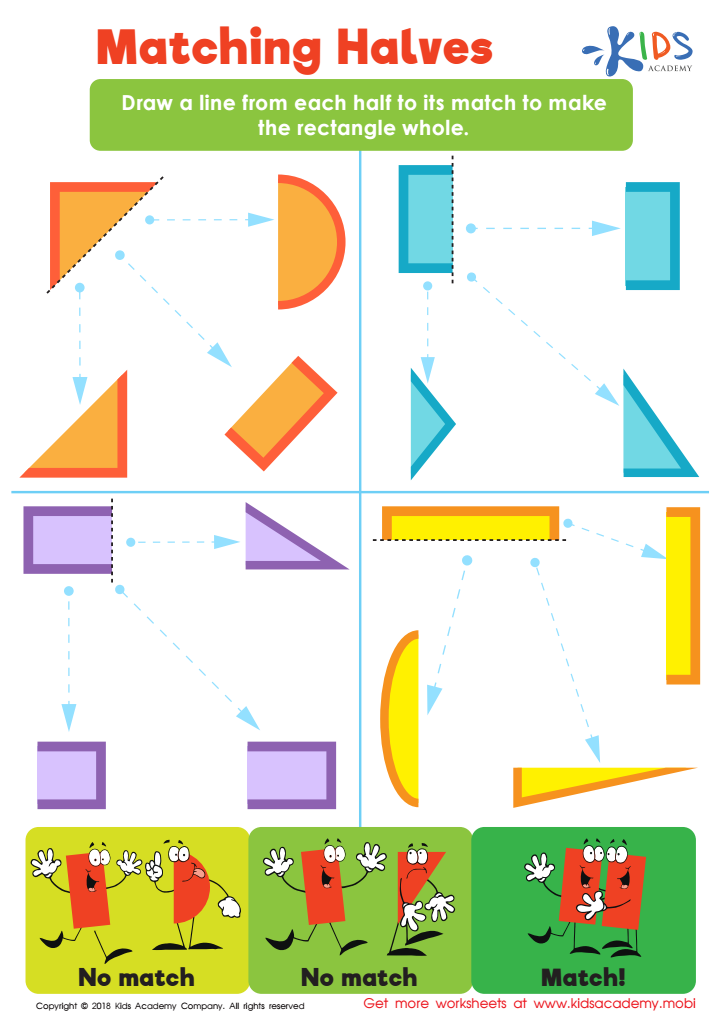
Matching Halves Worksheet
 Assign to My Students
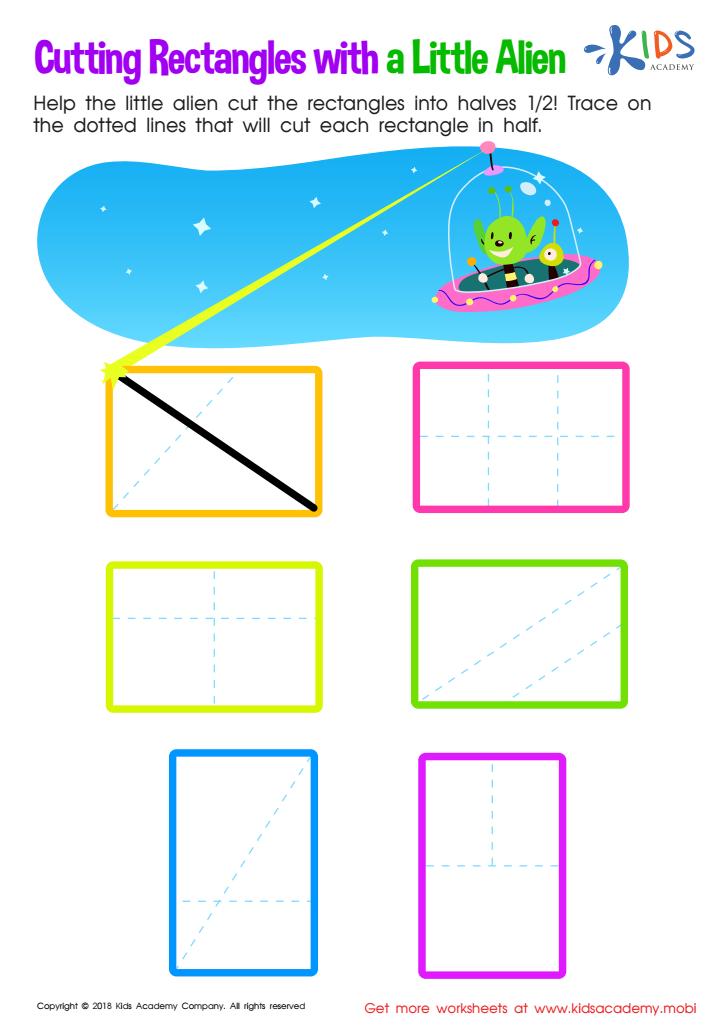
Cutting Rectangles with Alien Worksheet
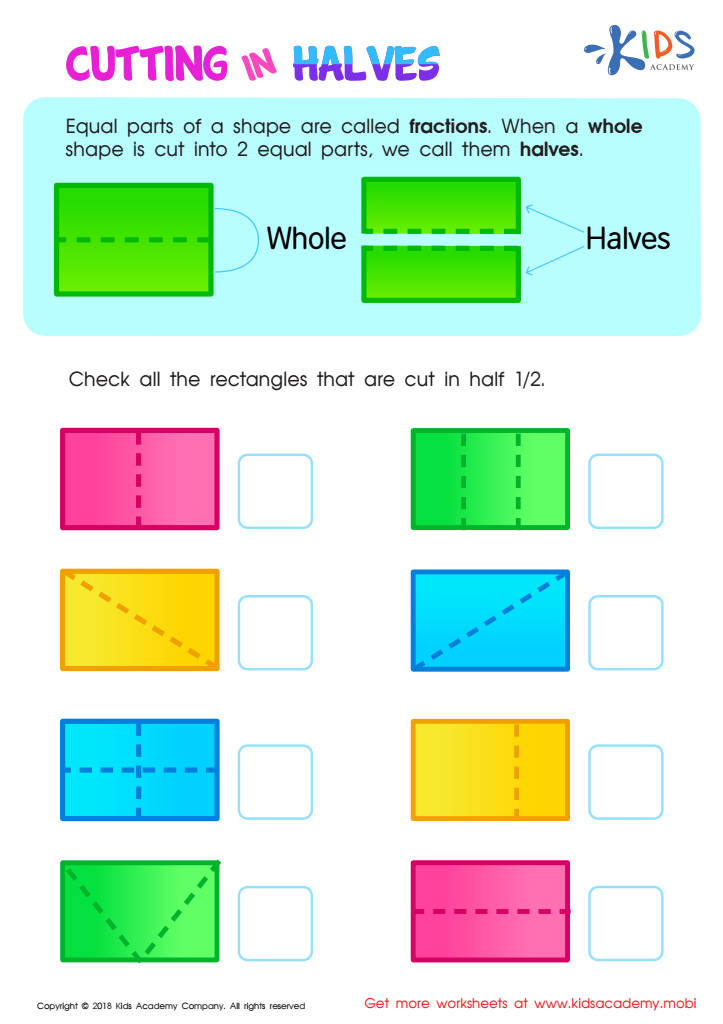
Cutting in Halves Worksheet
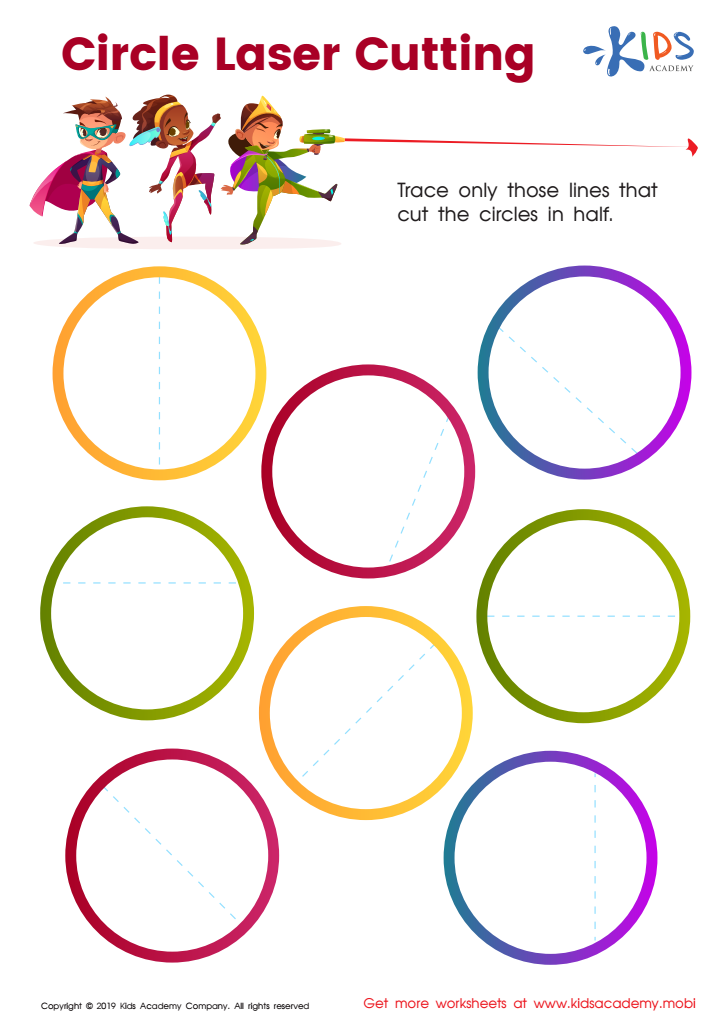
Circle Laser Cutting Worksheet
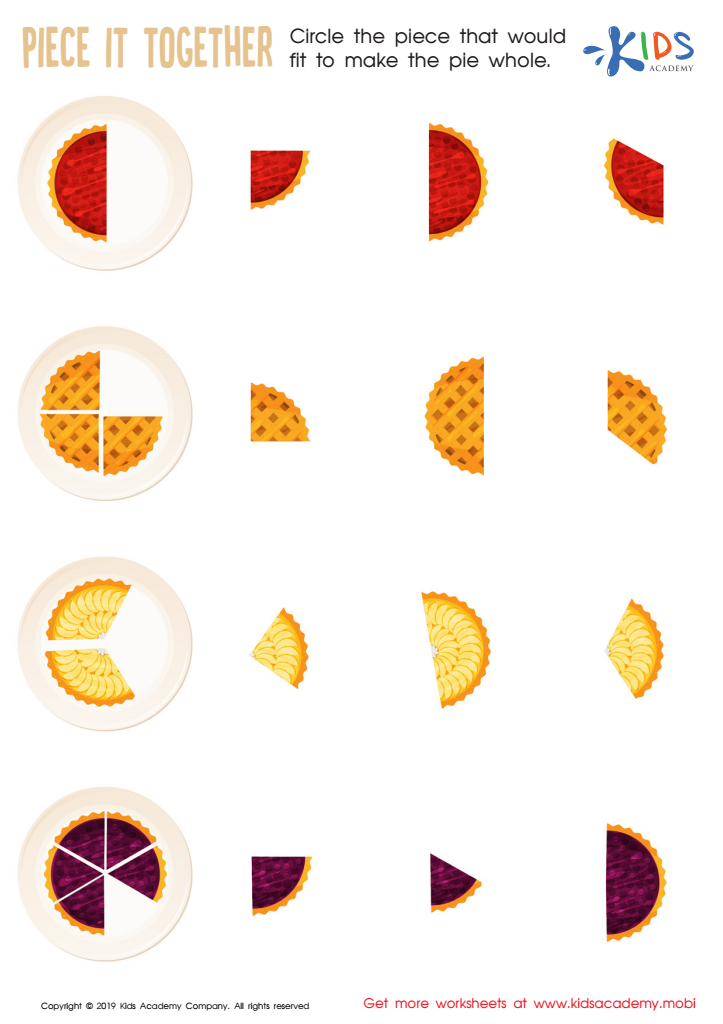
Piece it together Worksheet
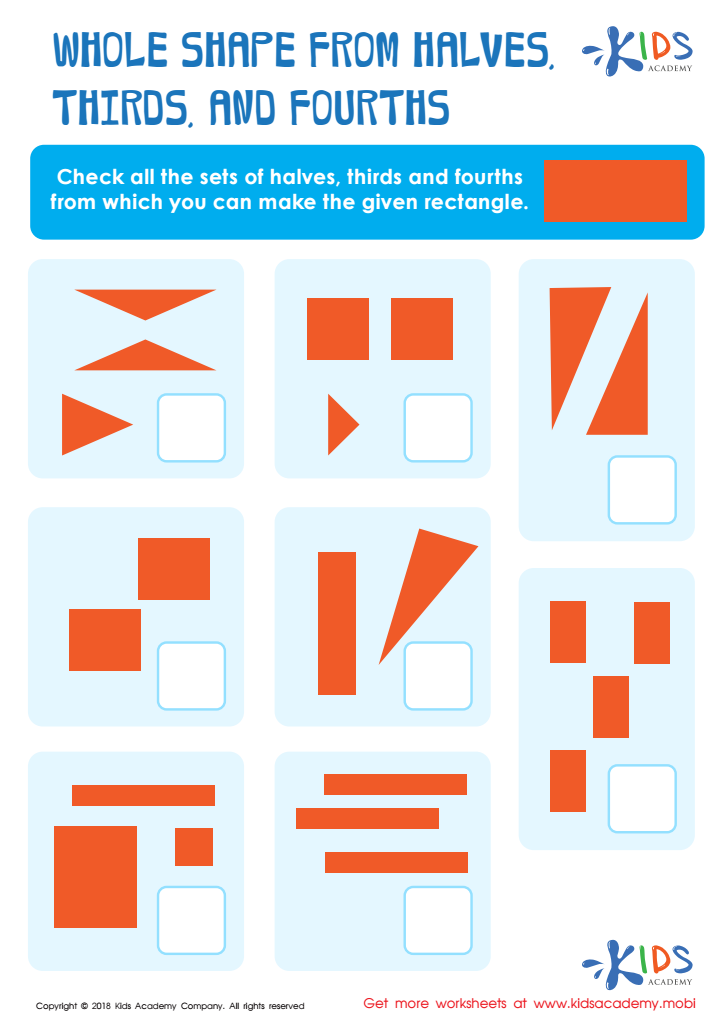
Whole Shape from Halves, Thirds and Fourths Worksheet








Shape recognition and understanding fractions of shapes are vital skills for children aged 8-9, laying the groundwork for future mathematical comprehension. At this age, students begin to encounter complex geometric concepts, and recognizing shapes helps them develop spatial awareness and reasoning. When they understand fractions of shapes, they connect geometry to real-world applications, enhancing their ability to think critically about sizes, proportions, and divisions.
Parents and teachers should care about these concepts because they empower children to visualize and manipulate shapes and understand parts of whole objects, which are foundational skills in mathematics, art, and science. Mastering these concepts fosters confidence in mathematics and promotes problem-solving abilities.
Additionally, proficiency in shape recognition and fractions enhances children's ability to work with percentages, ratios, and algebraic thinking in later years. Engaging children in activities that involve creating, dividing, and transforming shapes also encourages teamwork and communication skills through collaborative exercises.
By prioritizing shape recognition and understanding fractions of shapes, parents and teachers can nurture a well-rounded, mathematically literate child equipped with the skills necessary for academic success and everyday decision-making. Developing these foundational skills early builds a strong foundation for lifelong learning and an appreciation for mathematics.