Recognizing shapes Geometry Worksheets for Ages 8-9
5 filtered results
-
From - To
Explore our engaging "Recognizing Shapes Geometry Worksheets" designed specifically for kids aged 8-9! These worksheets offer a fun and interactive way to help young learners identify and classify various shapes, enhancing their geometric understanding. With captivating visuals and a range of activities, children will sharpen their skills in recognizing circles, squares, triangles, and more. Ideal for classroom use or at-home learning, these worksheets encourage critical thinking and creativity while reinforcing essential math concepts. Foster a love for geometry in your child today and watch their confidence grow as they master shape recognition through play and exploration!
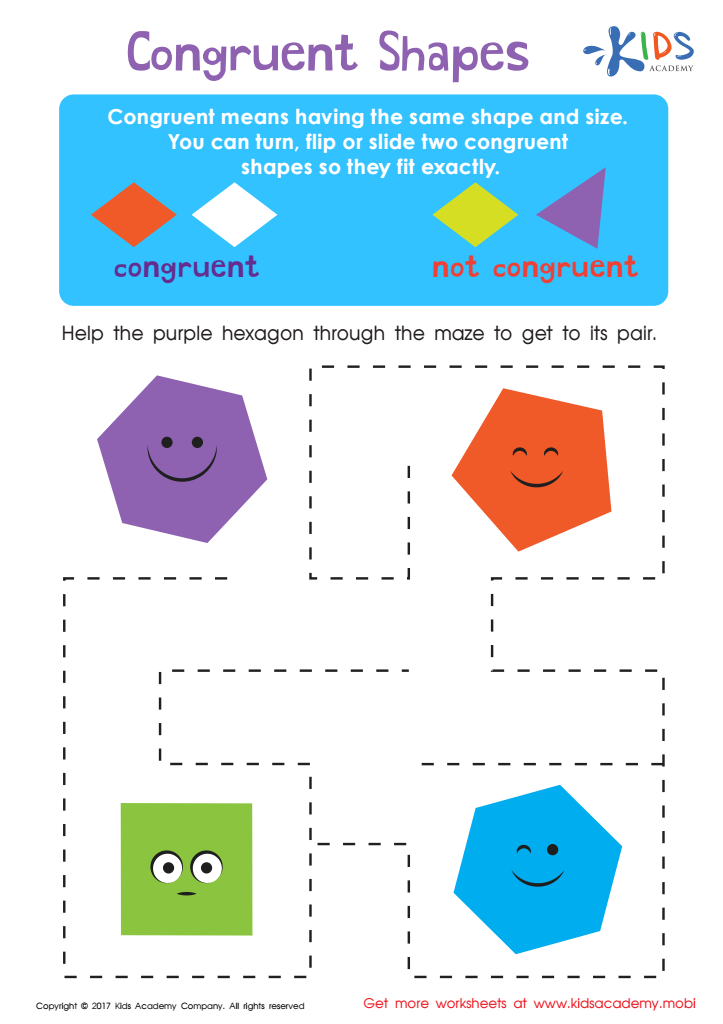
Congruent Shapes Worksheet
 Assign to My Students











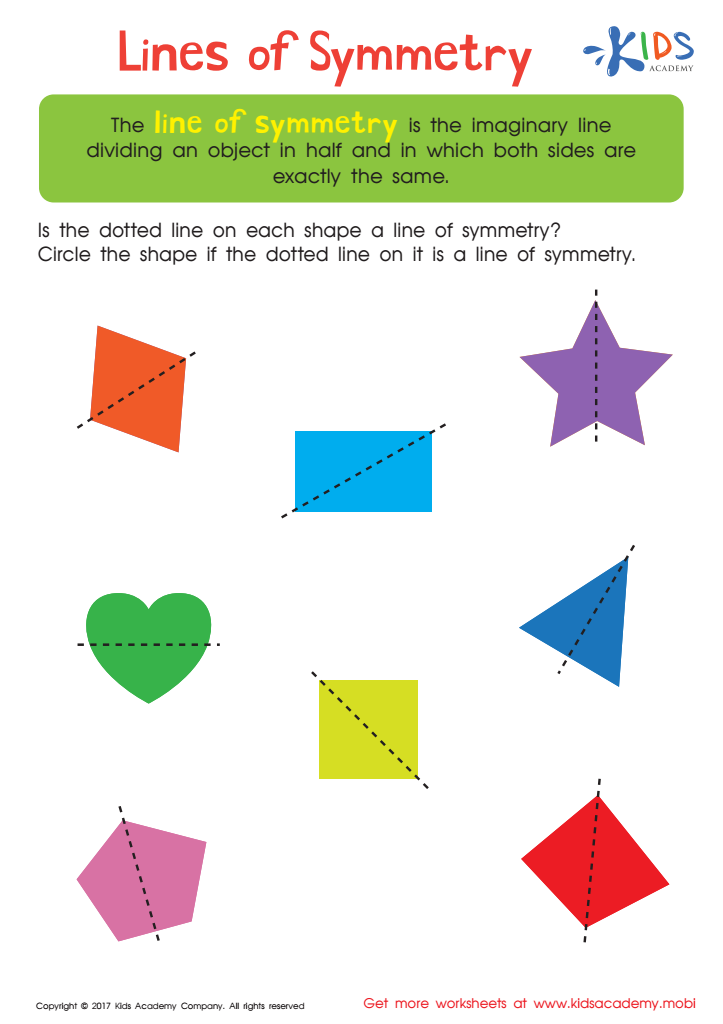
Lines of Symmetry Printable
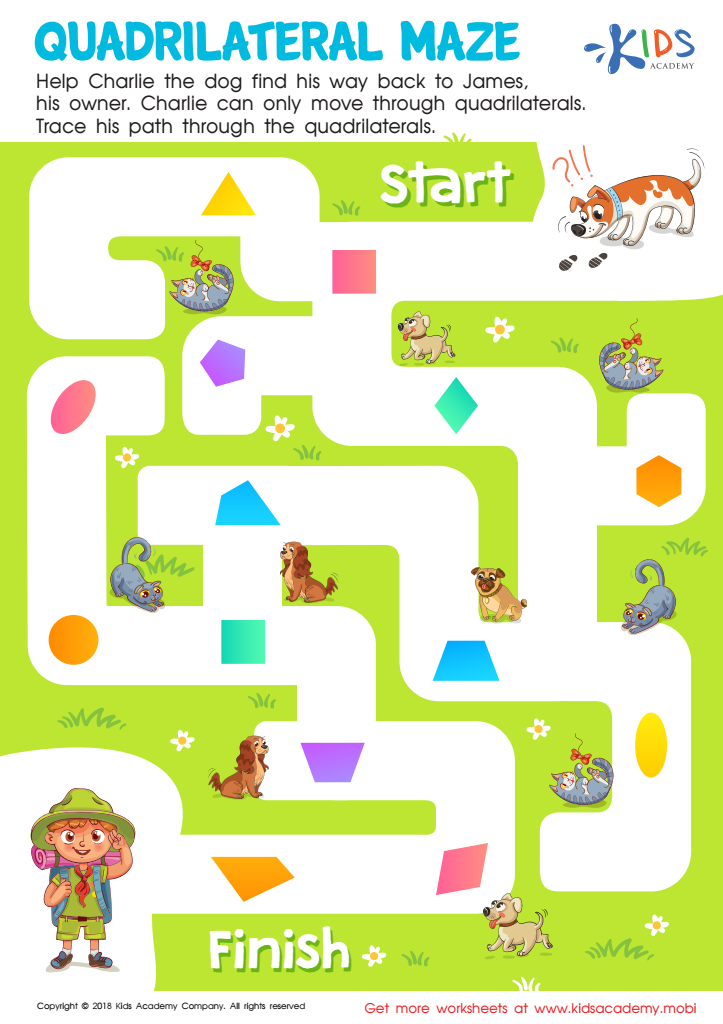
Quadrilateral Maze Worksheet
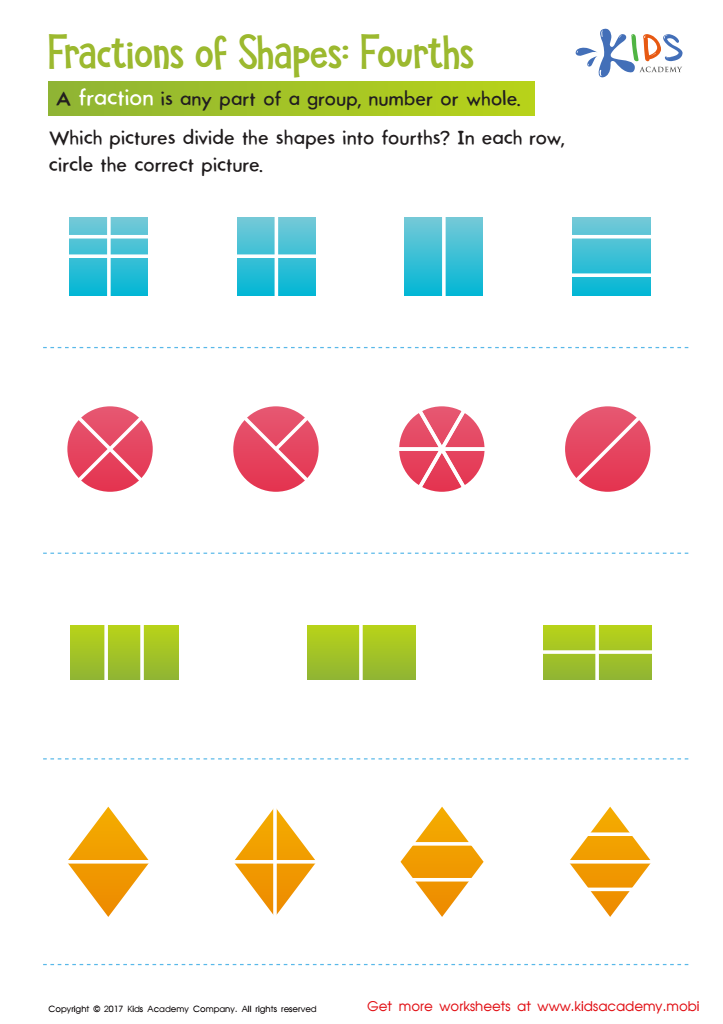
Fractions of Shapes Worksheet
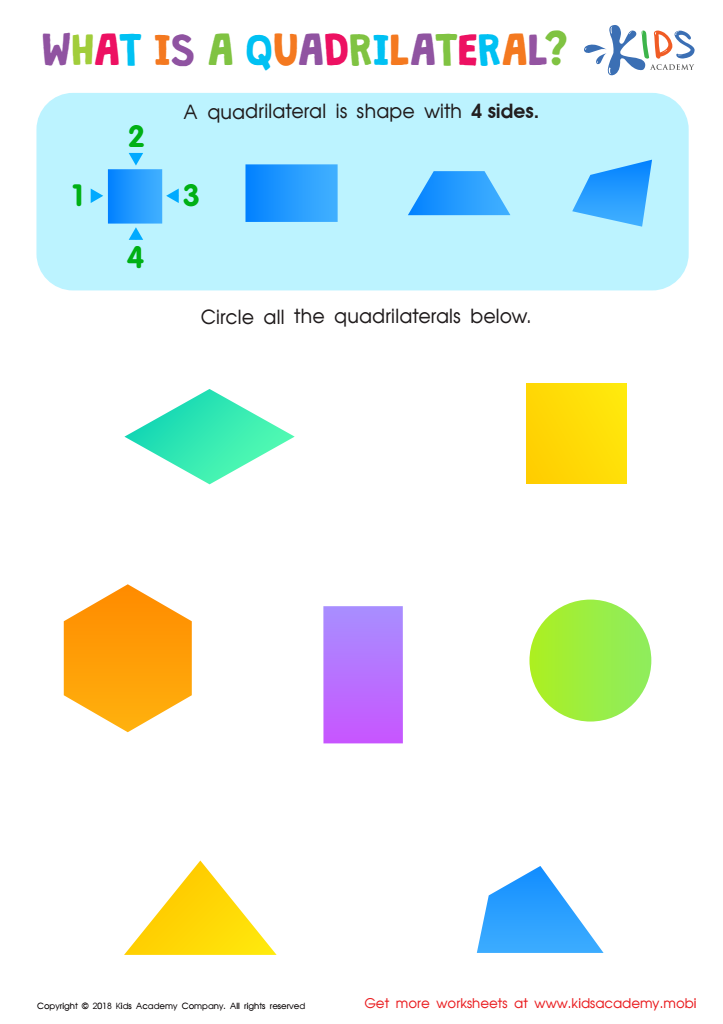
What Is a Quadrilateral? Worksheet








Recognizing shapes is a foundational aspect of geometry that is crucial for children aged 8-9. At this stage of development, children are busy building critical thinking and problem-solving skills, which are essential for their academic journey. Understanding shapes helps enhance their spatial awareness and cognitive abilities, enabling them to visualize and manipulate objects in their environment.
Parents and teachers should care about this concept because geometric skills are interconnected with everyday life. Kids learn to identify shapes in their surroundings—like buildings, furniture, and nature—which fosters observational skills and independence. Geometry forms the basis for more advanced mathematical concepts, such as measurement and algebra, thus laying the groundwork for success in future math courses.
Moreover, recognizing shapes develops creativity and artistic skills; many art forms depend on understanding shape and form. Engaging with shapes through games, puzzles, and real-life applications promotes active learning, making math less intimidating and more enjoyable.
Ultimately, being proficient in recognizing shapes contributes to a holistic education, aiding in academic achievement and encouraging a lifelong interest in learning. Both parents and teachers play a pivotal role in nurturing these skills, helping children gain confidence in their mathematical abilities.








