Visual representation comprehension Geometry Worksheets for Ages 8-9
3 filtered results
-
From - To
Enhance your child's geometry skills with our "Visual Representation Comprehension Geometry Worksheets" designed specifically for ages 8-9. These engaging, printable worksheets focus on helping young learners understand geometric concepts through visual aids and representations. With activities that encourage critical thinking, students will practice identifying shapes, analyzing patterns, and interpreting geometric figures. Our worksheets are crafted to stimulate curiosity and strengthen comprehension, making math enjoyable and easy to grasp. Perfect for home or classroom use, these resources will build a solid foundation in geometry while boosting confidence in mathematical abilities. Explore our collection today and foster a love for learning!
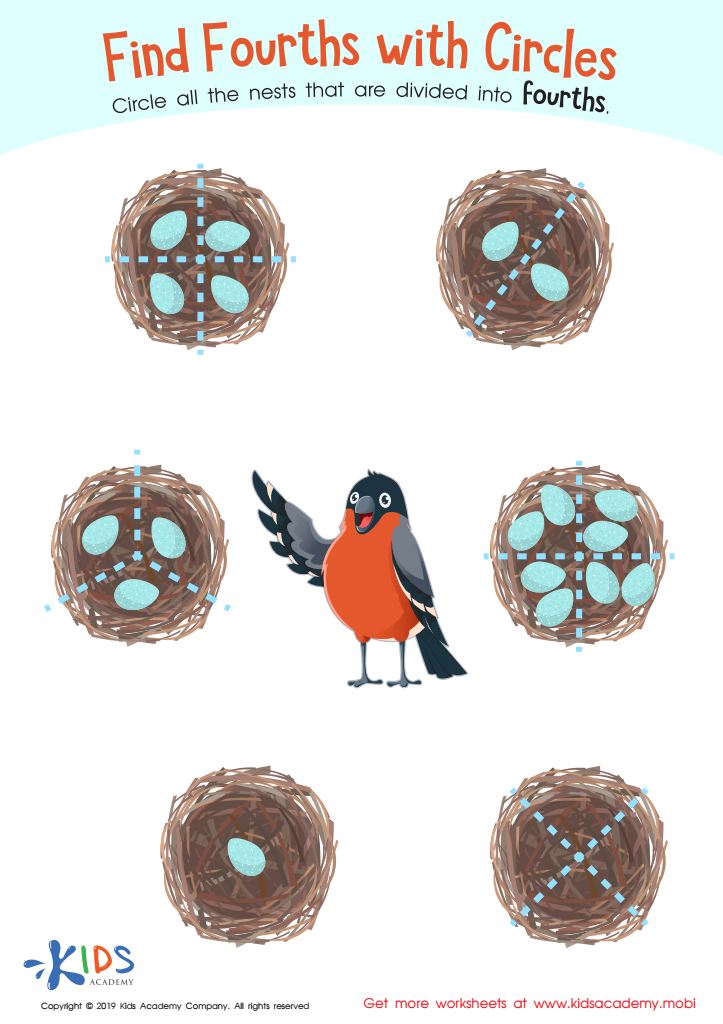
Find Fourths Circles Worksheet
 Assign to My Students











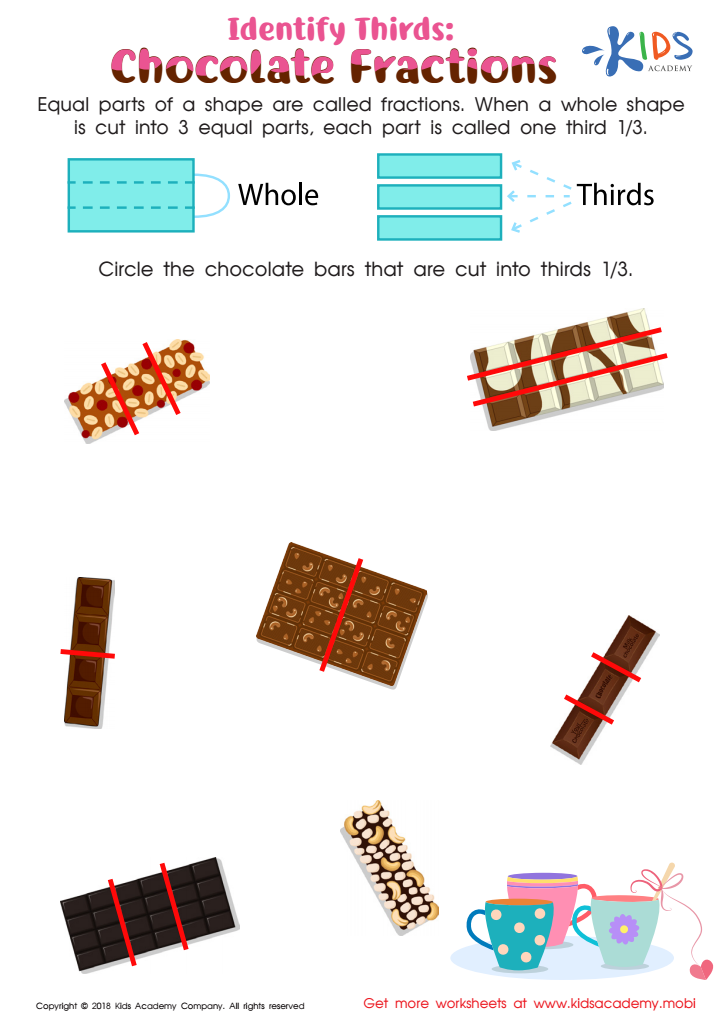
Identify Thirds: Chocolate Fractions Worksheet
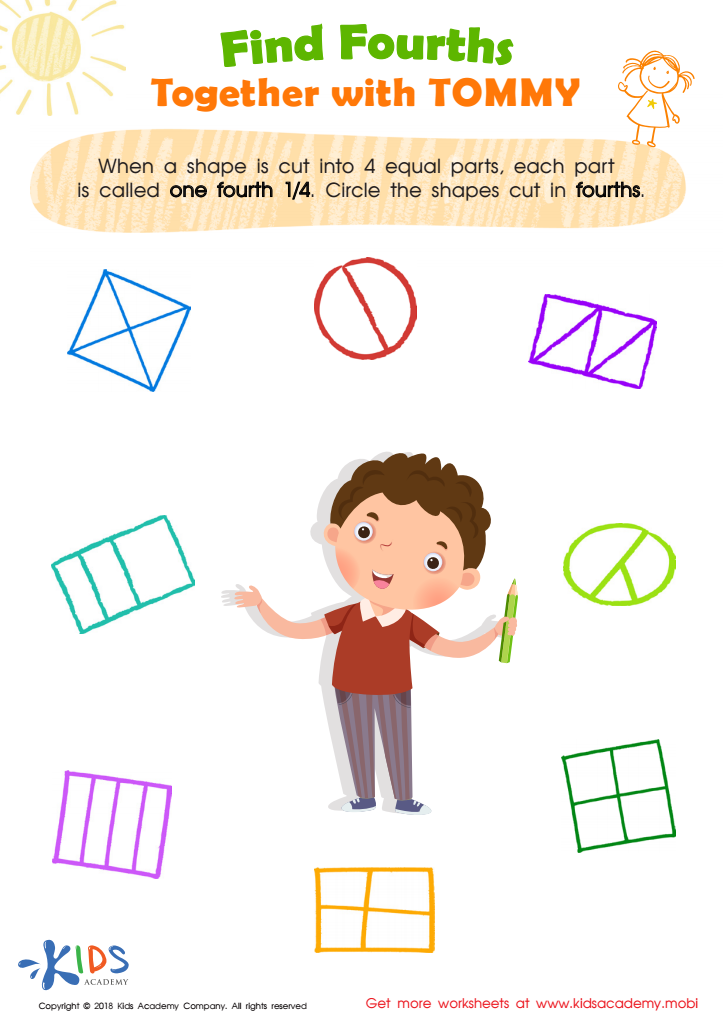
Find Fourths Together with Tommy Worksheet








Visual representation comprehension in geometry is crucial for children aged 8-9 as it underpins their understanding of spatial concepts and shapes, paving the way for more advanced mathematical skills. At this age, children's cognitive abilities are developing rapidly, and fostering spatial reasoning through visual representations enhances their problem-solving skills and creativity.
When parents and teachers emphasize visual comprehension in geometry, they help children better grasp concepts such as symmetry, area, and volume through shapes and diagrams. This understanding allows kids to visualize mathematical problems, making them more engaged and confident in their abilities. Moreover, it reinforces critical thinking skills, as children learn to analyze and interpret visual information.
Effective visual representation comprehension also links math to real-world applications, such as architecture, art, and even coding, fostering a richer educational experience. By nurturing this skill, educators and parents lay a foundation for success in later grades, where geometry and advanced mathematics become increasingly important.
Ultimately, promoting visual comprehension in geometry empowers children to navigate their world more effectively, reinforcing the importance of math in everyday life and inspiring a lifelong appreciation for learning. In doing so, adults play a vital role in shaping confident, capable learners.








