Basic counting skills Math Worksheets for Ages 8-9
6 filtered results
-
From - To
Discover engaging Basic Counting Skills Math Worksheets designed for children aged 8-9 at Kids Academy! Our comprehensive resources help young learners enhance their counting abilities through fun and interactive activities. These worksheets focus on recognizing and writing numbers, counting objects, and solving simple multiplication and addition problems. By practicing regularly, children will build a strong mathematical foundation using captivating visuals and relatable examples that spark their interest. Ideal for classroom use or at-home learning, our worksheets provide an effective way to boost confidence and mastery in essential math skills. Embrace the joy of learning with Kids Academy's tailored worksheets today!
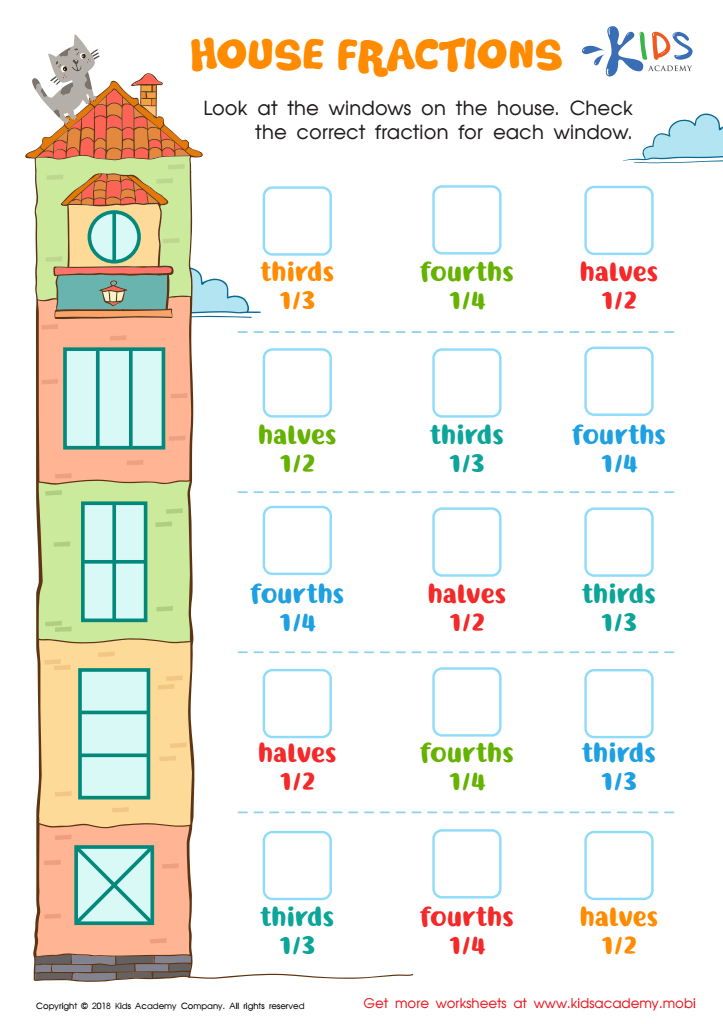
House Fractions Worksheet
 Assign to My Students
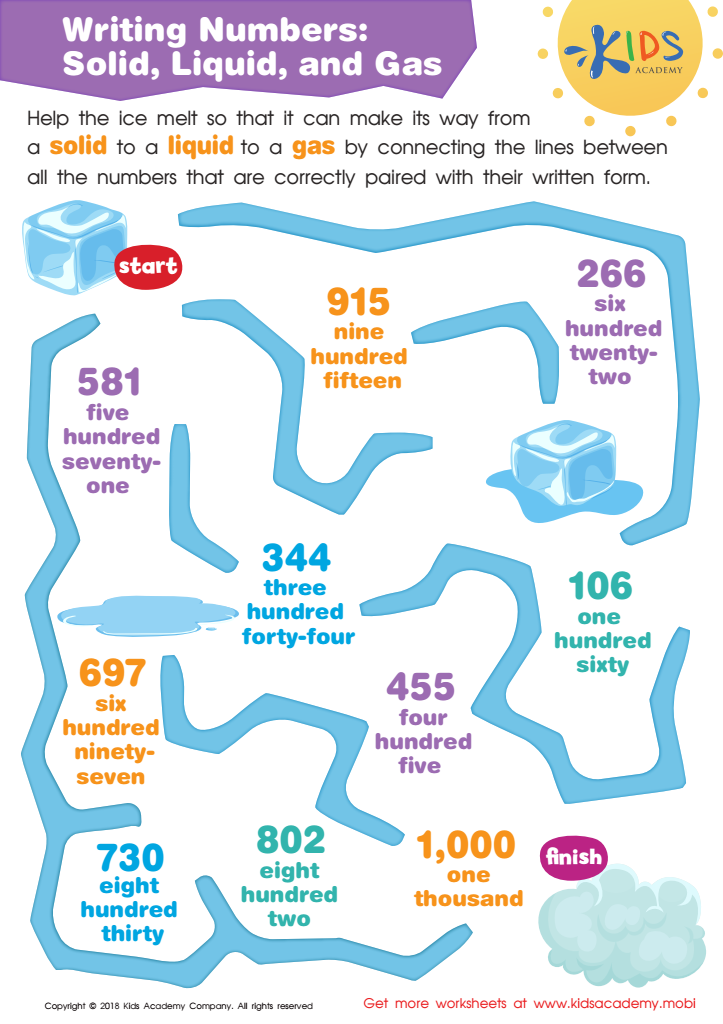
Solid, Liquid, and Gas Writing Numbers Worksheet
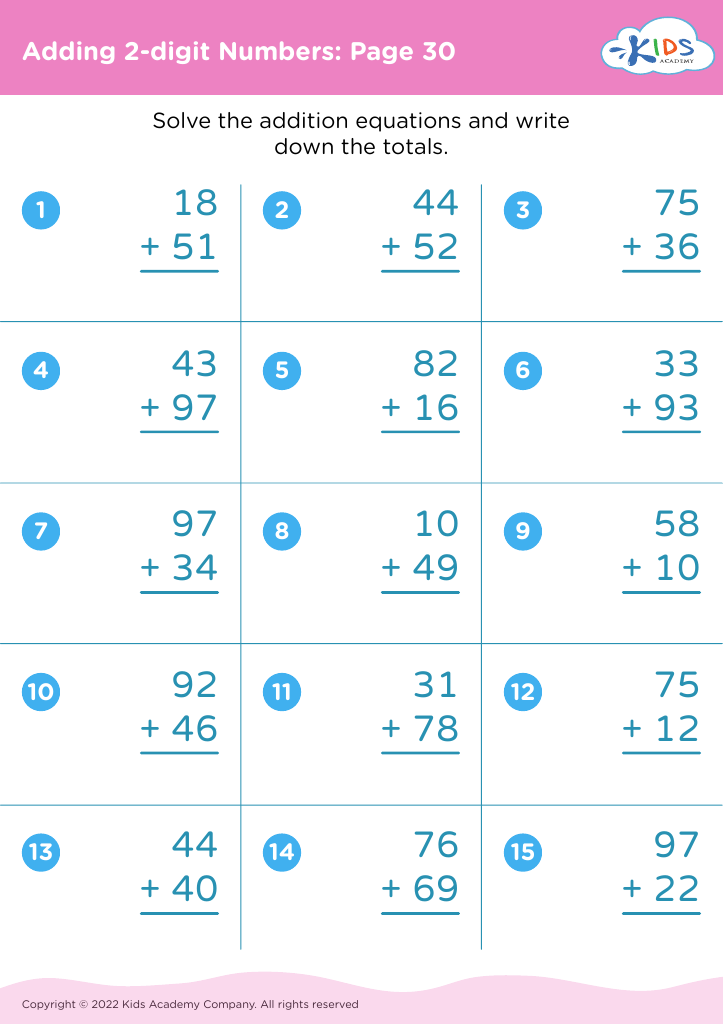
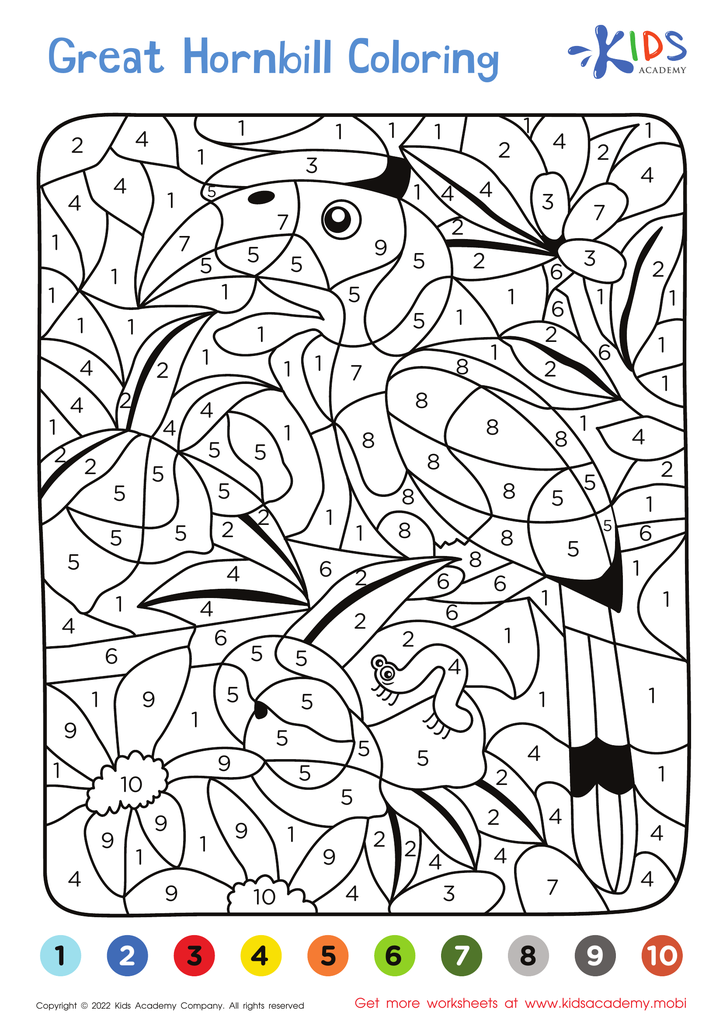
Great Hornbill – Coloring by Numbers







Basic counting skills are foundational for children aged 8-9, making them crucial for parents and teachers. At this developmental stage, children transition from simple counting to more complex mathematical concepts. Mastery of counting lays the groundwork for arithmetic operations such as addition, subtraction, and even later concepts like multiplication and division.
Counting is not just about numbers; it enhances cognitive skills, including logical thinking and problem-solving. Children learn to recognize patterns and sequences, which are essential skills in mathematics and other subjects. Moreover, strong counting skills contribute to a child's confidence in math, reducing anxiety and promoting a positive attitude towards learning.
Additionally, counting proficiency is tied to real-world applications. Whether it’s budgeting allowance, measuring ingredients for cooking, or estimating distances in games, these skills come into play daily, reinforcing their importance across different contexts.
For teachers and parents, fostering these skills is key to ensuring a child’s academic success. Engaging activities, games, and technology can help make counting fun, motivating children to practice more. Ultimately, attention to basic counting skills supports overall development, setting the stage for future learning and fostering a lifelong appreciation for math.








