Filters

80 filtered results

Clear all filters
Favorites
With answer key
Interactive

80 filtered results

Difficulty Level

Grade


Check out this FREE Trial Lesson on Math for age 8-9!

Compare Numbers with 2 and 3 digits

Favorites
With answer key
Interactive
  • 8-9
  • Basic Math Skills
  • Math
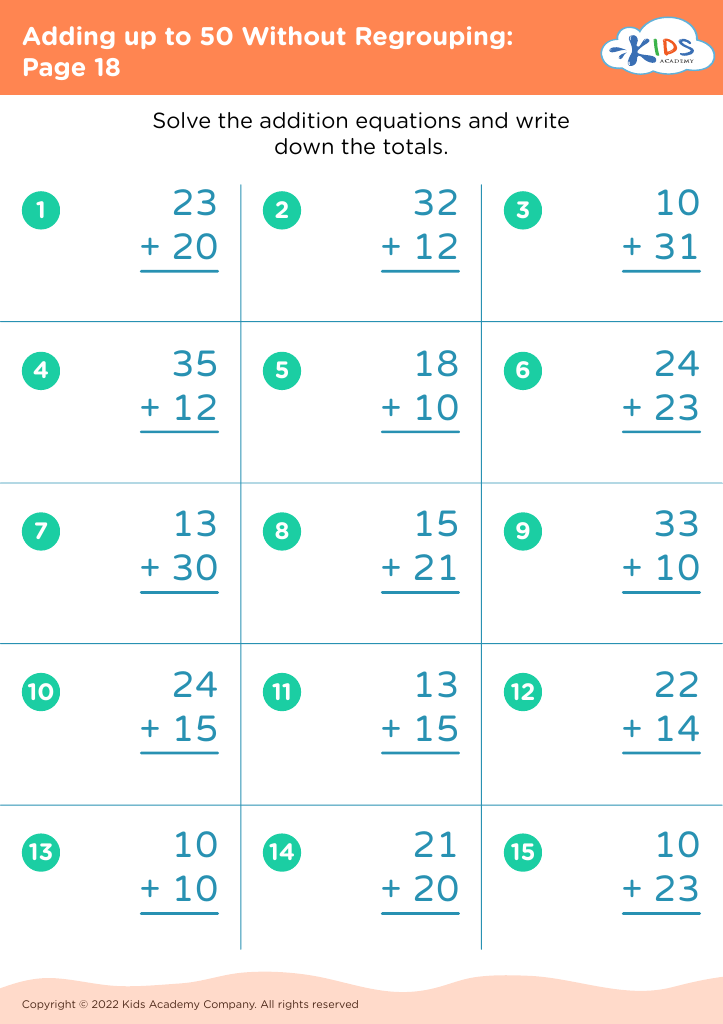
Adding up to 50 Without Regrouping: Page 18
Worksheet
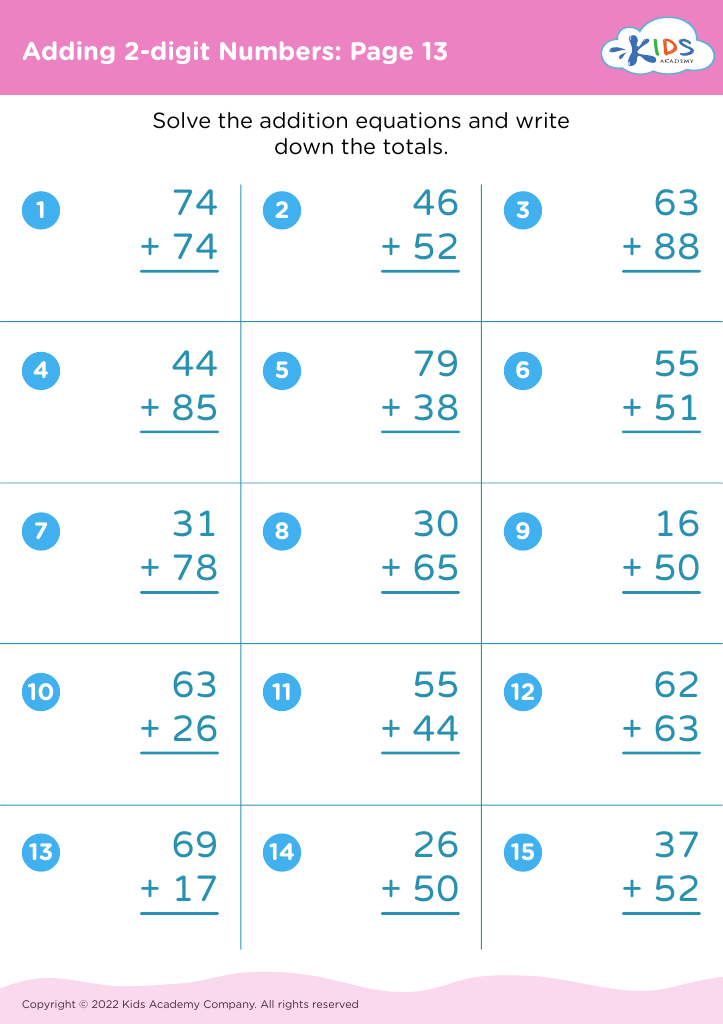
Adding 2-digit Numbers: Page 13

Adding 2-digit Numbers: Page 13

Adding 2-digit Numbers: Page 13
Worksheet
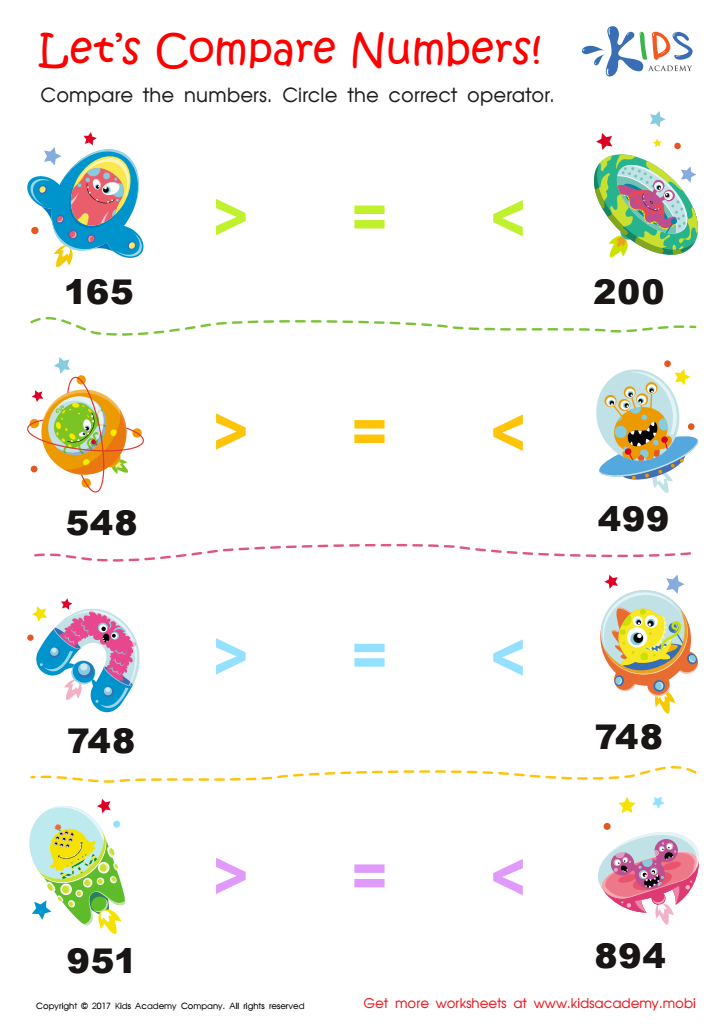
Comparing numbers worksheet for 2nd grade

Comparing Numbers Worksheet for 2nd Grade

Alien friends are back to help your child learn to compare numbers using >, < and = symbols. This 2nd grade worksheet will challenge them with larger numbers!
Comparing Numbers Worksheet for 2nd Grade
Worksheet
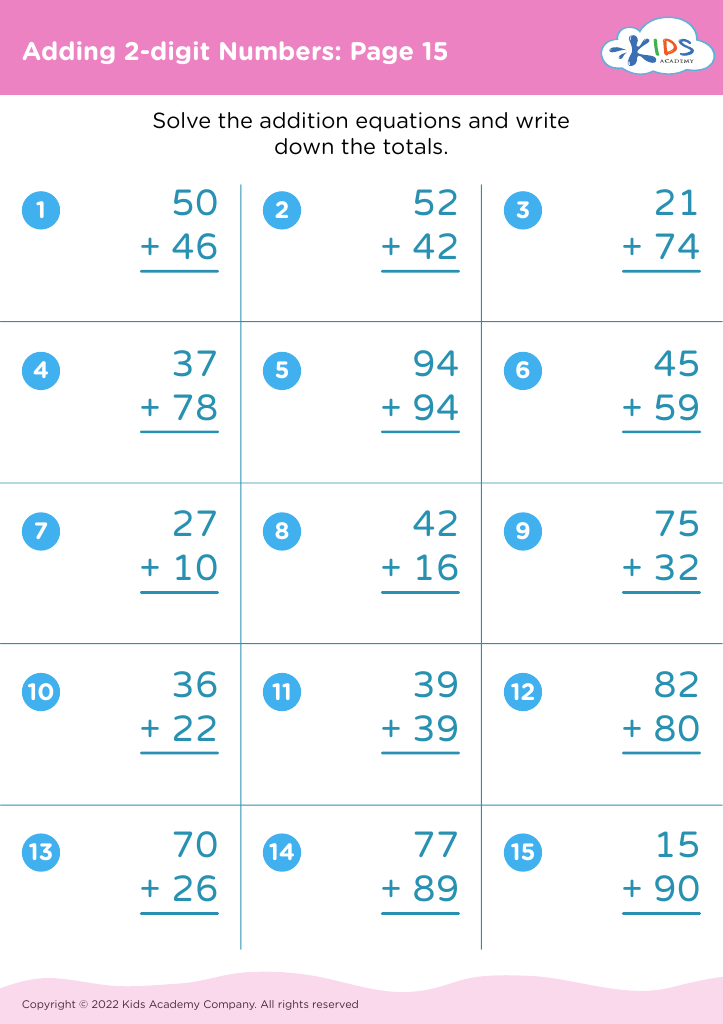
Adding 2-digit Numbers: Page 15

Adding 2-digit Numbers: Page 15

Adding 2-digit Numbers: Page 15
Worksheet
Sharing Fruit Circles Worksheet

Sharing Fruit Circles Worksheet

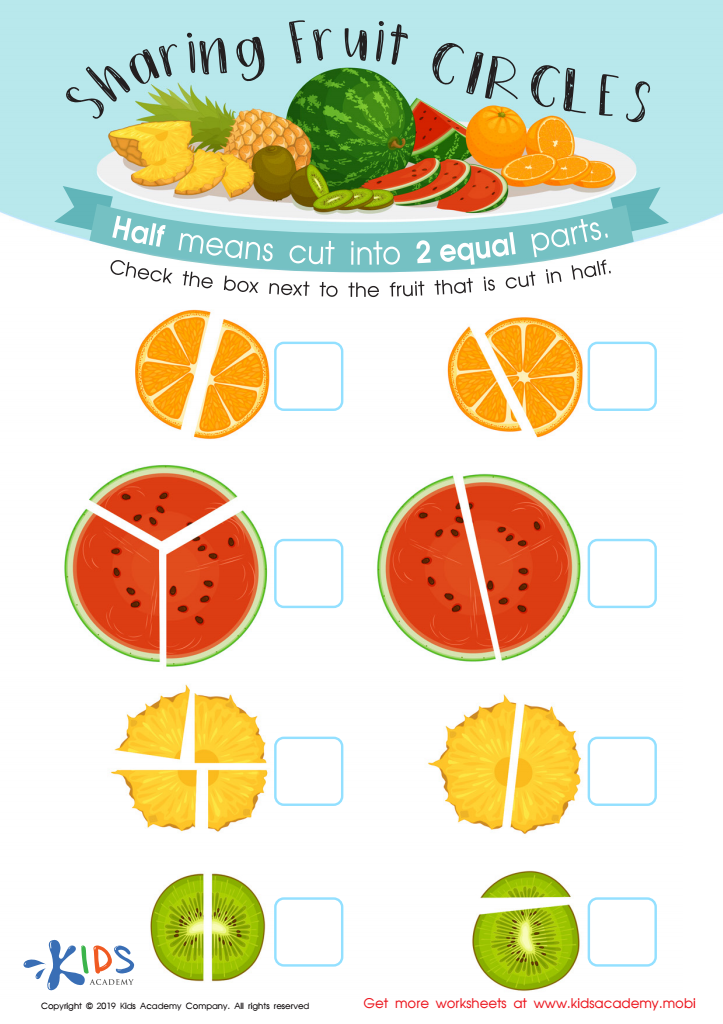
Fruits are tasty and bright! Can your kids name some of their favorites? With this worksheet, you can use fruit to teach your kids geometry. Talk about how shapes can be cut into halves. Ask them to tick the box for the fruit halves in the printout.
Sharing Fruit Circles Worksheet
Worksheet
Adding up to 1000: Page 61

Adding up to 1000: Page 61

Adding up to 1000: Page 61
Worksheet
10 Tens Make 1 Hundred Worksheet
10 Tens Make 1 Hundred Worksheet
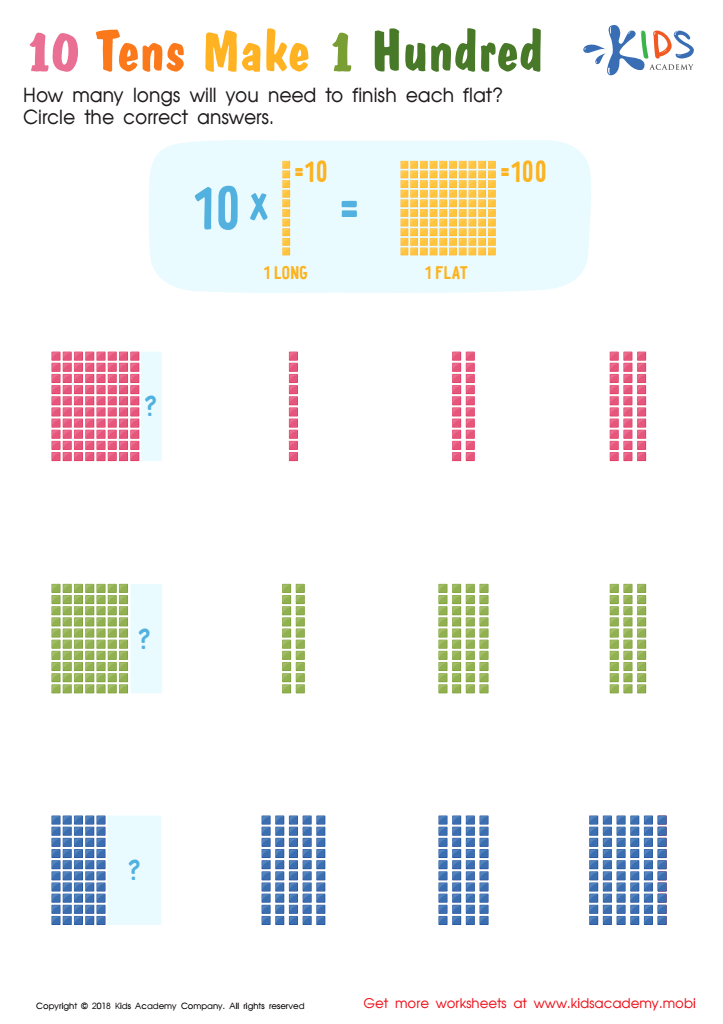
Help your child understand multiplication with this worksheet. Ask them how many 'longs' will be needed to complete each flat, then have them circle the correct answer from the options. With this exercise, your child will learn that 10 'tens' make 1 'hundred'!
10 Tens Make 1 Hundred Worksheet
Worksheet
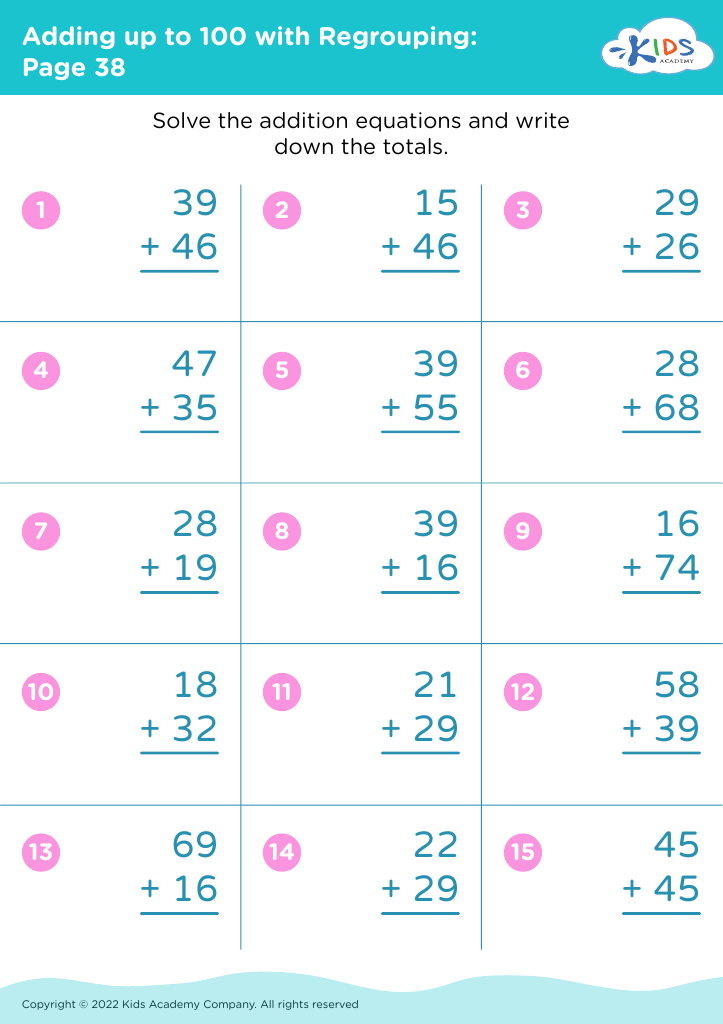
Adding up to 100 with Regrouping: Page 38
Worksheet
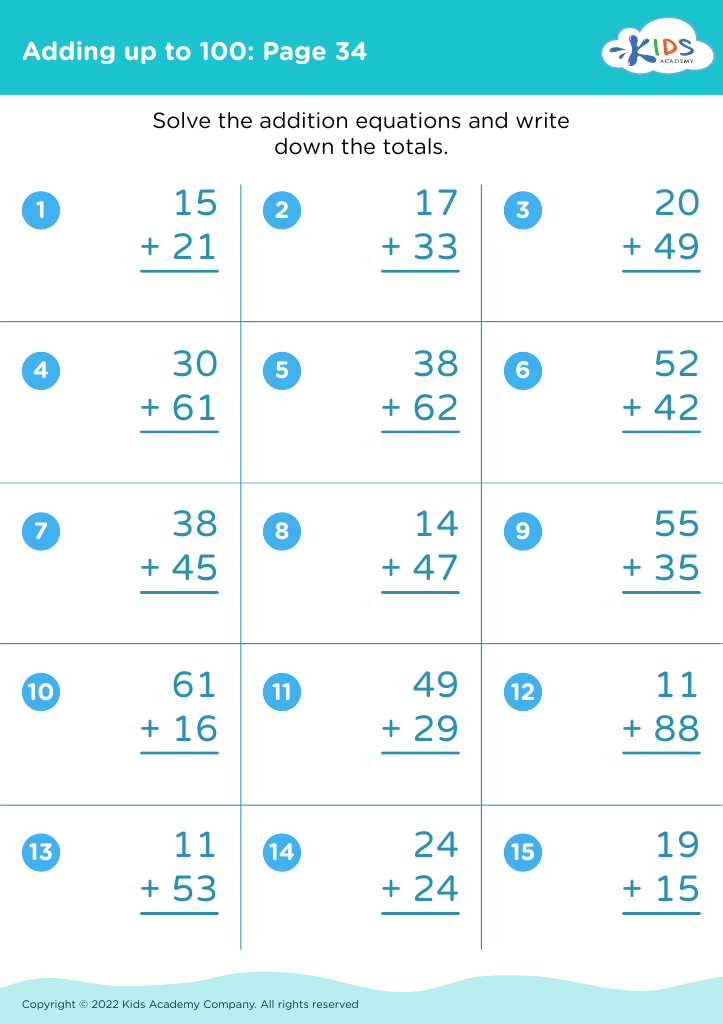
Adding up to 100: Page 34

Adding up to 100: Page 34

Adding up to 100: Page 34
Worksheet
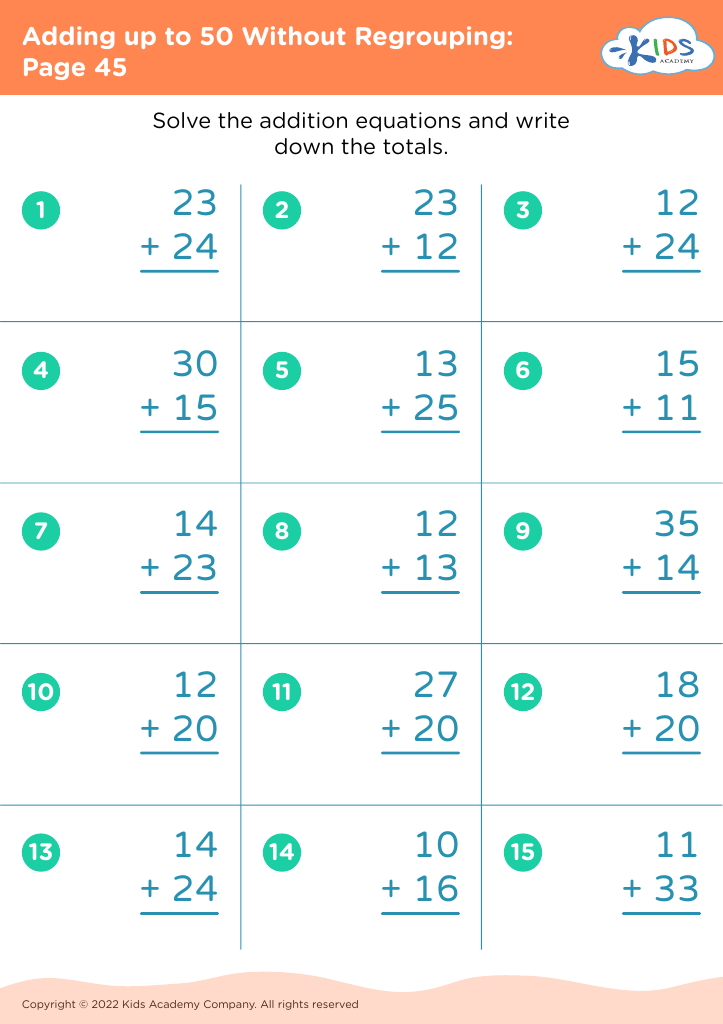
Adding up to 50 Without Regrouping: Page 45
Worksheet
Adding 2-digit Numbers: Page 63

Adding 2-digit Numbers: Page 63

Adding 2-digit Numbers: Page 63
Worksheet
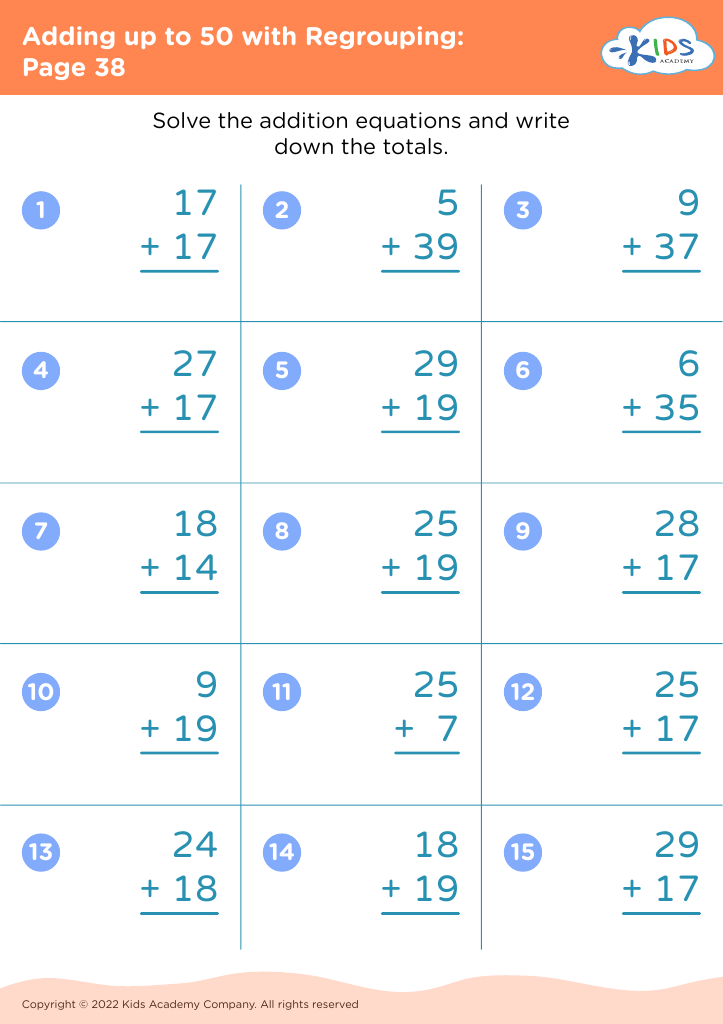
Adding up to 50 with Regrouping: Page 38
Worksheet
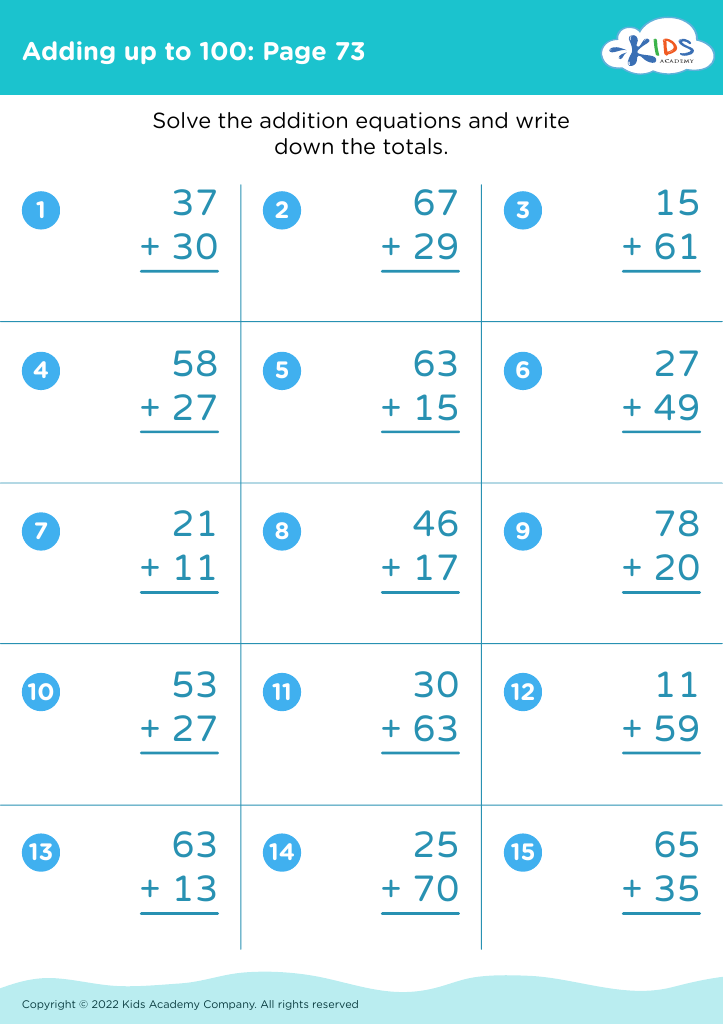
Adding up to 100: Page 73

Adding up to 100: Page 73

Adding up to 100: Page 73
Worksheet
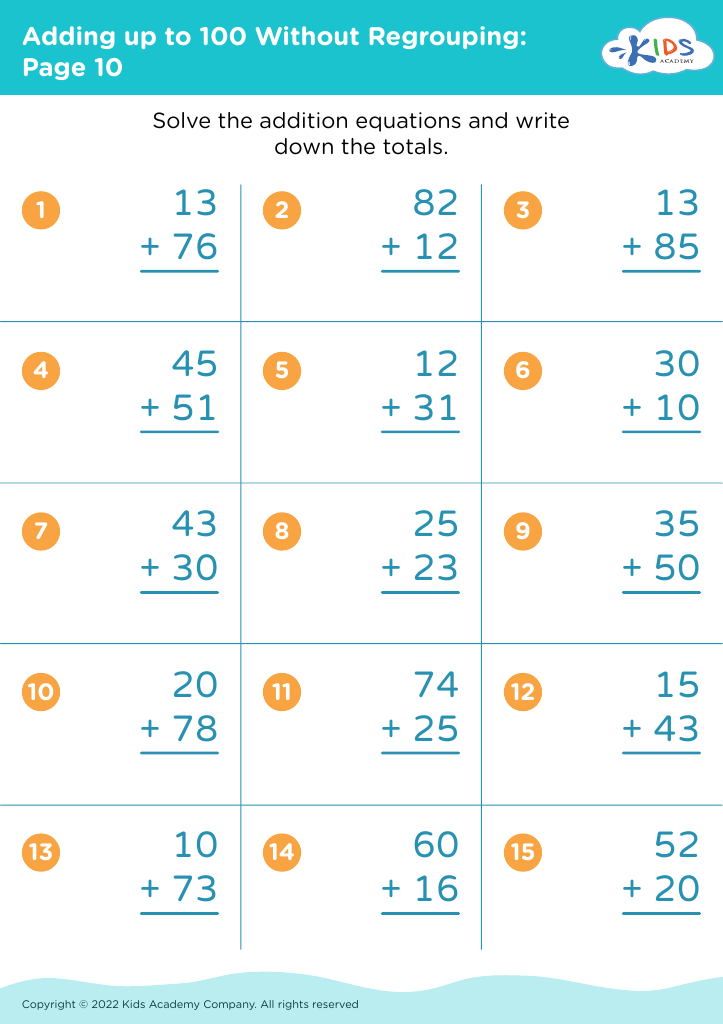
Adding up to 100 Without Regrouping: Page 10
Worksheet
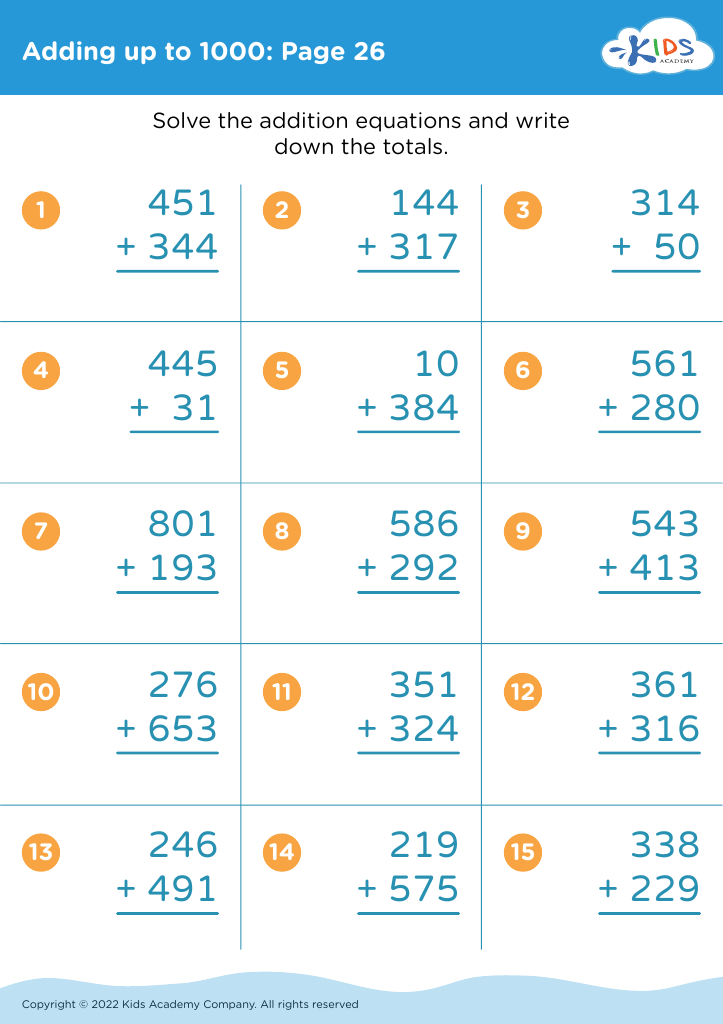
Adding up to 1000: Page 26

Adding up to 1000: Page 26

Adding up to 1000: Page 26
Worksheet
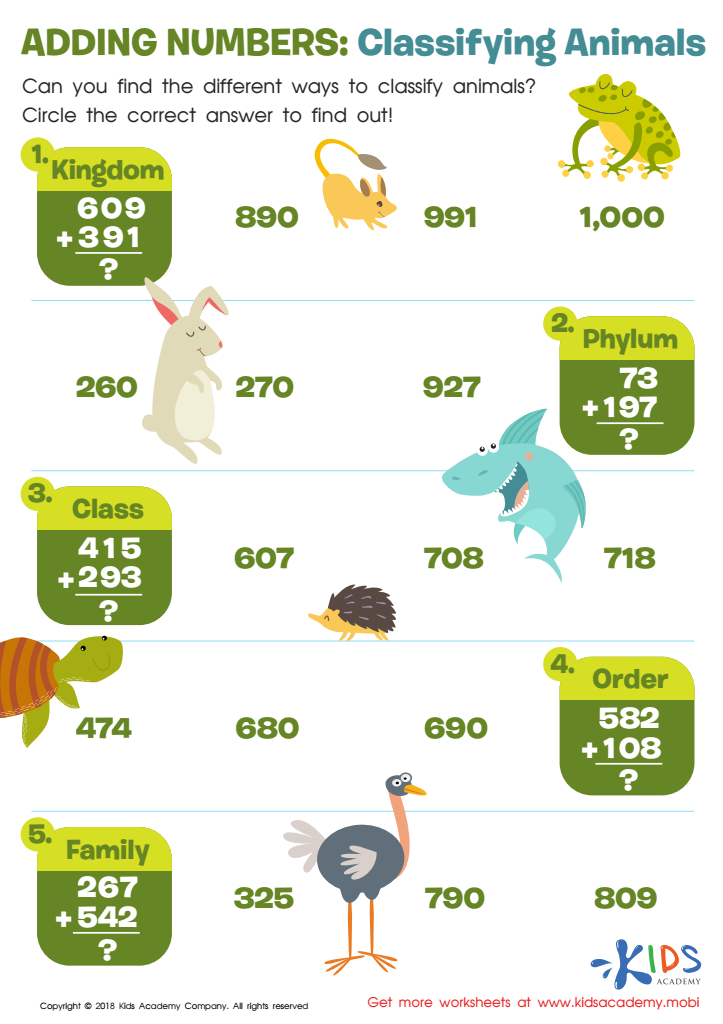
Adding Numbers: Classifying Animals Worksheet

Adding Numbers: Classifying Animals Worksheet

Your kids can learn to classify animals in Biology. This worksheet helps them do this by solving 5 equations. Circle the right answer to complete the task.
Adding Numbers: Classifying Animals Worksheet
Worksheet
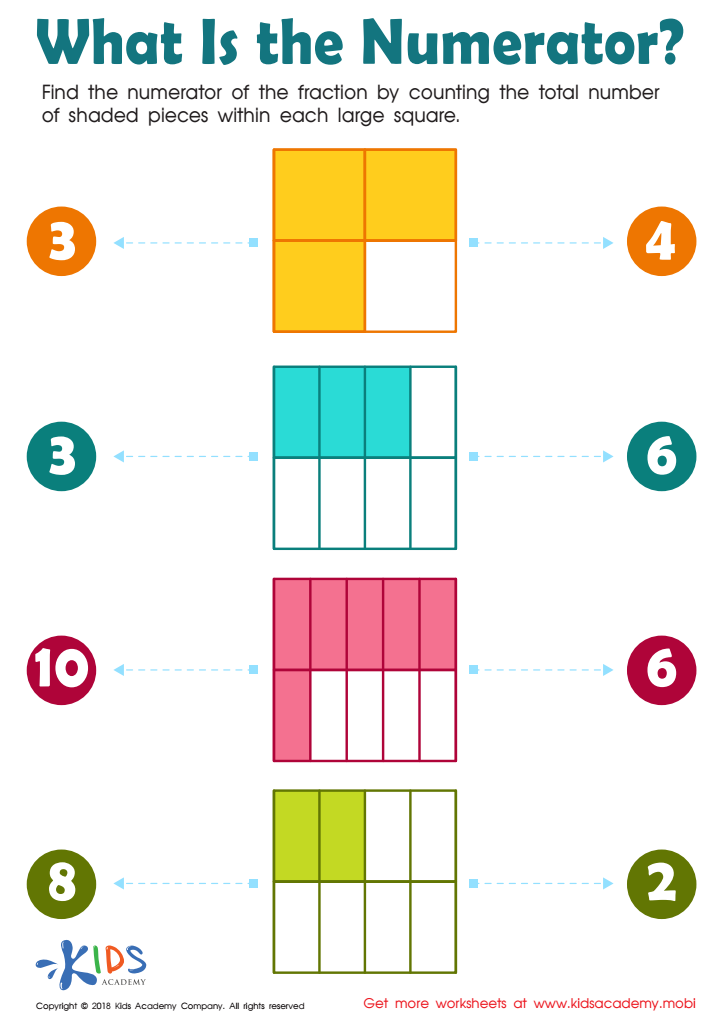
What Is the Numerator? Worksheet

What Is the Numerator? Worksheet

Help your kids learn fractions with this simple worksheet. Explain that the numerator is the number atop another number, then have them count the shaded pieces in each large square to find the numerator of the fraction. This activity is perfect for young kindergartners starting out with fractions.
What Is the Numerator? Worksheet
Worksheet
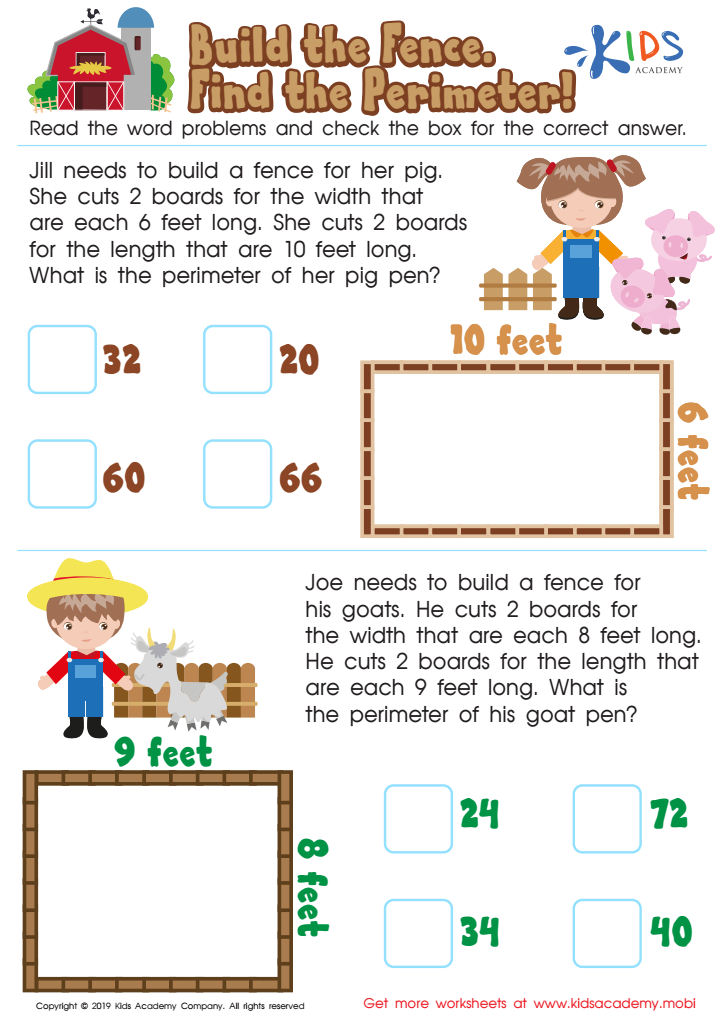
Build the Fence, Find the Perimeter Worksheet
Build the Fence, Find the Perimeter Worksheet

This worksheet is great for kids needing extra help with geometry and maths. Read the problems to your kids and assist them in answering them correctly by ticking the box. This way, they'll be combining their addition and subtraction skills with literacy to help them learn.
Build the Fence, Find the Perimeter Worksheet
Worksheet
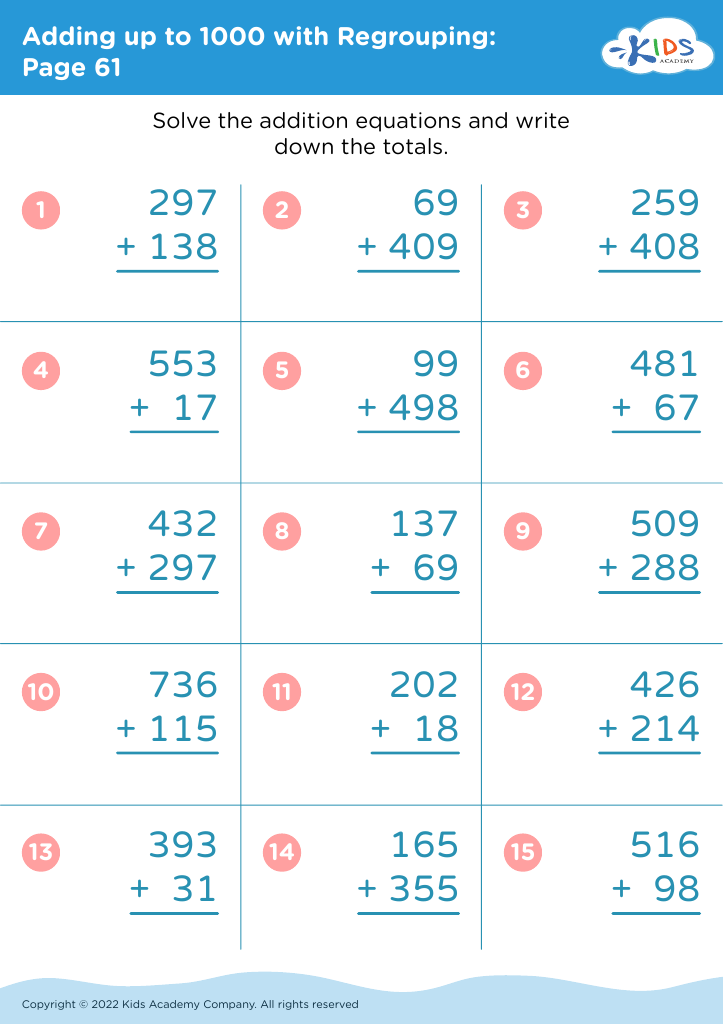
Adding up to 1000 with Regrouping: Page 61
Worksheet
Measuring Quest: Inches and Centimeters - Part 2 Worksheet
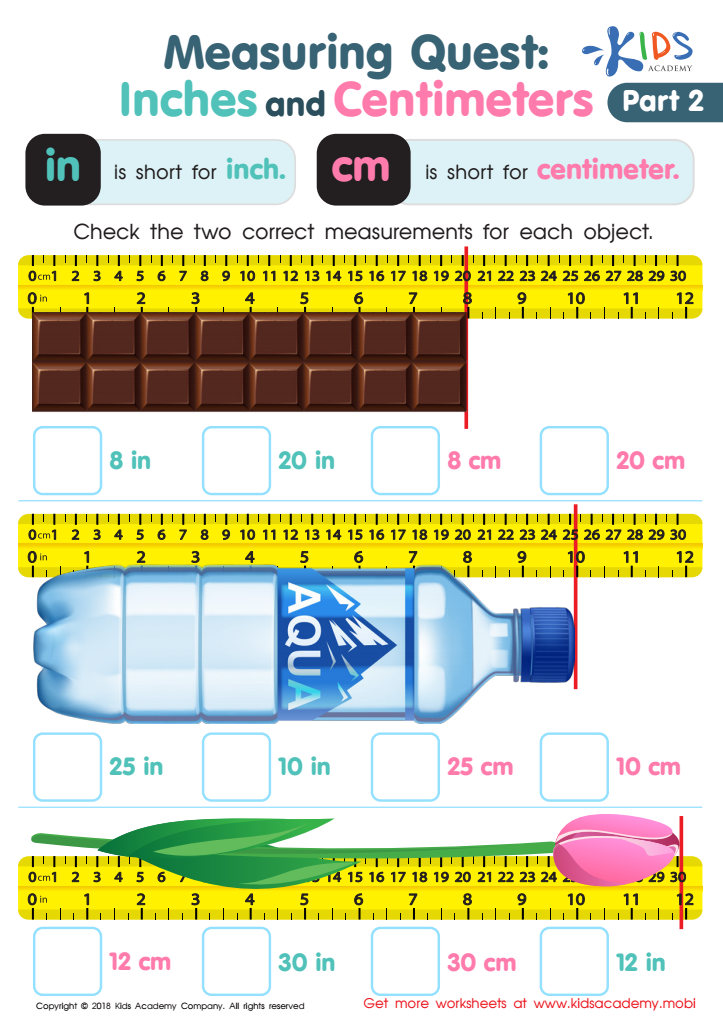
Measuring Quest: Inches and Centimeters - Part 2 Worksheet
This worksheet teaches kids how inches and centimeters measure up. It features rulers with centimeter measurements at the top, and inches at the bottom. Kids must choose the correct measurement for each object among the options provided.
Measuring Quest: Inches and Centimeters - Part 2 Worksheet
Worksheet
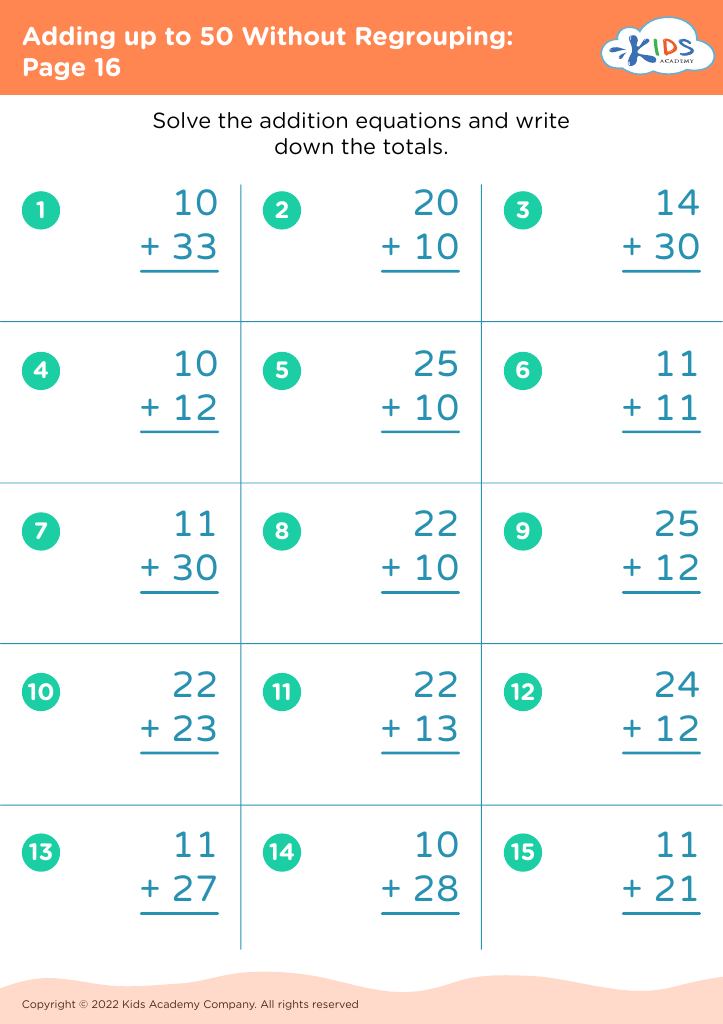
Adding up to 50 Without Regrouping: Page 16
Worksheet
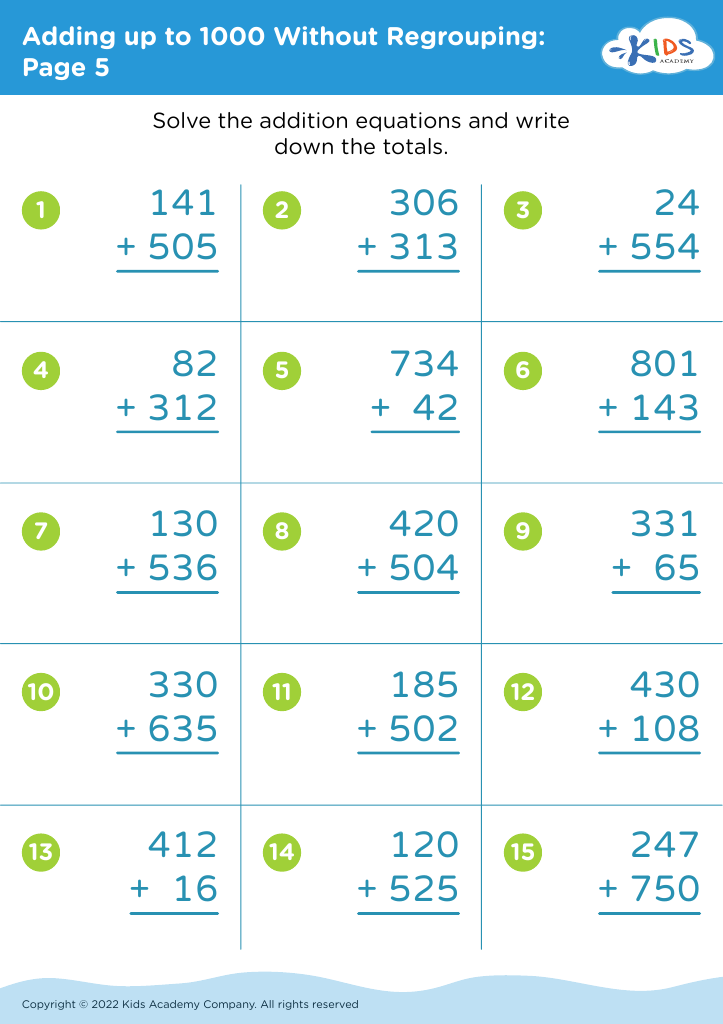
Adding up to 1000 Without Regrouping: Page 5
Worksheet
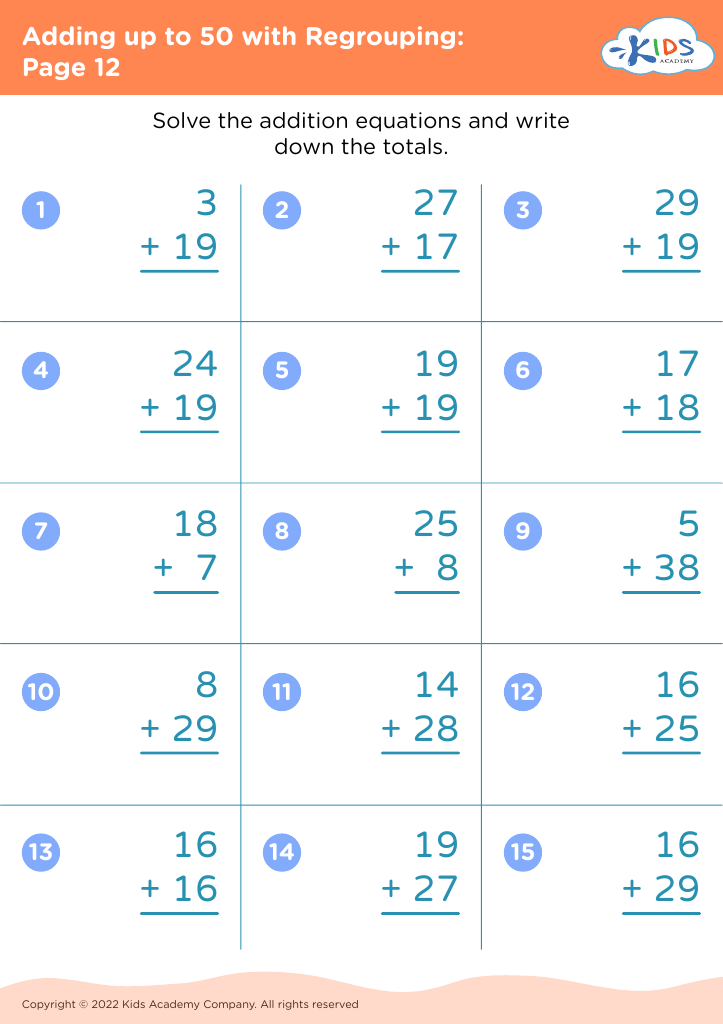
Adding up to 50 with Regrouping: Page 12
Worksheet
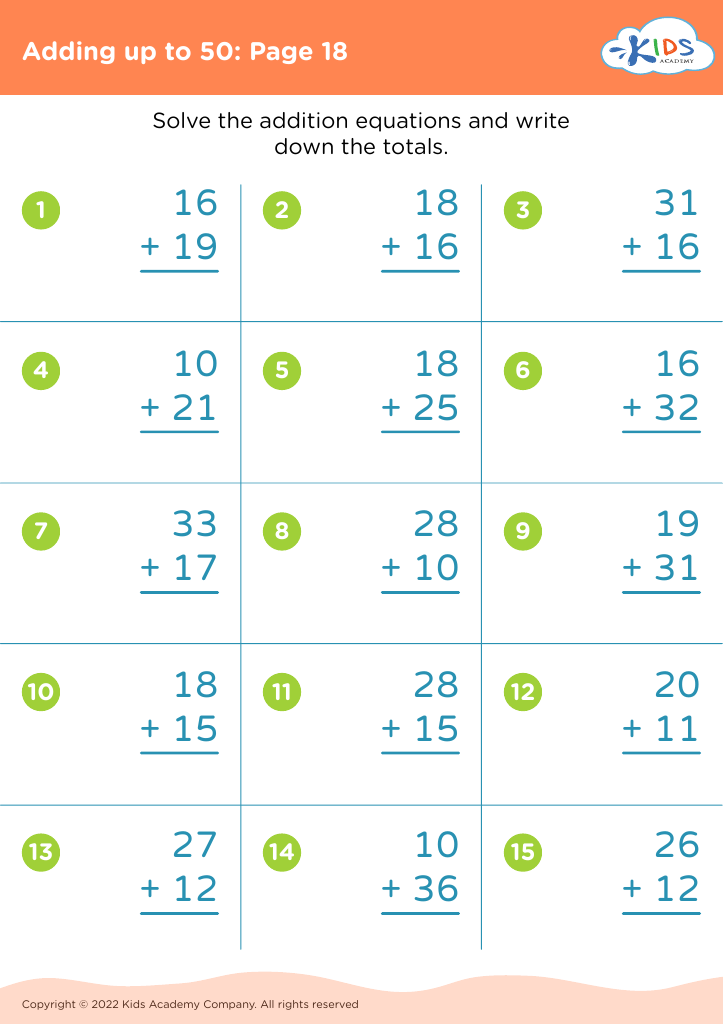
Adding up to 50: Page 18

Adding up to 50: Page 18

Adding up to 50: Page 18
Worksheet


Basic math skills form the foundation for advanced mathematical concepts and everyday problem-solving, making them crucial for ages 8-9. At this developmental stage, children transition from simple arithmetic to more complex operations, including multiplication, division, and an introduction to fractions. Having a solid grasp of these fundamental skills supports their cognitive development and fosters a positive attitude toward math—a subject that can impact their academic performance across various disciplines.

For parents and teachers, advocating for and nurturing these skills is essential because math competency is closely linked to critical thinking and logical reasoning abilities. Success in math boosts confidence and promotes a sense of achievement, encouraging a lifelong interest in learning. Furthermore, math proficiency supports other subjects such as science and technology, areas increasingly important in a digitally-driven world.

Ensuring children develop strong basic math skills also prepares them for real-life scenarios, like handling money, understanding time, and solving everyday problems efficiently. Active involvement from parents and teachers—through engaging activities and continuous support—sets children on a path toward academic and future career success. This early intervention can mitigate math anxiety and cultivate a resilient, growth-oriented mindset, optimizing their educational journey and beyond.