Categorization skills Math Worksheets for Ages 8-9
6 filtered results
-
From - To
Enhance your child's learning journey with our Categorization Skills Math Worksheets designed specifically for ages 8-9. These interactive and engaging worksheets will help students develop essential critical thinking skills as they sort and group objects based on various attributes. Each worksheet presents a blend of visual aids, real-life scenarios, and fun activities that make learning enjoyable. By practicing categorization, children will improve their ability to recognize patterns and relationships in mathematics and everyday life. Perfect for classroom use or at-home practice, our worksheets provide valuable opportunities for students to gain confidence and proficiency in foundational math skills. Start categorizing today!
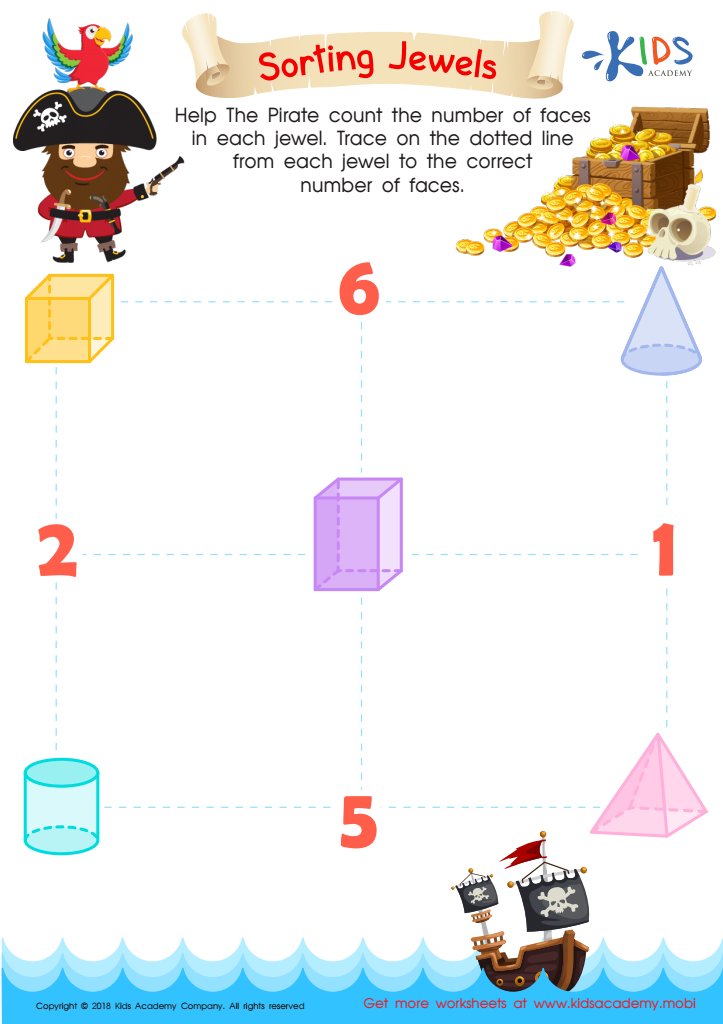
Sorting Jewels Worksheet
 Assign to My Students
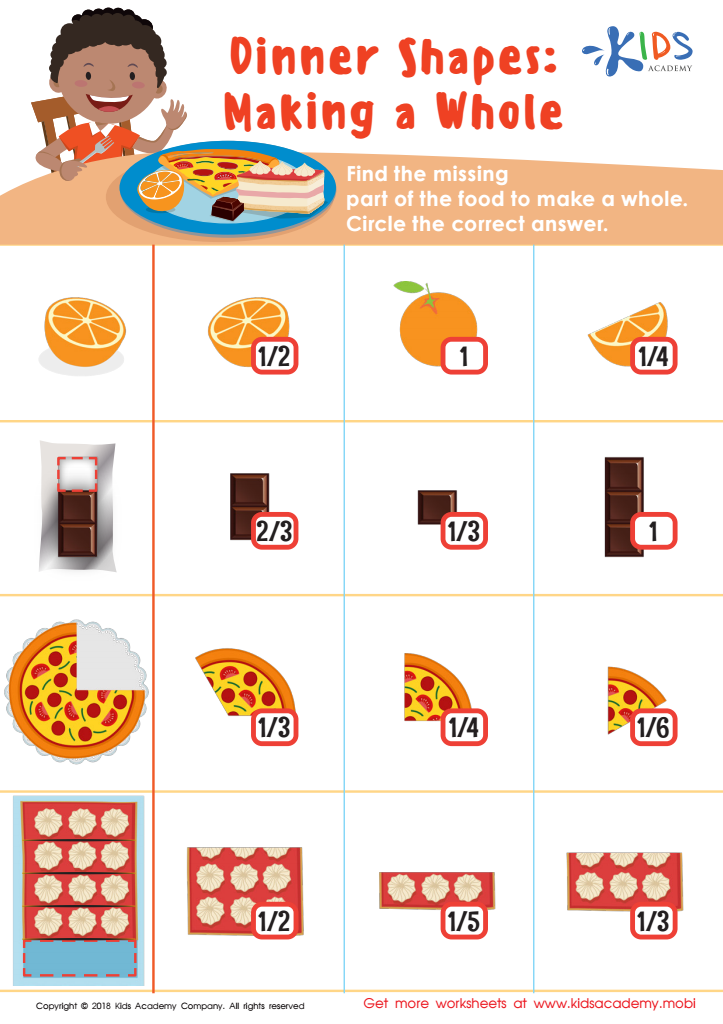
Dinner Shapes: Making a Whole Worksheet
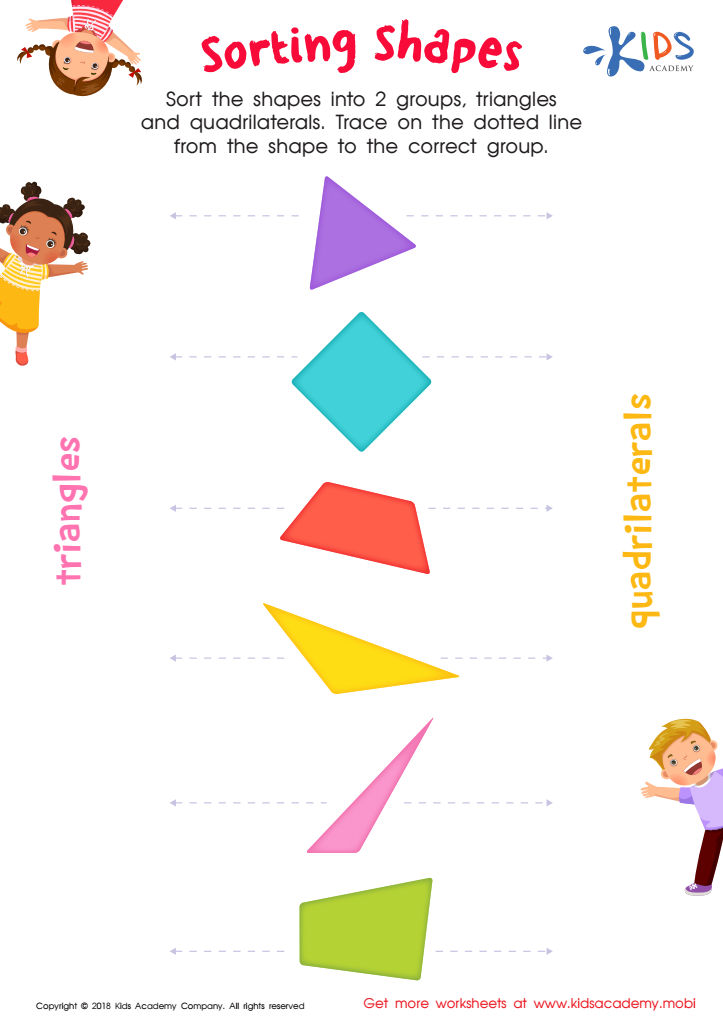
Sorting Shapes Worksheet
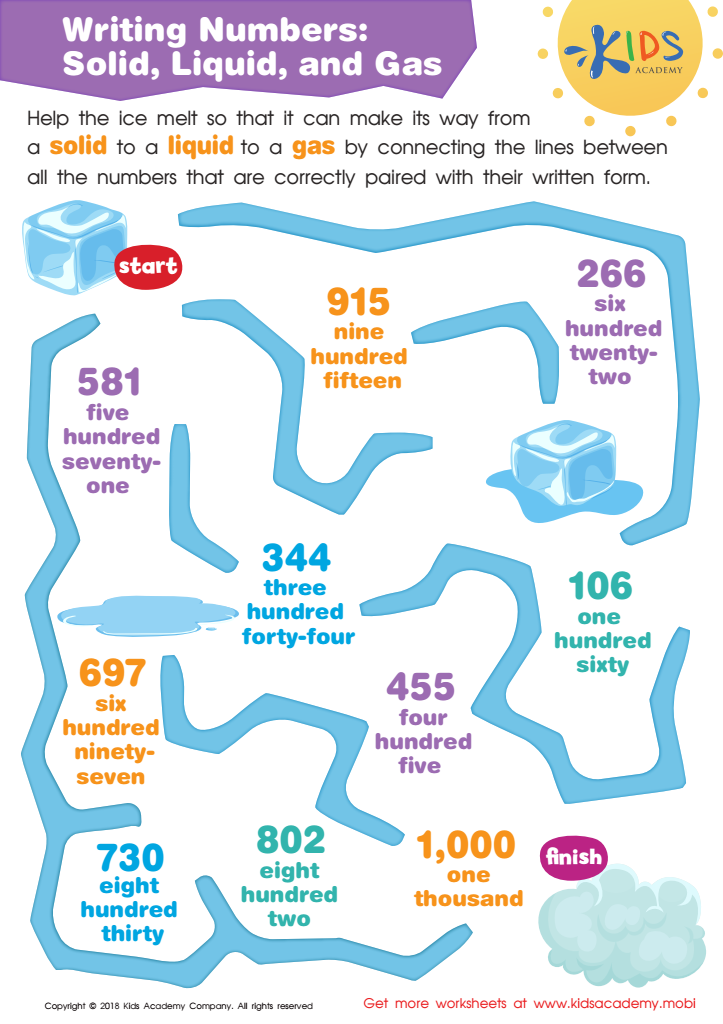
Solid, Liquid, and Gas Writing Numbers Worksheet
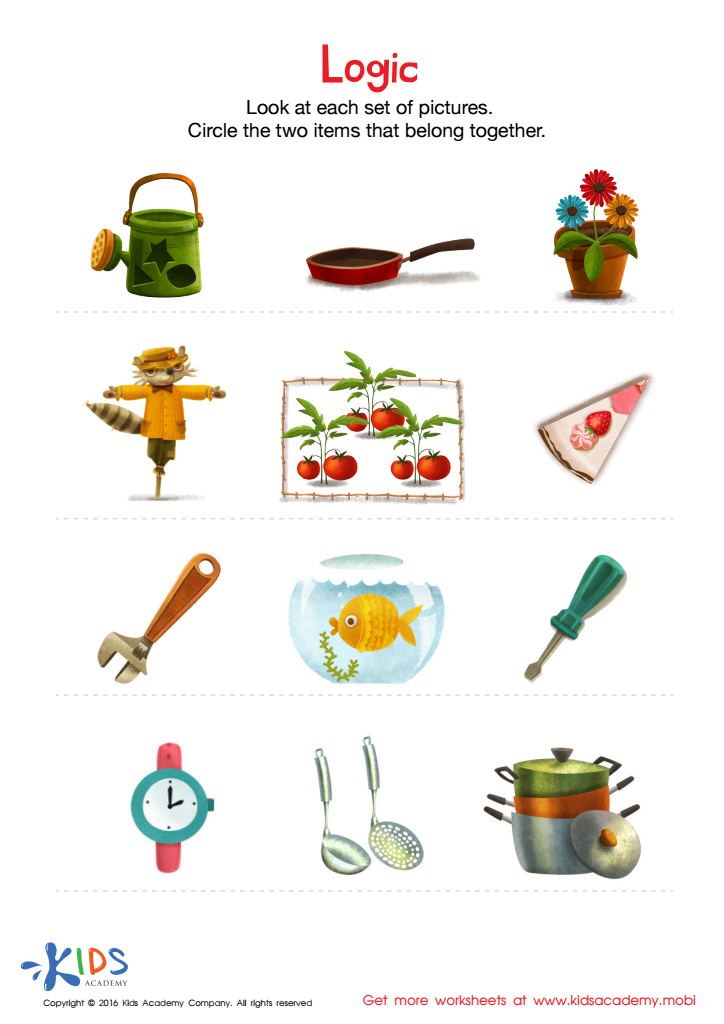
Logic Game Sorting Worksheet







Categorization skills in math are essential for children aged 8-9 as they serve as the foundation for critical thinking and problem-solving. At this age, children are developing their cognitive abilities, and understanding how to group items based on shared characteristics enhances their analytical thinking. When children categorize objects, they learn to recognize patterns, a skill crucial for mastering more complex mathematical concepts like skip counting or basic operations.
Additionally, categorization supports other academic subjects. For example, in science, students categorize animals or plants into different groups based on features, while in reading, they sort narrative elements by themes or characters. Developing these skills in young learners promotes better organization of information and boosts memory retention.
For parents and teachers, fostering categorization skills through engaging activities ensures children are not just memorizing facts but truly understanding the relationships between concepts. Incorporating games or real-life scenarios can make learning enjoyable and meaningful, drawing children’s interests while aiding in their overall development. Emphasizing categorization helps create a strong mathematical foundation, setting the stage for future success in academics and everyday decision-making. By prioritizing these skills, adults can nurture confident, competent learners ready to tackle increasingly complex ideas.








