
Counting money Math Worksheets for Ages 8-9
3 filtered results
Difficulty Level
Grade
Age
-
From - To
Subject
Activity
Standards
Discover our engaging Counting Money Math Worksheets specifically designed for children ages 8-9! These interactive resources help young learners develop essential money management skills through fun and practical exercises. Your child will enhance their ability to identify coins and bills, perform calculations, and solve real-life money problems. With colorful visuals and age-appropriate challenges, our worksheets make math enjoyable and accessible. Whether in the classroom or at home, these activities foster confidence and proficiency in handling money. Make learning fun and meaningful with our Counting Money Math Worksheets, the perfect tool to prepare your child for financial awareness and responsibility!
Favorites
With answer key
Interactive
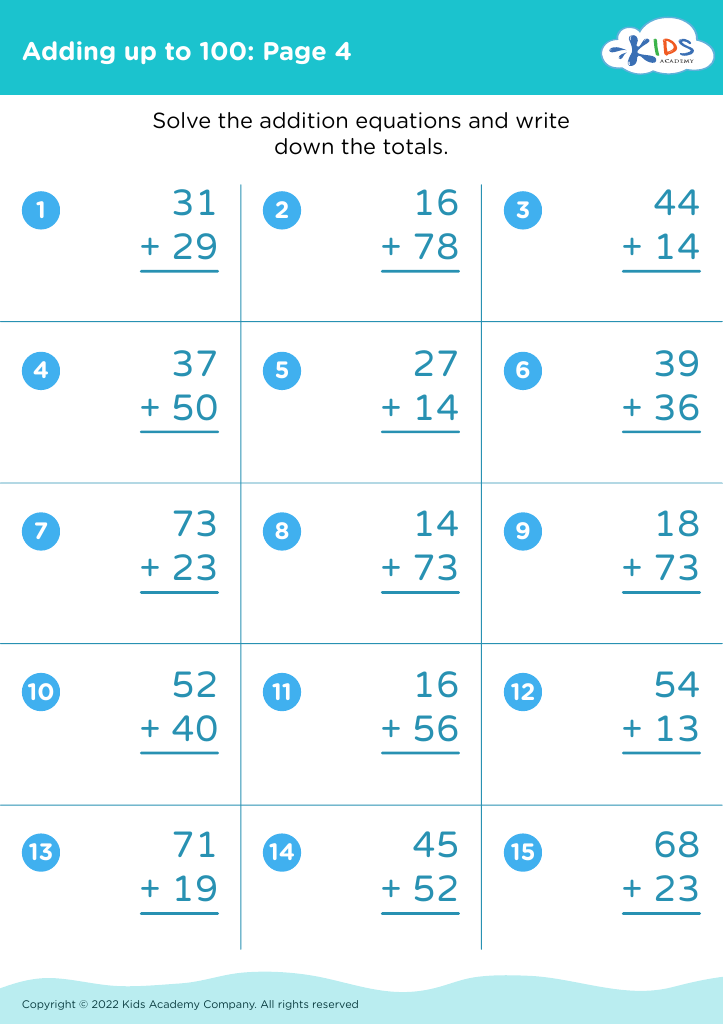
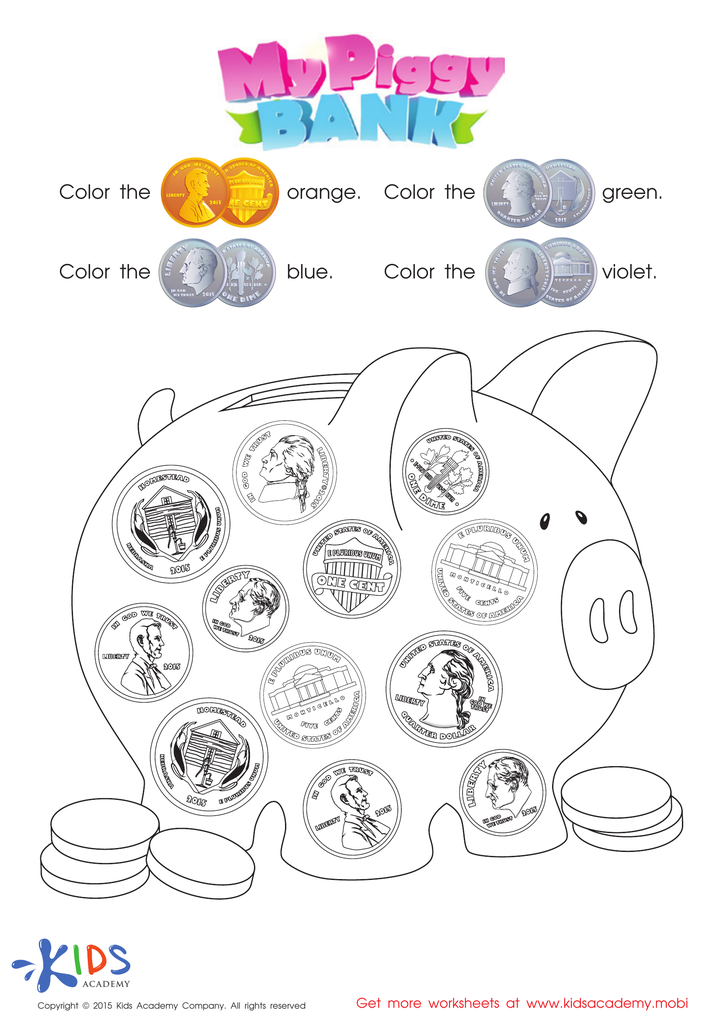
Recognizing Money Money Worksheet
Help the piggy bank by coloring its coins with Kids Academy's free money worksheets! Learn the different coins and their values with your kids. Printable worksheets are available to continue the lesson. Let's learn and have fun!
Recognizing Money Money Worksheet
Worksheet
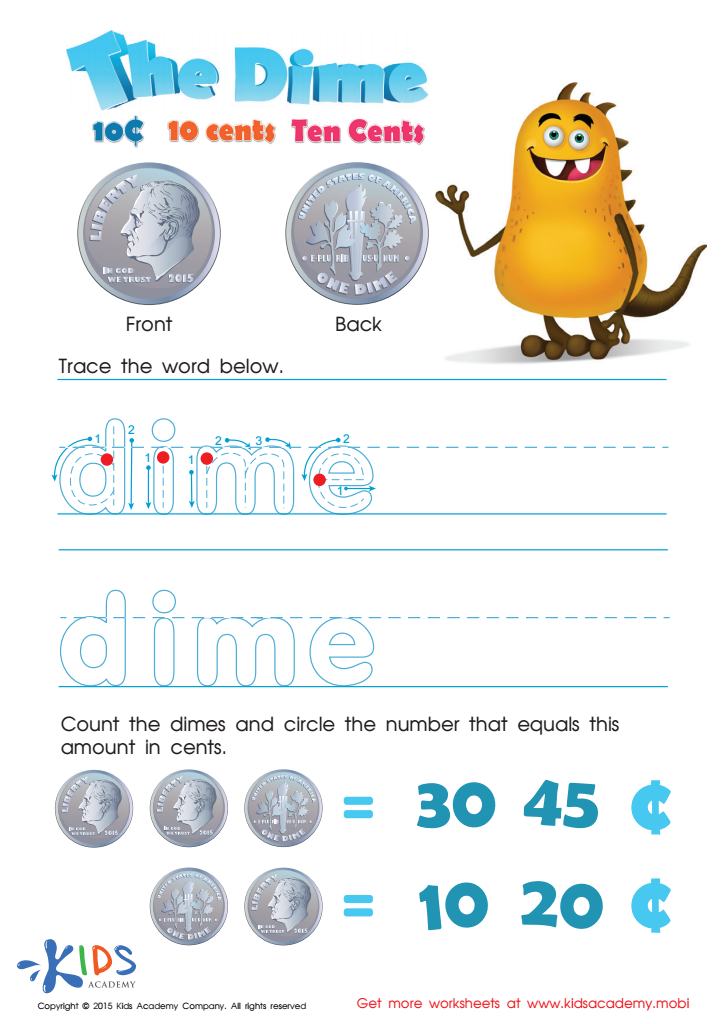
Ten Cents or the Dime Money Worksheet
Introduce your kids to coin games! Start with a dime: trace the word on both sides and count the dimes. Kids Academy has printable worksheets to help your kids learn how to count money.
 Assign to My Students
Ten Cents or the Dime Money Worksheet
Worksheet
Join Kids Academy for Free
Who is primarily going to use this learning content?







Counting money is an essential skill for children aged 8-9, laying a crucial foundation for their financial literacy. At this developmental stage, children are beginning to grasp the concept of value and the real-world importance of money. Parents and teachers should prioritize this skill for several reasons.
First, it builds confidence and independence; by knowing how to count money, children become more capable of managing small transactions, such as making purchases or understanding change. This sense of empowerment fosters responsible decision-making as they navigate a world full of choices.
Second, counting money correlates with other fundamental math skills, such as addition, subtraction, and problem-solving. Engaging with real-life scenarios enhances students’ comprehension and application of these concepts, making math more relatable and enjoyable.
Moreover, instilling a strong understanding of money management at a young age promotes positive financial habits. Children who learn how to count and manage money are less likely to face difficulties with budgeting and saving in later years.
Ultimately, teaching money counting not only enriches academic growth but also equips children with essential life skills, preparing them for the future in a society where financial literacy is paramount.








