Counting objects Math Worksheets for Ages 8-9
9 filtered results
-
From - To
Explore our engaging Counting Objects Math Worksheets tailored for children aged 8-9. Designed to enhance math skills, these worksheets help students practice counting and recognizing numbers through fun, practical exercises. Each worksheet is crafted to align with educational standards, ensuring your child builds a strong foundation in mathematics. From simple counting to more complex mathematical challenges, these printables make learning enjoyable and effective. Perfect for homeschooling or extra practice, these resources support your child's mathematical development with targeted, age-appropriate content. Elevate your child's counting skills and boost their confidence in math with our expertly designed worksheets.
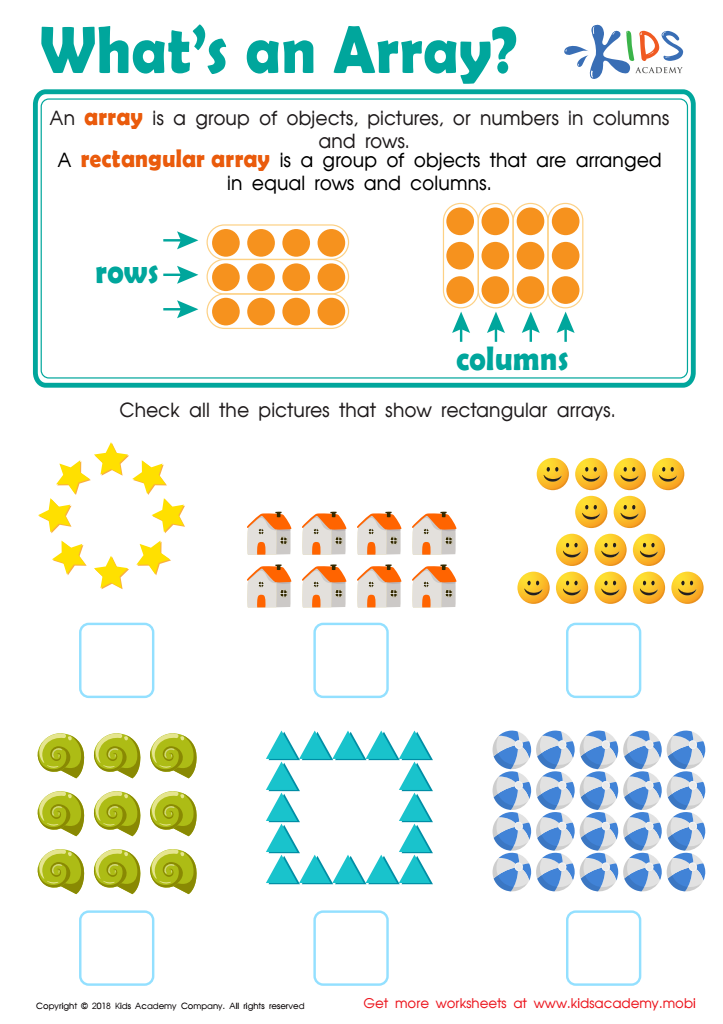
What's an Array? Worksheet
 Assign to My Students
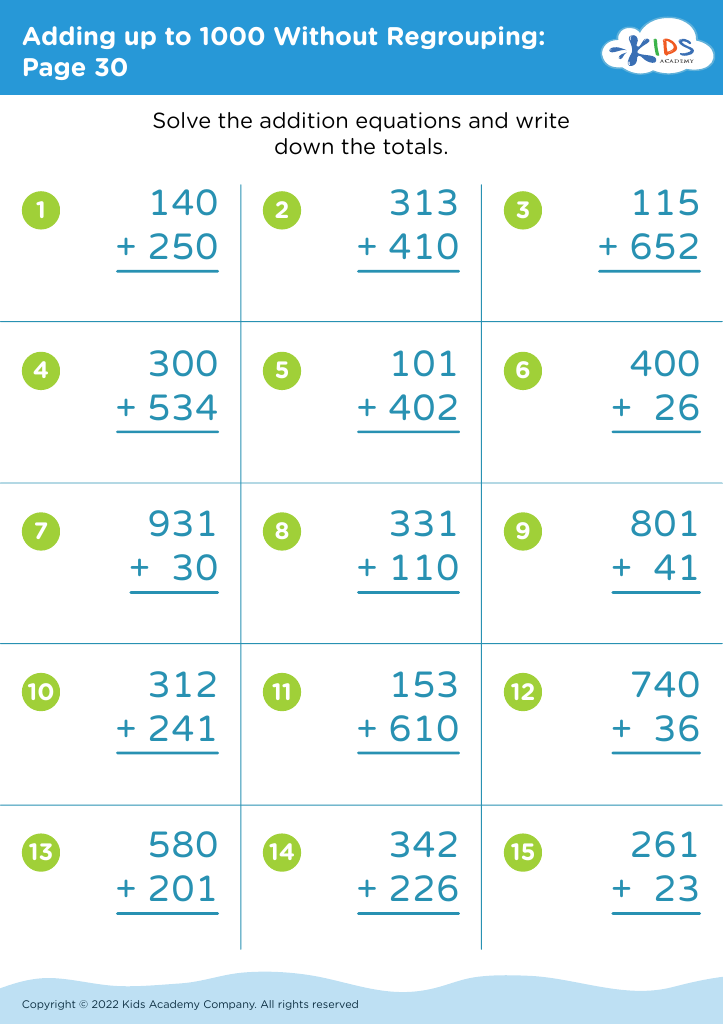
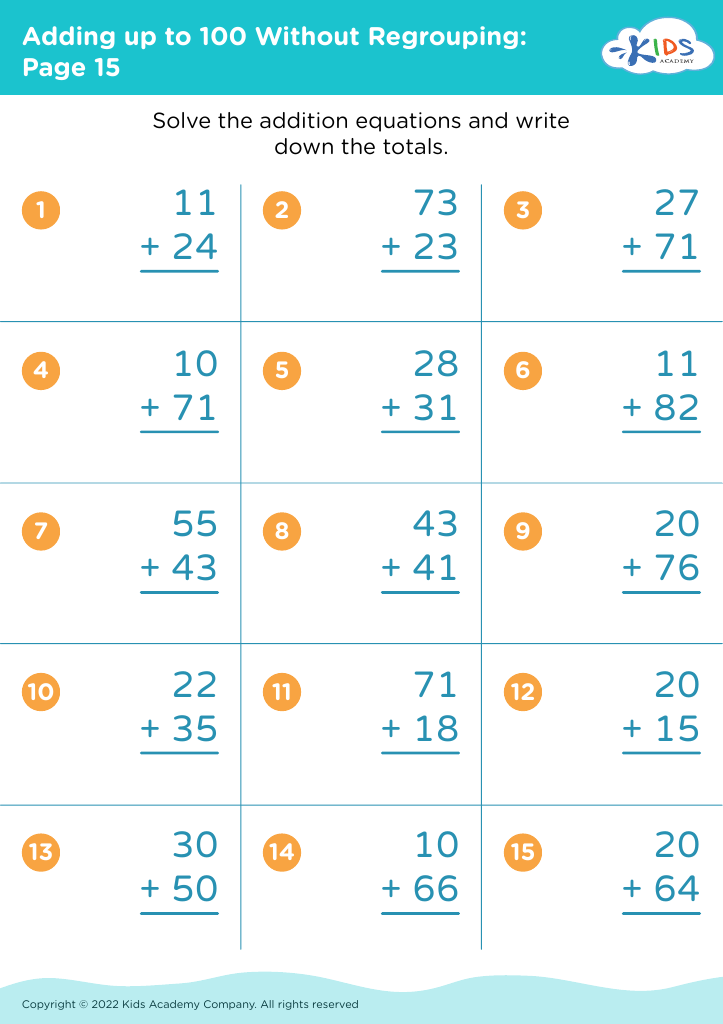
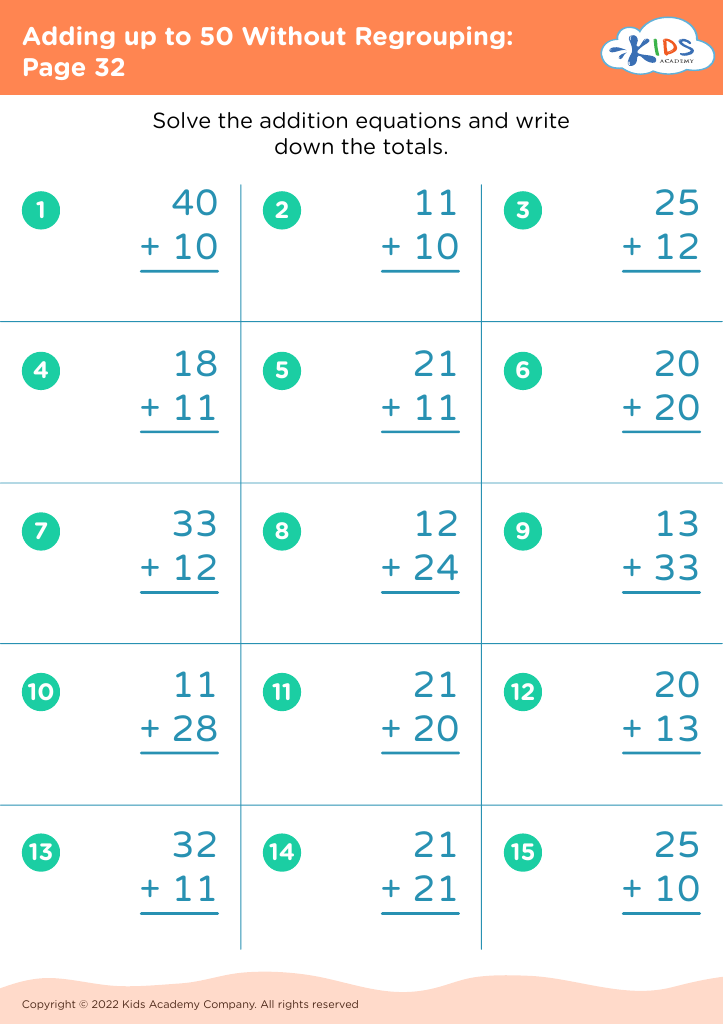






Counting objects in math for ages 8-9 is fundamental for several developmental reasons. At this age, children transition from simple counting to understanding more complex mathematical concepts. This skill lays the groundwork for number sense, vital for grasping addition, subtraction, and eventually more intricate operations like multiplication and division.
Parents and teachers should care because these early math skills closely tie to the child's academic success across subjects. Counting objects activates problem-solving skills, reinforces the ability to follow sequences, and strengthens memory—skills essential for diverse learning activities. Recognizing quantities helps children make sense of the world, from identifying amounts in nature to working with money and time.
Moreover, counting objects engages children actively, making learning interactive and fulfilling. When children use physical objects (like blocks or beads) to count, it can make abstract numbers feel tangible and understandable. This multi-sensory approach supports various learning styles, ensuring that all children have the tools they need to succeed.
Lastly, developing these skills also builds confidence. Mastery of counting gives children a sense of achievement, which fuels their enthusiasm for learning and exploration. Early intervention in math education fosters a supportive environment that prepares children for more advanced concepts as they grow.








