Develop addition skills Math Worksheets for Ages 8-9
4 filtered results
-
From - To
Enhance your child's math proficiency with our engaging addition skills worksheets designed specifically for ages 8-9. Our collection features a variety of fun and interactive activities that make learning addition enjoyable. These worksheets help reinforce basic skills, encourage mental math, and promote problem-solving abilities. With engaging illustrations and relatable scenarios, your child will find delight in mastering addition concepts. Whether used at home or in the classroom, these resources are perfect for supporting your child's educational journey. Empower your little learner with the confidence to tackle addition confidently. Explore our printable worksheets and watch their math skills flourish!
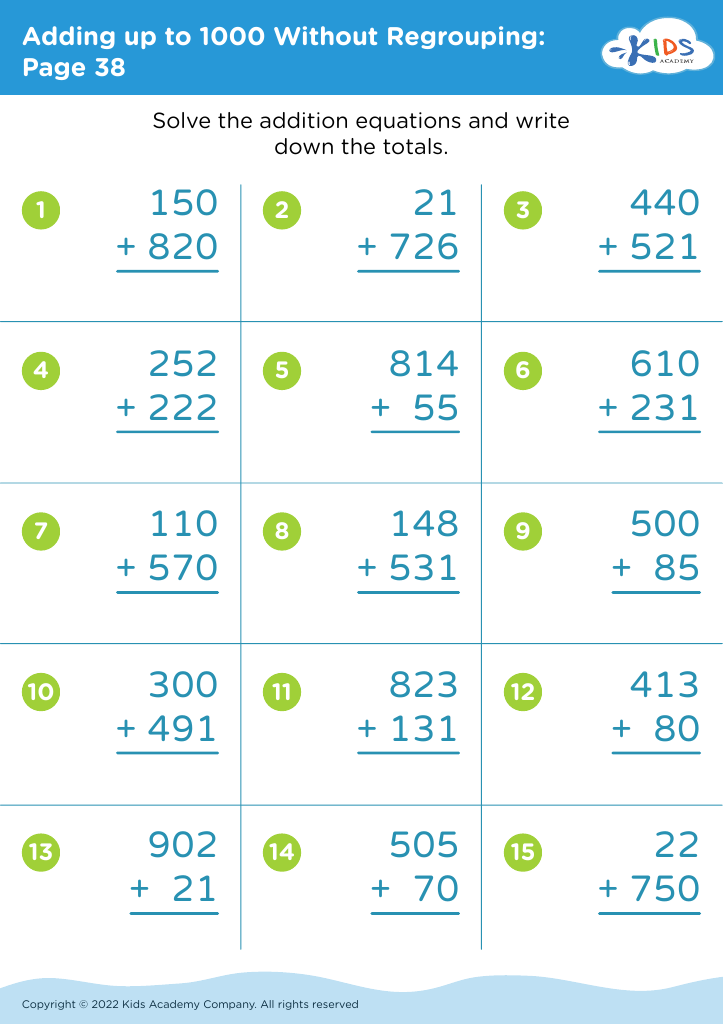
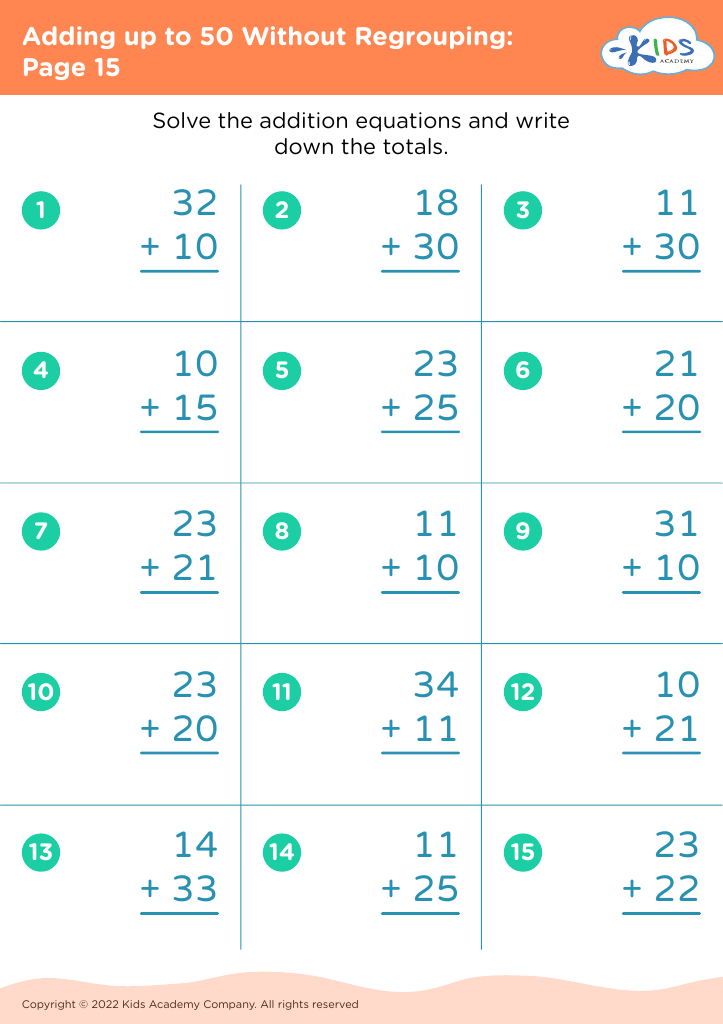
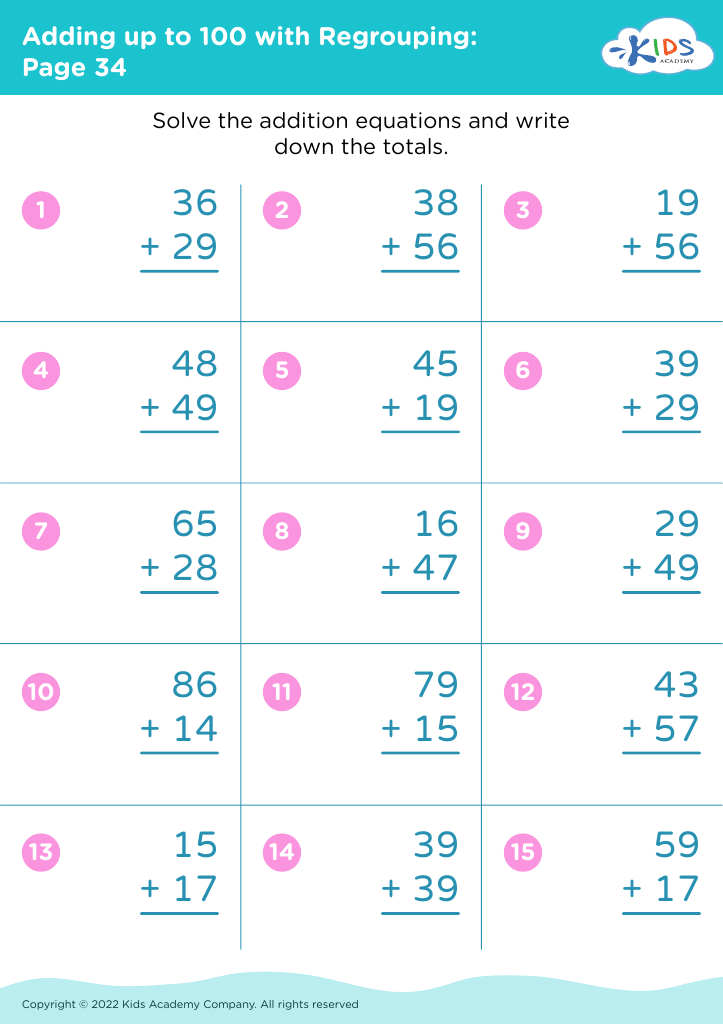
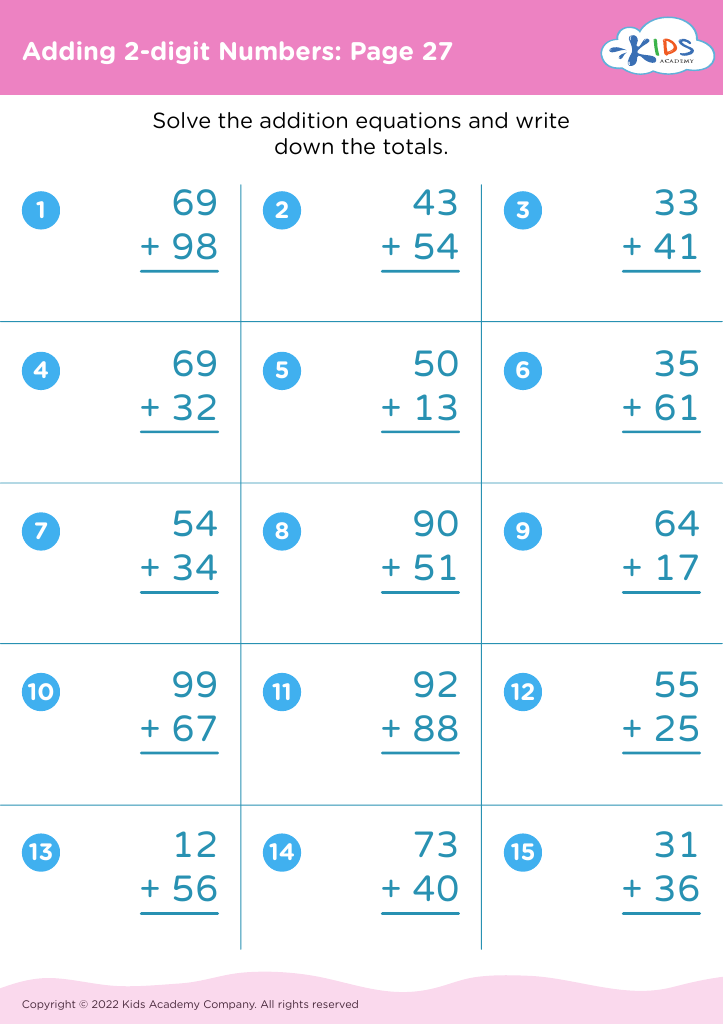








Developing addition skills in children aged 8-9 is vital for their academic and everyday success. At this stage, children transition from basic addition to more advanced mathematical concepts, including multi-digit addition and mental math. Strong addition skills serve as the foundation for future mathematics learning, enabling students to tackle more complex operations, such as subtraction, multiplication, and division.
Additionally, proficient addition skills enhance problem-solving abilities, helping children analyze and comprehend math-related tasks both in and out of the classroom. This competence not only builds confidence but also encourages a positive attitude toward math, reducing anxiety and increasing engagement.
Furthermore, real-world applications of addition—such as budgeting, shopping, and time management—underscore its practicality, making it essential for developing critical life skills. Ensuring that children have solid addition skills can empower them to approach various situations confidently and effectively.
Ultimately, parents and teachers play a crucial role in fostering these skills through supportive practices, such as interactive games and relatable contexts. By prioritizing addition skill development, adults equip children to navigate their educational paths successfully and thrive in their future endeavors.








