Develop counting skills Math Worksheets for Ages 8-9
5 filtered results
-
From - To
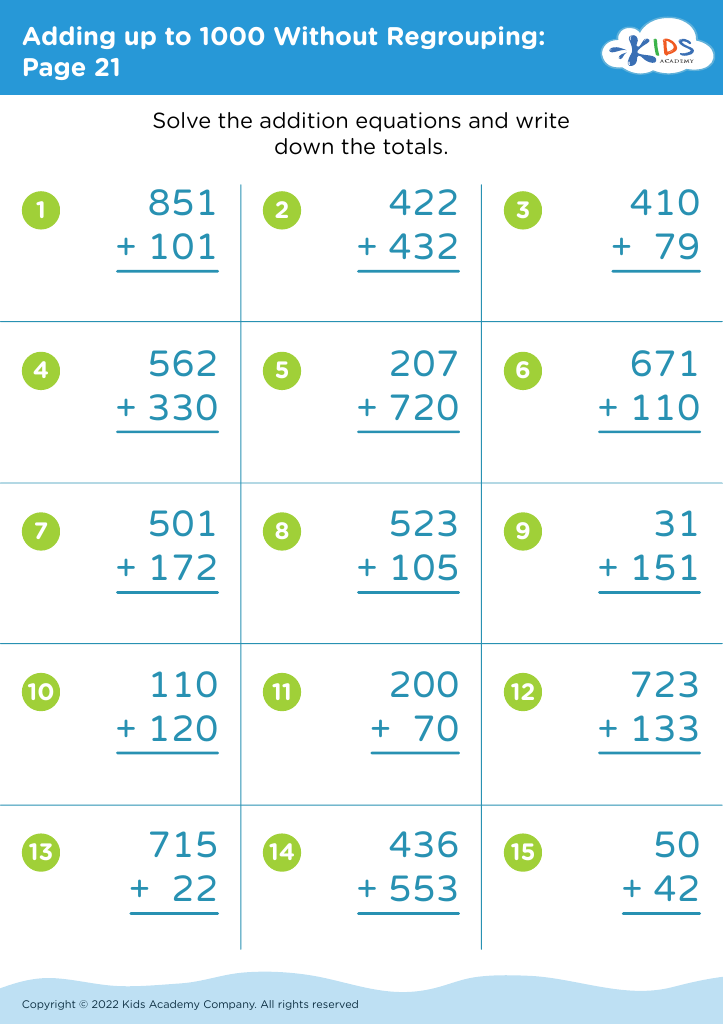
Boost your child's numerical proficiency with our specialized Math Worksheets designed for ages 8-9. These engaging activities focus on enhancing counting skills through diverse exercises, like skip counting, number patterns, and place values. Each worksheet is crafted to build confidence and mastery in foundational math concepts, while fostering critical thinking and problem-solving abilities. Perfect for classroom use or at-home practice, our worksheets make learning math fun and accessible. Strengthen your 8-9-year-old's counting skills today, and set them on the path to mathematical success with Kids Academy. Download now for an educational leap forward!
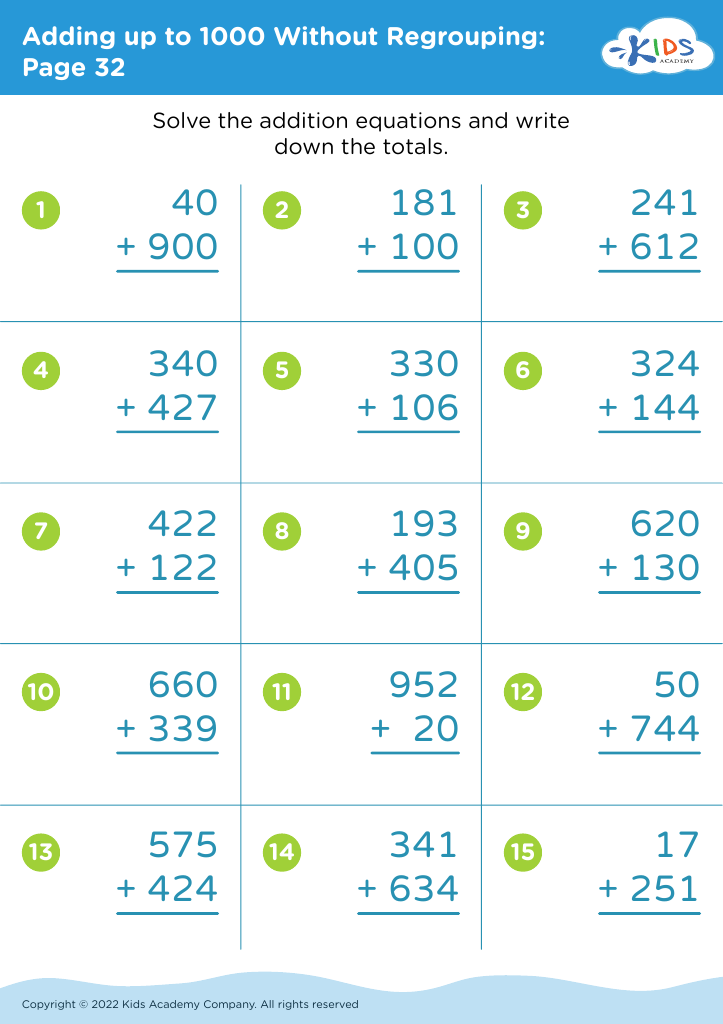
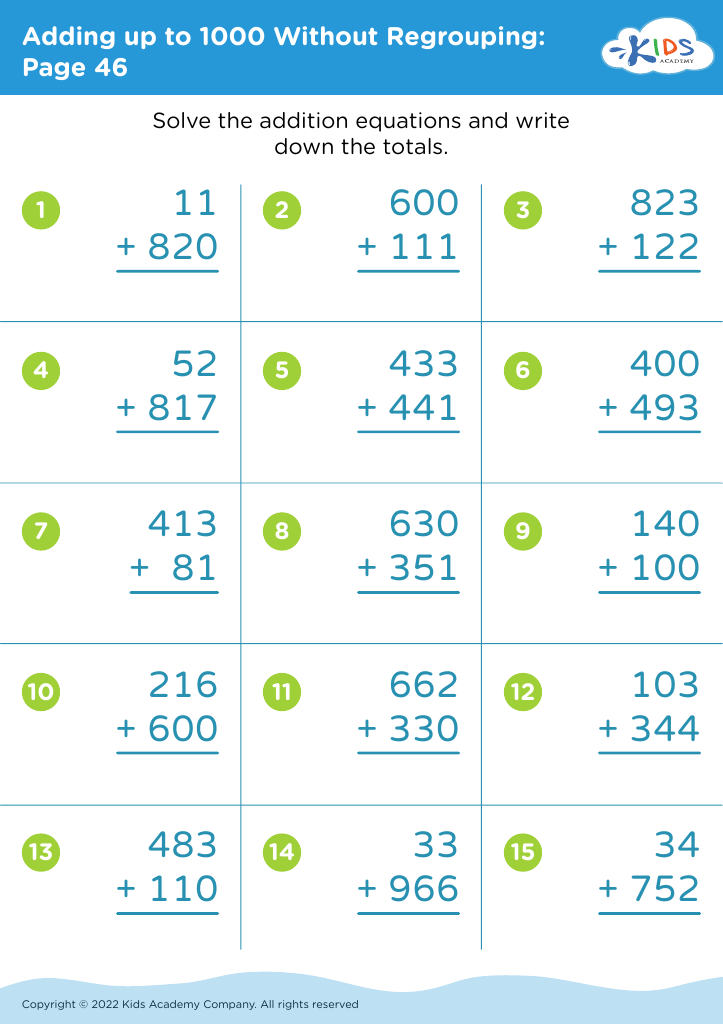
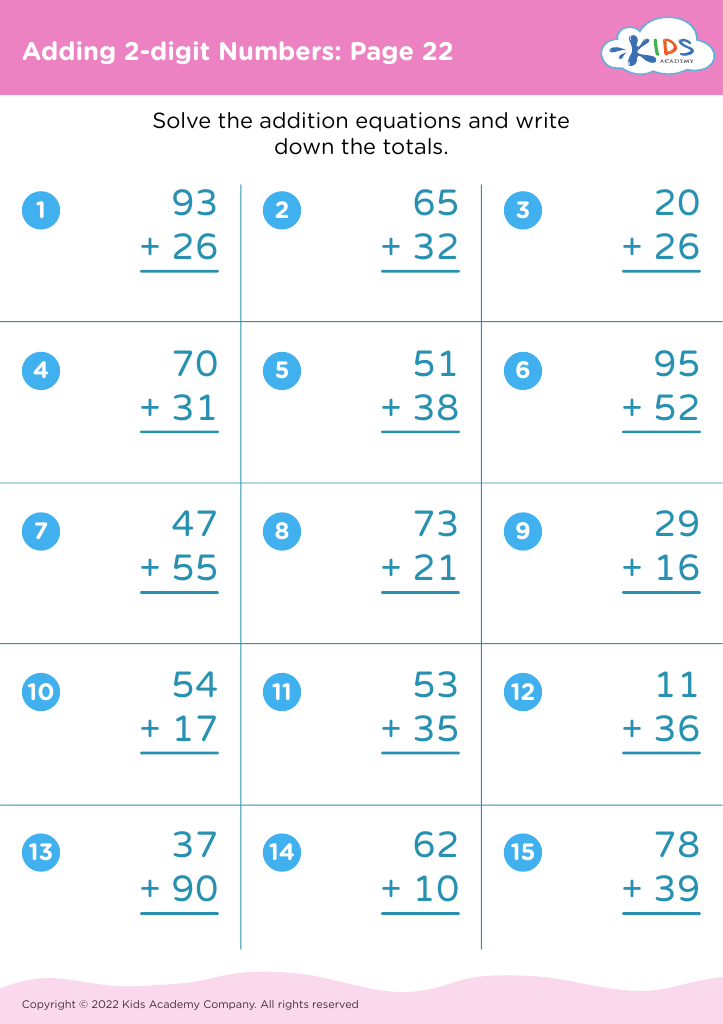
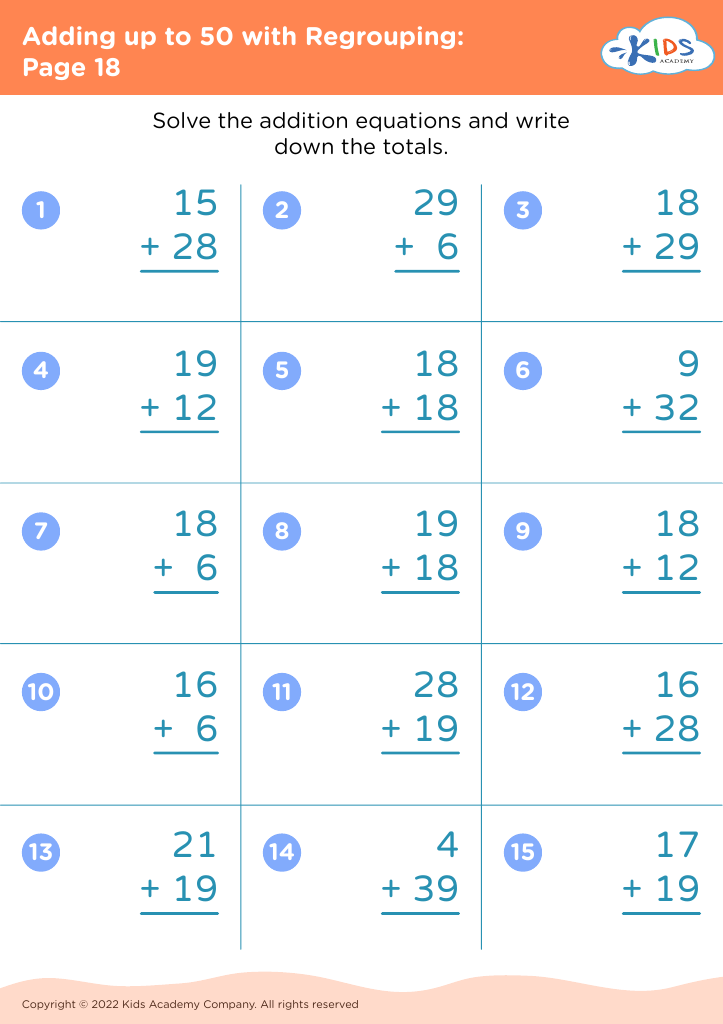


.jpg)




Developing counting skills in children aged 8-9 is vital for several reasons, benefiting both parents and teachers in supporting the child's overall educational journey. At this age, children solidify foundational math concepts that aren't just crucial for academic success but also for daily life. Effective counting goes beyond rote memorization; it fosters number sense, helping children understand numerical relationships and patterns. This underpins more complex operations such as addition, subtraction, multiplication, and division.
For parents, emphasizing counting skills can lead to more meaningful engagement in children's homework and everyday activities, such as shopping or cooking, which can be both educational and enjoyable experiences. For teachers, developing these skills can lead to smoother progressions in math curricula and improved student confidence.
Moreover, strong counting skills correlate with problem-solving abilities and critical thinking. Children who can count proficiently are better equipped to tackle word problems and logical reasoning tasks, which are integral components of standardized tests and real-life situations. Finally, math proficiency at this stage can pave the way for future interests in STEM (Science, Technology, Engineering, Math) fields, opening doors to numerous academic and career opportunities. Therefore, nurturing counting skills at this crucial age sets a robust foundation for lifelong learning and success.








