Developing analytical skills Math Worksheets for Ages 8-9
3 filtered results
-
From - To
Introduce your child to a world of critical thinking with our "Developing Analytical Skills Math Worksheets for Ages 8-9". Meticulously designed to challenge young minds, these worksheets foster essential problem-solving abilities and logical reasoning through engaging math exercises. Each worksheet guides students through complex concepts disguised as fun activities, making learning both enjoyable and effective. Whether calculating patterns, decoding puzzles, or strategizing solutions, these resources are tailored to nurture analytical proficiency and inspire confidence in math. Ideal for classroom and home use, empower your young learner with tools to think deeply and excel academically—all while having a blast!
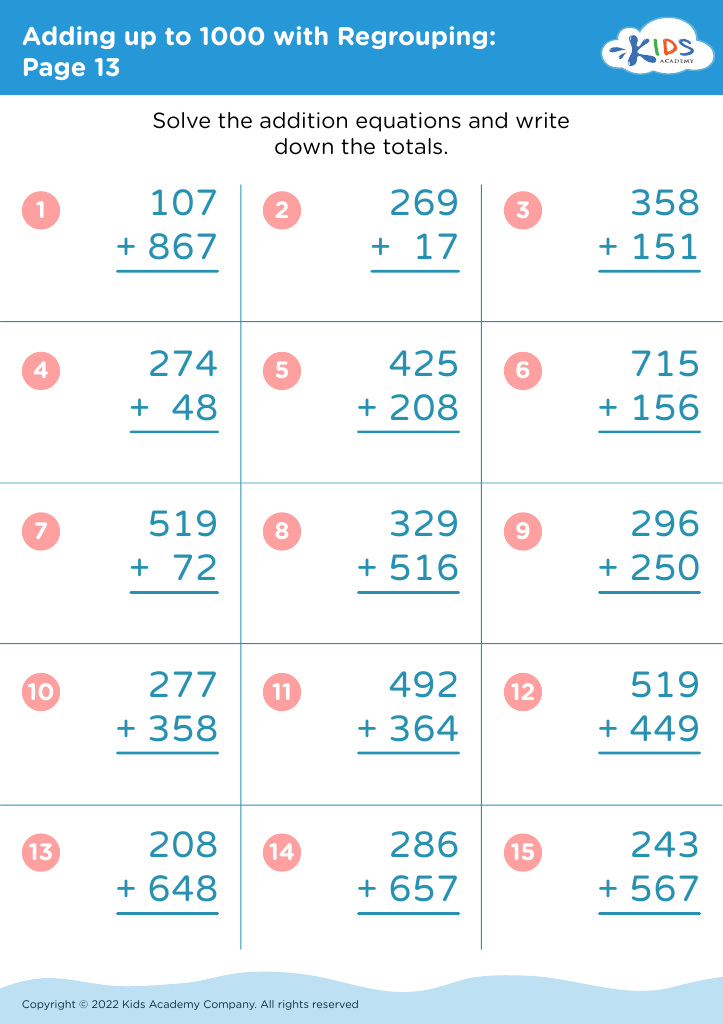
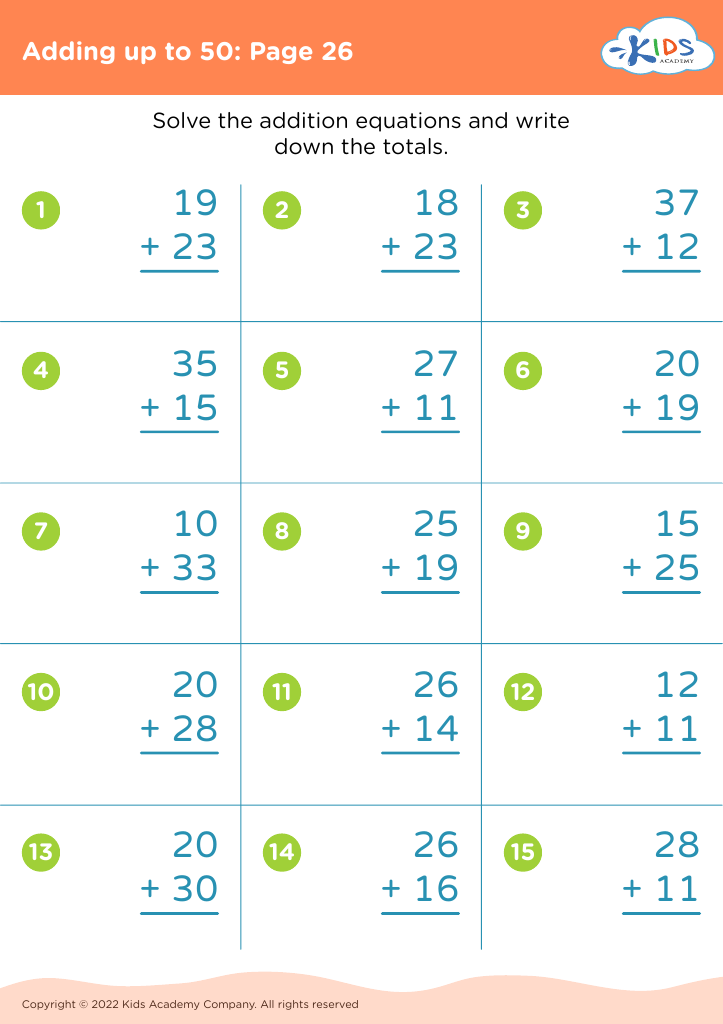
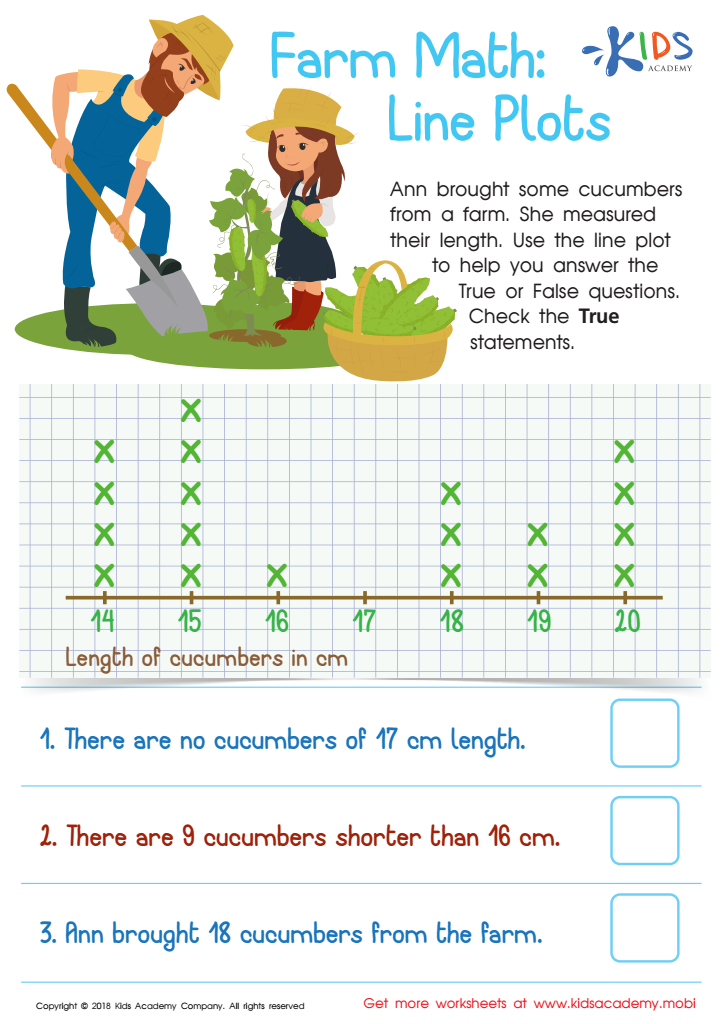
Farm Math: Line Plots Worksheet
 Assign to My Students








Developing analytical skills in math for children aged 8-9 is paramount for several reasons, beneficial to both parents and teachers alike. At this pivotal stage in their cognitive development, children are transitioning from basic arithmetic to more complex problem-solving and logical reasoning. Analytical skills enable them to dissect problems, comprehend relationships, and formulate systematic strategies, which are invaluable across various disciplines and in everyday decision-making.
For parents, nurturing these skills means equipping their children with the tools to excel academically and beyond. It lays a strong foundation for future learning, opening doors to advanced mathematical concepts and fostering a love for learning. Analytical proficiency also builds confidence; children can tackle challenging problems with a sense of accomplishment, essential for their self-esteem and resilience.
Teachers, on the other hand, benefit from students who can think critically and independently. Classrooms with analytically skilled children tend to engage in higher-order thinking, promoting a more dynamic and collaborative learning environment. Moreover, students with strong analytical abilities perform better on standardized tests, reflect commendable academic growth, and are primed for future scholastic success.
In sum, by prioritizing the development of analytical skills in math, both parents and teachers can significantly enhance a child's intellectual capability, critical thinking, and lifelong problem-solving abilities.








