Developing fine motor skills Math Worksheets for Ages 8-9
3 filtered results
-
From - To
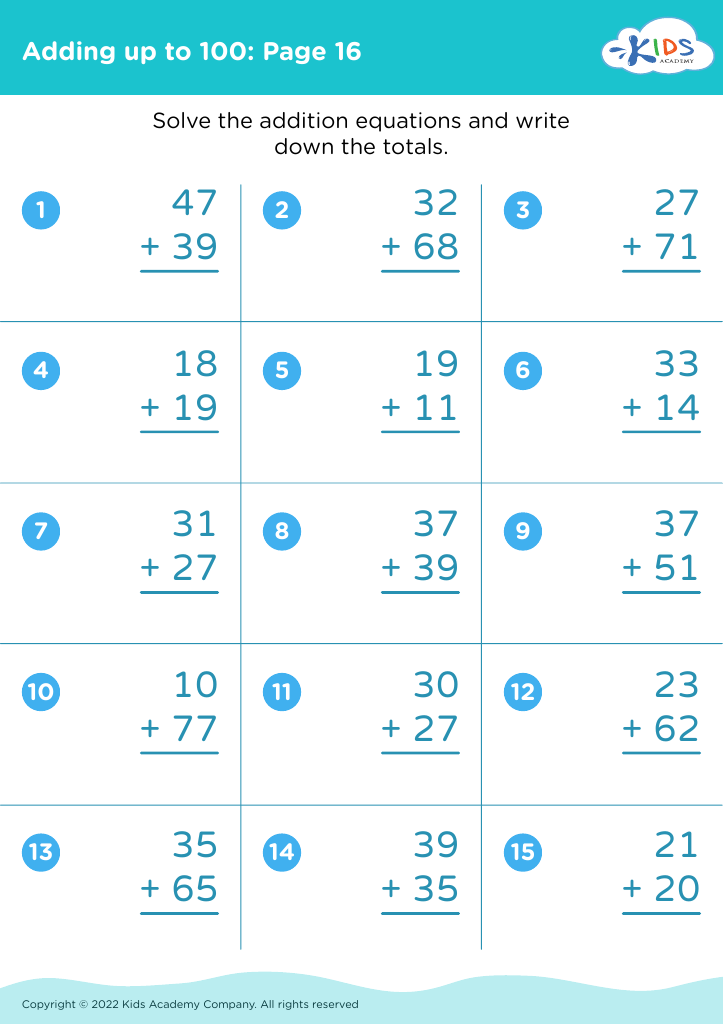
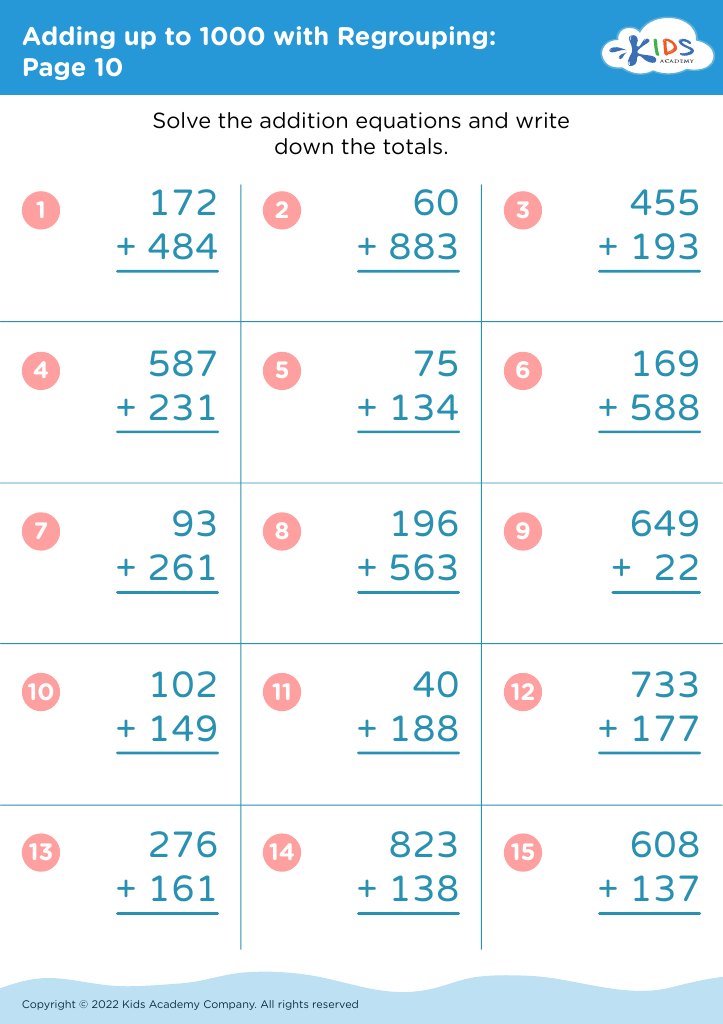
Enhance your child's fine motor skills with our engaging Math Worksheets designed specifically for ages 8-9! These printable worksheets are crafted to help children develop precision and control while grappling with various math concepts. Through fun activities like tracing numbers, connecting dots, and solving visual puzzles, kids can refine their hand-eye coordination and dexterity in a playful, educational environment. As they explore concepts such as addition, subtraction, and basic geometry, they'll strengthen both their mathematical abilities and fine motor skills simultaneously. Foster your child’s confidence and proficiency in math with these interactive resources that make learning enjoyable!
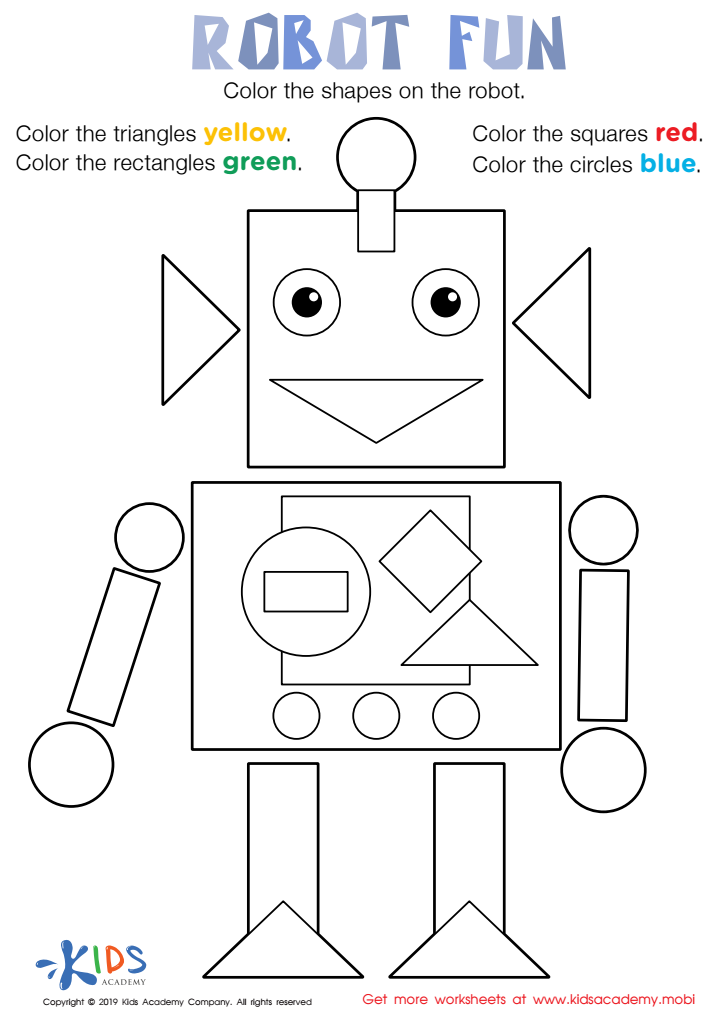
Robot Fun Worksheet
 Assign to My Students








Developing fine motor skills in children aged 8-9 is essential as it lays the foundational groundwork for their overall learning, particularly in math. During this stage, students engage in more complex mathematical tasks that often require precise manipulation of tools, such as rulers, protractors, and calculators. Strong fine motor skills enable children to execute these tasks with accuracy and confidence.
Additionally, fine motor skills, such as gripping a pencil correctly or managing hands-on activities like measuring and drawing graphs, enhance a child's ability to express mathematical ideas visually. These skills support activities that require coordination and precision, allowing for neater, more organized work, which is crucial for both classroom performance and academic assessments.
Furthermore, fine motor development is interconnected with cognitive skills, including problem-solving and critical thinking. Engaging in activities that promote fine motor skills—such as crafting, building with blocks, or even playing certain games—can improve children's mathematical abilities and enrich their learning experience.
In summary, parents and teachers should prioritize developing fine motor skills in their children as it not only enhances their math capabilities but also supports holistic cognitive growth and fosters a positive attitude toward learning. This comprehensive approach sets children up for academic success and lifelong skills.








