Enhancing logical thinking Math Worksheets for Ages 8-9
5 filtered results
-
From - To
Enhancing Logical Thinking Math Worksheets for Ages 8-9
Unlock your child's potential with our carefully designed math worksheets tailored to enhance logical thinking in children aged 8-9. Our engaging activities focus on critical problem-solving skills, strategic planning, and pattern recognition. Perfectly aligned with educational standards, these worksheets offer a variety of fun and challenging puzzles, from sudoku to logic grids, to nurture budding mathematicians’ minds. Support your child's journey to becoming an analytical thinker through consistent practice and stimulating exercises. Set a strong foundation for their future success in math and beyond. Join Kids Academy today and watch their confidence soar!
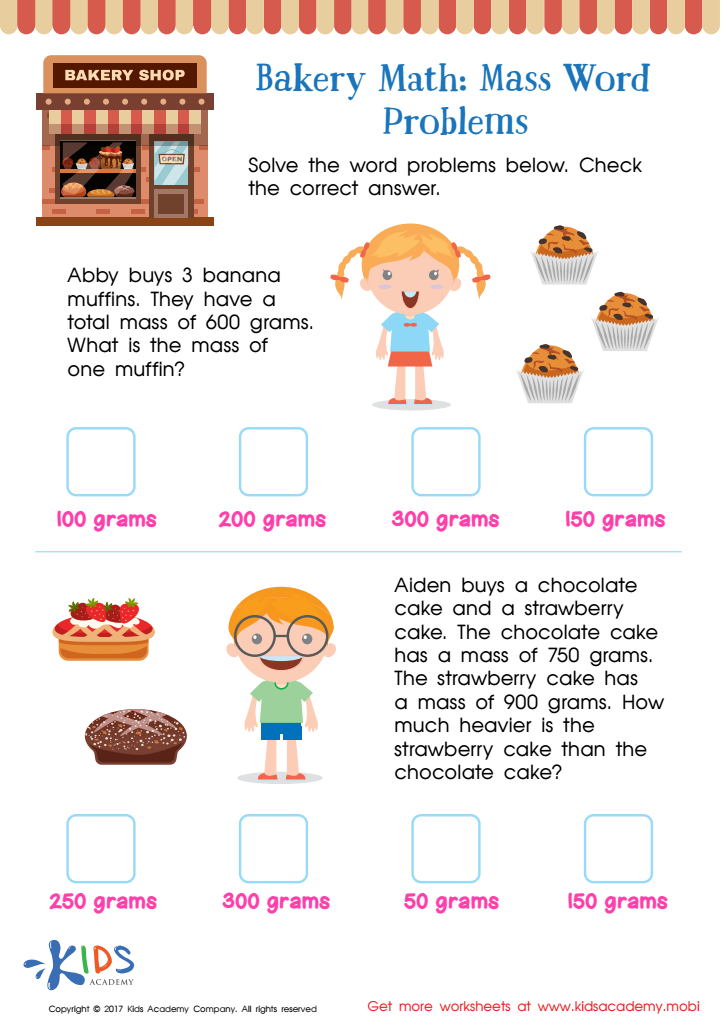
Mass Word Problems Worksheet
 Assign to My Students
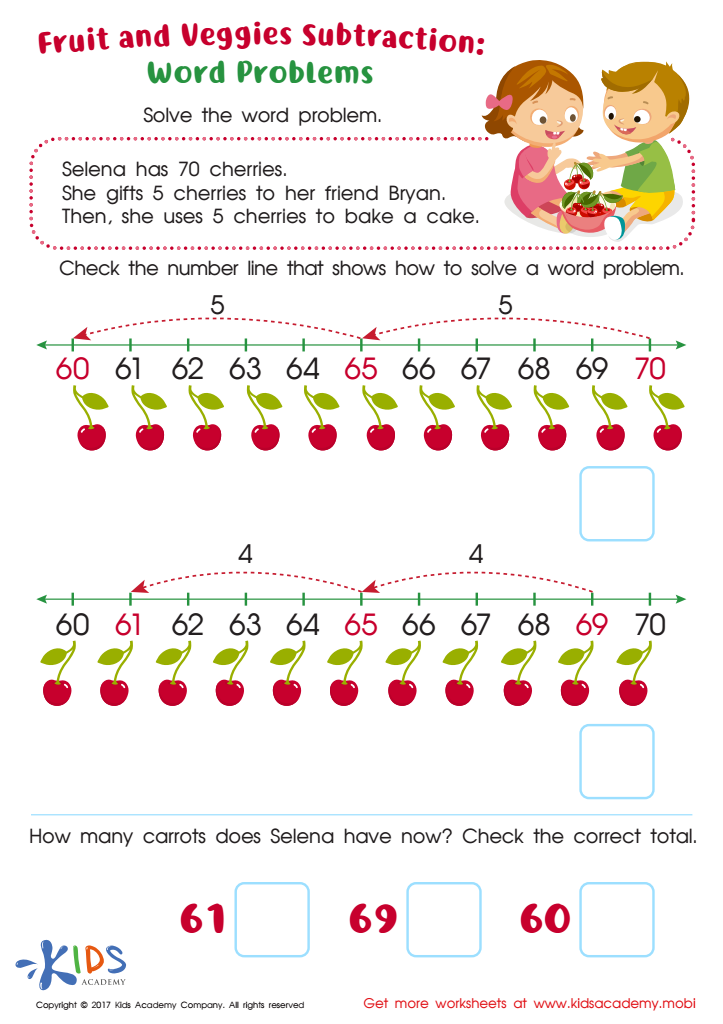
Subtraction Word Problems Free Printable
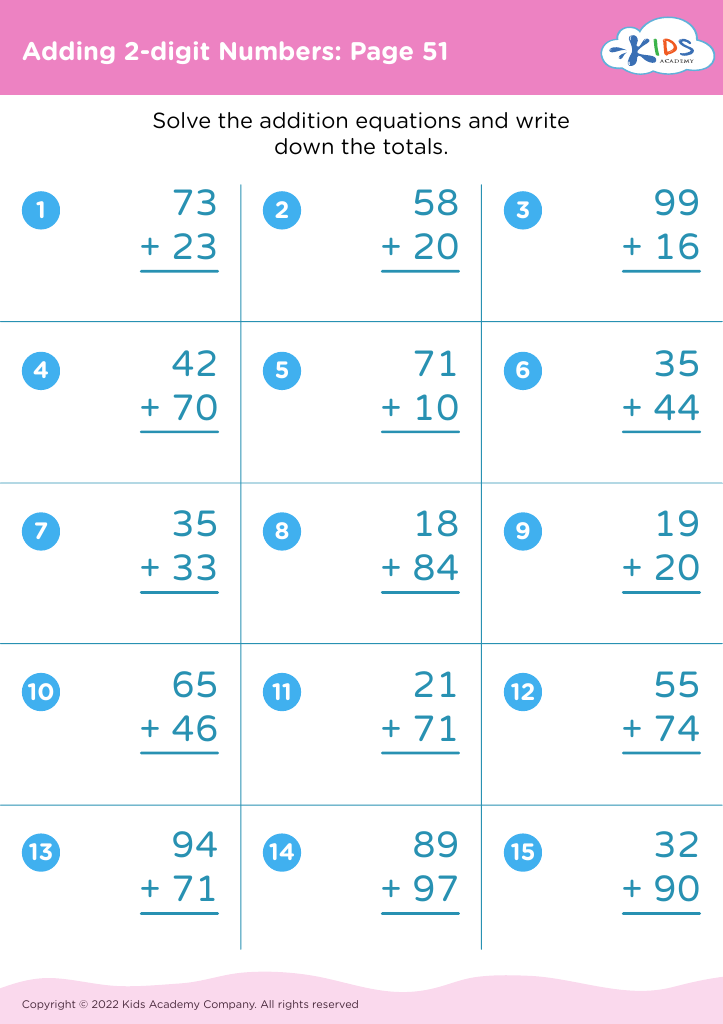
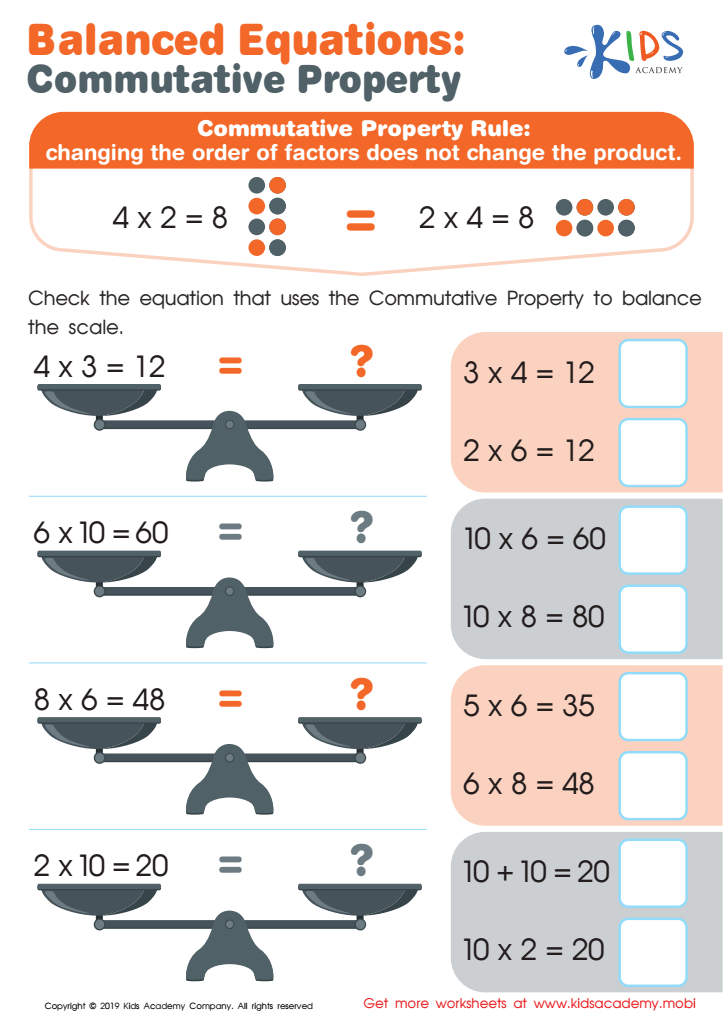
Balanced Equations: Commutative Property Worksheet
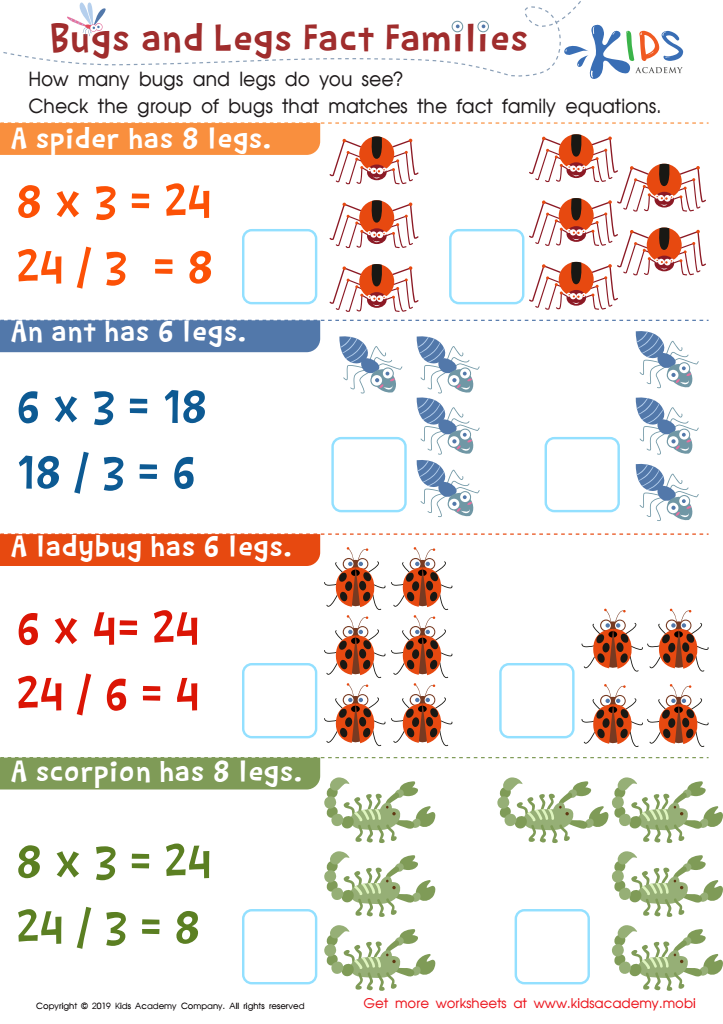
Bugs and Legs Fact Families Worksheet







Enhancing logical thinking in math for children aged 8-9 is crucial for several reasons. At this developmental stage, kids are not only laying the foundation for advanced math concepts but also honing essential life skills. Logical thinking in math helps children learn how to approach problems systematically, breaking them down into smaller, manageable steps.
Firstly, attributes of logical thinking like pattern recognition, sequencing, and categorizing are fundamental skills that aid in understanding more complex math topics later on. By nurturing these abilities early, educators and parents prepare children to tackle subjects like algebra and geometry with greater ease.
Secondly, logical thinking fosters critical thinking and decision-making skills. Kids become capable of assessing various outcomes and reasoning their way to the best solution, a valuable competency across all areas of life. For instance, practical decision-making benefits from the same analytical skills honed during math exercises.
Moreover, early mastery of logical thinking contributes to self-confidence. When children successfully solve problems, it builds a sense of accomplishment and motivates them to face new challenges.
In conclusion, emphasizing logical thinking in math for 8-9-year-olds enriches their academic journey and equips them with vital skills for personal and societal growth. By integrating these practices, parents and teachers can significantly enhance a child's holistic development.








