Fine motor skills (writing) Math Worksheets for Ages 8-9
7 filtered results
-
From - To
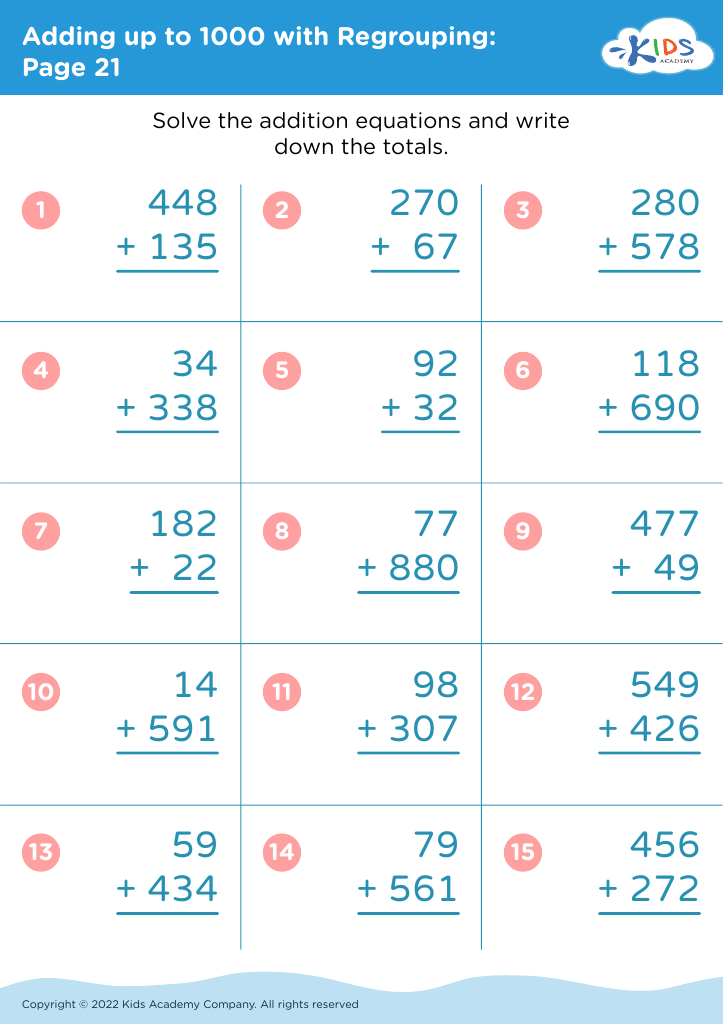
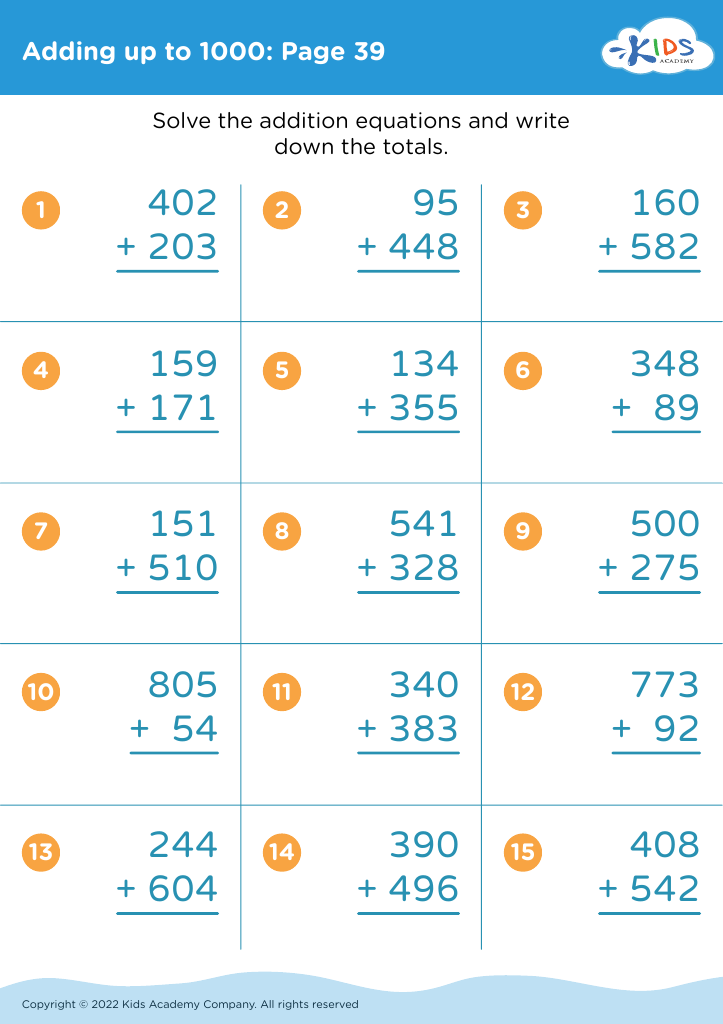
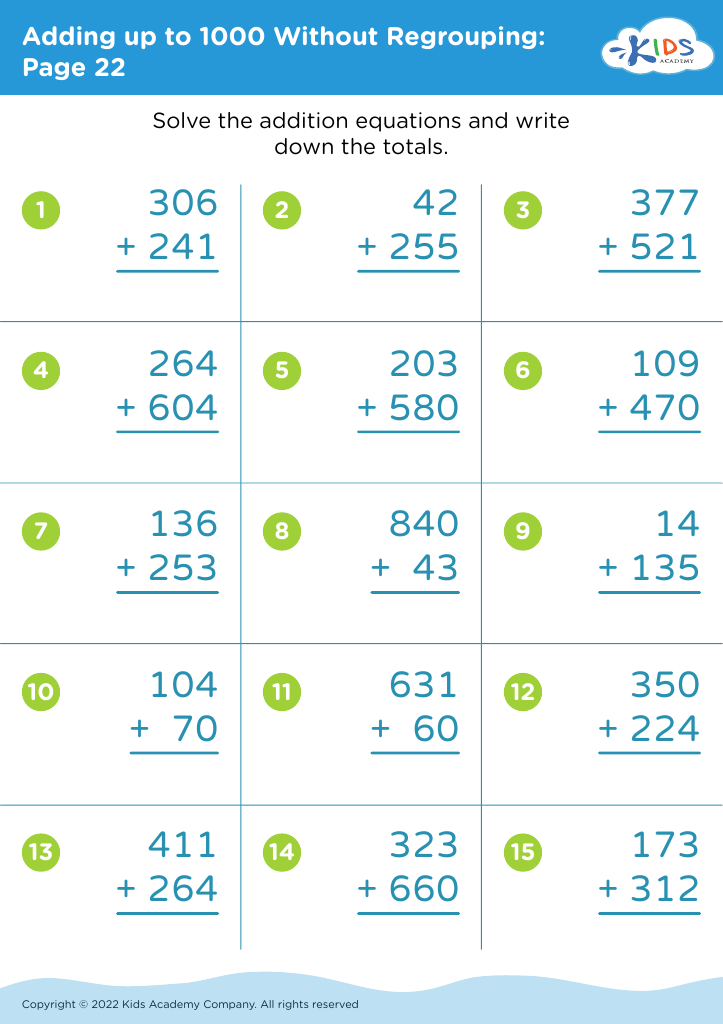
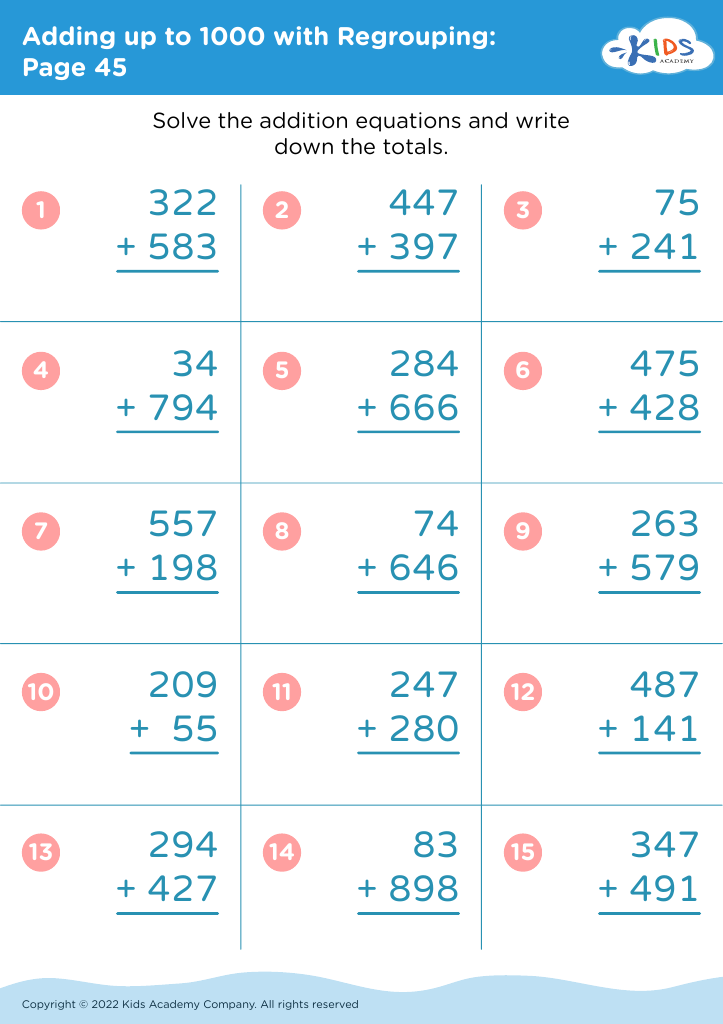
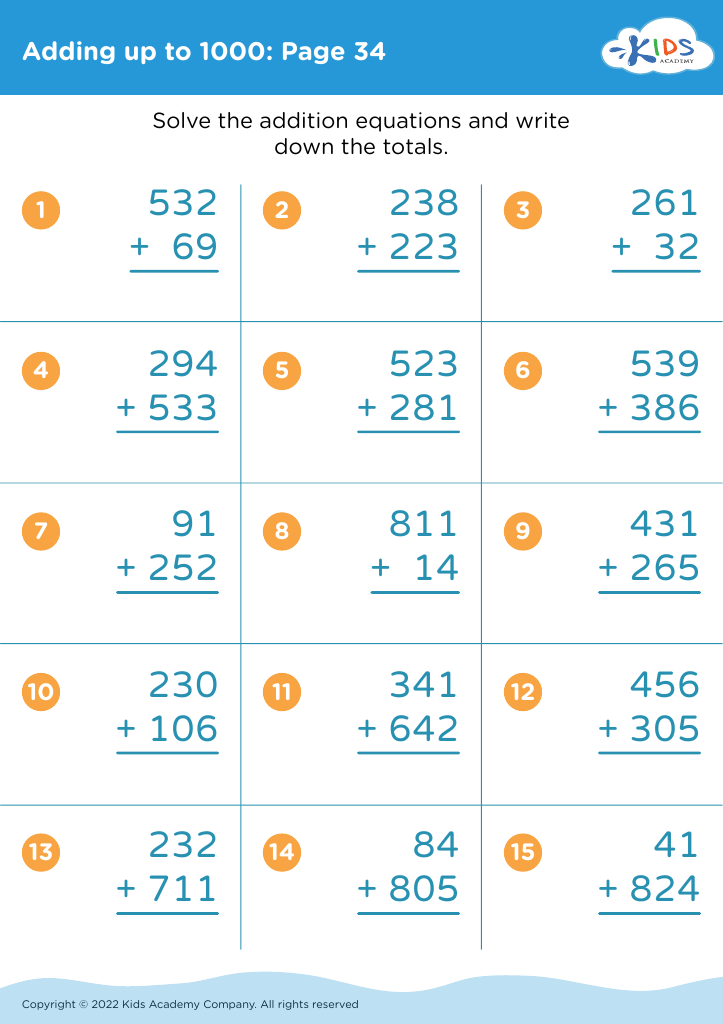
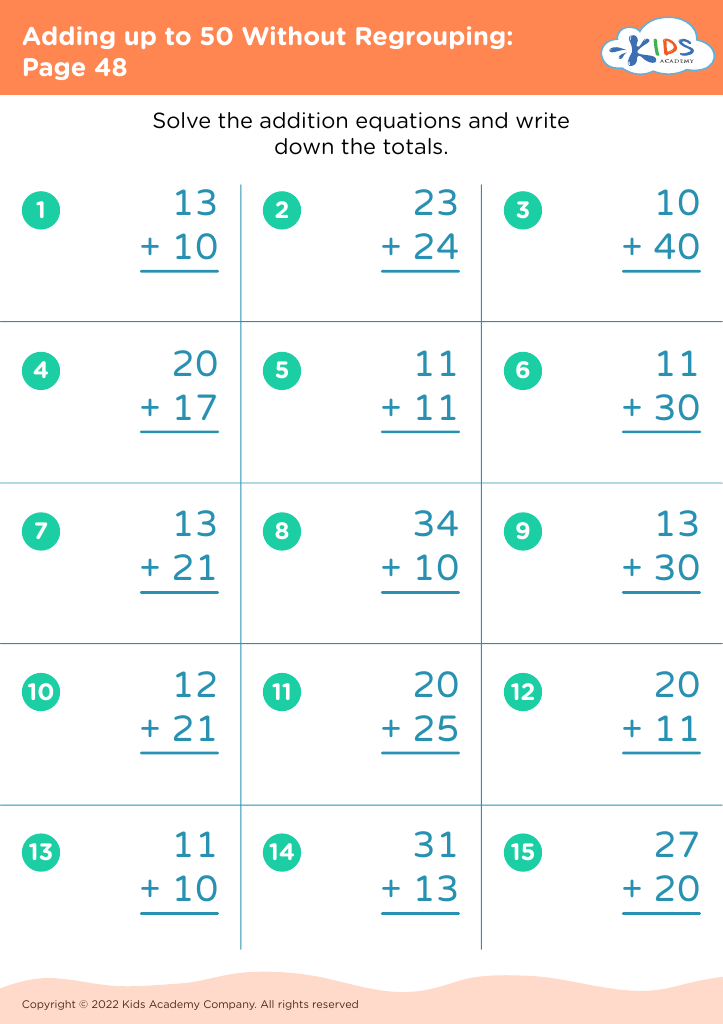
Enhance your child's fine motor skills with our engaging writing math worksheets designed for ages 8-9! These worksheets offer a perfect blend of math concepts and writing practice, helping students refine their handwriting and coordination. Each activity encourages creativity while reinforcing math skills, making learning fun and effective. From tracing numbers to solving math problems, kids will gain confidence in their abilities as they complete each engaging task. These printable worksheets are ideal for home or classroom use, empowering your young learners to develop essential skills that will benefit them in their academic journey. Start cultivating their potential today!
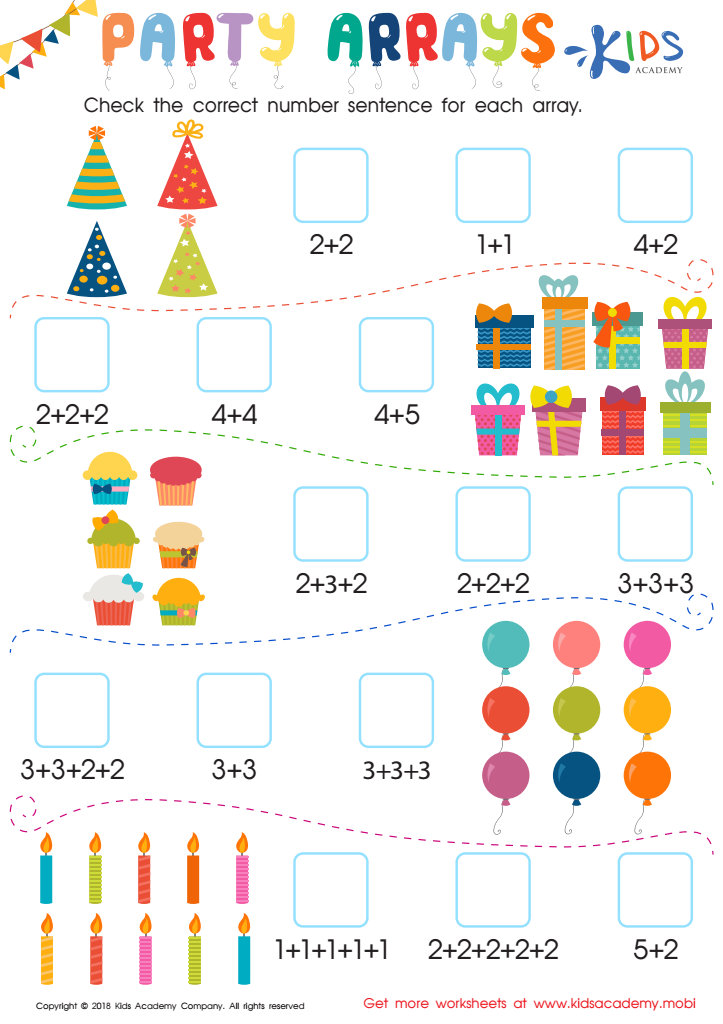
Party Arrays Worksheet
 Assign to My Students








Fine motor skills play a crucial role in a child's overall development, especially for those aged 8-9. At this stage, children are refining their writing abilities, which are essential for effective communication. Fine motor skills, including hand-eye coordination and dexterity, are vital in achieving neat handwriting and being able to write comfortably over extended periods. This not only enhances their writing performance but also boosts their self-esteem and engagement in classroom activities.
Furthermore, fine motor skills are intricately linked to mathematics. Many math tasks, such as drawing shapes, using rulers, or manipulating tools for measurements, require precise control and manipulation of objects. Improved fine motor skills enable children to engage more fully and confidently with math concepts, facilitating a better understanding of patterns, spatial awareness, and problem-solving.
By nurturing fine motor skills, parents and teachers can create a more supportive learning environment that empowers children both academically and socially. Regular activities that promote these skills, such as arts and crafts, puzzles, and writing exercises, can significantly enhance a child's capabilities, setting the foundation for future learning success. In short, the development of fine motor skills is essential for fostering both academic achievement and everyday life skills in children.








