Fraction representation Math Worksheets for Ages 8-9
3 filtered results
-
From - To
Unlock the world of fractions with our engaging Fraction Representation Math Worksheets designed specifically for children aged 8-9! These worksheets help students grasp essential fraction concepts through fun, interactive exercises. Kids will learn to visualize and represent fractions using models, number lines, and number sentences, enhancing their understanding and confidence. With a variety of practice problems, these worksheets promote critical thinking while making math enjoyable. Perfect for classroom use or at-home learning, our resources are tailored to meet educational standards and support young learners on their journey to mathematical mastery. Get started today and watch your child's fraction skills flourish!
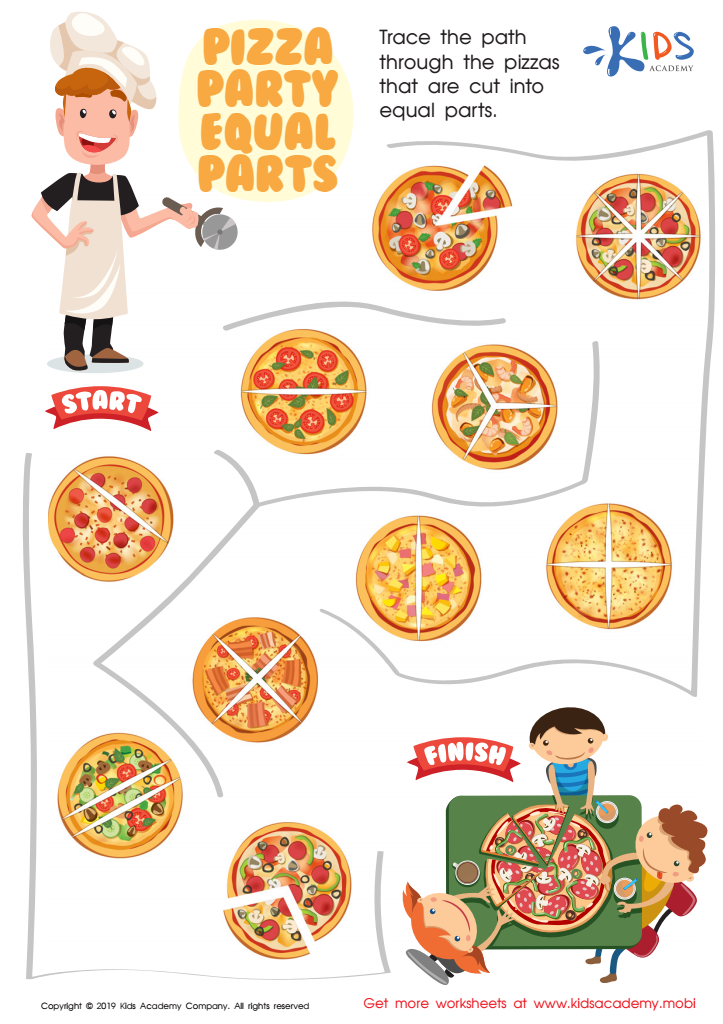
Pizza Party Equal Parts Worksheet
 Assign to My Students
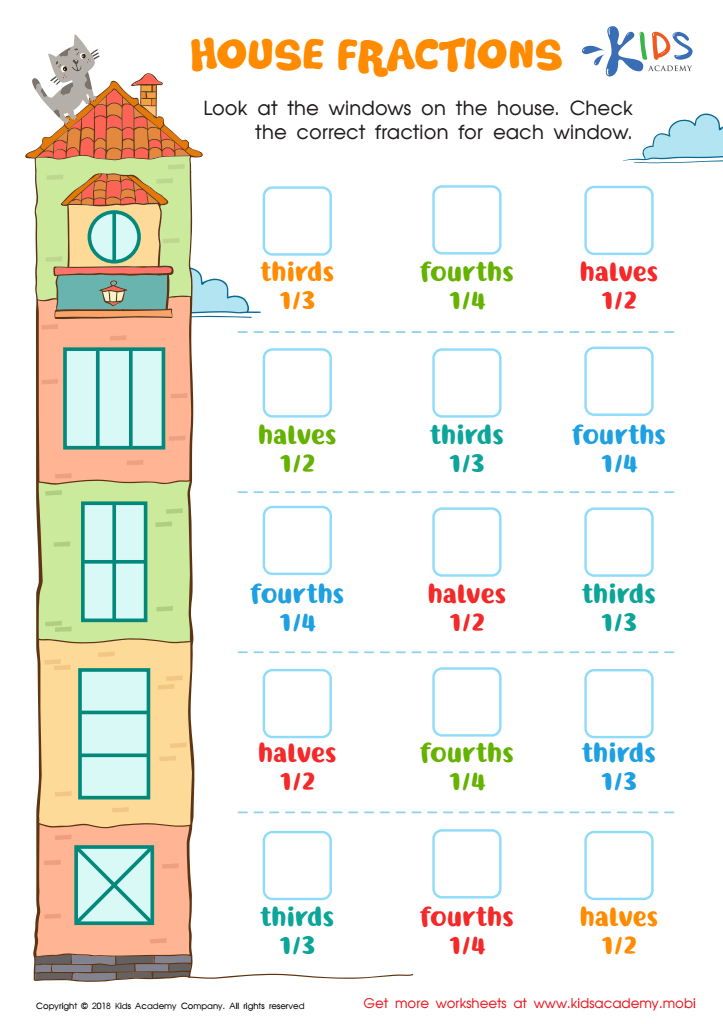
House Fractions Worksheet








Parents and teachers should care about fraction representation in math for children aged 8-9 because this foundational concept supports essential skills in numeracy and problem-solving. At this age, students are transitioning from concrete to abstract thinking, making it a critical time to understand fractions, which represent part-to-whole relationships.
Understanding fractions helps children develop their ability to compare quantities, solve problems, and recognize patterns, skills that are applicable in various real-life situations. For instance, when cooking or handling money, a solid grasp of fractions allows children to measure ingredients accurately or make change effectively.
Furthermore, fractions are the building blocks for more advanced mathematical concepts, such as ratios, proportions, and decimals. If students struggle with fractions early on, they may find it difficult to engage with and succeed in subsequent math education.
Encouraging meaningful discussions about fractions through visual aids, real-life applications, and interactive activities makes the learning process enjoyable and effective. By supporting their mathematical growth in fractions, parents and teachers are equipping children with vital skills that enhance their confidence and enable them to tackle more complex math challenges in the future. Thus, investing time in fractional representation is crucial for a child's academic development and overall numeracy proficiency.








