Fractions understanding Math Worksheets for Ages 8-9
3 filtered results
-
From - To
Enhance your child's math skills with our engaging "Fractions Understanding" worksheets tailored for ages 8-9. Designed to complement classroom learning, these worksheets provide a fun and interactive way for children to grasp foundational concepts of fractions. Through varied activities, students will learn to identify, compare, and manipulate fractions, fostering a deeper comprehension of this essential math skill. Ideal for homework or supplementing classroom instruction, our worksheets encourage independent practice while boosting confidence. Strengthen your child's math proficiency with our comprehensive resources, ensuring they master fractions and develop a positive attitude towards math. Explore our collection and watch their understanding grow!
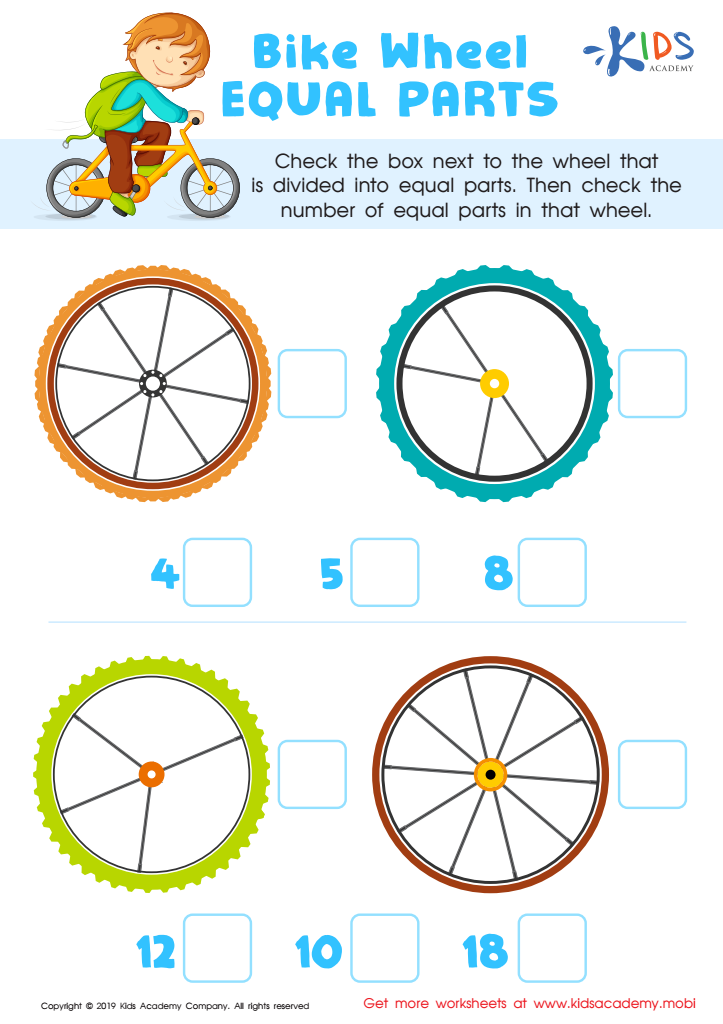
Bike Wheel Equal Parts Worksheet
 Assign to My Students
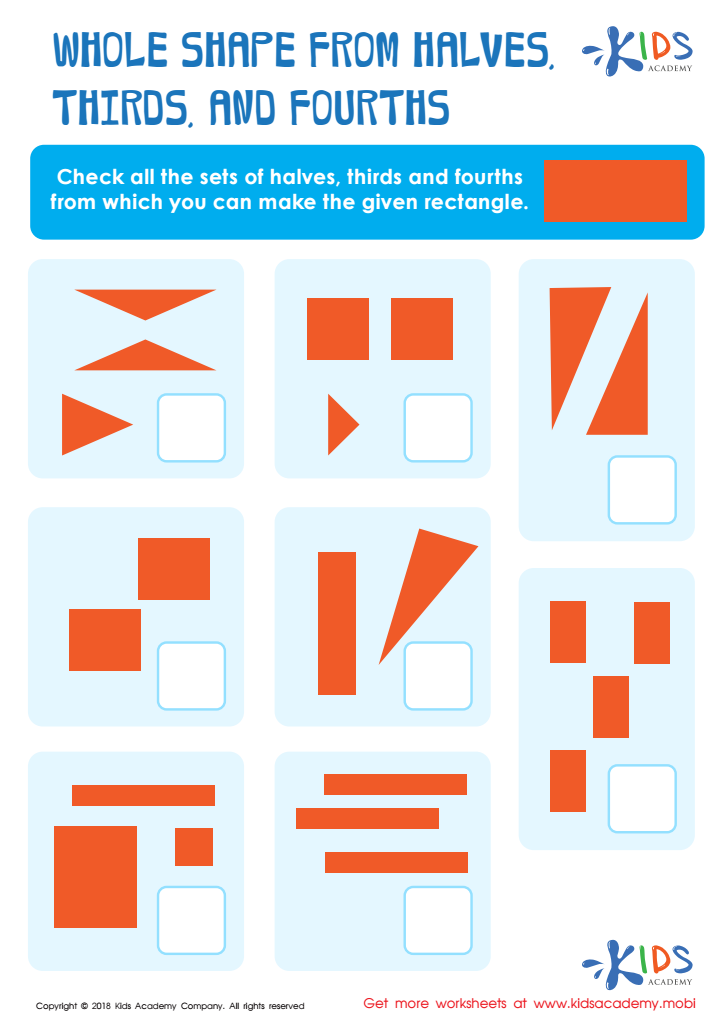
Whole Shape from Halves, Thirds and Fourths Worksheet








Understanding fractions is crucial for children aged 8-9, laying a strong foundation for their future mathematical learning. At this age, students begin to encounter more complex concepts where fractions become prevalent, such as in measurements, dividing, and understanding ratios. A solid grasp of fractions not only enhances calculation skills but also fosters critical thinking and problem-solving abilities. Parents and teachers should care about developing fraction understanding because it directly impacts children's confidence in math, influencing their attitude towards the subject.
Moreover, real-world applications of fractions—like cooking, budgeting, and even sharing—make learning relevant and engaging for children. When children understand fractions, they can better grasp concepts such as equivalent fractions, comparison, and basic operations with fractions, which are vital for more advanced topics they will face in later grades, such as decimals and percentages.
Additionally, proficiency in fractions is linked to higher academic performance and reducing math anxiety. When parents and teachers support fraction understanding, they empower children to build resilience and persistence in their learning processes. By fostering a strong foundation in fractions at this critical developmental stage, parents and teachers equip children with essential skills that will benefit them throughout their education and daily lives.








