Improve mathematical skills Math Worksheets for Ages 8-9
3 filtered results
-
From - To
Unlock your child's mathematical potential with our engaging Math Worksheets for Ages 8-9! Designed to enhance critical skills, these worksheets cover essential concepts such as addition, subtraction, multiplication, and problem-solving. Each activity is tailored to cater to young learners' growing abilities, ensuring a fun and effective learning experience. Teachers and parents will appreciate the structured format that supports independent practice and helps consolidate classroom learning. With vibrant visuals and interactive exercises, your child will develop confidence and proficiency in math. Explore our wide range of resources to make math enjoyable while reinforcing vital skills that set the foundation for future success!
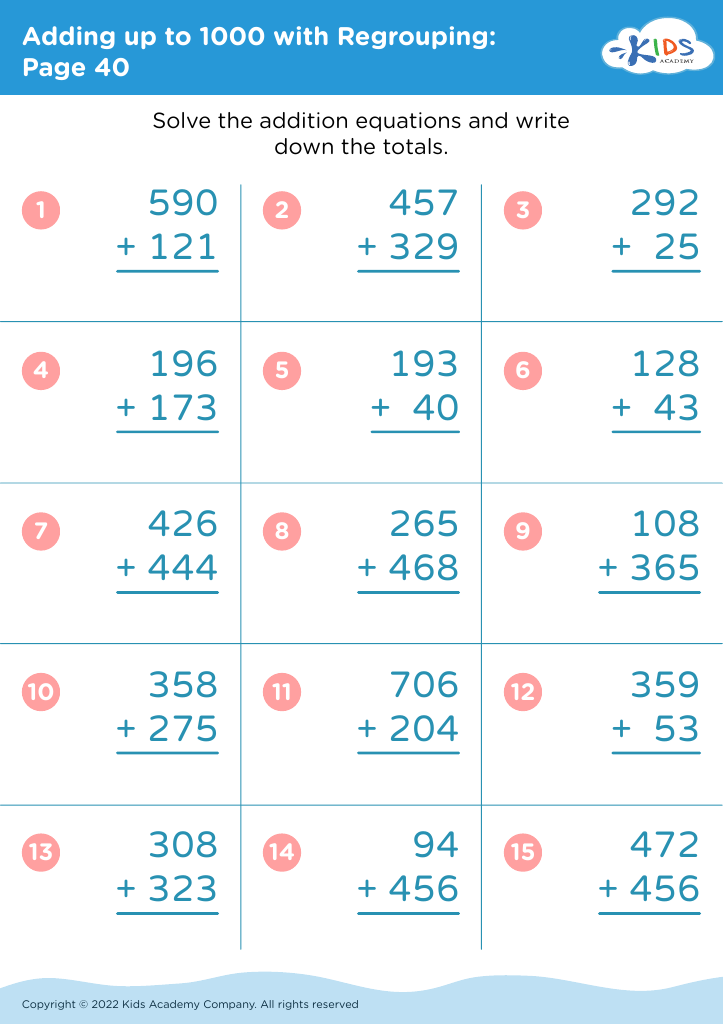
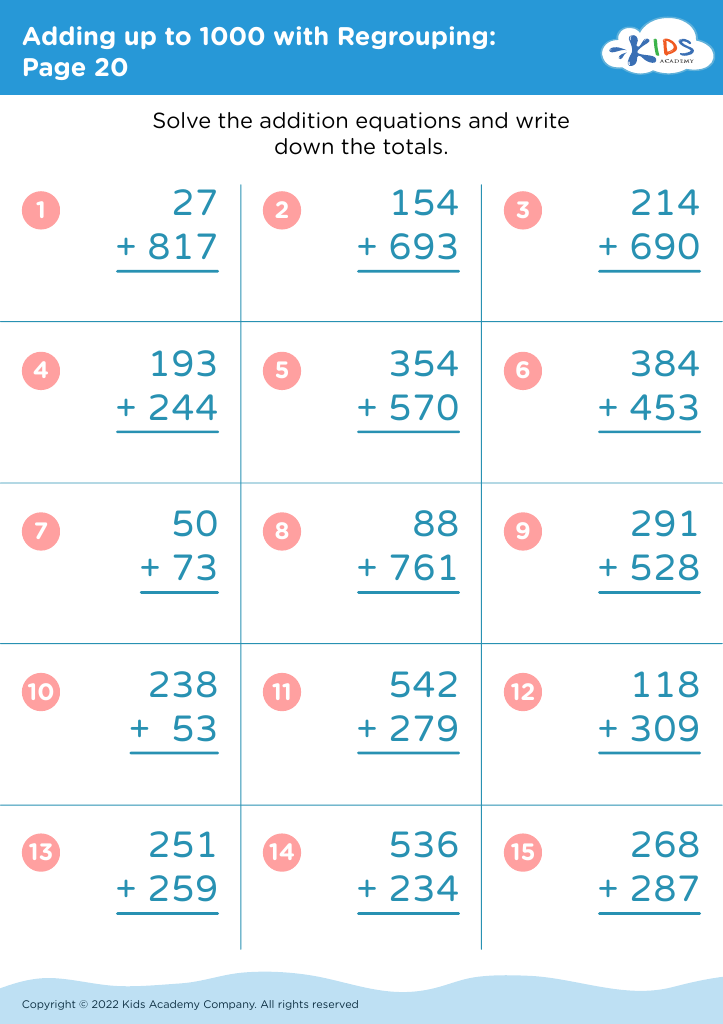
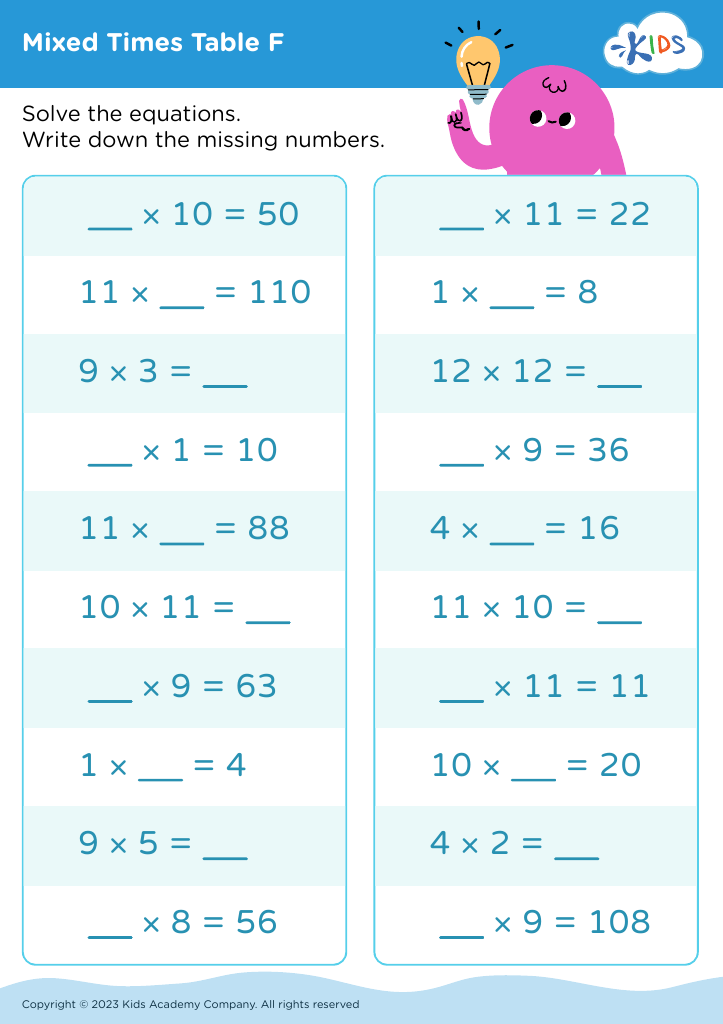








Parents and teachers should prioritize improving mathematical skills for children aged 8-9 because this age group is critical for foundational learning. During these formative years, children are transitioning from basic arithmetic to more complex problem-solving and analytical thinking, preparing them for more advanced concepts as they progress in their education.
Strengthening math skills helps in developing logical reasoning and critical thinking abilities, which are essential not just in math but across all subjects and real-life situations. Proficient math skills contribute to improved academic performance overall, fostering self-confidence and a positive attitude towards learning.
Moreover, children who struggle with math at this age can form negative associations with the subject, which could lead to increased anxiety and a long-term aversion to math-related tasks. Early intervention and support can prevent these issues, providing students with the tools they need to succeed.
Furthermore, a strong mathematical foundation opens doors to future opportunities in STEM fields, which are increasingly valuable in today’s technology-driven world. By investing time and resources into enhancing math skills, parents and teachers not only equip children for immediate success but also set them on a path for lifelong learning and achievement.








